Science
Deadly version of H5N1 bird flu spills over into Nevada dairy cattle

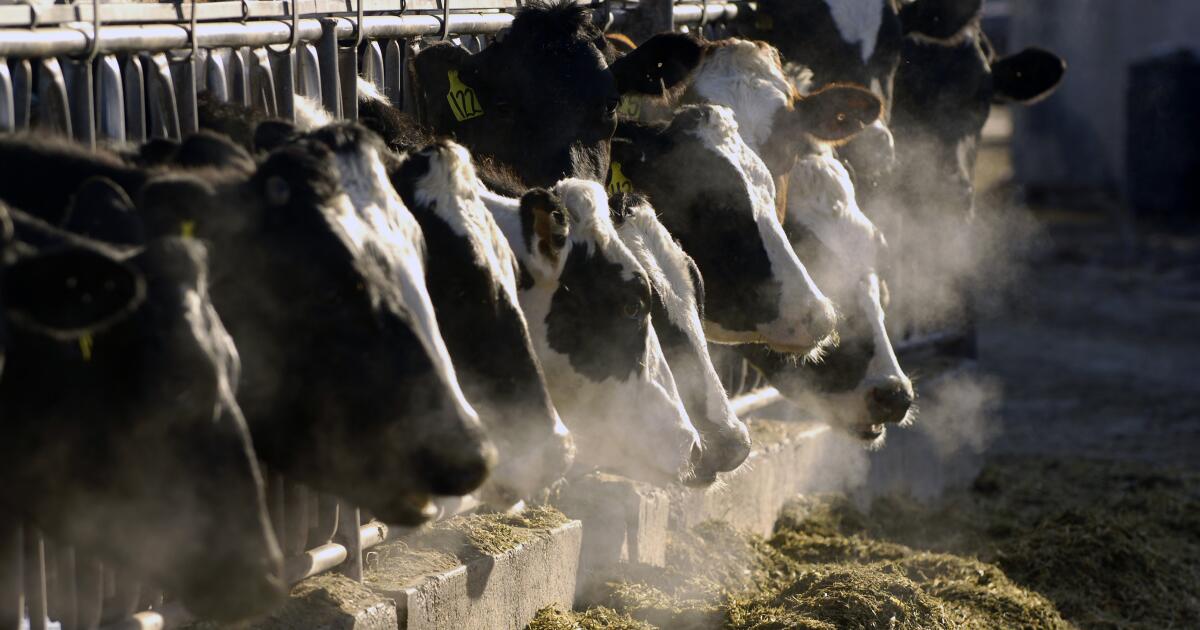
A version of the H5N1 bird flu virus that killed a person in Louisiana and severely sickened a teenager in Canada has now been detected in dairy herds in Nevada. The version, known as D1.1, is circulating in wild birds around the nation — causing massive die-offs in places such as Chicago, upstate New York and Ohio.
The U.S. Department of Agriculture’s Animal and Plant Health Inspection Service confirmed the finding Wednesday.
It’s different from the version circulating in dairy cows, which has caused only relatively mild illness in humans, although it has killed scores of domestic and wild cats. Both versions belong to the H5N1 virus family — each with slightly different histories and genetic structures.
Finding D1.1 in dairy cows caught investigators off-guard, but it is just the latest surprise as the H5N1 bird flu continues to flummox researchers and public health officials. It’s a stark reminder that this virus does not behave like a “typical” flu virus.
“I can’t overemphasize what a big deal it is,” said John Korslund, a former USDA scientist, in an email. “This is truly … unfolding into a nightmare scenario. We have no idea how widespread this version of the virus already is in cattle herds. Every time poultry flocks break (with virus), we’ll need to investigate cattle contacts (which are many) as well as wild bird and other poultry contacts.”
Richard Webby, an influenza researcher in the department of infectious diseases at St. Jude Children’s Research Hospital in Memphis, Tenn., said that while he thinks the findings are unlikely to change the risk outlook for the general population, it will affect the dairy industry.
Anja Raudabaugh, CEO of Western United Dairies — a California dairy trade group — said the discovery was “extraordinary” and should exacerbate industry concern about the virus, which she described as already being “very high.” She hopes it will compel federal officials to work on a bovine vaccine “ASAP” to stop or slow the spread of the disease between cows.
“My farmers do not want to go through another summer with this virus,” she said.
Most researchers believed there was a singular contact event between a bird infected with H5N1 B3.13 and a dairy cow in the Texas Panhandle in late 2023. That interaction led to an outbreak that has now affected more than 950 herds across 16 states and sickened 67 people, including 40 dairy workers.
But this new finding suggests such an occurrence was not a one-off — and that we may see more such spillover events from wild birds into cattle.
“I think many of us, including myself, thought that the first introduction was sort of a fluke,” said Seema Lakdawala, a microbiologist at Emory University in Atlanta. But, she added, the discovery of D1.1 in dairy cows “clearly means that other bird viruses can get into cows.”
The virus was discovered as a result of the USDA’s National Milk Testing Program, which requires testing of milk in 38 states, including Nevada, where the herds infected with the D1.1 version were found.
Researchers are still trying to pin down exactly how the cows in Nevada became infected. One theory has to do with nonnative European starlings, which state officials described in a news release about the infected cattle as “a nuisance population” that spreads disease and contaminates food and water sources for animals, putting them at risk of bird flu. That said, Tanya Espinosa, a USDA spokeswoman, said the agency had not found H5N1 in any starling in Nevada.
In any case, as these viruses circulate in and jump back and forth between birds and cows, they can pick up new traits, potentially allowing the viruses to spread more easily and make the animals they infect sicker.
Korslund said the discovery raises several questions that epidemiologists and health officials will need to address: How will it affect dairy workers? Dairy cows and feedlot cows? How about other livestock, such as swine, sheep, goats, and horses? What symptoms should farmers and veterinarians be on the lookout for? Will milk testing and reporting now require fields for both versions of the virus? Will herds that have been infected by B3.13 have immunity to D1.1?
And he’s worried about the political climate, and the appetite the Trump administration will have for addressing this outbreak.
“So many unanswered questions yet on how this strain will behave in cattle,” he said. “We may have to hope that Canada does the research because our federal researchers appear to be temporarily paralyzed by the political process.”
Nevertheless, he urged health officials to begin testing livestock — not just dairy cows — in places with densely situated agricultural operations, such as in Ohio, where since Jan. 1, H5N1 (assumed to be D1.1) has been found in 40 commercial poultry farms in a two-county area.
“The entire livestock population in the area should be screened now to sort out susceptibility and viral hosting, given the circumstances,” Korslund said.
But of all his worries, it’s the farmworkers at the viral battlefront about whom he’s most concerned.
“No caring public health personnel can currently in good conscience recommend that sick, undocumented farm animal caretakers or flock depopulation employees get tested, knowing that ICE could show up at testing sites to demand citizenship verification,” he wrote. “Better to push the Tamiflu and recommend staying home a day or two … any worker testing initiatives are dead in the water and viral isolates will not be monitored for genomic changes by public health officials.”


Three months after his son was born, Kevin Maguire felt alone.
It was 2019. He had recently moved to Barcelona with his wife and daughter and was working on marketing projects for Fortune 500 companies. The birth of his son, Bodhi, should have been a joyous event. But Maguire, now 43, became sad and irritable, and didn’t want to be around his newborn. He withdrew from family and friends, often playing video games late into the night or finding excuses to get out of the house.
“I would take the dog out for a walk,” Maguire said. “I wanted to get far away enough that I wouldn’t bump into anyone I knew and I would just sit and cry.”
Desperate for answers, he entered his symptoms online. Maguire, author of the recently published book “The New Fatherhood: Why Everything They Told You About Being a Dad Is Wrong, and How Embracing It Will Transform Your Life,” knew to look for signs of the “baby blues” in his wife. But he was surprised by articles that said men could experience postpartum depression too. The diagnosis resonated and he began writing about his condition and the trials of fatherhood on Substack.
New dads face psychological pressures, from sleepless nights to sky-high bills, which can contribute to postpartum depression. So can shifting hormone levels.
“One thing I found in my lab’s research is that when new dads have really low levels of testosterone, they might report more symptoms of postpartum depression,” said Darby Saxbe, a professor of psychology at USC and author of the recently published “Dad Brain: The New Science of Fatherhood and How It Shapes Men’s Lives.”
While hormonal shifts can create challenges, they also help men adapt to fatherhood, Saxbe explained. Several hormones can spike in men when they become dads, including oxytocin, linked to better relationship quality; vasopressin, associated with emotional bonding; and prolactin, which promotes lactation in women and caregiving behavior in guys.
New dads can also experience a decline in testosterone. According to a 2011 paper from University of Notre Dame professor Lee Gettler, part of the largest study on fatherhood and testosterone ever conducted, men averaged around a 25% drop in testosterone after becoming fathers.
While dads have reasons to be concerned by plummeting levels of testosterone, a modest dip isn’t necessarily a disaster — in fact, it can make men better parents and partners.
“We often get invested in the idea that men should always have the highest possible levels of testosterone,” Saxbe said. “What the research tells us is a little more nuanced. You really want flexibility. You want a hormonal system that can adapt to the different demands of your life.”
The prospect of a decline might scare soon-to-be fathers, especially those on TikTok and Instagram, where accounts push the idea that having “high T” is the key to being a “real man,” according to a recent study in the journal Social Science & Medicine.
Influencers stand to profit persuading men there’s a widespread “masculinity crisis,” the researchers found, noting that 72% of the accounts they analyzed had a stake in testosterone supplements and treatments.
But studies show more testosterone isn’t always better. “We found that when dads have higher testosterone, even before birth, they’re less invested [than men with lower testosterone] in co-parenting a few months after birth,” Saxbe said. High T fathers were more stressed from parenting than their lower T counterparts, and had partners who were less satisfied in their romantic relationships.
This jibes with the challenge hypothesis, which says, in multiple species, testosterone levels rise when males battle for attention from potential mates and go down when it’s time to take care of the young.
While a small decline can be adaptive, dads face mental health risks when their testosterone drops too low.
There is no “normal” level of testosterone, said Dr. Jesse Mills, director of the Men’s Clinic at UCLA Health. Experts recommend that men should consider treatment if their levels dip below 300 nanograms per deciliter (ng/dL). But men metabolize testosterone in different ways, meaning a healthy level for one might be low for another.
“If a new dad comes to me and his testosterone is 298 [ng/dL], he’s below the threshold,” Mills said. “But if he has zero symptoms and everything else is going great — he’s over the moon with his new child, he’s so happy — that’s not somebody I’m going to treat with testosterone.”
He notes that the drop in testosterone fathers experience can partly be attributed to the stresses that come with a new kid: less sleep, a poor diet and fewer trips to the gym. That means there are precautions that expectant fathers can take that don’t involve testosterone replacement therapy (TRT).
Still, while some guys with low testosterone levels might not need TRT, others in the “normal” range could benefit from treatment. (Dads who want another kid soon, beware. Mills notes that testosterone replacement therapy can take a man’s sperm count to zero.)
Both Mills and Saxbe stress that men should be paying attention to symptoms of low testosterone — such as depression and low libido — rather than trying to reach or maintain an ideal number. They also agree that tending to mental health concerns is hugely important for new fathers.
Eventually, after Maguire researched his condition, he recovered after time spent meditating, exercising and bonding with his son.
“A lot of new dads don’t realize how much they’re struggling because they feel ashamed or because they don’t realize it’s common shortly after the birth of a baby,” Saxbe said.
When they struggle, fathers can fixate on testosterone because that’s what modern culture tells them will make them feel better. And sometimes testosterone replacement therapy works. But Saxbe stresses a lot of men could use psychotherapy or support groups that bring dads together, as well as more time bonding with loved ones in general.
“The thing that predicts a man’s well-being and longevity is the quality of his relationships with other people,” said Saxbe. “You can be the world’s best weightlifter. You can have a low body-fat percentage. You can be killing it at work. Those things don’t predict how happy you’re going to be at 80.”

new video loaded: NASA Announces Artemis III Crew
transcript
transcript
NASA Announces Artemis III Crew
NASA announced the crew of Artemis III mission, which will fly to low-Earth orbit to test rendezvous and docking maneuvers with one or two lunar landers.
-
“I am excited to welcome you as the next crew in the Artemis journey to successfully return to the moon — this time to stay.” “I’m honored by the role that I’ve been given. I’m also very humbled by the task in front of us. But first and foremost, I’m grateful.” “So with that, the Artemis II crew, comrade, hands you the baton. You got the controls.” “As you know, we had a significant anomaly at our Launch Complex 36A on May 28. We’ve redoubled our efforts and are moving forward.”
By Alisa Shodiyev Kaff
June 9, 2026
Science
Santa Monica Mountains’ last steelhead trout survived the Palisades fire — and even had babies

Scientists feared the Santa Monica Mountains’ last remaining steelhead trout were dead, smothered by debris flows unleashed by the Palisades fire.
But the endangered fish surprised them: A team of biologists recently spotted 30 of the rare trout — and 21 babies — in Topanga Creek.
“There was a lot of happy dancing in the creek,” said Rosi Dagit, principal conservation biologist for the Resource Conservation District of the Santa Monica Mountains, which works with public and private landowners to conserve natural resources.
That’s because the steelhead here are endangered, at both the state and federal levels. Once, they swam in most streams of the Santa Monicas, but their numbers plummeted amid overfishing and coastal development. Increasingly frequent wildfire has further stressed their habitat. Topanga Creek, a biodiversity hot spot, is home to their last known population in the mountains that stretch from the Hollywood Hills to Point Mugu in Ventura County.
The trout that were spotted, including this one, are part of a distinct Southern California population that’s listed as endangered at the state and federal levels.
(RCDSMM Stream Team)
The California Department of Fish and Wildlife spearheaded a complex mission to rescue trout threatened by the Palisades fire that sparked in January 2025.
Time was of the essence. The fire hadn’t yet been fully contained. But rain was on the way, which would sweep massive amounts of sediment from the denuded hillsides into the water. Fish are often killed this way.
Crews stunned the fish with electricity, scooped them up in buckets, trucked them to a hatchery and ultimately moved them to Arroyo Hondo Creek in Santa Barbara County.
Within days, Topanga Creek was choked with mud. Some assumed the fish left behind were goners.
But in March, the conservation district’s team found four. The following month, when water conditions were clearer, they saw more.
“These fish continue to amaze me,” said Kyle Evans, environmental program manager for the state Department of Fish and Wildlife, who had seen the damage to the creek. “I had seen populations get wiped out in similar situations. So when I heard, I was thrilled.”
Evans surmises the fish that survived were in an area of the creek where less charred material and sediment were swept in.
“These fish likely hunkered down, were hiding under some rocks or places to try to get away from the main concentration of flow,” he said. “And luckily they weren’t buried.”
The ones that were spotted were fairly small, around 6 to 14 inches. Rainbow trout and steelhead trout are the same species, but with different lifestyles. If the fish remain in freshwater, they’ll be considered rainbows. However, they can migrate to the ocean and become steelhead, where they typically grow larger before returning to their natal waters to spawn.
Topanga Creek hasn’t fully recovered from the damage it sustained, but scientists say it’s looking better. Surveys last year were “so depressing,” Dagit said, with very few animals, and stretches that were essentially transformed into flat roads from all the sediment buildup. Some of the riparian canopy burned right down to the creek.
Then came 32 inches of rain over the last nine months, scouring out and moving sediment, creating deeper pools. Dagit said they recently found newt egg masses for the first time in years, as well as a few adult newts and many frogs. Plants that provide cover are starting to recover.
She provided photos comparing certain pools last year and this year, some dramatically transformed. In September 2025, the Shrine Pool could have been an overgrown hiking trail. This April, it was filled with shallow water.

The Shrine Pool in September 2025, left, and the same location in April 2026, right, with RCDSMM’s Isaac Yelchin donning a wetsuit.
(RCDSMM Stream Team)
Topanga Creek is home to another endangered fish, the small but hardy northern tidewater goby, often described as cute. Not long before the trout operation, Dagit led a rescue of hundreds of these fish too. Many were repatriated to the lagoon at the mouth of the creek in a moving ceremony last June.
There’s still the matter of what to do with the trout that were moved to Santa Barbara County last year. Evans would like to bring them home to the Santa Monicas at some point, but isn’t sure if it will happen. On one hand, they could bolster the small, genetically isolated surviving population. On the other, they might inadvertently bring in a disease or bacteria. There is some time to decide. Evans estimates the creek still needs to recover for two to three more years.
For now, the fish are functioning fine in their adopted creek. Experts worried the trauma wrought by the move would disrupt their spawning process, but they had babies that spring. This year, they spawned again.
-

 Pennsylvania2 minutes ago
Man pleads guilty to stabbing wife to death inside Pennsylvania home
-

 Rhode Island9 minutes ago
Scottish soccer fan nears end of 3,000-mile walk for mental health awareness
-

 South-Carolina12 minutes ago
OFFICIAL: South Carolina hires Kevin Schnall as Baseball Head Coach
-
 South Dakota17 minutes ago
South Dakota tribes revoice claim to Black Hills through joint resolution
-

 Tennessee24 minutes ago
Wanted murder suspect sought by US Marshals, TBI says
-

 Texas27 minutes ago
Texas landowners fight massive transmission line project at Austin hearing
-
 Utah32 minutes ago
Utah conservation organization pledges $5.1M for wildlife recovery
-

 Vermont39 minutes ago
‘Like Christmas’: For Vermont’s Congolese community, a historic World Cup bid is cause for celebration – VTDigger

