AUSTIN (KXAN) — Hundreds of Texas landowners gathered in Austin this week to challenge proposed transmission line routes tied to a major statewide power infrastructure project.
Advertisement
The Bell County East to Big Hill 765-kV transmission project, proposed by Oncor and the Lower Colorado River Authority, is designed to move power across Texas and strengthen the state grid as demand rises from population growth, data centers and industrial expansion.
Landowners, attorneys and utility representatives attend a hearing on the proposed Bell County East-to-Big Hill transmission project at the J.J. Pickle Research Campus in Austin. The hearing centers on dozens of proposed transmission line routes stretching across Central Texas. (KXAN Photo/Eric Henrikson)
In March, the utilities filed plans with the Public Utility Commission of Texas that included 122 potential route options.
This week, administrative judges are hearing testimony about those routes before eventually making recommendations to the PUC.
For Burnet County resident Jan Rose, the possibility of a transmission line crossing her property is overwhelming.
“It’s going to traverse our property, not along the property lines, but right through the middle, about 150 feet from our front door,” Rose said.
Advertisement
What is the Bell County East-to-Big Hill project?
Rose is one of hundreds of Texans participating in this week’s hearing, arguing why their land is not an appropriate location for future transmission infrastructure.
“We have 13 minutes to present this whole case (to the administrative judges),” Rose said.
The proposed project spans multiple counties across Texas and is part of a broader effort to expand the state’s electric transmission capacity.
Maps showing proposed transmission line route alternatives are displayed during a hearing on the Bell County East-to-Big Hill transmission project at the J.J. Pickle Research Campus in Austin. (KXAN Photo/Eric Henrikson)
Oncor and LCRA argue they studied dozens of route options to reduce impacts to homes, landowners and environmentally sensitive areas.
Why Texas landowners oppose the transmission routes
Still, opponents argue the process pits neighbors against one another while forcing landowners to spend significant money trying to protect their property.
“All of these groups and all of these landowners are going to spend, I mean, collectively, millions of dollars easily, over this next week in legal fees,” said Mia Sarot, founder of the Hill Country Land and Legacy Alliance, an advocacy group representing landowners across Central Texas.
Advertisement
She also argued the state’s timeline for approving transmission projects compresses the process too aggressively.
How the PUC hearing process works
Under state law, the Public Utility Commission has 180 days from the initial filing to complete the transmission line approval process.
According to Sarot, landowners have about 30 days to intervene in the case, followed by roughly 90 days of review by administrative law judges and about 30 days for PUC commissioners to make final decisions.
“The decisions are made faster than they can really meaningfully have input because you have to understand the project,” Sarot said.
When Texas regulators could make a decision
Following the hearing, administrative judges are expected to send route recommendations to the PUC.
Advertisement
“It doesn’t mean that the PUC commissioners have to agree with what they do, and they can make a completely different decision,” Sarot said.
Another hearing later this month could further complicate the process. That proceeding will focus on whether additional route alternatives should have been included in the application.
If judges determine the proposed routes were insufficient, portions of the process could be revisited.
“We might then, you know, have to do this again, spend more money. That is very frustrating,” Sarot said.
For Jan Rose and her husband, Austin Rose, the hope is simple. “Our hope is that the PUC will slow this process down,” she said.
Advertisement
As part of the hearing process, Oncor and LCRA are expected to present witnesses discussing why specific routes were selected. Participants are given 13 minutes to cross-examine utility representatives and limited time to present their arguments.
The Public Utility Commission is expected to make a final decision later this year.
Advertisement
Advertisement
Advertisement
`;
}
// –>
Trending Stories
Advertisement
View All BestReviews Picks
Don’t Miss
Advertisement
Latest weather conditions from the KXAN First Warning Weather team
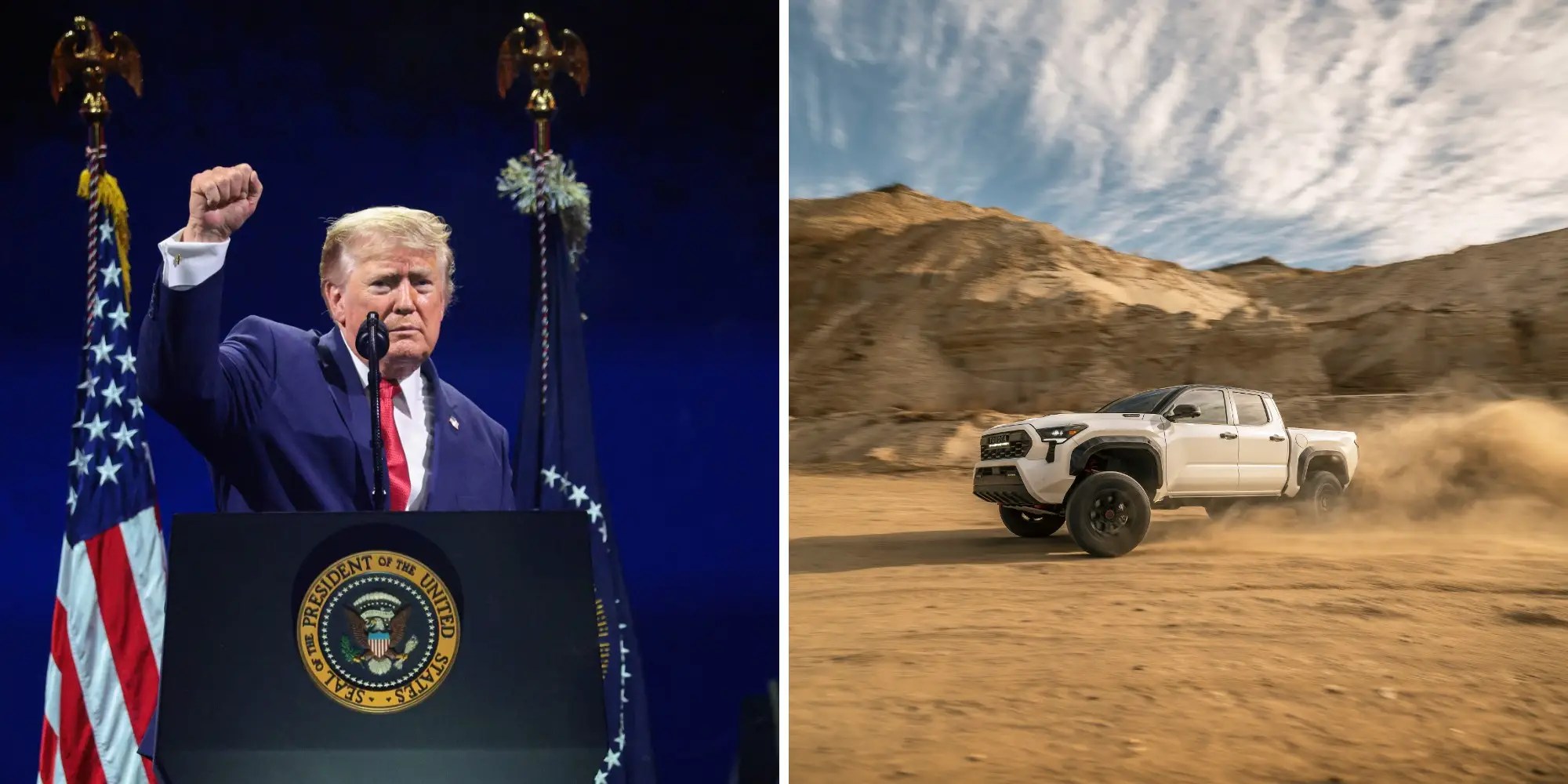
Toyota is planning a $3.6 billion expansion of its Texas truck assembly plant. President Donald Trump took credit for the investment.
On Monday, the automaker announced the multibillion-dollar investment to add a second vehicle assembly line at its San Antonio manufacturing campus to support production of the Tacoma pickup. Toyota said the expansion project would shift some of the midsize truck’s production from its Mexico plants to San Antonio over roughly 4 years. Toyota will still build some Tacoma models and the Corolla in Mexico.
While Toyota did not attribute the expansion to tariffs in its announcement and the company is not fully exiting production in Mexico, Trump said the fresh investment was a sign that his tariffs were working.
“It came over the wires that Toyota is moving out of Mexico into the United States, and building one of the biggest truck and car plants ever built,” Trump said on Tuesday during a visit to Ankara, Turkey. “It’s amazing. That’s what tariffs do, properly used.”
Advertisement
Toyota said the investment will create 2,000 jobs and add 2.5 million square feet to the site, doubling the company’s Texas footprint by 2030.
Toyota says its plant will hire 2,000 new workers to support the assembly line.
Toyota
On Monday, Ted Ogawa, president and CEO of Toyota Motor North America, said the investment reflected the company’s “confidence in the region’s workforce, innovation, and long-term growth potential.”
Advertisement
The move gives Trump a high-profile example of a well-recognized company creating manufacturing jobs. His administration has argued that tariffs incentivize companies — particularly automakers — to reshore manufacturing in America and reduce reliance on foreign production.
Toyota’s announcement also comes amid major uncertainty for automakers with plants in North America. The USMCA — the trilateral free trade pact between the US, Canada, and Mexico struck during Trump’s first term — is under review after the US declined to renew the treaty in its current form on July 1. The Trump administration is reportedly pushing to change the agreement so 50% of all automotive parts and manufacturing would happen in the US.
Toyota also nodded to that trade uncertainty in its release, saying it remained committed to operations in all three countries while encouraging “a quick resolution to USMCA” to keep North America globally competitive.
WASHINGTON – The U.S. Supreme Court on Monday declined to block Texas from enforcing a state law that requires apps stores to verify users’ ages and obtain parental consent for minors seeking to download apps or make in-app purchases on mobile phones.
Justice Samuel Alito, in a pair of one-sentence orders, denied petitions by plaintiffs who claim that the Texas App Store Accountability Act violates users’ constitutional rights to free speech.
Last month, a three-judge panel from the 5th U.S. Circuit Court of Appeals ruled that the law can take effect. The panel suspended a district court’s ruling last December that the law is unconstitutional.
The plaintiffs suing to block the law include the Computer & Communications Industry Association and Students Engaged in Advancing Texas. Texas Attorney General Ken Paxton is a defendant in both cases.
Advertisement
Plaintiffs’ lawyers argued that the law impermissibly seeks to limit access to content protected by the First Amendment, including news and educational material.
“Equity and the public interest support relief because protecting First Amendment rights — and parents’ rights to supervise their children as they see fit, not as the government tells them they should — is always in the public interest,” wrote attorneys for Students Engaged in Advancing Texas.
Attorneys from Paxton’s office argued that the law protects children from “dangerous modern products.”
“A child with access to an app store and a mobile device (such as a tablet or smartphone) can potentially download any number of software applications, potentially agreeing to invasions of the child’s privacy and sale of the child’s data and be exposed to any conceivable content without parental consent or even parental knowledge,” they wrote.
Copyright 2026 The Associated Press. All rights reserved. This material may not be published, broadcast, rewritten or redistributed without permission.
A passerby’s curiosity may have saved a life behind a Dallas high school. Police say that around 5:25pm on June 28, a young man followed faint cries coming from a wooded area and discovered a young woman stuck in a steep ravine, mired in mud and sewage after being trapped for days, Fox News reports. Dallas police and fire crews mounted a joint rescue in 104-degree heat, trekking about a quarter-mile over rough ground to reach her. They hauled her out and rushed her to a hospital, where she was treated for severe dehydration, extended sun exposure, and other injuries.
Police did not release the woman’s identity or say how she ended up in the ravine, WFAA reports. In a Facebook post Monday, the Dallas Police Department credited the “collaborative effort” of officers, firefighters, and paramedics whose quick work “saved a young woman who was in desperate need of help.” “The well-being of the Dallas community is not something that’s handled by a single agency,” the department said.”It takes a collaborative effort from multiple teams and organizations working side-by-side to ensure every person’s safety.”