Science
10 Years After the Paris Climate Agreement, Here’s Where We Are


Almost exactly 10 years ago, a remarkable thing happened in a conference hall on the outskirts of Paris: After years of bitter negotiations, the leaders of nearly every country agreed to try to slow down global warming in an effort to head off its most devastating effects.
The core idea was that countries would set their own targets to reduce their climate pollution in ways that made sense for them. Rich, industrialized nations were expected to go fastest and to help lower-income countries pay for the changes they needed to cope with climate hazards.
So, has anything changed over those 10 years? Actually, yes. Quite a bit, for the better and the worse. For one thing, every country remains committed to the Paris Agreement, except one. That’s the United States.
We wanted to help you cut through the noise and show you 10 big things that have happened in the last 10 years.
1. Emissions have come down, but there’s still far to go.
Call this good-ish news. Lower emissions mean the arc of temperature increase has curved downward over the past 10 years. If countries stick to current policies, the global average temperature is projected to rise by 2.5 to 2.9 degrees Celsius by the end of the century. That’s a significant improvement from where we were 10 years ago: In 2015, scientific models said we were on track to increase the global average temperature by up to 3.8 degrees Celsius.
Global greenhouse gas emissions and expected warming
But none of the world’s biggest emitters — China, the U.S., the European Union, India — have met their Paris promises. And every degree of warming matters. A one-degree increase in average temperature, for instance, raises malaria risk for children in sub-Saharan Africa by 77 percent.
2. The last 10 years were the hottest on record.
We started burning coal, oil and gas on a large scale roughly 150 years ago. As a result, global temperatures have been rising ever since, and the last 10 years have been the hottest 10 on record.
Global temperatures compared with late-19th-century average
The most scorching was 2024. That year, extreme heat killed election workers in India and pilgrims on the hajj in Saudi Arabia. This year, it forced the temporary closure of the top of the Eiffel Tower at the peak of tourist season and shuttered schools in parts of the United States.
3. Solar is spreading faster than we thought it would.
Solar power has been the largest source of new electricity generation for the last three years. Most of this new solar infrastructure is coming up inside China, and Chinese companies are making so much surplus solar equipment — cells, modules and everything that goes into them — that prices have plummeted.
Forecasts keep underestimating solar growth
Today, solar panels hang from apartment balconies in Germany and cover vast areas of desert in Saudi Arabia. Solar and onshore wind projects offer the cheapest source of new electricity generation. Little wonder, then, that in India’s electricity sector, more than half of the generation capacity now comes from solar, wind and hydropower.
4. Electric vehicles are now normal.
The way the world moves has changed. At the time of the Paris Agreement, Tesla had just unveiled its luxury electric SUV. Fast forward to last year: Worldwide, one in five cars sold was electric.
In the United States, 265,000 children ride electric buses to school. In Kenya, electric motorcycle taxis ferry commuters to work. Chinese carmakers are assembling E.V.s abroad, including in Brazil, Indonesia and, soon, in Saudi Arabia, a petrostate.
World
United States
Electrifying transportation is important because it’s one of the biggest sources of emissions globally. Currently, electric vehicles are displacing 2 million barrels of oil demand per day, roughly equal to Germany’s total daily demand, according to BloombergNEF.
5. Rich countries have put relatively little money on the table.
One of the key tenets of the Paris Agreement was an acknowledgement that countries had different responsibilities. Wealthy industrialized countries were supposed to pony up money to help poorer countries do two things: transition to renewable energy and adapt to the problems brought on by a hotter climate.
Last year, countries agreed that a total of $1.3 trillion would be needed every year by 2035 to help developing countries manage climate harms, including $300 billion a year in public monies from rich countries. That’s far more than what rich countries have thus far made available. Where that money will come from is still uncertain.
Public climate finance from developed countries would need to increase substantially
Meanwhile, some of the poorest countries are getting clobbered by extreme weather. They’re falling deeper into debt as they try to recover.
6. Coal is in a weird place.
The growth of coal is slowing worldwide. That matters because coal, which powered the modern industrial economy, is the dirtiest fossil fuel.
Coal is waning in wealthy countries, including the United States, despite President Trump’s efforts to expand its use. Britain, the birthplace of the Industrial Revolution, closed its last coal plant in 2024. That year, more than half of Britain’s electricity came from renewables. But coal is still growing in China, which, despite its pledge to clean up its economy, has gone on to build more coal plants than any other country, ever.
In America, coal demand fell faster than expected… …while in China, it grew faster than expected
7. Natural gas, a planet-warming fossil fuel, is ascendant thanks to America.
Over the decade since the Paris Agreement was signed, the United States has rapidly become the world’s leading producer and exporter of gas.
Liquid natural gas opened up an export boom
Mr. Trump, in his second term, has supersized that ambition. He appointed Chris Wright, a former fracking executive, as the U.S. energy secretary, and he has used the sale of American gas as a diplomatic and trade cudgel. That matters because, while gas is cleaner than coal as a source of electricity, it stands to lock the world into gas use for decades to come.
8. Forests are losing their climate superpower.
Fires are increasingly driving forest loss worldwide. That’s because rising temperatures and more intense droughts are making forests burn more easily and also because people are setting fire to forests to clear land for agriculture.
The world’s forests are absorbing less carbon dioxide
That’s limiting the ability of many forests to store planet-warming carbon dioxide. In fact, it’s pushing parts of the Amazon rainforest, often called the lungs of the planet, to a startling tipping point. Parts of the Amazon are releasing more carbon than trees and soil are absorbing. One recent study found the same pattern in the rainforests of Australia.
9. Corals are bleaching more often.
Since 2015, two separate global bleaching events have stretched over six years. They’re happening much more often than before, and affecting more reefs, because the oceans are heating up fast.
Percent of the world’s coral reefs affected by each bleaching event
Corals are important because they support so many other creatures, including fish that millions of people rely on for nutrition and income. About a quarter of all marine species depend on reefs at some point in their life cycle.
Many reefs have been ravaged, but some coral species are turning out to be more resilient to marine heat waves than we had thought. That’s good-ish news, too.
10. U.S. electricity demand is soaring, in part because of A.I.
Power demand had always been expected to increase worldwide. More than a billion people still need access to electricity, and billions of others around the globe are buying air-conditioners and plugging in electric vehicles. But a big surprise came from the United States.
American electricity demand was pretty flat in the 2010s but is now rising significantly and is projected to climb for at least another decade. One reason: energy-hungry A.I. That raises a critical question for Big Tech: Will its A.I. ambitions heat up the planet faster?
After two decades of slower demand growth, energy needs are rising.
What does all this mean for the world’s 8 billion people?
The physical damage inflicted by global warming costs the global economy around $1.4 trillion a year, according to BloombergNEF.
It means we are being forced to adapt to new conditions on a climate-altered planet. Many already are, especially the most vulnerable among us. In India, a women’s union has created a tiny new insurance plan to help workers cope when it gets dangerously hot. In China, a landscape architect has persuaded cities to create porous surfaces to let floodwaters seep in. In the United States, school playgrounds are adding shade to protect kids on exceptionally hot days. In California, an app developer created a tool to help his neighbors track the path of wildfires. In Malawi and Uganda, people are experimenting with growing different crops.
A big problem is, there’s very little money to help them, and even that has declined in the last couple of years.



After years of heated debates among fire officials, scientists and local advocates, California’s Board of Forestry and Fire Protection released new proposed landscaping rules for fire-prone areas Friday that outline what residents can and can’t do within the first 5 feet of their homes.
Many of these proposed rules — designed to reduce the risk of a home burning down amid a wildfire — have wide support (or at least acceptance); however, the most contentious by far has been whether the state would allow healthy plants in the zone.
Many fire officials and safety advocates have essentially argued anything that can burn, will burn and have supported removing virtually anything capable of combustion from this zone within 5 feet of houses, dubbed “Zone Zero.” They point to the string of devastating urban wildfires in recent years as reason to move quickly.
Yet, researchers who study the array of benefits shade and extra foliage can bring to neighborhoods — and local advocates who are worried about the money and labor needed to comply with the regulations — have argued that this approach goes beyond what current science shows is effective. They have, instead, generally been in favor of allowing green, healthy plants within the zone.
The new draft regulations attempt to bridge the gap. They outline more stringent requirements to remove all plants in a new “Safety Zone” within a foot of the house and within a bigger buffer around potential vulnerabilities in a home’s wildfire armor, including windows that can shatter in extreme heat and wooden decks that can easily burst into flames. Everywhere else, the rules would allow residents to maintain some plants, although still with significant restrictions.
The rules generally do not require the removal of healthy trees — instead, they require giving these trees routine haircuts.
Once the state adopts a final version of the rules, homeowners would have three years to get their landscaping in order and up to five years for the bigger asks, including removing all vegetation from the Safety Zone and updating combustible fencing and sheds within 5 feet of the home. New constructions would have to comply immediately.
The rules only apply to areas with notable fire hazard, including urban areas that Cal Fire has determined have “very high” fire hazard and rural wildlands.
Officials with the Board will meet in Calabasas on Thursday from 1 p.m. to 7 p.m. to discuss the new proposal and hear from residents.
-
Share via
Some L.A. residents are championing a proposed fire-safety rule, referred to as “Zone Zero,” requiring the clearance of flammable material within the first five feet of homes. Others are skeptical of its value.
Where is the Safety Zone?
The proposed Safety Zone with stricter requirements to remove all vegetation would extend 1 foot from the exterior walls of a house.
In a few areas with heightened vulnerabilities to wildfires, it extends further.
The Safety Zone covers any land under the overhang of roofs. If the overhang extends 3 feet, so does the Safety Zone in that area. It also extends 2 feet out from any windows, doors and vents, as well as 5 feet out from attached decks.
What plants would be allowed in the Safety Zone?
Generally, nothing that can burn can sit in the Safety Zone. This includes mulch, green grass, bushes and flowers.
What plants would be allowed in the rest of Zone Zero?
Homeowners can keep grasses (and other ground-covers, like moss) in this area, as long as it’s trimmed down to no taller than 3 inches.
The rules also allow small plants — from begonias to succulents — up to 18 inches tall as long as they are spaced out in groups. Residents can also keep spaced-out potted plants under this height, as long as they’re easily movable.
What about fences, trees and gates?
Any sheds or other outbuildings would need noncombustible exterior walls and roofs in Zone Zero — Safety Zone or not.
Residents would have to replace the first five feet of any combustible fencing or gates attached to their house with something made out of a noncombustible material, such as metal.
Trees generally would be allowed in Zone Zero. Homeowners would need to keep any branches one foot away from the walls, five feet above the roof and 10 feet from chimneys.
Residents would also have to remove any branches from the lower third of the tree (or up to 6 feet, whichever is shorter) to prevent fires on the ground from climbing into the canopy.
Some trees with trunks directly up against a house in this 1-foot buffer or under the roof’s overhang might need to go — since keeping branches away from the home could prove difficult (or impossible).
However, the board stressed it wants to avoid the removal of trees whenever feasible and encouraged homeowners to work with their local fire department’s inspectors to find case-by-case solutions.
What’s new and what’s not
Some of the rules discussed in Zone Zero are not new — they’ve been on the books for years, classified as requirements for Zone One, extending 30 feet from the home with generally less strict rules, and Zone Two, extending 100 feet from the house with the least strict rules.
For example, homeowners are already required to remove any dead or dying grasses, plants and trees. They also have to remove leaves, twigs and needles from gutters, and they already cannot keep exposed firewood in piles next to their house.
Residents are also already required to keep grasses shorter than 4 inches; Zone Zero lowers this by an inch.

new video loaded: Rescuers Mount a Likely Final Push to Save a Stranded Whale
By Jorge Mitssunaga
April 17, 2026
Science
1,200% jump in kratom-related calls to poison control centers in last decade, analysis shows
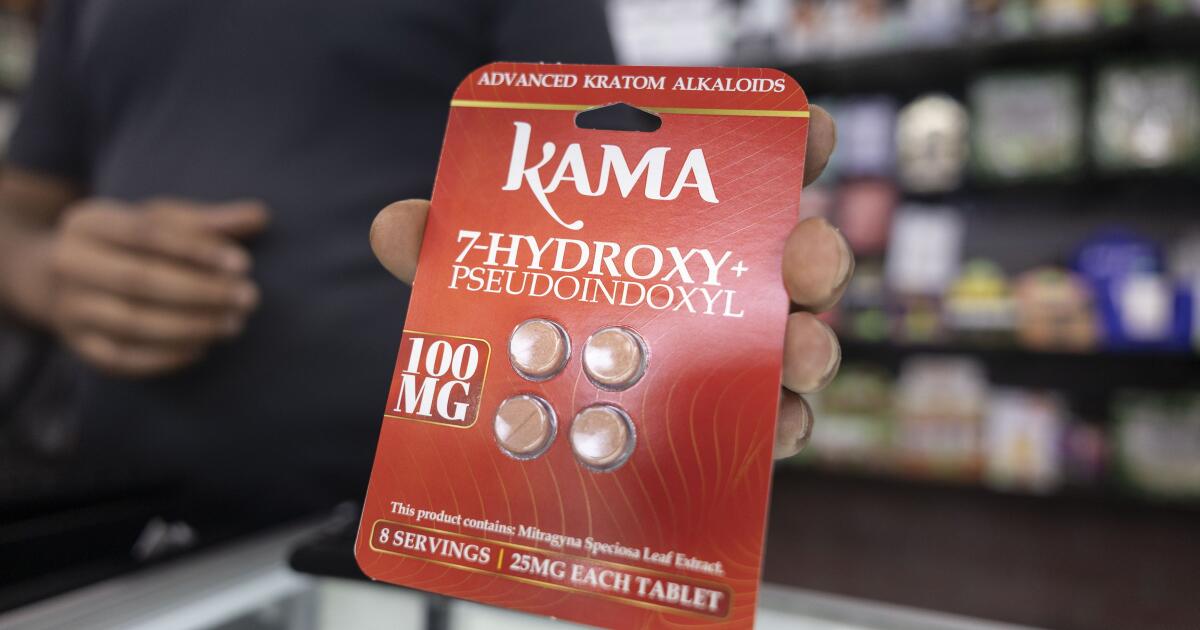
Over the last decade, poison control centers around the country have received tens of thousands of calls from consumers of kratom products reporting adverse and life-threatening health effects, with researchers saying reports in 2025 reached a new level. California’s poison center is reporting similar findings.
Last month, researchers analyzed information from the National Poison Data System and found that between 2015 and 2025, poison control centers across the nation received 14,449 calls related to kratom. More than 23% of those calls, or 3,434, were made last year, according to a published report in the Centers for Disease Control and Prevention. That represents a more than 1,200% increase from 2015, when only 258 calls were reported.
Officers gather illegally grown kratom plants in 2019 in Phang Nha province, Thailand. The country decriminalized the possession and sale of kratom in 2021.
(Associated Press)
Kratom is derived from the leaves of Mitragyna speciosa, a tree native to Southeast Asia. It has a long history of being used for chronic pain or to boost energy and in the U.S., research points to Americans also using it to alleviate anxiety. In low doses, kratom appears to act as a stimulant but in high doses, it can have effects more like opioids.
But in the last few years, a synthetic form of kratom refined for its psychoactive compound, 7-hydroxymitragynine or 7-OH, has entered the market that is highly concentrated and not clearly labeled, leading to confusion and problems for consumers. The synthetic form gaining momentum in the market is sparking concern among public health officials because of its ability to bind to opioid receptors in the body, causing it to have a higher potential for abuse.
Los Angeles County leaders, meanwhile, have grappled with differentiating the two and regulating the products that come in the form of powder, capsules and drinks and have been linked to six county deaths. Sales of kratom and 7-OH products were banned in the county in November.
In reviewing the data, which did not differentiate whether callers had consumed natural or synthetic kratom, researchers set out to understand the effect of what they believe is a “rapidly evolving kratom market,” and highlight the role poison centers can play as an early warning surveillance system to detect new trends.
National Poison Data System findings
The data showed that over the last 10 years, 62% of the kratom-related calls to poison control centers were from people who said they consumed the drug by itself, and the other 38% were from people who combined it with another substance or substances.
Those who consumed kratom with another substance combined it most frequently with one or a combination of the following: alcohol, opioids, benzodiazepines (like Xanax or Valium), cannabis and cannabinoids, stimulants and antidepressants.
The data also broke down hospitalizations related to kratom — adults who took it alone or in combination and experienced “adverse” health effects; and adults who took it alone or in combination and experienced more serious “moderate” or “major” health effects, including death.

Kratom powder products are displayed in a smoke shop in Los Angeles in 2024.
(Michael Blackshire/Los Angeles Times)
Hospitalizations for adults who had consumed kratom alone and experienced adverse effects increased from 43 in 2015 to 538 in 2025. For those who took it in combination and were hospitalized with an adverse health effect, the total jumped from 40 in 2015 to 549 last year.
The numbers were even higher for hospitalizations where the health effects were more serious or fatal.
In 2015, there were 76 reports of people being hospitalized after taking kratom alone and experiencing a serious health effect or dying. By last year, that number had climbed to 919. The reports of serious health effects, including death, for those who took kratom in combination with another substance grew from 51 in 2015 to 725 last year.
The research does not break down kratom-related deaths by year but states that there were 233 deaths over the 10-year study period, or just over 3% of all 7,287 serious medical outcomes. Of the total number of kratom-related deaths, 184 cases involved the consumption of multiple substances.
What California’s poison control system found in its state data
The California Poison Control System is currently reviewing its data concerning kratom-related calls but an initial analysis shows parallels to the national report, said Rais Vohra, medical director of the state poison control system.
“We have about 10% of the national population and about 10% of the national call volume with poison control,” Vohra said. “And so, not surprisingly, we were able to identify over 900 cases of calls related to kratom in that same period.”
Local researchers are still deciphering the state data but they too have found that kratom-related calls are climbing.
“It’s accelerating, which I think is one of the main points of the [published] report,” Vohra said.
A majority of calls received by poison control come from healthcare facilities where “presumably someone has a problem … severe enough to warrant calling 911 or going to the emergency room, and that’s when our agency gets involved,” Vohra said.
Kait Brown, clinical managing director for America’s Poison Control Centers, said the fact that kratom and 7-OH are federally unregulated products sold online, in gas stations and smoke shops gives people across the country easy access.
And while kratom enthusiasts maintain that it has been used in its natural form for hundreds of years, “there are new formulations that are a little bit different than how people have used it, at least historically,” said William Eggleston, a pharmacist and the assistant clinical director of the Upstate New York Poison Center in Syracuse.
People are no longer consuming kratom only as a powder or capsule but also in the form of an energy shot or extract; it’s similar for synthetic, more concentrated 7-OH products.
When regional poison centers compare their findings and experiences with the analysis of calls in the National Poison Data System, Eggleston said, “undeniably there is an increase in calls related to kratom.”
“But when you put it in the bigger perspective of all the calls … this is still a very small percentage of what we’re dealing with on a day to day basis,” he said.
-

 Tennessee5 minutes ago
Tennessee drops series to Ole Miss with game two loss
-

 Texas11 minutes ago
Co‑worker confesses to killing missing North Texas man and stealing his car, police say
-

 Utah17 minutes ago
Embattled Utah Rep. Trevor Lee loses county GOP convention — but wins enough support to make primary
-

 Vermont23 minutes ago
Women’s Lacrosse Bested in Burlington by Vermont – University at Albany Great Danes
-

 Virginia29 minutes ago
Skydiver rescued after crashing into scoreboard during Virginia Tech football scrimmage
-

 Washington35 minutes ago
Washington football displays depth, talent at first spring scrimmage
-

 Wisconsin41 minutes ago
Wisconsin basketball signs Miami transfer Eian Elmer, who gives ‘scoring punch’
-

 West Virginia47 minutes ago
West Virginia American Water set to upgrade water lines in Fayetteville