Politics
Trump envoy rebukes Greenland leader for rejecting hospital ship proposal


NEWYou can now listen to Fox News articles!
Greenland’s rejection of President Donald Trump sending a U.S. military hospital ship has touched off a private-public healthcare debate amid ongoing diplomatic talks about Arctic security.
Greenland’s Prime Minister Jens-Frederik Nielsen on Sunday turned down Trump’s offer, and now Trump special envoy to Greenland, Louisiana Gov. Jeff Landry, has weighed in.
“Shame on Prime Minister Jens-Frederik Nielsen!” Landry wrote in response to a Fox News report on Nielsen’s objection. “President Donald J. Trump and America care. After speaking to many Greenlanders about the day to day problems they face, one issue stood out — healthcare.”
Greenland has sought more self-governance from Denmark under the Self Government Act in 2009 to take more local authority under home rule, but Danish officials’ instant rejection of Trump’s offer is aligned with Greenland’s own rejection that came later Sunday.
CANADA AND FRANCE OPENING NEW CONSULATES IN GREENLAND’S CAPITAL AMID TRUMP PRESSURE
Greenland has rejected the Trump administration’s push to take over the Danish territory. (Thomas Traasdahl/Ritzau Scanpix / AFP via Getty Images; Al Drago/Bloomberg via Getty Images)
“President Trump’s idea of sending an American hospital ship here to Greenland has been noted,” Nielsen wrote in a translated Facebook post. “But we have a public healthcare system where treatment is free for citizens.
“It is a deliberate choice.”
Greenland remains open to dialogue and cooperation with the U.S., with a caveat, according to Nielsen.
“But talk to us instead of just making more or less random outbursts on social media,” Nielsen said in his own public Facebook protestation.
TRUMP KEEPS MACRON UNDER SPOTLIGHT AS GREENLAND TALKS GRIND FORWARD FROM DAVOS
Louisiana GOP Gov. Jeff Landry speaks during a meeting with President Donald Trump last year. (Scott Olson/Getty Images)
Greenland’s “free for citizens” care is not sufficient, Landry argued in his Facebook response posted to his campaign’s page.
“Many villages and small towns lack basic services that Americans often take for granted,” Landry’s post continued. “Small settlements are without permanent doctors, diagnostic tools, or specialist care – forcing residents to travel great distances for vital treatments that should be available at home.”
The healthcare issue underlies the overreaching Trump hopes to annex Greenland to secure the strategic Arctic region from Russian and Chinese designs, calling it a vital issue for “national security” for both the U.S. and the NATO alliance.
“A healthy Greenland is vital for America’s national security,” Landry’s post concluded. “America is committed to defending Greenland, and that begins by ensuring its people are defended against basic illnesses and ailments.
“These missions matter because health is inseparable from security. America’s commitment to defending Greenland must begin with ensuring its people are healthy.”
The recent dust-up came after Denmark’s Joint Arctic Command evacuated a crew member who required urgent medical treatment from a U.S. submarine in Greenlandic waters, seven nautical miles outside of Greenland’s capital of Nuuk.
“Working with the fantastic Governor of Louisiana, Jeff Landry, we are going to send a great hospital boat to Greenland to take care of the many people who are sick, and not being taken care of there,” Trump wrote Saturday night on Truth Social. “It’s on the way!!!”
That post sparked objection from both Danish Defense Minister Troels Lund Poulsen and Danish Prime Minister Mette Frederiksen on Sunday.
“The Greenlandic population receives the healthcare it needs,” Poulsen told Danish broadcaster DR, according to Reuters. “They receive it either in Greenland, or, if they require specialized treatment, they receive it in Denmark.
VANCE: US SHOULD GET ‘SOME BENEFIT’ FROM GREENLAND IF IT’S GOING TO BE ‘ON THE HOOK’ FOR PROTECTING TERRITORY
“So it’s not as if there’s a need for a special healthcare initiative in Greenland.”
Danish Prime Minister Mette Frederiksen is rejecting President Donald Trump’s offer to send a U.S. military hospital ship to Greenland, suggesting Denmark’s public healthcare system is sufficient. (Anna Moneymaker/Getty Images; Kirsty Wigglesworth – WPA Pool/Getty Images)
Frederiksen spun the Trump offer into a political debate on public healthcare.
“Am happy to live in a country where there is free and equal access to health for all,” Frederiksen wrote in a translated post, sharing a Democrat attack point on Trump’s Republican Party’s struggles to reform what Trump has rebuked as a “failure” of Obamacare. “Where it’s not insurances and wealth that determine whether you get proper treatment. You have the same approach in Greenland.”
CLICK HERE TO DOWNLOAD THE FOX NEWS APP
The U.S. Navy has two hospital ships, the Mercy and the Comfort. Both were last docked in Alabama for repairs, according to Reuters.



Politics
Trump gives Iran 48-hour ultimatum to reopen Strait of Hormuz or face strikes on power plants

NEWYou can now listen to Fox News articles!
President Donald Trump issued a 48-hour ultimatum to Iran on Saturday, warning the U.S. would strike its power plants if the Strait of Hormuz is not reopened.
“If Iran doesn’t FULLY OPEN, WITHOUT THREAT, the Strait of Hormuz, within 48 HOURS from this exact point in time, the United States of America will hit and obliterate their various POWER PLANTS, STARTING WITH THE BIGGEST ONE FIRST!” Trump said in a post on Truth Social.
The president’s threat represents a notable escalation in rhetoric as tensions surge over the strategically vital waterway.
Traffic through the Strait of Hormuz, a global choke point for oil and gas transport that supplies roughly one-fifth of the world’s crude oil, has been largely limited since early March, shortly after the war with Iran began.
US SIGNALS READINESS TO ESCORT TANKERS THROUGH HORMUZ AS TRAFFIC THINS BUT NO MISSION LAUNCHED
President Donald Trump warned on Saturday that the U.S. could strike Iranian power plants if the Strait of Hormuz is not reopened. (Getty Images)
Trump’s post comes after he told reporters Friday that reopening the strait was a “simple military maneuver.”
“It’s relatively safe, but you need a lot of help in the sense of you need ships, you need volume,” he said.
The president added that NATO hasn’t had the “courage” to assist the U.S. with reopening the waterway.
TRUMP SAYS US ‘OBLITERATED’ TARGETS IN STRIKE ON KEY IRANIAN OIL HUB
The Callisto tanker sits anchored as the traffic is down in the Strait of Hormuz, amid the U.S.-Israeli conflict with Iran, in Muscat, Oman. (Benoit Tessier / Reuters)
“NATO could help us, but they so far haven’t had the courage to do so, and others could help us,” Trump said. “But, you know, we don’t use it. You know, at a certain point, it’ll reopen itself.”
Earlier Friday, Trump ripped NATO on Truth Social as “cowards,” saying they “complain about the high oil prices they are forced to pay, but don’t want to help open the Strait of Hormuz.”
A growing group of countries has signed onto a joint statement signaling their “readiness to contribute to appropriate efforts to ensure safe passage” through the strait.
The joint statement said, “We express our readiness to contribute to appropriate efforts to ensure safe passage through the Strait,” and, “We welcome the commitment of nations who are engaging in preparatory planning.”
The statement was attributed to leaders from more than 20 countries, including the United Kingdom, France, Germany, Italy, Japan, Canada and the United Arab Emirates.
“We condemn in the strongest terms recent attacks by Iran on unarmed commercial vessels in the Gulf, attacks on civilian infrastructure including oil and gas installations, and the de facto closure of the Strait of Hormuz by Iranian forces,” the statement reads.
NATO HEAVYWEIGHTS BALK AT HORMUZ MISSION AS TRUMP WARNS ALLIANCE AT RISK
A satellite image shows the Strait of Hormuz, a key maritime passage connecting the Persian Gulf to the Gulf of Oman, vital for global energy supply. (Amanda Macias/Fox News Digital)
“We express our deep concern about the escalating conflict. We call on Iran to cease immediately its threats, laying of mines, drone and missile attacks and other attempts to block the Strait to commercial shipping, and to comply with UN Security Council Resolution 2817,” the statement continued.
CLICK HERE TO DOWNLOAD THE FOX NEWS APP
Earlier this week, U.S. forces struck Iran’s anti-ship missile sites near the Strait of Hormuz with 5,000-pound bunker-buster bombs, according to U.S. Central Command (CENTCOM).
Fox News Digital’s Greg Norman-Diamond contributed to this report.

Riverside County Sheriff Chad Bianco, who is a leading Republican candidate for governor, has seized more than 650,000 ballots from last November’s election and is investigating whether they were fraudulently counted.
“This investigation is simple: Physically count the ballots and compare that result with the total votes recorded,” Bianco said at a news conference Friday.
The unusual probe drew a sharp rebuke from California Atty. Gen. Rob Bonta, who said in a statement Friday that it is “unprecedented in both scope and scale” and appears “not to be based on facts or evidence.”
“There is no indication, anywhere in the United States, of widespread voter fraud,” Bonta said. “Counts, recounts, hand counts, audits, and court cases all support this.”
According to Bonta’s office, Bianco’s department on Feb. 26 seized about 1,000 boxes of ballot materials in Riverside County related to the November election for Proposition 50, which temporarily redrew the state’s congressional districts to favor Democrats in response to partisan redistricting in Republican states, including Texas.
The sheriff said his investigators are looking into allegations by a local citizens group that “did their own audit” and found that the county’s tally was falsely inflated by more than 45,000 votes — a claim that local election officials have rejected.
The investigation comes as President Trump — who remains fixated on his 2020 election loss — continues to amplify election conspiracy theories and has repeatedly called for the federal government to “nationalize” state-run elections to counter what he says is widespread fraud.
Bonta and California Secretary of State Shirley Weber, both Democrats, have vowed to fight federal interference that could affect voting in California, including efforts to seize election records, as the FBI recently did in Georgia.
Bianco is an outspoken Trump supporter who said in an endorsement video in 2024 that, after 30 years of putting criminals in jail, he figured it was “time to put a felon in the White House — Trump 2024, baby” — referencing Trump’s conviction by a New York jury for falsifying business records while paying hush money to a porn actor.
Bianco’s investigation, which includes all the ballots cast in Riverside County in November, raises questions about how he would handle the election denialism movement if elected governor.
A poll released last week by UC Berkeley’s Institute of Governmental Studies and co-sponsored by The Times showed Bianco and conservative commentator Steve Hilton leading the crowded field of gubernatorial candidates by slim margins, in a left-leaning state.
Last fall, Proposition 50 passed in Riverside County with 56% of the vote — a margin of more than 82,000 ballots.
A citizens group called the Riverside Election Integrity Team has said it performed an audit finding that 45,896 more ballots were counted than were cast.
In a lengthy February presentation to the Riverside County Board of Supervisors, Registrar of Voters Art Tinoco disputed that figure, saying it was based on a misunderstanding of raw data that had not been fully processed.
The actual discrepancy, Tinoco said, was 103 votes, a variance of 0.016% that was far below what he said was the state’s preferred 2% margin of error for certifying results.
Bianco on Friday said that there “is no acceptable error, small or large, in our elections.”
The sheriff did not name the Riverside Election Integrity Team, but his description of the allegations brought to him by “a group of citizen volunteers” matched theirs.
Bianco said the investigation was “not a recount” for the Proposition 50 contest and was “just as much to prove the election is accurate as it is to show otherwise — we will not know until the count is complete.”
Bonta said his office has “attempted to work cooperatively” with the Sheriff’s Department to understand the basis for the probe. The sheriff, Bonta said, “has delayed, stonewalled, and otherwise refused to work with us in good faith” and failed to provide most of the requested documents.
“We’re concerned that there is not sufficient justification for seizing every ballot that was cast in this very largely populated county,” an official in Bonta’s office said in an interview Friday night.
In a March 4 letter to Bianco, the attorney general cited Bianco’s plan to use Sheriff’s Department staffers, “who are not trained and have no experience,” to count the ballots.
“Let me be clear: this is unacceptable,” Bonta wrote. “Your decision to seize ballots and begin counting them based on vague, unsubstantiated allegations about irregularities in the November special election results sets a dangerous precedent and will only sow distrust in our elections. You are also flagrantly violating my directives.”
At his news conference Friday, Bianco fired back by calling Bonta “an embarrassment to law enforcement.”
A Riverside County Superior Court judge, Bianco said, has ordered the appointment of a special master to oversee the ballot count.
In a statement Friday, Secretary of State Weber said “the Sheriff’s assertion that his deputies know how to count is admirable. The fact remains that he and his deputies are not elections officials and they do not have expertise in election administration.”

NEWYou can now listen to Fox News articles!
Senate Republicans blocked an attempt by Senate Minority Leader Chuck Schumer, D-N.Y., to only pay Transportation Security Administration (TSA) workers as the Homeland Security shutdown drags on.
Despite being in the minority and not controlling the Senate floor, Schumer used an arcane tactic to force a procedural vote to allow the Senate to get onto the bill in Democrats’ move to shift the narrative of the ongoing Department of Homeland Security (DHS) shutdown.
“It is unacceptable for workers and travelers and entire airports to get taken hostage in political games,” Schumer said on the Senate floor. “But that’s what the Republicans are doing. It is unacceptable to say we will only pay TSA workers if it is attached to a bill that funds ICE with no reforms, but that’s what the Republicans have been doing.”
GOP SENATOR’S GAMBIT EXPOSES FALSE DEM CLAIMS ABOUT SUPPORTING VOTER ID
Senate Minority Leader Chuck Schumer, D-N.Y., forced a rarely used procedural tactic to pay TSA workers, which Senate Republicans blocked in their quest to fully reopen DHS. (Heather Diehl/Getty Images)
The shutdown entered its 36th day on Saturday as the ongoing partial closure hurtles toward matching the record-breaking full government shutdown from last year. Schumer’s failed gambit follows increasingly long wait times at airports as thousands of TSA agents go without pay.
Senate Democrats have dug in deep in their demands for stringent reforms to Immigration and Customs Enforcement (ICE) and have so far refused to reopen the agency or temporarily extend funding to end the closure until they get what they want.
Senate Republicans and the White House made a new compromise offer to Democrats on Friday night after an open letter from the administration on several reforms to immigration operations was revealed earlier this week. The letter spurred two back-to-back meetings on Capitol Hill with Republicans, Democrats and administration officials.
THUNE ACCUSES CRITICS OF ‘CREATING FALSE EXPECTATIONS’ AMID BACKLASH OVER STALLED SAVE AMERICA ACT
Travelers wait in line at a Transportation Security Administration (TSA) checkpoint at Hartsfield-Jackson Atlanta International Airport (ATL) in Atlanta, Georgia, (Elijah Nouvelage/Bloomberg via Getty Images)
Whether they accept that offer or counter remains in the air for now. Sen. Katie Britt, R-Ala., who was in the meeting, said that she hoped there would be another soon.
“That will be up to them, but I hope so,” Britt said.
Still, Republicans tried and failed for a fifth time to fully reopen the agency on Friday. In the background, there have been several attempts by Senate Democrats to move forward with standalone funding bills — like Schumer’s gambit — to open parts of DHS, save for immigration enforcement.
DHS SHUTDOWN TIED FOR SECOND-LONGEST EVER AS DEMS AGAIN BLOCK FUNDING AMID AIRPORT CHAOS, TERRORISM CONCERNS
Senate Majority Leader John Thune, R-S.D., speaks during the Senate Republicans’ news conference in the Ohio Clock Corridor in the U.S. Capitol on Tuesday, Feb. 10, 2026. (Bill Clark/CQ-Roll Call, Inc via Getty Images)
Time is also running out for lawmakers to find middle ground on reopening the agency, given that they are set to leave Washington, D.C., for a two-week break at the end of next week.
At a press conference earlier Saturday, Senate Majority Leader John Thune, R-S.D., told Fox News Digital that it’d be “very, very hard to explain if we leave town this next week without having funded the Department of Homeland Security.”
CLICK HERE TO DOWNLOAD THE FOX NEWS APP
“At some point the Democrats are going to be held accountable for this,” Thune said.
“I know they think it’s, as has been described by one of their leaders, ‘very serene, very serene’ with their position,” he continued. “Well, I’m telling you something, the people who are sitting in those lines at the airports right now don’t see it as very serene. This needs to be resolved.”

The fault(s) in our state: The geological forces that cause SC’s earthquakes, explained

Softball vs South Dakota on 03/21/2026 – Box Score – South Dakota State University Athletics

Virginia vs Tennessee prediction, picks, odds for NCAA Tournament Second Round

Where to watch LSU vs. Texas Tech in March Madness Second Round: Time, TV Channel

Sixers-Jazz: What we learned from Saturday’s crucial win against Utah

Florida High School Football Rankings: Top 25 teams – Oct. 21

How old is Bo Nix? What to know about Oregon quarterback ahead of 2024 NFL Draft

Cleary's 21 help Le Moyne down Central Connecticut State 69-64 in OT

99th annual Pony Swim held in Virginia

Indiana Members Credit Union announced as new anchor tenant at Bottleworks District

Video: Former F.B.I. Director Robert Mueller Dies at 81

Trump gives Iran 48-hour ultimatum to reopen Strait of Hormuz or face strikes on power plants

Macron pushes tougher EU digital action ahead of key votes
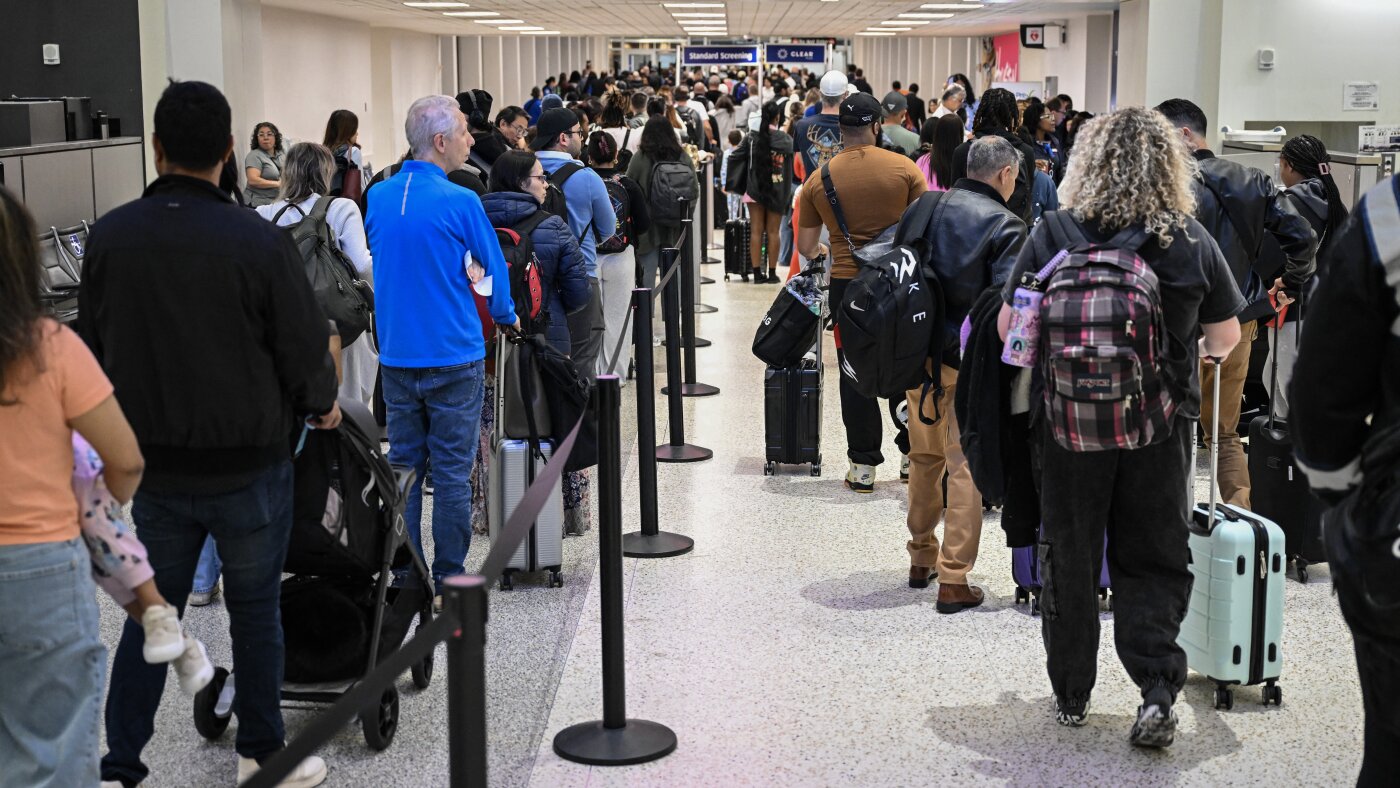
Airport security lines are long. Here’s what to know if you’re flying

Schumer gambit fails as DHS shutdown hits 36 days and airport lines grow
-

 Detroit, MI3 days ago
Drummer Brian Pastoria, longtime Detroit music advocate, dies at 68
-

 Oklahoma1 week ago
Family rallies around Oklahoma father after head-on crash
-

 Nebraska1 week ago
Wildfire forces immediate evacuation order for Farnam residents
-

 Georgia6 days ago
How ICE plans for a detention warehouse pushed a Georgia town to fight back | CNN Politics
-

 Alaska7 days ago
Police looking for man considered ‘armed and dangerous’
-
 Science1 week ago
Federal EPA moves to roll back recent limits on ethylene oxide, a carcinogen
-

 Minnesota1 week ago
Many with Minnesota ties make Forbes list of world’s richest people
-
 Science1 week ago
H5N1 bird flu spreads to sea otters and sea lions along San Mateo coast, wildlife experts say