Politics
Tracking Trump’s Cabinet Nominations


President-elect Donald J. Trump is assembling the cast of characters who will serve in his cabinet and in other senior positions during his second term. The cabinet always comprises at least 16 positions — the vice president and the heads of the 15 executive departments — and presidents have discretion to elevate other officials, like the White House chief of staff, to the cabinet level. This page will be updated as new announcements are made.
3 of 24 announced
Mr. Ratcliffe is a former Texas congressman who served as director of national intelligence during Mr. Trump’s first term.
Read more › A former congressman from Long Island who ran unsuccessfully for governor in 2022, Mr. Zeldin is an avid supporter of Mr. Trump who voted against certifying the results of the 2020 election. During Mr. Zeldin’s tenure in the House of Representatives, he voted against clean water legislation at least a dozen times and clean air legislation at least half a dozen times, according to a scorecard from the League of Conservation Voters.
Read more › Ms. Stefanik, who represents an upstate New York district in the House and is a member of the Republican leadership in the chamber, has been a vocal supporter of Mr. Trump. She emerged as a key ally during Mr. Trump’s first impeachment proceeding. She has minimal experience in foreign policy and national security. Read more › 4 named Mr. Vance, a former venture capitalist in Silicon Valley, is a relative political newcomer. He rose to fame in 2016 after the publication of “Hillbilly Elegy,” his best-selling memoir about his experiences growing up in Appalachia. He previously criticized Mr. Trump as “reprehensible,” but won Mr. Trump’s backing when he ran successfully for Senate in 2022 by embracing Mr. Trump’s politics and his lies that the 2020 presidential election was stolen.
Read more › Ms. Wiles, the political tactician who managed Mr. Trump’s 2024 presidential campaign, has worked in Republican campaigns and administrations, at both the federal and state levels, since the Reagan era. She was the only campaign manager to survive an entire campaign working for Mr. Trump, and will be the first woman to serve as White House chief of staff.
Read more › Mr. Homan, who served as a senior immigration official in Mr. Trump’s first administration, will manage Mr. Trump’s campaign promise of widespread deportations of undocumented immigrants and the tightening of measures that allow some of them to stay in the country legally. He has decades of experience in immigration enforcement.
Read more › A former Green Beret and current Florida congressman, Mr. Waltz is widely regarded on Capitol Hill as a hawk on China and Iran. He served multiple combat tours in Afghanistan and opposed President Biden’s withdrawal of troops from the country. Read more › 2 named Mr. Lutnick is the chairman and chief executive of Cantor Fitzgerald, a financial services firm. A longtime registered Democrat, he has said that the party moved away from his interests and that he is now a Republican. He donated $1 million to Mr. Trump’s inauguration in 2017 and appeared on an episode of “The Apprentice” while Mr. Trump was the show’s host. He has no known experience in the federal government.
Read more › Ms. McMahon is a major donor to Mr. Trump, a onetime Senate candidate from Connecticut and a former executive of a professional wrestling empire that she founded with her husband. She served in Mr. Trump’s first cabinet as the head of the Small Business Administration.
Read more › Senate confirmation required
No confirmation required
Transition officials



new video loaded: How JD Vance Is Being Tested as Trump’s Chief Defender

By Zolan Kanno-Youngs, Gilad Thaler, Jon Miller, Nikolay Nikolov, Rafaela Balster and Jordan Gantz
April 17, 2026
Politics
Grieving mothers scorch Dem lawmaker after he pivots during hearing to attack ‘MAGA Republicans’

NEWYou can now listen to Fox News articles!
A congressional hearing featuring the victims of crimes tied to illegal immigration erupted into a tense confrontation Thursday.
Rep. Hank Johnson, D-Ga., drew fierce backlash from grieving mothers and Rep. Brandon Gill, R-Texas, for appearing to dismiss their tragedies while pivoting to attacks on “MAGA Republicans.”
The fiery exchange happened during a hearing focused on “The Human Toll of Sanctuary Policies,” during which Johnson claimed the victims’ families’ comments were a “Steve Miller-approved” stunt with the sole purpose of “stir[ring] up passion and prejudice against immigrants who are people of color.”
SLAIN COLLEGE STUDENT’S MOTHER VOWS ‘FIGHT FOR JUSTICE’ AFTER ILLEGAL IMMIGRANT CHARGED IN CHICAGO KILLING
After offering brief condolences to the families of victims allegedly killed and critically injured by illegal immigrants, Johnson immediately pivoted to a partisan attack, arguing the committee should instead be holding hearings on the “human toll” of the “Trump MAGA tax cuts,” Trump’s foreign policy with Iran or the “cover up of the Epstein files.”
He went on to list a string of violent crimes committed by White men and noted the death of Renee Good, who was killed by federal authorities in January while protesting immigration enforcement.
Rep. Hank Johnson, D-Ga., claimed during a congressional hearing Thursday that the victims’ families’ comments were a “Steve Miller-approved” stunt with the sole purpose of “stir[ring] up passion and prejudice against immigrants who are people of color.” (Jim Vondruska/Getty Images)
“I’m not minimizing the tragedy that is before us today with you three women, but the other tragedies at the hands of non-immigrants are just as important,” Johnson said.
He also accused the Republican majority of strategically “sandwich[ing]” a Democrat witness between the victims’ families for “dramatic effect.”
Gill fired back, calling Johnson’s tirade “one of the most disgusting testimonies I have ever heard” and blaming Democrat lawmakers for the tragedies during four years of open borders under the Biden administration.
Rep. Brandon Gill, R-Texas, called Johnson’s tirade “one of the most disgusting testimonies I have ever heard.” (Tom Williams/CQ-Roll Call, Inc via Getty Images)
DHS SLAMS CALIFORNIA ‘SANCTUARY’ COUNTY AFTER MOM ALLEGEDLY MURDERED BY 2 HONDURAN NATIONALS
However, the most stinging reply to Johnson’s comments came from Jen Heiling, the mother of victim Brady Heiling, 18, who was killed along with his girlfriend, Hallie Helgeson, 18, in 2025, when an illegal immigrant from Honduras was allegedly driving the wrong way on I-90 while intoxicated, crashing into the teens’ car.
“You can put me in whatever order, in whatever seat. My tragedy is never going to be OK,” Heiling told Johnson. “Today’s our day. Hear us. Leave your butts in your seat. I don’t want to hear your butts.”
A woman holds up a sign that says “Sanctuary policy set my daughter’s perpetrator free, explain that” during a House Judiciary Committee hearing March 4 in the Rayburn House Office Building in Washington, D.C. (Heather Diehl/Getty Images)
She described how her 11-year-old and 16-year-old children are still waiting for the teens to come home, noting that her garage stall remains empty because her son’s car is still being held as police evidence.
“We can’t pick a headstone because that makes it too real. But you can sit here and tell us about what kind of hearing this should be,” Heiling said. “Renee Good is not the same as angel families. She made a choice. … Brady and Hallie didn’t get a choice. … They were living [by] American laws … and they were stolen by somebody who doesn’t care.”
CLICK HERE TO DOWNLOAD THE FOX NEWS APP
Patricia Fox, mother of Carissa Aspnes, who was seriously injured in a hit-and-run allegedly caused by an illegal immigrant, followed Heiling’s remarks by shooting back at Johnson’s comments about race, noting, “I don’t know if anybody has noticed, but I am not White. I wake up Brown every day.”
“I’m not sure what race has to do with any of this,” Fox said. “There’s four kids that we talked about today, and y’all can’t seem to stay on topic for what — an hour of your time.
“Today, we’re talking about sanctuary policies and how they have wrecked our families. Y’all come and y’all feed Carissa. You get her up from her bed using a crane, and then you tell me and lecture me what this hearing should be about.”

WASHINGTON — Democrats who once saw retaking the U.S. Senate as a long shot in 2026 have newfound hope thanks to an unpopular president and a California donor machine that has snapped into action.
Californians provided the most out-of-state cash to Democrats in nearly every hotly contested race, and in several cases gave more than in-state donors, according to a Times analysis of campaign finance filings covering the first three months of 2026.
Sen. Jon Ossoff of Georgia, who took in more than $14 million overall, received nearly as much from California backers as from supporters in his home state among donors who contributed at least $200 and whose identities were disclosed.
James Talarico, a Democratic Senate candidate in Texas, has raised a staggering $27 million so far this year, with California donors contributing just under $1.2 million to back his campaign — second only to Texas supporters among those donors whose names were disclosed.
Donors who give less than $200 are not required to be identified in campaign finance reports and made up a significant share of the donors to Ossoff’s and Talarico’s campaigns.
Republicans currently have control of the Senate with 53 of the chamber’s 100 seats. This year 35 seats are at play, including special elections in Florida and Ohio.
GOP still winning a key cash race
While more of the seats up for grabs are in Republican hands, polling showing the potential for tight races in several of them has given Democrats hope that they might be able to shrink or reverse their deficit in November.
Top Democratic candidates have out-raised their GOP rivals in the most competitive Senate races, but Republicans are winning the cash race among big-money committees that can accept checks far larger than the $7,000 cap on donations to candidate committees.
Those Democratic candidates have continued a tradition of relying on donors in the country’s most populous state to bankroll their campaigns.
“California has been a rich gold mine for many a candidate and continues to be that,” said Michael Beckel, director of money in politics reform at Issue One, a bipartisan advocacy group.
Democratic Senate candidates in a few races raised more from California donors than from donors in their home states, according to campaign finance reports filed Wednesday.
Democratic former Rep. Mary Peltola of Alaska, who is challenging incumbent Republican Sen. Dan Sullivan, brought in nearly $900,000 from California donors who had contributed at least $200. Alaska donors contributed just over $520,000 to Peltola in the same time period.
Two of the three leading Democratic hopefuls in Michigan’s open Senate race, Rep. Haley Stevens and physician Abdul El-Sayed, reported taking in more from California donors than from donors in Michigan. California was the second biggest bank of support for the other top Democratic contender, state Sen. Mallory McMorrow.
And in Nebraska, independent Dan Osborn, who is challenging incumbent Republican Sen. Pete Ricketts, took in $80,000 more from disclosed California donors than from Nebraskans.
Dozens of California donors gave to at least five Senate candidates across the country, according to The Times’ analysis of the filing data.
Burbank playwright and screenwriter Winnie Holzman has donated to Democratic candidates in nine key races and said she has been inspired to give to them — and other candidates and political groups — because of concerns about the policies of President Trump’s administration and what she sees as its violation of the law.
“This isn’t just about who is in the Senate,” said Holzman, who wrote the script for the play “Wicked” and co-wrote its movie adaptations. “But if enough Democrats were in the Senate right now, there would be a lot more ability to push back on this.”
The impressive fundraising hauls by Democrats come with a significant caveat.
The two most prominent political committees that support Republican Senate candidates — the party-affiliated National Republican Senatorial Committee and the Senate Leadership Fund super PAC, have both outraised rival Democratic groups by a significant margin this cycle.
For the NRSC, an $11.5-million fundraising advantage since the start of 2025 has translated to a modest $2-million advantage in cash in the bank through the end of February compared with the Democratic Senatorial Campaign Committee.
But the Senate Leadership Fund, which can accept unlimited amounts of cash from donors, had $91.6 million more to spend at the end of March than the Democratic rival Senate Majority PAC.
And the pro-Trump super PAC MAGA Inc. had a stunning $312 million in the bank at the end of February.
Money raised by candidate campaign committees does, however, bring some advantages over money raised by other committees. Most significantly, candidates are able to buy advertising at cheaper rates than other political committees.
That is an important distinction in a year when advertising spending in Senate races is expected to top $2.8 billion.
The Senate map
While political analysts expect that Democrats will likely perform well in congressional races — with early signs pointing to a strong possibility that the party regains control of the House — winning control of the Senate would be a much taller order.
“The Senate is going to be won or lost in red states,” said Kyle Kondik, managing editor of Sabato’s Crystal Ball at the University of Virginia’s Center for Politics.
Even in the best-case scenario for Democrats, to retake control of the chamber they would probably need to win in at least two states such as Iowa, Alaska, Ohio or Texas, all of which went to Trump in the 2024 presidential election by double-digit margins.
With the vast sums likely to be raised — and spent — by both sides, Kondik said that fundraising can reach a point of diminishing returns.
“You’d rather have more than less, obviously, but the actual effect is pretty debatable,” he said.
And history shows that fundraising prowess doesn’t necessarily translate to electoral success in November.
Take the example of Texas Democrat Beto O’Rourke.
In his 2018 challenge of incumbent Republican Ted Cruz, O’Rourke brought in more than $80 million, more than double Cruz’s fundraising haul of $35 million.
But it wasn’t enough to put the then-congressman from El Paso over the top.
O’Rourke lost the race by about 2.5 percentage points.

Chainalysis Details ‘Shadow Crypto Economy’ Exposure as Grinex Suspends Operations

A Protracted US–Iran War Could Strain Climate Finance From Wealthy Countries to Developing Nations – Inside Climate News

Ellie Kildunne built her powerful body by keeping things simple – focusing on these fundamentals

‘Roommates’ Review: Sadie Sandler Navigates the Highs and Lows of Freshman Year in Chandler Levack’s Formulaic Netflix Comedy

FACT FOCUS: RFK Jr. says the US is limiting measles outbreaks better than the rest of the world

Florida High School Football Rankings: Top 25 teams – Oct. 21

How old is Bo Nix? What to know about Oregon quarterback ahead of 2024 NFL Draft

Cleary's 21 help Le Moyne down Central Connecticut State 69-64 in OT

99th annual Pony Swim held in Virginia

Indiana Members Credit Union announced as new anchor tenant at Bottleworks District

Grieving mothers scorch Dem lawmaker after he pivots during hearing to attack ‘MAGA Republicans’

Pressure mounts on Peru’s election authorities amid presidential race delay

Tornadoes touch down in Rochester area

Minnesota Republicans reveal which far-left candidate they want to challenge in open Senate race

Swedish rights groups slam ‘honest living’ criteria for migrants
-

 Ohio3 days ago
‘Little Rascals’ star Bug Hall arrested in Ohio
-

 Arkansas1 week ago
Arkansas TV meteorologist Melinda Mayo retires after nearly four decades on air
-

 Austin, TX1 week ago
ABC Kite Fest Returns to Austin for Annual Celebration – Austin Today
-

 Politics3 days ago
Dem fundraising giant in the hot seat as GOP lawmakers demand answers over dodged subpoena
-
 Science3 days ago
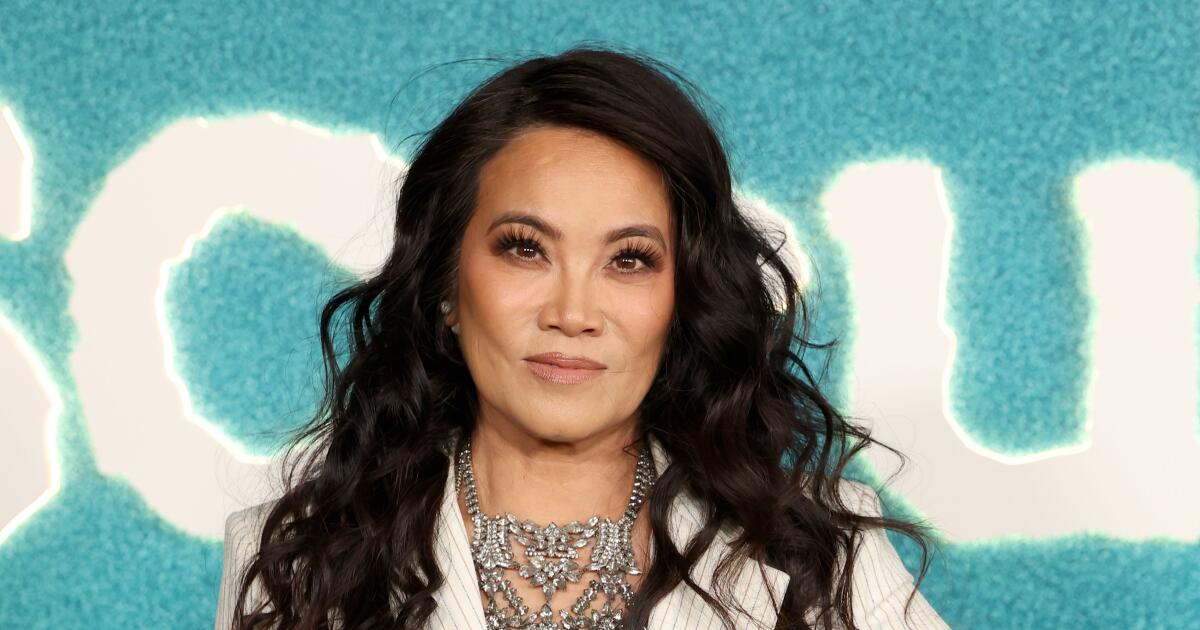
‘Dr. Pimple Popper’ Sandra Lee had a stroke last fall. Here’s how the TV doc is bouncing back
-

 Politics6 days ago
Trump blasts Spanberger ahead of Virginia meetings, says state faces tax base exodus like New York, California
-

 Health1 week ago
Woman discovers missing nose ring traveled to her lungs, causing month-long cough
-

 Detroit, MI1 week ago
Byron Allen’s “Comics Unleashed” replacing Colbert’s “Late Show”