Politics
The California Democratic Party's premiere event will have two notable no-shows

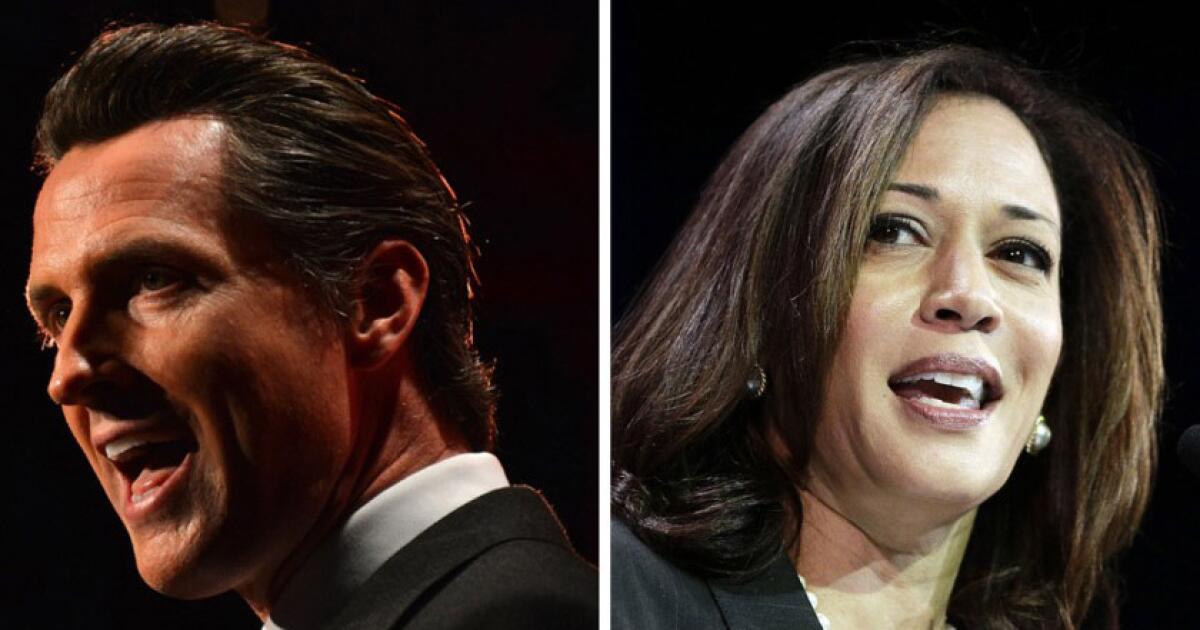
Thousands of California Democrats will gather this weekend to be courted by gubernatorial and potential presidential candidates, rage against the Trump administration and organize for the 2026 election.
However, the state’s two most prominent Democrats — former Vice President Kamala Harris and Gov. Gavin Newson — will not be attending the multiday gathering of roughly 4,000 party delegates, activists, donors, labor leaders and other powerful voices in the largest Democratic state in the nation, according to a source familiar with the event’s planning.
Their absences are notable given speculation about their political futures. Newsom and Harris are both viewed as potential 2028 presidential candidates. Harris also may jump into California’s 2026 race for governor, and is expected to make a decision by the end of the summer.
Both were invited to the state party convention in Anaheim, according to the source. Harris is expected to send a video greeting attendees. Harris representatives did not respond to multiple requests for comment.
Newsom is scheduled to participate in a Democratic Governors’ Assn.’ gathering in Portland to coordinate efforts to fight Trump’s tariffs, a spokesperson said. But the gathering doesn’t begin until Sunday, the final day of the state party convention. A letter from the governor to delegates is included in the convention program.
Darry Sragow, a veteran Democratic strategist, said there was little benefit to either one attending the gathering.
“There’s no question that well-known, well-defined political figures like the governor and former vice president could be met with mixed reactions,” he said. “If I was advising them, I’m honestly not sure I could come up with a justification for their going. What’s the upside?”
Prominent California Democrats have routinely faced backlash from liberal delegates at the party’s annual conventions. Anti-fracking advocates interrupted a speech by former Gov. Jerry Brown over his support for the controversial oil extraction practice and the late Sen. Dianne Feinstein was booed during her 1990 speech supporting the death penalty. Her then-gubernatorial campaign turned the latter into a television advertisement aimed at that era’s more moderate electorate.
Newsom, once a darling at such conventions, could possibly face similar fallout among party loyalists because of recent statements about opposing transgender athletes being allowed to compete in women’s sports as well as bantering with conservative heroes such as Steve Bannon and Charlie Kirk on his podcast.
If she attended, Harris could be criticized for complicity in hiding former President Biden’s alleged cognitive decline while in office, an allegation lodged in a recent book that argues that deception led to Trump’s 2024 victory.
However, Harris has the luxury of time as she decides what to do next in her political career. Harris’ delay in making a decision about the gubernatorial contest, however, has drawn scorn from some Democrats who have announced their candidacies.
Every prominent Democrat who has announced a gubernatorial run is expected to attend the convention.
Lt. Gov. Eleni Kounalakis and state Supt. of Public Instruction Tony Thurmond have official speaking roles because they currently serve in elected office, as does former state Controller Betty Yee because she is the party’s vice chair.
Former state Senate President Pro Tem Toni Atkins, former U.S. Secretary of Health and Human Services Xavier Becerra, businessman Stephen J. Cloobeck, former Rep. Katie Porter and former Los Angeles Mayor Antonio Villaraigosa will also be wooing attendees.
Potential 2028 presidential candidates Minnesota Gov. Tim Walz and N.J. Sen. Cory Booker are also scheduled to speak to California Democratic Party delegates at the Anaheim Convention Center.
In addition to addressing delegates at caucus meetings, such as labor, environmental, Latino and women voters, candidates will meet with donors and court activists throughout the weekend. Social gatherings include a Friday night fireworks show, an ice cream social and a party titled “Punk the System” hosted by state Democrats as well as the powerful nurses’ and teachers’ lobbies.
“Dance. Drink. Rage for Democracy,” reads the invite to the gathering.
Candidates are also hosting events — Yee is offering “healthy breakfast bites” and coffee on Saturday morning. Cloobeck, a billionaire who made his fortune in real estate and hospitality, is planning a reception that night with the theme “Fight for California, Celebrate CA Dems!”
The longtime donor and fundraiser for Democrats and philanthropic causes has never previously run for elected office. In his first introduction to state party activists, Cloobeck said he plans to focus on lessons from the 2024 election and urging Democrats not to be tone deaf to the electorate’s needs.
“The party should work for everyone,” Cloobeck said. “It can’t cater to only special interests or well-connected individuals.”
State party chairman Rusty Hicks, who is widely expected to win reelection at the convention, said California Democrats have reflected and reckoned with last year’s election results, “some good and some bad and some ugly.”
While the party bucked national trends by performing strongly in congressional races, it also unexpectedly lost legislative seats and saw a decline in voter turnout among Latinos, Asian Americans and young people, Hicks said.
“We can’t just compete in targeted seats,” he said. “We have to compete everywhere in a different way. What happened in ‘24 — the good and the bad — informs what our work is in ‘26.”
Times staff writer Taryn Luna in Sacramento contributed to this report.



Politics
Mamdani’s response to Trump’s Iran strike sparks conservative backlash: ‘Rooting for the ayatollah’

NEWYou can now listen to Fox News articles!
New York City’s socialist Mayor Zohran Mamdani is facing blowback from conservatives on social media over his post condemning the U.S. attack on Iran that led to the killing of Iran’s supreme leader, Ayatollah Ali Khamenei.
On Saturday, as a joint strike on Iran by the United States and Israel was developing, Mamdani blasted the Trump administration’s decision in a post on X that has been viewed roughly 20 million times.
“Today’s military strikes on Iran — carried out by the United States and Israel — mark a catastrophic escalation in an illegal war of aggression,” Mamdani wrote.
“Bombing cities. Killing civilians. Opening a new theater of war. Americans do not want this. They do not want another war in pursuit of regime change.”
New York City Mayor Zohran Mamdani speaks to reporters during a news conference in New York Feb. 17, 2026. (AP Photo/Seth Wenig)
Mamdani said Americans prefer “relief from the affordability crisis” before speaking directly to Iranians in New York City.
“You are part of the fabric of this city — you are our neighbors, small business owners, students, artists, workers, and community leaders,” Mamdani said. “You will be safe here.”
The post was quickly slammed by conservatives on social media making the case that Mamdani’s response appeared sympathetic to Iran’s brutal regime and pointing to his lack of public reaction to the Iranian protesters killed in recent years.
“Comrade Mayor is rooting for the Ayatollah,” GOP Sen. Ted Cruz posted on X. “They can chant together.”
OBAMA OFFICIAL WHO BACKED IRAN DEAL SPARKS ONLINE OUTRAGE WITH REACTION TO TRUMP’S STRIKE: ‘SIT THIS ONE OUT’
“Do u say anything pro American ?” Fox News host Brian Kilmeade posted on X. “do u know any Iranians – ? they hate @fr_Khamenei they celebrate his death, you should be celebrating his death ! hes killed thousands of American’s and just killed 30k Iranians, did u even say a word about that? You are an embarrassment !! Please quit.”
Sen. Ted Cruz, R-Texas, questions Pam Bondi, President-elect Donald Trump’s nominee to be attorney general, during her Senate Judiciary Committee confirmation hearing in Hart building Jan. 15, 2025. (Tom Williams/CQ-Roll Call, Inc via Getty Images)
“I don’t feel safe in New York listening to someone like you, Mamdani, who sympathizes with the regime that killed more than 30,000 unarmed Iranians in less than 24 hours,” Iranian American journalist Masih Alinejad posted on X.
“We Iranians do not allow you to lecture us about war while you had nothing to say when the Islamic Republic shot schoolgirls and blinded more than 10,000 innocent people in the streets. You were busy celebrating the hijab while women of my beloved country Iran were jailed and raped by Islamic Security forces for removing it.
“And NOW you find your voice to defend the regime? No. I will not let you claim the moral high ground. The people of Iran want to be free. Where were you when they needed solidarity?”
CLICK HERE TO DOWNLOAD THE FOX NEWS APP
“How is it that you can’t differentiate between good and evil?” Billionaire hedge fund manager Bill Ackman posted on X. “Why is this so hard for you?”
“It takes a particular kind of audacity, or ignorance, for a city mayor to appoint himself the conscience of American foreign policy while his constituents step over garbage on their way to work,” GOP Rep. Nancy Mace posted on X. “History will not remember his bravery. It will not remember him at all.”
“Iranian New Yorkers are thrilled today and see right through you,” Republican New York City Councilwoman Vickie Paladino posted on X.
Bill Ackman, CEO of Pershing Square Capital Management LP, speaks during the WSJ D.Live global technology conference in Laguna Beach, Calif., Oct. 17, 2017. (Patrick Fallon/Bloomberg/Getty Images)
“When Kuwait, Saudi Arabia, Qatar, Turkey, UAE, Bahrain all support today’s operation eliminating world’s #1 sponsor of terror, but New York City’s Mayor @ZohranMamdani is shilling for Iran,” Republican New York City Councilwoman Inna Vernikov posted on X.
Fox News Digital reached out to Mamdani’s office for comment.
Shortly after Mamdani’s post, it was announced by President Trump and Israeli officials that the military operation resulted in Khamenei’s death.
Israeli leaders confirmed Khamenei’s compound and offices were reduced to rubble early Saturday after a targeted strike in downtown Tehran.
“Khamenei was the contemporary Middle East’s longest-serving autocrat. He did not get to be that way by being a gambler. Khamenei was an ideologue, but one who ruthlessly pursued the preservation and protection of his ideology, often taking two steps forward and one step back,” Behnam Ben Taleblu, senior director of FDD’s Iran program, told Fox News Digital.
Related Article

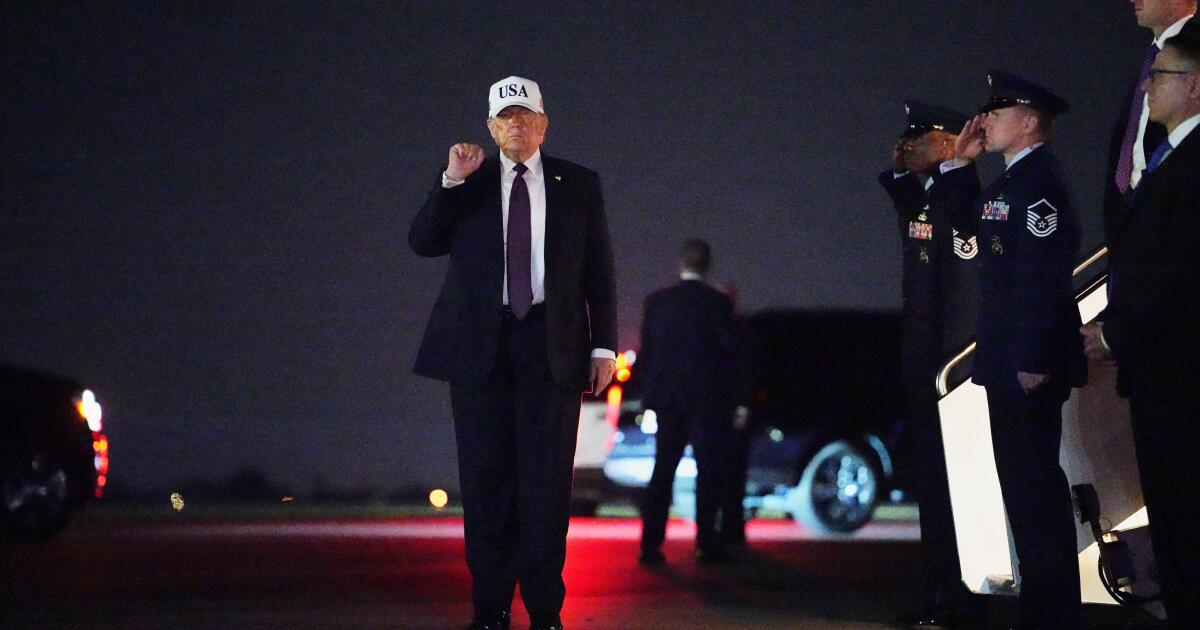
WASHINGTON — For a decade, President Trump promised to end what he calls forever wars, casting himself as a leader opposed to prolonged conflicts in the Middle East and who would rather pursue peace in the world.
Now, early in his second term, Trump is taking military action against Iran that could expand well beyond a limited effort to halt the country’s nuclear program.
In a video posted on Truth Social, the commander in chief said American forces also plan to “raze their missile industry to the ground” and “annihilate their navy.” He warned members of Iran’s military to surrender or “face certain death.” And urged the Iranian people to take the moment as an opportunity to rise up against their government.
“This regime will soon learn that no one should challenge the strength and might of the United States armed forces,” Trump said.
A few hours after relaying that message, Trump confirmed in a separate social media post that Ayatollah Ali Khamenei, the supreme leader of Iran, was among those killed by U.S. and Israeli strikes. Even with his death, Trump said that “the heavy and pinpoint bombing” would continue in Iran “as long as necessary to achieve our objective of PEACE THROUGHOUT THE MIDDLE EAST AND, INDEED, THE WORLD!”
Trump, who has been considering a strike on Iran for several weeks, acknowledged he reached the decision to attack Iran while aware of the human toll that could come with it.
“The lives of courageous American heroes may be lost, and we may have casualties. That often happens in war,” he said. “But we are doing this, not for now, we are doing this for the future, and it is a noble mission.”
Trump’s military campaign in Iran is a sharp turn in tone for a president who has long been critical of open-ended conflicts in the Middle East, and marks a shift from an America-first agenda message that helped him return to the White House.
“I’m not going to start a war. I’m going to stop wars,” Trump said in his November 2024 victory speech as he promised to focus national resources on domestic priorities rather than foreign conflicts.
As Trump advocated to bring home American forces from deployments around the world and to withdraw from key defense treaties, his position resonated with a war-weary electorate in the lead-up to the election.
Fewer than six in 10 Americans (56%) believed the United States should take an active role in world affairs ahead of the election — the second-lowest level recorded since the question was first asked in 1974, according to polling by the Council on Foreign Affairs.
Trump’s posture on war in the Middle East had been largely consistent before he ran for office.
In 2013, he criticized then-President Obama’s negotiations with Tehran, predicting in a post on Twitter that Obama would “attack Iran because of his inability to negotiate properly.” That same year, Trump warned that “our horrendous leadership could unknowingly lead us into World War III.”
And in a heated February 2016 debate, Trump attacked former Florida Gov. Jeb Bush, stating that his brother George W. Bush lied about Iraq’s nuclear capabilities to get the U.S. into the Iraq war. Trump called the Iraq war a “big, fat mistake” that “destabilized the Middle East.”
“They lied. They said there were weapons of mass destruction. There were none, and they knew there were none,” he said.
At the time of the Iraq war, however, Trump had said he supported it.
Trump’s confrontation with Iran bears little resemblance to his earlier rebukes.
Trump has yet to present evidence of an imminent threat to the United States from Iran’s nuclear program — a capability he claimed to have “obliterated” just eight months ago — and has instead framed the military campaign as one to ensure Tehran never develops nuclear weapons at all.
“It is a very simple message,” he said. “They will never have a nuclear weapon.”
Trump’s shift has already drawn the attention of congressional Democrats, many of whom are calling the president out for backing out on his promise to end foreign wars — and are demanding that he involve Congress in any further military actions.
“Regardless of what the President may think or say, he does not enjoy a blank check to launch large-scale military operations without a clear strategy, without any transparency or public debate, and not without Congressional approval,” Sen. Alex Padilla (D-Calif.) said.
Sen. Adam Schiff (D-Calif.) criticized Trump for “drawing the country into yet another foreign war that Americans don’t want and Congress has not authorized.”
The military involvement in Iran is not the first time that members of Congress have complained about the Trump administration’s willingness to sideline the legislative branch on decisions that could trigger broader conflicts this year.
In January, Trump ordered military forces to capture former Venezuelan President Nicolás Maduro and said the United States would run the sovereign nation until further notice. He threatened military action in Colombia, whose leftist President Gustavo Petro has been one of Trump’s most vocal critics.
Trump has alienated allied nations when he said he was willing to send American troops to seize Greenland, a semiautonomous territory of Denmark. And on Friday, he said U.S. is in talks with Havana and raised the possibility of a “friendly takeover of Cuba” without offering any details on what he meant.
His actions have coincided with his annoyance at not being awarded the Nobel Peace Prize. At one point, the president said he no longer felt an “obligation to think purely of Peace” because he didn’t get the recognition.
Trump’s shifting tone, and his use of violent war imagery in his pretaped remarks about Iran, have rattled even part of his base.
“I did not campaign for this. I did not donate money for this,” said former Rep. Marjorie Taylor Greene, a conservative who recently left Congress after a bitter fight with Trump. “This is not what we thought MAGA was supposed to be. Shame!”
Republican leaders, however, are largely standing behind the president.
Senate Majority Leader John Thune (R-S.D.) said Iran “posed a clear and unacceptable threat” to the United States and has refused “the diplomatic off-ramps.” House Speaker Mike Johnson (D-La.) said Trump took the action after exhausting “every effort to pursue peaceful and diplomatic solutions.”
Other top Republican lawmakers rallied behind Trump, too.
“The butcher’s bill has finally come due for the ayatollahs,” Sen. Tom Cotton, the chairman of the Senate Intelligence Committee, wrote in a post on X. “May God bless and protect our troops on this vital mission of vengeance, and justice, and safety.”
Politics
Iran fires missiles at US bases across Middle East after American strikes on nuclear, IRGC sites

NEWYou can now listen to Fox News articles!
Iran launched missile and drone strikes targeting U.S. military facilities in multiple Middle Eastern countries Friday, retaliating after coordinated U.S.–Israeli strikes on Iranian military and nuclear-linked sites.
Explosions were reported in or near areas hosting American forces in Bahrain, Qatar, the United Arab Emirates, Kuwait and Jordan, according to regional officials and state media accounts. Several of those governments said their air defense systems intercepted incoming projectiles.
It remains unclear whether any U.S. service members were killed or injured, and the extent of potential damage to American facilities has not yet been confirmed. U.S. officials have not publicly released casualty figures or formal damage assessments.
Iran’s Islamic Revolutionary Guard Corps (IRGC) described the operation as a direct response to what Tehran called “aggression” against Iranian territory earlier in the day. Iranian officials claimed they targeted U.S. military infrastructure and command facilities.
Explosions were reported in or near areas hosting American forces in Bahrain, pictured above. (Photo by Petty Officer 2nd Class Adelola Tinubu/U.S. Naval Forces Central Command/U.S. 5th Fleet )
The United States military earlier carried out strikes against what officials described as high-value Iranian targets, including IRGC facilities, naval assets and underground sites believed to be associated with Iran’s nuclear program. One U.S. official told Fox News that American forces had “suppressed” Iranian air defenses in the initial wave of strikes.
Tomahawk cruise missiles were used in the opening phase of the U.S. operation, according to a U.S. official. The campaign was described as a multi-geographic operation designed to overwhelm Iran’s defensive capabilities and could continue for multiple days. Officials also indicated the U.S. employed one-way attack drones in combat for the first time.
IF KHAMENEI FALLS, WHO TAKES IRAN? STRIKES WILL EXPOSE POWER VACUUM — AND THE IRGC’S GRIP
Smoke rises after reported Iranian missile attacks, following strikes by the United States and Israel against Iran, in Manama, Bahrain, Feb. 28, 2026. (Reuters)
Iran’s retaliatory barrage targeted countries that host American forces, including Bahrain — home to the U.S. Navy’s Fifth Fleet — as well as Qatar’s Al Udeid Air Base and the UAE’s Al Dhafra Air Base. Authorities in those nations reported intercepting many of the incoming missiles. At least one civilian was killed in the UAE by falling debris, according to local authorities.
Iranian officials characterized their response as proportionate and warned of additional action if strikes continue. A senior U.S. official described the Iranian retaliation as “ineffective,” though independent assessments of the overall impact are still developing.
Smoke rises over the city after the Israeli army launched a second wave of airstrikes on Iran in Tehran on Feb. 28, 2026. (Fatemeh Bahrami/Anadolu via Getty Images)
CLICK HERE TO DOWNLOAD THE FOX NEWS APP
Regional governments condemned the strikes on their territory as violations of sovereignty, raising the risk that additional countries could become directly involved if escalation continues.
The situation remains fluid, with military and diplomatic channels active across the region. Pentagon officials are expected to provide further updates as damage assessments and casualty reviews are completed.
Fox News’ Jennifer Griffin contributed to this report.
Related Article

Pittsburgh and Vegas take the ice for non-conference matchup

Protestors in downtown Augusta speak out after strikes on Iran

San Francisco Ballet cancels upcoming performances at Kennedy Center

14-year-old girl shot on Cleveland’s East Side

Multiple people injured in mass shooting on 6th St; Austin Police investigating

Florida High School Football Rankings: Top 25 teams – Oct. 21

Cleary's 21 help Le Moyne down Central Connecticut State 69-64 in OT

How old is Bo Nix? What to know about Oregon quarterback ahead of 2024 NFL Draft

99th annual Pony Swim held in Virginia

Indiana Members Credit Union announced as new anchor tenant at Bottleworks District

Mamdani’s response to Trump’s Iran strike sparks conservative backlash: ‘Rooting for the ayatollah’

Activists hail ‘historic’ EU’s decision on accessible abortion

A long-buried recording and the Supreme Court of old (CT+) : Consider This from NPR

2 Survivors Describe the Terror and Tragedy of the Tahoe Avalanche

Iran fires missiles at US bases across Middle East after American strikes on nuclear, IRGC sites
-

 World3 days ago
Exclusive: DeepSeek withholds latest AI model from US chipmakers including Nvidia, sources say
-

 Massachusetts4 days ago
Mother and daughter injured in Taunton house explosion
-

 Montana1 week ago
2026 MHSA Montana Wrestling State Championship Brackets And Results – FloWrestling
-

 Louisiana6 days ago
Wildfire near Gum Swamp Road in Livingston Parish now under control; more than 200 acres burned
-

 Denver, CO4 days ago
10 acres charred, 5 injured in Thornton grass fire, evacuation orders lifted
-

 Technology1 week ago
YouTube TV billing scam emails are hitting inboxes
-

 Technology1 week ago
Stellantis is in a crisis of its own making
-

 Politics1 week ago
OpenAI didn’t contact police despite employees flagging mass shooter’s concerning chatbot interactions: REPORT