Politics
Texas emergency rooms not bound by Biden admin's guidance on emergency abortion, federal court rules


A federal appeals court ruled on Tuesday that the U.S. government does not have the authority to force Texas emergency room doctors to perform abortions if necessary to stabilize emergency room patients.
Reuters reported that the ruling sided with Texas in a lawsuit claiming the Biden administration was overstepping its authority on abortion.
A panel with the 5th Circuit Court of Appeals ruled unanimously on the matter as several lawsuits pertaining to when abortions can be performed in states with abortion ban exceptions for medical emergencies make their way through the courts.
In July 2022, the Biden administration issued guidance saying the Emergency Medical Treatment and Active Labor Act (EMTALA), which is a federal law that governs emergency rooms, can require abortion if it is necessary to stabilize a patient with a medical emergency, despite abortion being required in the state where the emergency room is located.
PREGNANT TEXAS WOMAN CHALLENGES STATE ABORTION BAN WITH LAWSUIT AFTER RECEIVING FETAL FATAL DIAGNOSIS
Anti-abortion demonstrators gather for a rally in Federal Building Plaza on June 24, 2023 in Chicago, Illinois. (Scott Olson/Getty Images)
The guidance was issued shortly after the U.S. Supreme Court overturned the landmark Roe v. Wade ruling in June 2022.
The overturning of Roe v. Wade turned power over to the states to allow, limit or ban abortion altogether.
TEXAS JUDGE RULES STATE’S ABORTION LAW IS TOO RESTRICTIVE FOR WOMEN WITH PREGNANCY COMPLICATIONS
Following the overturning of Roe v. Wade, state supreme courts will be a key battleground in the fight over abortion rights. (AP Photo/Matt York, File)
The ruling came in the court’s opinion in Dobbs v. Jackson Women’s Health Organization, which centered on a Mississippi law that banned abortion after 15 weeks of pregnancy.
A lower court agreed, in August 2022, that there was no mention in EMTALA on what a doctor should do if there is a conflict between the health of a mother and the unborn child. The court also agreed that the Texas abortion ban “fills that void” by including narrow exceptions to save a mother’s life or prevent serious bodily injury in some cases.
Writing for the 5th Circuit Court panel, Judge Kurt Engelhardt said EMTALA includes a requirement to deliver an unborn child, and it was up to doctors to balance the mother’s medical needs, as well as those for the fetus, while complying with state abortion laws.
TEXAS ABORTION BAN CHALLENGED AS ORAL ARGUMENTS BEGIN
A federal appeals court ruled that the U.S. government does not have the authority to force Texas emergency room doctors to perform abortions if necessary to stabilize emergency room patients. (iStock)
What the law does not provide, Engelhardt wrote, is an “unqualified right for the pregnant mother to abort her child.”
The 5th Circuit Court’s ruling upholds a lower court order that blocked enforcement of the Biden administration’s guidance in Texas, and against members of two anti-abortion medical associations anywhere in the U.S.
In December, a pregnant Texas woman whose baby had a fatal diagnosis asked a court to let her have an abortion, bringing what her attorneys said was the first lawsuit of its kind in the U.S. since Roe v. Wade was overturned.
The Texas Supreme Court denied the woman’s request. She ended up leaving the state to get the procedure.
Texas is one of 13 states that ban abortion at nearly all stages of pregnancy, and although Texas allows exceptions, doctors and women have argued in court that the state’s law is so restrictive and vaguely worded that physicians are fearful of providing abortions because they could face criminal charges.
Reuters contributed to this report.


Platner delivers primary victory speech
Graham Platner delivered a speech Tuesday acknowledging past shortcomings and criticizing incumbent GOP Sen. Susan Collins. (Credit: Matthew Symons for Fox News Digital)
NEWYou can now listen to Fox News articles!
Senate Republicans are warning that scandal-plagued oysterman Graham Platner could still defeat Sen. Susan Collins, R-Maine, if the party fails to take the race seriously.
Republicans are defending several seats in expectedly close races, including Nebraska, Iowa, North Carolina, Ohio and Texas, while seeking to flip Georgia. Maine is different: Sen. Susan Collins’ seat is the only Republican-held Senate seat in a state won by Kamala Harris in 2024, making it Democrats’ most direct path to returning Sen. Charles Schumer, D-N.Y., to the majority leader’s office, Republicans said in a memo circulated Wednesday.
“It is a fatal mistake to assume Platner is too damaged to win,” the National Republican Senatorial Committee (NRSC) memo obtained by Fox News — addressed to “Interested Parties” — read.
The NRSC agreed that Maine is the “linchpin” of the 35 seats up this year and that despite Platner’s Nazi tattoo, allegations of misogynist violence, arousal from biocide in port-a-johns, and his socialist policy platform, he remains a credible threat to the middle-of-the-road Collins.
SEE IT: MAINE VOTERS SOUND OFF ON PLATNER’S DIVISIVE CAMPAIGN AS CRUCIAL PRIMARY NEARS: ‘HE’S A DISGRACE’
Sen. Bernie Sanders, I-Vt., and Democratic U.S. Senate candidate Graham Platner stood together during a “Fighting Oligarchy” tour stop at the Collins Center for the Arts on the University of Maine campus on May 24, 2026, in Orono, Maine. (Joe Raedle/Getty Images)
“Senator Collins has won tough races before and can win this one, but only if we meet this moment with total urgency,” the NRSC said.
“Because Democrats cannot win the majority without [Collins’ seat], they have fully rallied around Graham Platner, an extremely flawed, far-left candidate who secured the nomination last night. Platner has captured his party’s financial backing, outraising Senator Collins in every quarter since entering the race. We must match both the energy and the money to retain the seat,” the memo said.
The NRSC said Democrats don’t view Platner’s race as being about the flawed candidate but rather about usurping power.
COLLINS SECURES GOP NOD IN MAINE SENATE BATTLE THAT COULD DECIDE GOP MAJORITY
The committee said any one of Platner’s multiple scandals would have ended most campaigns, but Democrats remain united around him. The NRSC reported that after former girlfriend Lyndsey Fifield’s allegations against Platner broke, Platner raised $200,000 in one day in what the campaign said was its best haul of the cycle.
“The political fundamentals in Maine remain challenging, and it is a fatal mistake to assume Platner is too damaged to win,” the NRSC said.
Collins is the last remaining federal Republican in New England and the only Republican in the Senate north or east of Pennsylvania.
The NRSC reported that Platner is beating Harris’ own margins by seven points while noting Collins has won tough races in the past, but this one is different.
Collins won her last race against former Maine House Speaker Sara Gideon by about eight points, and her last electoral loss was way back in 1994 when now-Sen. Angus King Jr., I-Maine, won the governorship in a four-way contest.
Republicans said in the memo that the biggest story in the past week about Platner is not his latest scandal, but the fact that Democrats are circling the wagons around him even more tightly and “propping him up.”
WATCH: DEM SENATORS EXCUSE PLATNER’S CONDUCT AT CRISIS HUDDLE WITH EMBATTLED MAINE CANDIDATE
Graham Platner addresses the crowd at his watch party after winning the Democratic nomination for U.S. Senate at a YMCA in Blue Hill, Maine, on June 9, 2026. Platner will face Republican Sen. Susan Collins in the election for the seat. (Matthew Symons for Fox News Digital)
They cited Silicon Valley Rep. Ro Khanna visiting Maine to hold a gushy interview-slash-ad with Platner and the fact that Democrats keep claiming Collins and Trump are worse than the left-winger.
“Gotta do what you gotta do,” the NRSC quoted former Biden deputy campaign manager Rob Flaherty, while noting that Rhode Island Sen. Sheldon Whitehouse publicly claimed Platner’s foibles are a “lot of nothing.”
They also pointed to one of the most influential Democratic operatives claiming that Platner’s flaws actually bolster his qualifications.
Platner had disparaged former Pennsylvania lieutenant gubernatorial candidate Teddy Daniels after video of the Purple Heart recipient being besieged and gravely wounded by the Taliban surfaced several years ago.
“We’ve got a f—ed up guy who could be 100 times more f—ed up than he is and he’d never be as f—ed up as what we’ve got in Washington,” said 1992 Bill Clinton campaign architect James Carville, who suggested that Platner’s apparent PTSD should be a symbol on the Hill as to why neoconservatives have been wrong about war powers.
“This is not a party abandoning its nominee. This is a party rationalizing, accepting, and preparing to fight,” the NRSC said.
CLICK HERE TO DOWNLOAD THE FOX NEWS APP
“Republicans need to match that urgency immediately. Define Platner. Defend Collins. Resource Maine,” they said. “Senator Collins has proven time and time again, through her work ethic and commitment to the people of Maine and America, that she will prevail.”
“This race can be won, but it will not win itself.”
Fox News Digital reached out to the NRSC, DSCC, Platner campaign and Collins campaign for further comment.
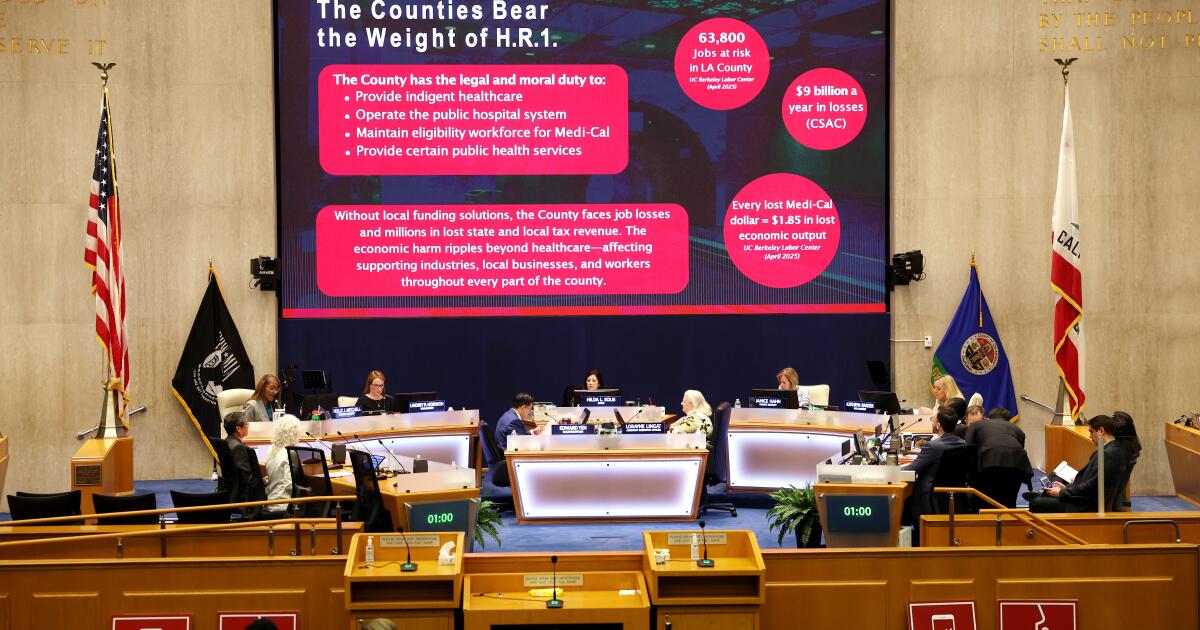
Supporters of a new Los Angeles County half-cent sales tax rallied Wednesday to celebrate what they framed as a historic win for the region’s cash-strapped healthcare system.
After a rocky election night that showed the tax lagging, supporters claimed victory Tuesday after the latest vote tally pushed Measure ER further over the 50% margin needed to pass. The measure would impose a new half-cent sales tax countywide, with the proceeds going toward local hospitals and clinics hit by federal funding cuts.
Jim Mangia, the chief executive of St. John’s Community Health who helped craft the measure, summed up the campaign as “grueling and expensive.”
“We had to ask an already overtaxed community — in the midst of runaway inflation and [an] affordability crisis — to tax themselves yet again,” he told a crowd of supporters Wednesday.
L.A. County already has a sales tax of 9.75%, and some cities add their own on top. Measure ER passing would raise the countywide sales tax to 10.25%, with some individual cities having a sales tax of more than 11%, according to the California Department of Tax and Fee Administration.
Despite a recent winning streak for sales taxes in L.A. County, some political observers had forecast doom for the measure, which came at a time of skyrocketing gas prices and cost-weary voters.
The largely informal opposition had consisted mainly of local cities that warned another sales tax would disproportionately burden the poorest residents and force shoppers across the county border in hopes of finding lower costs. Some city leaders had also dinged the county for misusing homelessness money generated from a previous sales tax and argued this new pot of dollars would be handled no better.
But supporters were able to eke out a narrow victory, according to the latest election returns, by emphasizing looming hospital closures and the temporary nature of the tax, which is set to sunset in five years.
“It’s a lifesaver to carry us through the storm we’re all in,” said county Supervisor Holly Mitchell, who led the push within the Board of Supervisors to get the measure on the ballot.
County leaders in February voted 4-1 to put the tax on the ballot after federal legislation threatened to pull health insurance from the poorest residents, leaving the already cash-strapped county to foot the bill for their care. Officials say cuts in the One Big Beautiful Bill Act are expected to slash more than $2 billion from the county’s budget for health services over the next three years.
“It’s disgusting what’s going to happen to our residents,” said Supervisor Hilda Solis, who championed the measure alongside Mitchell.
The tax, which begins Oct. 1, comes at a time of budget-tightening for the county amid rising labor costs and a $4-billion sex abuse settlement that is set to be paid out over the next five years.
Officials estimate the tax will bring in about $1 billion per year, which will go to clinics, hospitals and Planned Parenthood services that supporters say are at risk of closure without a new source of cash.
A similar proposed healthcare sales tax in Contra Costa County, meant to generate $150 million a year, was soundly rejected with about 57% of voters opposing the measure, according to votes tallied as of Wednesday.

By Hamed Aleaziz, Alexandra Ostasiewicz, Jon Hazell, Gilad Thaler, Stephanie Swart and Rafaela Balster
June 10, 2026
-

 Pennsylvania4 minutes ago
Man pleads guilty to stabbing wife to death inside Pennsylvania home
-

 Rhode Island11 minutes ago
Scottish soccer fan nears end of 3,000-mile walk for mental health awareness
-

 South-Carolina14 minutes ago
OFFICIAL: South Carolina hires Kevin Schnall as Baseball Head Coach
-
 South Dakota19 minutes ago
South Dakota tribes revoice claim to Black Hills through joint resolution
-

 Tennessee26 minutes ago
Wanted murder suspect sought by US Marshals, TBI says
-

 Texas29 minutes ago
Texas landowners fight massive transmission line project at Austin hearing
-
 Utah34 minutes ago
Utah conservation organization pledges $5.1M for wildlife recovery
-

 Vermont41 minutes ago
‘Like Christmas’: For Vermont’s Congolese community, a historic World Cup bid is cause for celebration – VTDigger

