Politics
News Analysis: Trump consistently frames policy around 'fairness,' trading on American frustration


In a sit-down interview with Fox News last month, President Trump and his billionaire “efficiency” advisor Elon Musk framed new tariffs on foreign trading partners as a simple matter of fairness.
“I said, ‘Here’s what we’re going to do: reciprocal. Whatever you charge, I’m charging,’” Trump said of a conversation he’d had with Indian Prime Minister Narendra Modi. “I’m doing that with every country.”
“It seems fair,” Musk said.
Trump laughed. “It does,” he said.
“It’s like, fair is fair,” said Musk, the world’s richest person.
The moment was one of many in recent months in which Trump and his allies have framed his policy agenda around the concept of fairness — which experts say is a potent political message at a time when many Americans feel thwarted by inflation, high housing costs and other systemic barriers to getting ahead.
“Trump has a good sense for what will resonate with folks, and I think we all have a deep sense of morality — and so we all recognize the importance of fairness,” said Kurt Gray, a psychology professor at University of North Carolina at Chapel Hill and author of the book “Outraged: Why We Fight About Morality and Politics and How to Find Common Ground.”
“At the end of the day,” Gray said, “we’re always worried about not getting what we deserve.”
In addition to his “Fair and Reciprocal Plan” for tariffs, Trump has cited fairness in his decisions to pull out of the Paris climate agreement, ban transgender athletes from competing in sports, scale back American aid to embattled Ukraine and pardon his supporters who stormed the U.S. Capitol on Jan. 6, 2021.
Trump has invoked fairness in meetings with a host of world leaders, including Japanese Prime Minister Shigeru Ishiba and British Prime Minister Keir Starmer. He has suggested that his crusade to end “diversity, equity and inclusion” programs is all about fairness, couched foreign aid and assistance to undocumented immigrants as unfair to struggling American taxpayers, and attacked the Justice Department, the media and federal judges who have ruled against his administration as harboring unfair biases against him.
Trump and Musk — through his “Department of Government Efficiency,” which is not a U.S. agency — have orchestrated a sweeping attack on the federal workforce largely by framing it as a liberal “deep state” that either works in unfair ways against the best interests of conservative Americans, or doesn’t work at all thanks to lopsided work-from-home allowances.
“It’s unfair to the millions of people in the United States who are, in fact, working hard from job sites and not from their home,” Trump said.
In a Justice Department speech this month, Trump repeatedly complained about the courts treating him and his allies unfairly, and reiterated baseless claims that recent elections have been unfair to him, too.
“We want fairness in the courts. The courts are a big factor. The elections, which were totally rigged, are a big factor,” Trump said. “We have to have honest elections. We have to have borders and we have to have courts and law that’s fair, or we’re not going to have a country.”
Before a meeting with NATO Secretary-General Mark Rutte this month, Trump complained — not for the first time — about European countries not paying their “fair share” to defend Ukraine against Russian aggression, and the U.S. paying too much.
“We were treated very unfairly, as we always are by every country,” Trump said.
Almost exclusively, Trump’s invocations of fairness cast him, his supporters or the U.S. as victims, and his critics and political opponents as the architects and defenders of a decidedly unfair status quo that has persisted for generations. And he has repeatedly used that framework to justify actions that he says are aimed at tearing down that status quo — even if it means breaching norms or bucking the law.
Trump has suggested that unfavorable media coverage of him is unfair and therefore “illegal,” and that judges who rule against him are unfair liberal activists who should be impeached.
The politics of feeling heard
Of course, grievance politics are not new — nor is the importance of “fairness” in democratic governance. In 2006, the late Harvard scholar of political behavior Sidney Verba wrote of fairness being important in various political regimes but “especially central in a democracy.”
Verba noted that fairness comes in different forms — including equal rights under the law, equal voice in the political sphere, and policies that result in equal outcomes for people. But the perception of fairness in a political system, he wrote, often comes down to whether people feel heard.
“Democracies are sounder when the reason why some lose does not rest on the fact that they are invisible to those who make decisions,” Verba wrote. “Equal treatment may be unattainable, but equal consideration is a goal worth striving for.”
According to several experts, Trump’s appeal is in part based on his ability to make average people feel heard, regardless of whether his policies actually speak to their needs.
Gray said there is “distributive fairness,” which asks, “Are you getting as much as you deserve?” and “procedural fairness,” which asks, “Are things being decided in a fair way? Did you get voice? Did you get input?”
One of Trump’s skills, Gray said, is using people’s inherent sense that there is a lack of distributive fairness in the country to justify policies that have little to do with such inequities, and to undermine processes that are in place to ensure procedural fairness, such as judicial review, but aren’t producing the outcomes he personally desires.
“What Trump does a good job at is blurring the line between rules you can follow or shouldn’t follow,” he said. “When he disobeys the rules and gets called out, he goes, ‘Well those moral rules are unjust.’”
People who voted for Trump and have legitimate feelings that things are unfair then give him the benefit of the doubt, Gray said, because he appears to be speaking their language — and on their behalf.
“He’s not just saying that it’s him. He’s saying it’s on behalf of the people he’s representing, and the people he’s representing do think things are unfair,” Gray said. “They’re not getting enough in their life, and they’re not getting their due.”
Lawrence Rosenthal, chair of the Center for Right-Wing Studies at UC Berkeley and author of “Empire of Resentment: Populism’s Toxic Embrace of Nationalism,” said Trump and his supporters have built him up as a leader “interested in fixing the unfairness to the working class.”
But that idea is premised on another notion, even more central to Trump’s persona, that there are “enemies” out there — Democrats, coastal elites, immigrants — who are the cause of that unfairness, Rosenthal said.
“He names enemies, and he’s very good at that — as all right-wing authoritarians are,” Rosenthal said.
Such politics are based on a concept known as “replacement theory,” which tells people to fear others because there are only so many resources to go around, Rosenthal said. The theory dovetails with the argument Trump often makes, that undocumented immigrants receiving jobs or benefits is an inherent threat to his MAGA base.
“The sense of dispossession is absolutely fundamental and has been for some time,” Rosenthal said.
John T. Woolley, co-director of the American Presidency Project at UC Santa Barbara, said Trump has “a remarkable capacity for constructing the world in a way that favors him” — even if that’s as the victim — and appears to be an “outlier” among presidents in terms of how often he focuses on fairness as a political motif.
“Certainly since his first term with impeachment, ‘the Russia hoax,’ ‘dishonest media,’ ‘fake news’ and then ‘weaponizing’ of justice — he’s constructed a kind of victim persona, in battle with the deep state, that is now really basic to his interaction with his core MAGA constituency,” Woolley said.
An idea for Democrats
In coming to terms with Trump’s win in November, Democrats have increasingly acknowledged his ability to speak to Americans who feel left behind — and started to pick up on fairness as a motif of their own, in part by zeroing in on mega-billionaire Musk.
In an interview with NPR last month, Rep. Alexandria Ocasio-Cortez (D-N.Y.) evoked the idea of unfairness in the system by saying American government is working for rich people like Musk, but not for everyone else. “Everything feels increasingly like a scam,” she said.
She and Sen. Bernie Sanders (I-Vt.) have since embarked on a nationwide “Fighting Oligarchy” tour, where they have blasted Musk’s role in government and questioned how his actions, or those of Trump, have helped average Americans in the slightest.
“At the end of the day, the top 1% may have enormous wealth and power, but they are just 1%,” Sanders wrote Friday on X. “When the 99% stand together, we can transform our country.”

Construction workers unfurled a large printed tarp to cover scaffolding installed at the White House’s front entrance. Doug Burgum, the interior secretary, said President Trump had ordered the repairs after noticing damage to columns.
Politics
WATCH: Trump’s Energy chief reveals what escalating Iran tensions could mean for gas prices

NEWYou can now listen to Fox News articles!
Energy Secretary Chris Wright is telling Americans not to be concerned about the possibility of another surge of sharp increases in gasoline prices as tensions with Iran have started to escalate once again.
Asked whether Americans should worry about higher prices at the pump and how the Trump administration is preparing to keep the economy stable if the conflict continues to worsen, Wright told Fox News Digital: “It has not been any good behavior from Iran that’s allowed oil to flow. It’s been the United States military.”
“That’s not changing,” he assured, speaking from the Great American State Fair on the National Mall this week.
US CLAWS BACK KEY CONCESSION TO IRAN AFTER FRESH ATTACKS ON COMMERCIAL SHIPS IN STRAIT OF HORMUZ
(Mario Tama/Getty Images) (Mario Tama/Getty Images)
With Iran striking three commercial vessels transiting the Strait of Hormuz on Monday and Tuesday, Wright doubled down in urging citizens to not credit Iran for the U.S. military’s work to ensure oil shipments continue flowing through the strait.
“Look, the U.S. Military has been the key asset here,” he said. “They have assured the flow of oil and gas through the Strait of Hormuz throughout. Not at the beginning of this conflict, but through the last six weeks.”
Wright said the administration is closely monitoring global oil supplies as the tentative ceasefire with Iran seemingly came to come to a halt, with President Donald Trump telling Secretary-General Mark Rutte the call for peace with Iran is “over” at the NATO Summit in Turkey on Wednesday.
But, he pointed to the continued shipping through the Strait as evidence that markets should remain stable.
TRUMP SAYS IRAN CEASEFIRE IS ‘OVER’ AFTER IRANIAN ATTACKS TRIGGER MASSIVE US RESPONSE
President Donald Trump speaks at the White House on Tuesday, April 22. (AP/Alex Brandon)
“We’re of course constantly watching the supply of oil, the supply of refined products and what’s going on there,” Wright said. “And I think still all positive trends.”
Beyond geopolitical concerns, Wright also praised the new chain of discounted gas stations across Pennsylvania and New Jersey, Freedom Fuel, which promises customers prices below the national average.
The Trump administration, though not involved with the network, has heavily endorsed the new chain and its 25 locations.
“We love it,” Wright said when asked about Freedom Fuel. “I mean, look, any mechanism we can to lower energy costs for Americans of all kinds, we’re all in on.”
“With Freedom Fuels, they’re just lowering it down to their wholesale price of gasoline,” Wright said. “So they’re not making any money selling gasoline, but they’ve got convenience stores. That’s how most gas stations make money.”
NEWSOM UNDER FIRE AS CALIFORNIA GAS TAX HIKE SENDS PUMP PRICES EVEN HIGHER
Gasoline costs are a known concern for many Americans, and amid surging prices there has been a considerable increase in those opting to purchase electric vehicles to save money long-term at the pump — with Tesla dominating the market for these types of models.
Wright argued one of the benefits to living in America is having the option to choose what type of vehicle you drive.
CLICK HERE TO DOWNLOAD THE FOX NEWS APP
“We just want people to buy what they would prefer,” he told Fox News Digital when asked his thoughts on increasing calls for support of the electrification of cars. “Consumer choice — you wanna buy an electric car, you wanna buy a gas powered car, diesel powered car, buy a big truck. That’s the choice.”
“That’s why you live in America. You get the choice of all those.”

In 2023, California regulators levied more than $100,000 in fines against the private operator of a federal immigration facility, kicking off a three-year battle over whether detainees who do work at the facilities should be considered employees.
The question went beyond semantics: If considered employees, the detainees would be subject to state worker protection laws.
A legal settlement announced this week now affirms that private immigrant detention facilities are subject to California’s workplace safety and health requirements.
“Every worker deserves a safe and healthy workplace and should be able to report workplace hazards without fear of retaliation,” said Denisse Gómez, spokesperson for the California Division of Occupational Safety and Health or Cal/OSHA.
“Individuals who perform work in these facilities are entitled to workplace safety protections, and this settlement reinforces Cal/OSHA’s commitment to enforcing those protections and safeguarding vulnerable workers,” she added.
Under the settlement between California and the GEO Group, a Florida-based private prison company, the company recently withdrew its legal challenges and agreed to pay more than $100,000 in the fines.
The GEO Group did not respond to requests for comment.
Back in 2023, Cal/OSHA issued $104,510 in fines against the GEO Group. The agency had found six violations of state code by the company after detainees complained about a lack of protective equipment and proper training while cleaning the facility for $1 per day.
Detainees alleged they routinely wiped black mold off shower walls at the facility, saw black dust spew from air vents and used cleaning solutions that lacked instructions during the COVID-19 pandemic.
The biggest fine levied against the GEO Group was for failure to establish and maintain “effective written procedures to reduce employee risk of exposure to aerosol transmissible disease.”
Advocates viewed Cal/OSHA’S recognition of the detainees as workers as a victory that could pave the way for future labor rights fights at other detention centers in the state.
But the GEO Group appealed, arguing that detainees participating in ICE’s voluntary work program make their own schedules and aren’t employees, so hazard exposure couldn’t be “as a result of assigned duties,” as California law states. Plus, the company argued, there wasn’t enough evidence that detainees were exposed to any hazard.
Early last year, the state’s Occupational Safety and Health Appeals Board rejected the GEO Group’s argument and found that detainees should be considered “affected employees.”
The GEO Group sued, but three days before a California Superior Court hearing in May, the company and Cal/OSHA reached the settlement.
Along with paying the fines, the GEO Group agreed to draft plans for avoiding aerosol transmissions at 12 secure and reentry facilities in California, including five detention centers that hold immigrants.
“GEO ensures detainees are afforded the necessary tools, equipment, and personal protective equipment … to safely and effectively perform any necessary tasks,” the settlement states.
Gómez said the settlement also leaves intact the appeals board’s ruling that civil immigration detainees who participate in work programs can participate in proceedings anonymously, “acknowledging the potential for retaliation when individuals raise workplace safety concerns.”
But the question of whether detainees are employees and deserve certain protections isn’t entirely resolved — at least not for the federal government.
Last month, U.S. Immigration and Customs Enforcement released new standards for detention facilities across the country. The revised guidelines “emphasize that detainee volunteers participating in the voluntary work program are not considered facility and/or government employees” and thus not entitled to labor regulations.
Attorney Mariel Villarreal said the timing of the new detention standards made her question whether the GEO Group had asked ICE to specify in its standards that detainees are not workers in response to its battle with Cal/OSHA.
“To me, it’s a reaction to this very settlement,” she said. Villarreal works for the California Collaborative for Immigrant Justice, which filed the original complaint on behalf of detainees who said they worked in unsafe conditions.
Villarreal pointed to a Washington Post report that GEO Group executives privately asked ICE to specify that detainees are not employees of the facilities where they work. Two top Trump administration officials, border czar Tom Homan and acting ICE director David Venturella, previously worked for the GEO Group.
New versions of ICE detention standards take effect as contracts are established or modified, so this year’s rules won’t immediately apply to every facility.
An ICE spokesperson did not comment about the settlement. The spokesperson, who did not provide their name in an emailed statement Wednesday, said the agency has begun transitioning detention facilities to meet the 2026 standards, “building on its longstanding commitment to safe, secure, and professional detention operations.”
“ICE has consistently implemented many of these best practices independently, reinforcing its role as the leader in detention operations,” the spokesperson added.
The GEO Group and other immigrant detention center operators have faced other legal battles over workers’ rights, including lawsuits in Washington, Colorado and California over the $1-per-day payment.
Villarreal said she’s confident that the Cal/OSHA settlement would continue to hold even if California facilities incorporated the new standards. But she said she believes the statements are an attempt by the GEO Group to “sidestep responsibility” and avoid the possibility of being fined under similar circumstances in other states.
“These statements in the new standards are a way for them to try and preserve profits as much as possible,” she said. “GEO and ICE are so intertwined at this point that they have the same motives.”
-

 World5 minutes ago
Belgium to introduce new road tax in 2027, even for transiting drivers
-
 News29 minutes ago
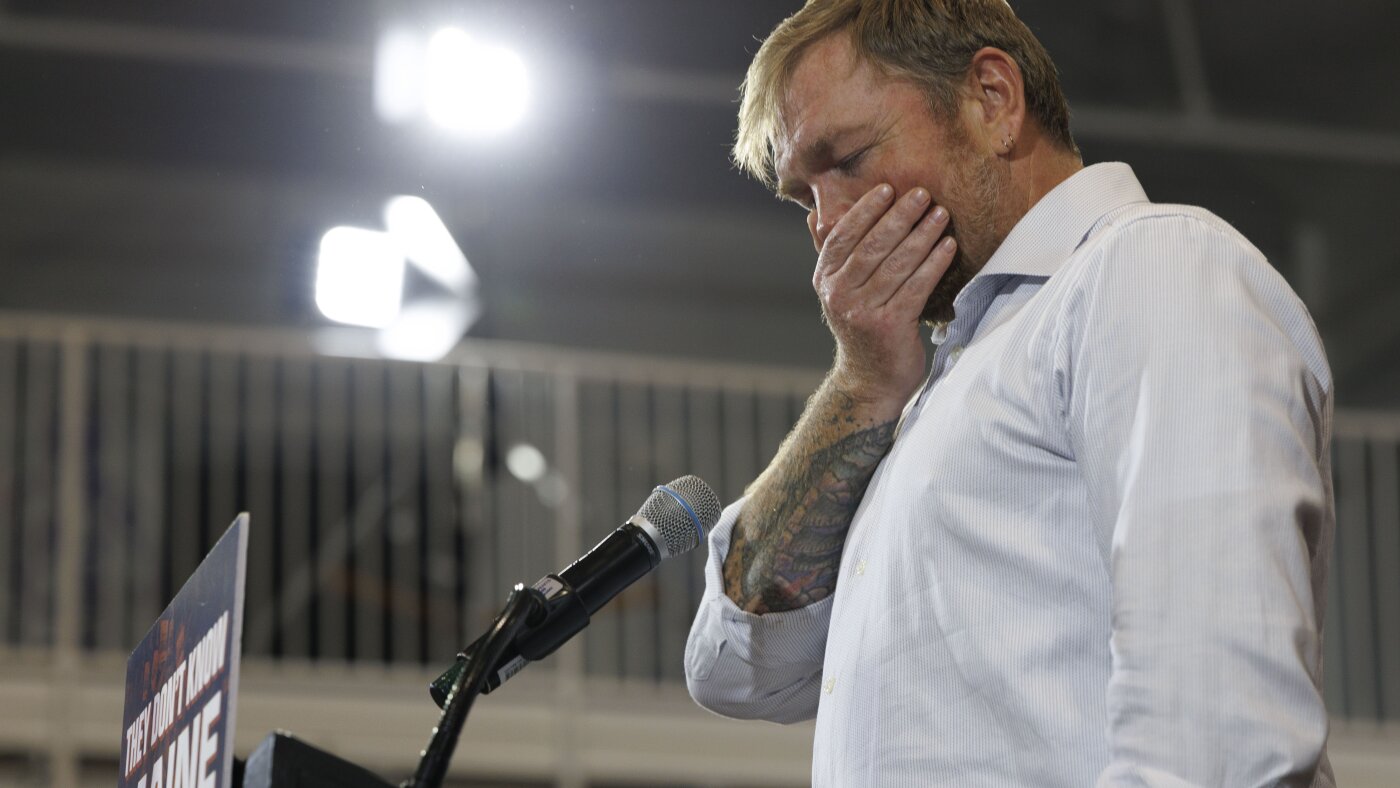
Graham Platner makes it official in Maine, submitting paperwork to leave Senate race
-

 Los Angeles, Ca2 hours ago
Knee irritation forces Shohei Ohtani out of Friday start, All‑Star game
-

 Detroit, MI2 hours ago
Detroit Evening Report: Waymo cars blocking first responders – WDET 101.9 FM
-

 San Francisco, CA2 hours ago
San Francisco Mayor Daniel Lurie Blocks Vacant Grocery Store Tax Proposal | KQED
-

 Miami, FL2 hours ago
Oregon Battling Miami, Mario Cristobal for Four-Star EDGE Recruit
-

 Dallas, TX2 hours ago
FC Dallas Forward Logan Farrington Inks Contract Extension
-

 Boston, MA3 hours ago
Red Sox face lengthy travel issues ahead of series vs. Mets

