Politics
Millions of Movers Reveal American Polarization in Action


Aside from their political views, Joshua Fisher and Ryan Troyer have a lot in common.
In 2020, they lived across the street from each other in Sioux Falls, S.D. They are both white men of a similar age. Mr. Fisher, 42, is an auto technician; Mr. Troyer, 39, is a sanitation worker. They are both married. They both have associate degrees.
They have something else in common, too: They both moved away from Sioux Falls. Mr. Troyer left in the fall of 2021, and Mr. Fisher about a year later.
In the process, they unwittingly became a part of a nationwide pattern that could matter in a close presidential election.
They made the country more geographically polarized.

Mr. Troyer, the Republican, moved to a more Republican neighborhood. Mr. Fisher, the Democrat, moved to a more Democratic one.
This is just one pair of voters, but they are part of a trend. Consider the moves of Republicans from relatively balanced neighborhoods like theirs:
The picture for Democrats is almost the reverse:
Put the two groups together, and you see political polarization in action.
These estimates, based on a New York Times analysis of detailed public voter registration records of more than 3.5 million Americans who moved since the last presidential election, offer a new and extraordinarily detailed glimpse into one of the ways that we segregate from each other — down to the street level.
Across all movers, Republicans chose neighborhoods Donald J. Trump won by an average of 19 percentage points in 2020, while Democrats chose neighborhoods President Biden won by the opposite margin (also 19 points). In total, movers started in neighborhoods 31 percentage points apart; they ended in neighborhoods 38 points apart. Across the country, the result is a widening gap between blue neighborhoods and red ones.
Where Democrats moved A solidly or heavily Biden place
A relatively balanced place
A solidly or heavily Trump place
Where Republicans moved A solidly or heavily Biden place
A relatively balanced place
A solidly or heavily Trump place
The independents and unaffiliated voters in our set picked more evenly balanced neighborhoods.
The different choices that movers made are not easily explained by things like voters’ ages, race, income or if they were leaving a rural or urban area. Even when narrowing our comparisons to demographically similar pairs of people from the same kinds of neighborhoods — people like Mr. Fisher and Mr. Troyer — Democrats and Republicans still chose neighborhoods that were 24 points apart in the 2020 vote.
Our analysis suggests partisanship itself, intentional or not, plays a powerful role when Americans uproot and find a new home. And their very personal decisions about where to resettle help power the churn of migration that is continuously reshaping American life at the neighborhood level and contributing to a sense that Americans are siloed in echo chambers, online and in their daily lives.
It also has real stakes for our elections: Political scientists say the more partisan a district or state becomes, the less a candidate needs to woo voters from the other party — or, after winning, govern on their behalf.
Interviews with 20 recent movers found that, consistent with research on the subject, politics alone did not drive a decision to move. But most we spoke to said it did influence their decision, and for some it topped the must-have list — the movers in our analysis are all registered to vote, and nearly all we spoke to intended to vote on Election Day.
Impact on the 2024 election
It’s unclear how much of a direct effect movers might have on the election next week. Each cycle, the electoral landscape changes in ways that have nothing to do with moving: People turn 18; people die; people change their minds or decide not to vote. But in an extraordinarily close race, even small shifts could prove decisive.
The 3.5 million movers in our analysis are a small number compared with the 158 million people who voted in 2020, but they do help explain some recent electoral trends — like Florida’s electoral shift to the right or the gains Democrats have made in Georgia.
In all but three states that voted for Mr. Biden in 2020, more Democrats have moved in than Republicans. The reverse is true for states Mr. Trump won — in all but one, more Republicans moved in.
Partisanship of incoming movers and the states they moved to Voters who moved into the 25 states Biden won in 2020 tended to be more Democratic than their neighbors.
And likewise, voters who moved into the 25 states Trump won tended to be more Republican than their neighbors.
In 36 states, polarization happened in both directions at once: More newcomers were of the winning party, and more of those who left were of the losing party.
Our analysis is an undercount of partisan migration; it may be missing some movers who haven’t yet filed a new address or registered to vote in their new homes. But it probably accounts for most voters who moved, and it shows how population shifts can have political consequences.
Consider Florida: Once a critical swing state, it has become more reliably Republican. Out of the 3.5 million voters we tracked, more than 200,000 registered Republicans have moved in over the past four years, more than twice the number of Democrats.
Mr. Biden won Georgia in 2020, the first time a Democrat won the state since 1992. Among more than 140,000 newcomers, Democrats outnumbered Republicans by more than 9,000. Over the same span, at least 10,000 more Republicans than Democrats moved out of the state — a third of them to Florida.
In Arizona, a state Mr. Biden won by less than 12,000 votes, incoming Republicans — a third of them from California — outnumbered incoming Democrats by a margin of three to two. Accounting for departures, Arizona gained about 17,000 Republican voters.
In all three Northern battlegrounds — Pennsylvania, Wisconsin and Michigan — Democrats made small gains through migration. In Pennsylvania, this year’s key battleground, Democratic gains actually came amid population loss: For both parties, more voters moved out than in. But Republicans lost more.
California has contributed to this trend in a different way: by exporting Republicans en masse. More Republicans have moved out of California than any other state. And those who did have made other states redder in the process — particularly Texas, Arizona, Florida and Nevada.
What drives moving
Tens of millions of Americans move each year, whether across town or across the country. Most of the voters in our set moved during the pandemic, when home sales surged and many Americans were ready for a change.
Mr. Troyer, the Republican from Sioux Falls, moved closer to his wife’s family in Minnesota. Mr. Fisher, the Democrat, moved to escape the harsh South Dakota winters.
Mr. Troyer, a Republican, on the front porch of his home outside Minneapolis, in a neighborhood that voted for Mr. Trump in 2020 by a wide margin.
Ben Brewer for The New York Times
And yet both ended up in places that were more partisan than where they came from, a phenomenon known as “sorting.” Research on partisanship and migration has found politics typically figures into the equation only indirectly — or even coincidentally.
Previous research has found that most people don’t intentionally seek out politically homogenous areas, but instead share similar preferences with people who vote as they do, with Democrats favoring cities and Republicans favoring the country, on average. A 2015 study, however, found that people favor properties in neighborhoods that reflect their partisan identity.
“Am I going to fit? Fittingness is a very important criteria for a place to live,” said James Gimpel, a politics professor at the University of Maryland, and co-author of the study. “Nobody wakes up in the morning and says, ‘Gee, I’m looking forward to having a fight with my neighbors.’”
Our analysis and interviews suggest just how intertwined political and lifestyle choices can be when it comes to choosing a new home, particularly since 2020.
Mr. Fisher, the Democrat, said that while he was eager to escape the snow, he also found the local politics increasingly oppressive. An outspoken liberal, with bumper stickers on his Jeep to match, he was eager to find a place that better reflected his sensibilities.
Mr. Fisher, a Democrat, finds his new home in Charlotte, N.C., “definitely bluer” and “a nice change,” he said.
Amanda Kathleen Greene for The New York Times
“For the most part, you just kind of kept to yourself,” Mr. Fisher, a South Dakota native, said of his old neighborhood, a precinct Mr. Biden won by five points. He says he feels more comfortable in his home in southwest Charlotte, in a precinct Mr. Biden carried by 46 points. “It’s definitely bluer than where we were before, and kind of a nice change,” he said.
And Mr. Troyer now lives in Otsego, northwest of Minneapolis, which Mr. Trump won by 27 points. Mr. Troyer said he chose his neighborhood because it was close to his job and family. While he did not intentionally seek out a conservative community, he feels at ease at home and at work. “Everybody I associate with is Republican,” he said. “Everybody at work, the hardworking kind, we’re all Republican.”
Characteristics of places Democrats were more likely to move to
Characteristics of places Republicans were more likely to move to
Movers who were…
Dem.
Rep.
Within 5 miles of a college
82%
65%
High racial diversity
62%
43%
Above avg. walkability
44%
18%
Within 5 miles of a Trader Joe’s
31%
10%
Avg. home price above $750k
19%
10%
Movers who were…
Dem.
Rep.
Property tax rate below 0.5%
64%
75%
Within 5 miles of a forest
36%
46%
Rural or a small town
22%
41%
Avg. temperature above 70° F
13%
24%
Somewhere to belong
For a handful of the people interviewed for this article, politics was the impetus.
Erin Thompson, 39, felt out of step as the lone Republican voice among her Seattle friends. Even dating was hard. “You want to find someone who has the same fundamental belief system as you,” she said. Absent that, “It’s just a little isolating.” In 2021, in search of warmer weather and a community more closely matching her worldview, she moved to Gilbert, a conservative Phoenix suburb.
Erin Thompson, a Republican, moved to Arizona after the 2020 election in search of more like-minded people.
Caitlin O’Hara for The New York Times
Romance was also a factor for Andrew Clohessey, 35, who moved to Minneapolis in 2021 from Cedar Falls, Iowa. He’d spent the previous year deliberately applying for jobs in liberal cities, eager to get out of an area that felt increasingly conservative to him, even though his precinct voted for Mr. Biden. He moved into a neighborhood with a lot of shops within walking distance, one that Mr. Biden carried by 61 points. “It’s been great,” he said. On dating apps he is now “more likely to match with people who have left-leaning political views.”
Naomi Hattaway in what will be a new house being built for her family in Atlanta.
Audra Melton for The New York Times
In contrast, Naomi Hattaway, 48, said politics “did not register one bit” when she moved for work to Fairburn, Ga., a suburb of Atlanta, from Omaha (after a stop in Florida). An independent who previously registered as a Democrat, she said diversity mattered more to her than party affiliation. She feels more at home as a Black mixed race woman in a city with a large Black population and a diverse local government. “It’s everything,” she said, adding that she is “better off living somewhere I belonged.”
All movers we spoke to felt politically comfortable in their new homes. Upon retiring, Robert LaRoche, 60, moved from Las Vegas to Spring Hill, Fla., about an hour north of Tampa to live closer to family. While the majority of his old neighbors in a precinct that voted for Mr. Biden by 41 points “did not align with our values,” he said, that’s not why he moved, nor was it why he chose his new home. He sees it as a bonus that he gets to live in a precinct that voted for Mr. Trump in 2020 by 26 points.
Mr. LaRoche’s sentiment is shared by more and more Americans — that life is less contentious when the people around you vote the way you do.
“Now I can talk to my neighbors about absolutely anything and not start a big argument,” he said.



Politics
Warren tells Trump to ‘sign the damn bill’ as bipartisan housing package remains stalled in Washington

NEWYou can now listen to Fox News articles!
Sen. Elizabeth Warren, D-Mass., lashed out at President Donald Trump during a recent local television interview, labeling him a “man-child” throwing a “tantrum” over his refusal to sign a sweeping bipartisan housing package.
Appearing on WCVB’s “On the Record,” the left-wing senator did not hold back her frustration over the stalled legislation, delivering a blunt message to the president: “Sign the damn bill.”
“If he cared about the American people, he’d have already signed the damn thing,” Warren said during the interview, arguing that Trump “does not care about the economic survival of America’s working families.”
FILE – The Senate previously advanced the massive housing package geared toward lowering the costs of homes and supercharging the housing supply. Sen. Elizabeth Warren, D-Mass., pitched it as legislation to prevent America from becoming a “nation of renters.” (Jemal Countess/Getty Images for Protect Borrowers ; Anna Moneymaker/Getty Images)
TRUMP-BACKED HOUSING BILL CLEARS HOUSE AFTER GOP DEFIES SENATE PRESSURE CAMPAIGN
The 21st Century ROAD to Housing Act is an expansive bipartisan package that she said contains nearly 50 provisions designed to address the nationwide housing emergency.
Warren noted that decades of under-building have driven prices up, leaving the U.S. in need of millions of new units.
The primary focus of the bill is to lower the costs of construction and make it easier to build new homes.
FILE – President Donald Trump previously said lawmakers must first approve the SAVE America Act before he moves forward with the housing package. (Yuri Gripas/Abaca/Bloomberg)
BIPARTISAN HOUSING PUSH ADVANCES, BUT TRUMP-BACKED INVESTOR BAN FACES RESISTANCE
The bill, which was co-sponsored by Sen. Tim Scott, R-S.C., also includes a secondary focus aimed at blocking corporate consolidation of the housing market.
Warren explained that the legislation is designed to keep private equity firms from buying up local neighborhoods and turning America “into a nation of renters.”
According to Warren, the legislation had widespread support from both sides of the aisle before it was stalled.
TRUMP VOWS BLOCK ON SIGNING NEW LAWS UNTIL SAVE AMERICA ACT PASSES SENATE
She claimed the bill was “handed to the president on a silver platter” and that lawmakers from both parties were eagerly taking credit for the legislation.
“Republicans were all going online, saying, ‘well, I helped write that bill. This bill is terrific,’” Warren said. “So everybody’s out there saying, ‘my bill, I helped make this happen,’ right up until the man-child has a tantrum and announces he will not be signing it.”
FILE – Sen. Elizabeth Warren called President Donald Trump a “man-child” during the interview, describing his refusal to sign the bill as a “tantrum.” (Chip Somodevilla/Getty Images)
CLICK HERE TO DOWNLOAD THE FOX NEWS APP
Critics of the legislation claim it does not allocate fresh federal funding, directly address rising costs of homeownership, or go far enough to address permitting issues.
The president previously canceled a scheduled signing event, insisting lawmakers must first approve the unrelated SAVE America Act, a voting-focused measure, before he moves forward.
The White House did not immediately respond to Fox News Digital’s request for comment.
Fox News Digital’s Alex Miller contributed to this report.
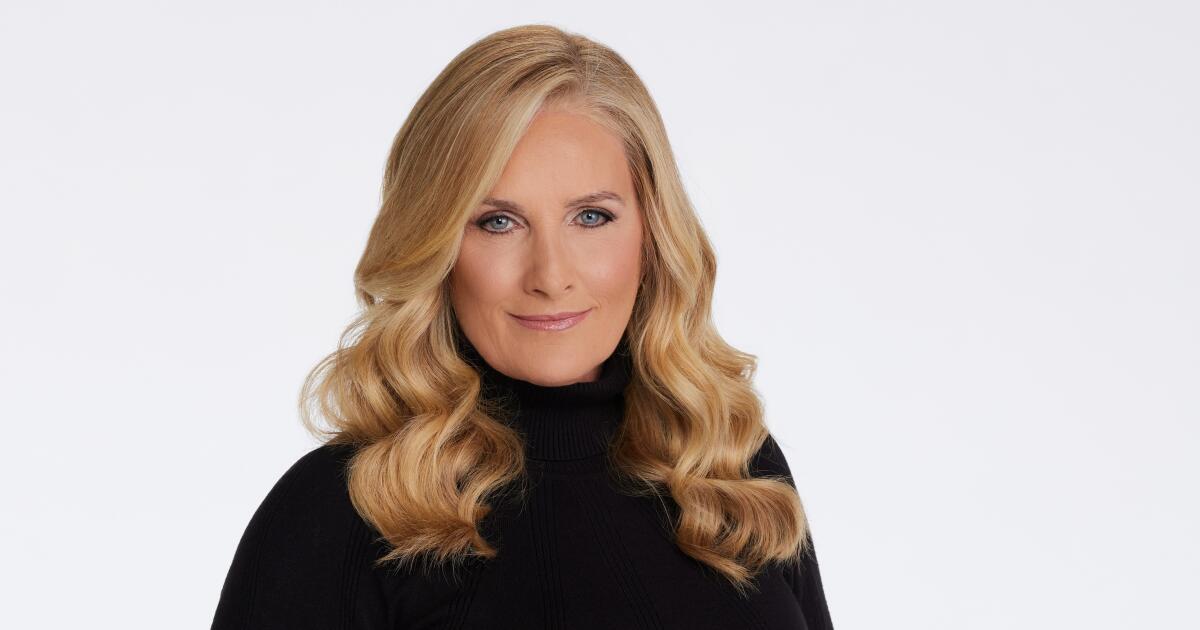
Veteran MS NOW anchor Alex Witt is leaving the news network, which is moving away from live evening programming on weekends.
The new weekend programming strategy announced Friday is a cost-saving measure that will give parent company Versant more resources for a new direct-to-consumer streaming offering that makes MS NOW available to consumers without a pay-TV subscription. The company is also looking to expand its live event business.
According to a memo from MS NOW President Rebecca Kutler, “The Weekend: Primetime,” a live discussion program launched last year, will have its final airing Saturday.
One of the program’s co-hosts, Antonia Hylton, will take over Witt’s midday shifts later this year. Hylton’s co-hosts Ayman Mohyeldin, Catherine Rampell and Elise Jordan will remain with MS NOW and continue to appear on other programs.
Kutler said job losses from the moves are minimal and encouraged staffers who lose their current roles to apply for 40 current job openings at the company with more on the way. MS NOW has been staffing up its news operation since separating from NBC News last year.
MS NOW changed its name from MSNBC in November. The network, along with other Comcast-owned cable channels, were spun off into Versant in January.
Weekends have long been a ratings weak spot for MS NOW, which while a distant second to Fox News, has seen audience growth in 2026 and remains ahead of CNN. The network has started to rely on podcasts such as “Pod Save America,” from Crooked Media, to fill some hours. The episodes have performed strongly enough for MS NOW to try similar deals with outside podcast producers.
“Throughout the summer, we will expand our taped strategy and announce new content partnerships,” Kutler said in her memo.
With the changes, MS NOW will still have 20 hours of live programming each weekend and will be staffed to handle breaking news.
Witt joined the network formerly known as MSNBC in 1999, long before it began its strong tilt toward progressive political commentary. Over the years, Witt’s weekend newscast became one of the few programs on the network that delivered straight news without opinion.
Kutler called Witt “a beloved longtime member of our MS NOW family” and “a continued, trusted, and steady presence for our audiences.”
While Witt works through the summer, Hylton will anchor the 11 a.m. weekday time period, which will eventually be handled by former NBC News White House correspondent Peter Alexander.
Politics
McCarthy says Trump will use ‘everything he can’ to force Senate action on SAVE America Act

NEWYou can now listen to Fox News articles!
As infighting over the SAVE America Act throws congressional Republicans into disarray, President Donald Trump’s bid to get the stalled election bill across the finish line gained one notable ally.
Former House Speaker Kevin McCarthy, R-Calif., told Fox News Digital that he supports the election integrity measure and indicated that Trump should continue to use every available tool to pressure the Senate to pass it.
“He’s going to try everything he can to make sure he passes that through,” McCarthy said in a brief interview outside the U.S. Capitol.
The ex-speaker’s comments came after Trump abruptly called off a signing ceremony Wednesday for a bipartisan housing bill to pressure the Republican-controlled Senate to act on the SAVE America Act.
President Donald Trump boards Air Force One as he departs Reading Regional Airport in Reading, Pa., on June 23, 2026. (Evelyn Hockstein/Reuters)
IRATE REPUBLICANS ACCUSE TRUMP OF HANDING DEMOCRATS A WIN AFTER BLOWING UP HOUSING PACKAGE
The move surprised Republican lawmakers, some of whom were praising the bill’s passage at a press conference when Trump’s Truth Social post broke.
But Trump has repeatedly cast the election measure — requiring proof of citizenship to vote in federal elections and voter identification requirements — as his top legislative priority.
The legislation’s momentum, however, has slowed in the upper chamber, where Republican leadership insists the votes aren’t there amid widespread Democratic opposition. Senate Republicans have also been unwilling to eliminate the legislative filibuster, which requires a 60-vote threshold to pass the legislation.
Former Speaker of the House Kevin McCarthy speaks during a ceremony honoring President Ronald Reagan on the 115th anniversary of his birthday at the Ronald Reagan Presidential Library in Simi Valley, Calif., on Feb. 6, 2026. (Hans Gutknecht/MediaNews Group)
TRUMP CALLS MAIL IN VOTING CORRUPT AS SENATE BEGINS DEBATE ON SAVE ACT REQUIRING VOTER ID
Amid the SAVE standoff, a group of conservative lawmakers effectively shut down the House floor in an effort to force Senate action on the election bill.
But the Senate recessed Wednesday for two weeks over the July 4 holiday, leaving the measure in limbo until lawmakers return.
The conservative-led blockade sparked fierce backlash, with several members inside the GOP conference telling Fox News Digital the move risked torpedoing their own legislative agenda.
Meanwhile, the House has also yet to pass a version of the legislation incorporating several of the president’s priorities, including a mail-in voting crackdown and provisions banning men from competing in women’s sports and child sex change procedures.
Trump has not indicated whether he will sign the 21st Century ROAD to Housing Act, despite the likely existence of a veto-proof majority.
House Speaker Mike Johnson, R-La., told reporters Thursday that the housing bill had been transmitted to the White House for Trump’s signature following a meeting with the president.
Speaker of the House Mike Johnson, R-La., talks with reporters in the U.S. Capitol on June 10, 2026. (Tom Williams/CQ-Roll Call, Inc via Getty Images)
CLICK HERE TO DOWNLOAD THE FOX NEWS APP
Trump now has 10 days to sign the package or veto it. If he does nothing, the legislation automatically becomes law at the end of the 10-day period.
-

 Fitness5 minutes ago
Health Watch: Fitness Friday – exercise and dementia
-
Movie Reviews13 minutes ago
Film review: ‘Tuner’ mixes classical music, crime, and Dustin Hoffman | The Jerusalem Post
-

 World22 minutes ago
Rescuers comb Venezuelan quake rubble, thousands reported missing
-

 Lifestyle1 hour ago
Former Vice President Mike Pence believes Washington is more ‘swampy’ under Trump
-

 Technology1 hour ago
Prime Day’s final hours bring rare discounts on Philips Hue smart lights
-

 World1 hour ago
Video shows gaping hole after small plane crashes into towering skyscraper
-

 Politics1 hour ago
Warren tells Trump to ‘sign the damn bill’ as bipartisan housing package remains stalled in Washington
-

 Health2 hours ago
Common food preservatives may raise blood pressure and heart risks, study suggests


