Politics
DeSantis cancels NBC, CNN appearances Sunday over scheduling issue ahead of New Hampshire primary


Florida Gov. Ron DeSantis canceled two TV appearances scheduled for Sunday due to a scheduling issue, his campaign confirmed Saturday.
“The media hits were canceled due to a scheduling issue and will be rescheduled,” DeSantis press secretary Bryan Griffin posted on X, formerly Twitter.
He added that the GOP presidential candidate DeSantis will be, “traveling Sunday morning with the campaign and has public events scheduled Sunday evening through Tuesday” in New Hampshire, where the nation’s first 2024 primary will be held.
TRUMP MAINTAINS MASSIVE LEAD IN NEW HAMPSHIRE DAYS AHEAD OF FIRST PRIMARY: POLL
Florida Gov. and GOP presidential candidate Ron DeSantis canceled two TV appearances for Sunday. (Brandon Bell/Getty Images)
The governor was expected to appear on NBC’s “Meet the Press” and CNN’s “State of the Union” with Jake Tapper on Sunday, but both shows confirmed on X that the campaign had canceled.
RON DESANTIS ARGUES TIM SCOTT ENDORSEMENT OF DONALD TRUMP ‘IS A BLOW TO NIKKI HALEY’
The cancelations were due to a “last-minute schedule change,” NBC reported, adding that DeSantis was planning to travel from South Carolina to New Hampshire to get at least one Granite State event on Sunday.
Trump’s campaign manager retweeted news about DeSantis’ cancelations, joking “The end is near…” suggesting it was a sign his presidential campaign was nearly over.
DeSantis placed a distant second to former President Trump in Iowa on Monday, losing to him by 30 points.
DeSantis narrowly edged out former South Carolina Gov. Nikki Haley in Iowa, but trails her by nearly 30 points in New Hampshire in polling averages (34.2% to 5.2%), according to 538.



NEWYou can now listen to Fox News articles!
Rep. Tony Gonzales, R-Texas, abruptly announced his decision to resign from Congress Monday evening amid calls for him to step aside after admitting to sexual misconduct with a staffer earlier this year.
The embattled lawmaker was facing an anticipated expulsion vote that could have occurred as early as this week.
“There is a season for everything and God has a plan for us all. When Congress returns tomorrow, I will file my retirement from office,” Gonzales wrote on social media. “It has been my privilege to serve the great people of Texas.”
It is currently unclear when Gonzales will formally resign. A spokesperson for Gonzales did not immediately respond to a request for comment.
His announcement came just an hour after Rep. Eric Swalwell, D-Calif., said he planned to resign after facing allegations of sexual misconduct and rape.
This is a developing story. Check back for updates.
Politics
Commentary: Trump says in his social media post he was a doctor, not Jesus. A Catholic school alum weighs in
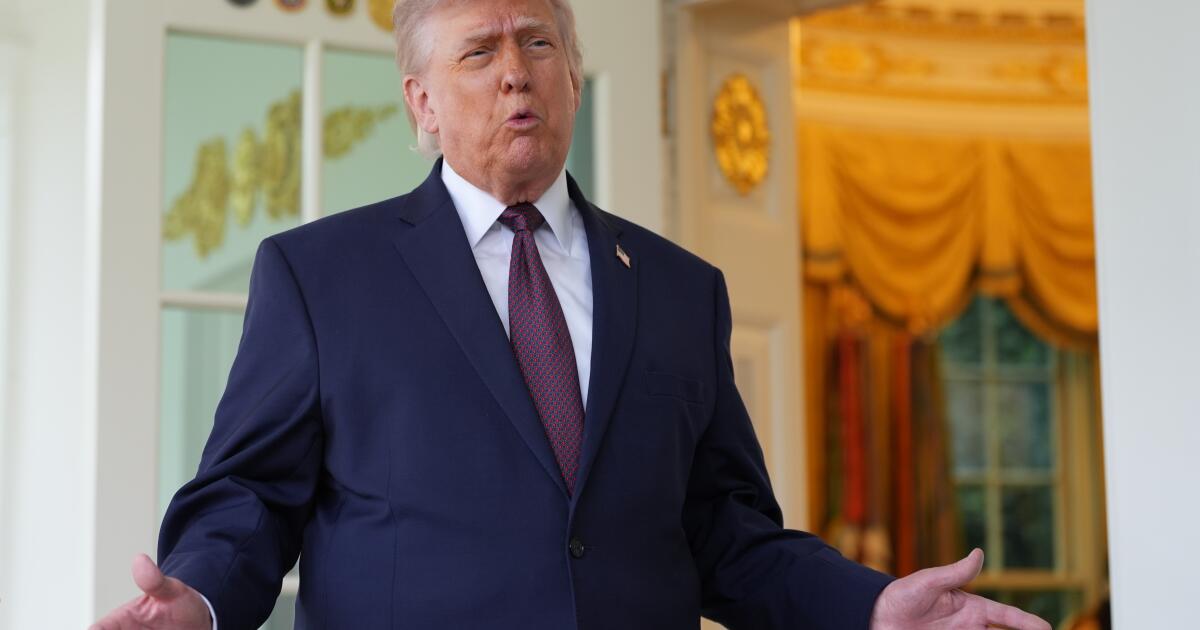
The general consensus is that President Trump’s social media post of himself dressed in robes, after a busy weekend in which he blasted Pope Leo and attended a prizefight while an Iran peace plan fell apart, was an attempt to cast himself as a Jesus-like figure.
But Trump says we have it wrong.
“It’s supposed to be me as a doctor, making people better,” he said.
As a graduate of St. Peter Martyr grade school in the San Francisco East Bay area, and as someone who has seen a lot of doctors for various ailments, I feel uniquely qualified to weigh in.
In Catholic school, holy cards are a big deal. You’ve seen a couple hundred of them by the time you hit second or third grade, so you become familiar with the muted ethereal glow, the heavenly gaze and the look of piety. A standard feature is the halo, a clearly defined sphere that sits like a buttered bonnet on the head of the saint.
Let the record show that in his post on his very own Truth Social, which is not always truthful, Trump does not have a halo.
So in total fairness, it’s possible the president was not lying when he said he was supposed to be a doctor.
On the other hand, having seen a good number of cardiologists and surgeons and orthopedic specialists, I don’t recall any doctors who wore flowing robes while bathed in heavenly light, with a flock of eagles coming out of their ears and a team of Navy SEALs busting through the hospital ceiling.
And then there’s the fireball emanating from Trump’s right hand. All of which poses the question: If Trump thinks this is what a doctor looks like, what ailment is he being treated for, and shouldn’t the public be advised?
There’s also the question of creation — not of human life but of the very existence of a social media post like this from the president of the United States in wartime. It was described as an AI-generated image, but who was at the computer?
Did the president sit down at the end of a long day and churn out an image of himself playing doctor, if not Jesus Christ? Or does he have a team of staffers who do this sort of thing, and if so, how could Elon Musk have missed them when he said the government was bloated and set out to fire half the federal workforce?
You’d at least hope the president would have the courage of his convictions. But as criticism of his post mounted, Trump deleted it Monday morning.
I think he should have stuck with the story — he was portraying himself as a doctor because he’s a healer. The next day, he could have been in a New York Jets uniform and told us he’s a quarterback. Then he could have released an image of himself in the Artemis space capsule and told us he’s an astronaut and he’s thinking of building a string of Trump hotels on the moon. Ask yourself this: Would anyone have been surprised?
A guy who only knows how to go for broke, and always doubles down when things go wrong, has to stick to his guns or the whole shtick unravels. I’d have respected Trump more if he had traipsed around the White House with a stethoscope for a week or two, or maybe performed brain surgery on Pete Hegseth, just to see what’s going on in there.
What’s going on in Trump’s head, if I might volunteer a bit of armchair psychoanalysis, is that failure triggers a sense of grandeur rather than humility.
Things are not going well at the moment, so he’s lashing out. The prices of things were supposed to come down on Day One, but thanks to his upheaval of the world economy, prices went up, and now they’re soaring because he helped start a war that made no sense.
A war that has been criticized by Pope Leo, who has pointed out that while the Trump administration has ascribed a religious imperative to the assault on Iran, and Trump promised to blow the country all the way back to the “Stone Ages,” Jesus would probably not be on board.
Trump, who said last year that he wants to “try and get to heaven, if possible,” now realizes he’s not going to get an endorsement from the pontiff.
And so the man who once issued a national call to prayer, said the Bible was his favorite book, joked after the death of Pope Francis that he wanted to be the next pontiff, and has now issued his own holy card, has attacked Pope Leo for being too liberal as well as “weak on crime and terrible for foreign policy.” He has, in effect, anointed himself as holier than the pope himself.
Even staunch supporters of Trump have worked themselves into a lather over this. They’re lashing out at Trump, as if his criticism of the pope and depiction of himself as Jesus Christ are shocking.
My fellow Americans, certain words have been rendered meaningless in describing the current state of affairs. Among them are shocking, surreal, unbelievable, unprecedented and unexpected.
If indeed Trump thinks he’s Jesus, let his penance begin with 100 Our Fathers, 500 Hail Marys and 1,000 Acts of Contrition.
If indeed he thinks he’s a doctor:
Physician, heal thyself.
steve.lopez@latimes.com

new video loaded: Eric Swalwell Suspends Campaign for California Governor
transcript
transcript
Eric Swalwell Suspends Campaign for California Governor
In a social media post, Representative Eric Swalwell announced that he was suspending his campaign for California governor after two news outlets published accusations of sexual assault and misconduct against him.
-
I do not suggest to you in any way that I’m perfect or that I’m a saint. I have certainly made mistakes in judgment in my past, but those mistakes are between me and my wife, and to her, I apologize deeply for putting her in this position. I also apologize to you if in any way you have doubted your support for me.
By Monika Cvorak
April 13, 2026

Coroner: Toddler dies after being hit by vehicle in Upstate

PBR | No. 1 John Crimber goes 4-for-4, tops final three rounds to win First PREMIER Bank PBR Sioux Falls

Tennessee immigration bill sparks nonprofit concerns over unintended impacts on vulnerable US citizens

Texas AG opens investigation into Austin over APD guidance on ICE warrants
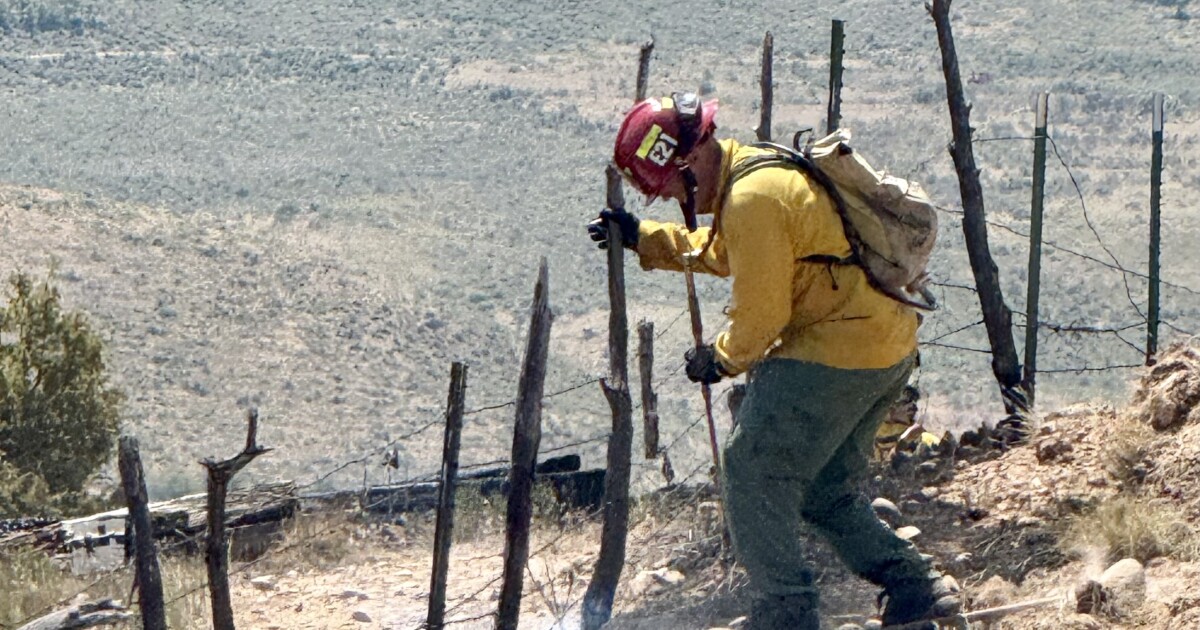
Utah delays imposing fee for wildfire mitigation program

Florida High School Football Rankings: Top 25 teams – Oct. 21

How old is Bo Nix? What to know about Oregon quarterback ahead of 2024 NFL Draft

Cleary's 21 help Le Moyne down Central Connecticut State 69-64 in OT

99th annual Pony Swim held in Virginia

Indiana Members Credit Union announced as new anchor tenant at Bottleworks District

Embattled Rep Tony Gonzales announces plans to resign amid sexual misconduct allegations

UN experts slam attacks on Gaza shelters, forced displacement in West Bank

DOJ fires at least 4 prosecutors involved in FACE Act cases during Biden administration

Melania Trump’s Epstein remarks turn up the heat on DOJ, Acting AG Todd Blanche to do more
Newsletter: Cautious optimism in Brussels as Orbán ousted in landslide Hungarian opposition win
-

 Atlanta, GA1 week ago
1 teenage girl killed, another injured in shooting at Piedmont Park, police say
-

 Georgia6 days ago
Georgia House Special Runoff Election 2026 Live Results
-

 Arkansas3 days ago
Arkansas TV meteorologist Melinda Mayo retires after nearly four decades on air
-

 Pennsylvania1 week ago
Parents charged after toddler injured by wolf at Pennsylvania zoo
-
 Milwaukee, WI1 week ago
Potawatomi Casino Hotel evacuated after fire breaks out in rooftop HVAC system
-

 Technology1 week ago
Anthropic essentially bans OpenClaw from Claude by making subscribers pay extra
-

 Austin, TX6 days ago
ABC Kite Fest Returns to Austin for Annual Celebration – Austin Today
-

 World1 week ago
Zelenskyy warns US-Iran war could divert critical aid from Ukraine