Politics
California lawmakers unveiled 14 reparations bills. None of them call for cash payments

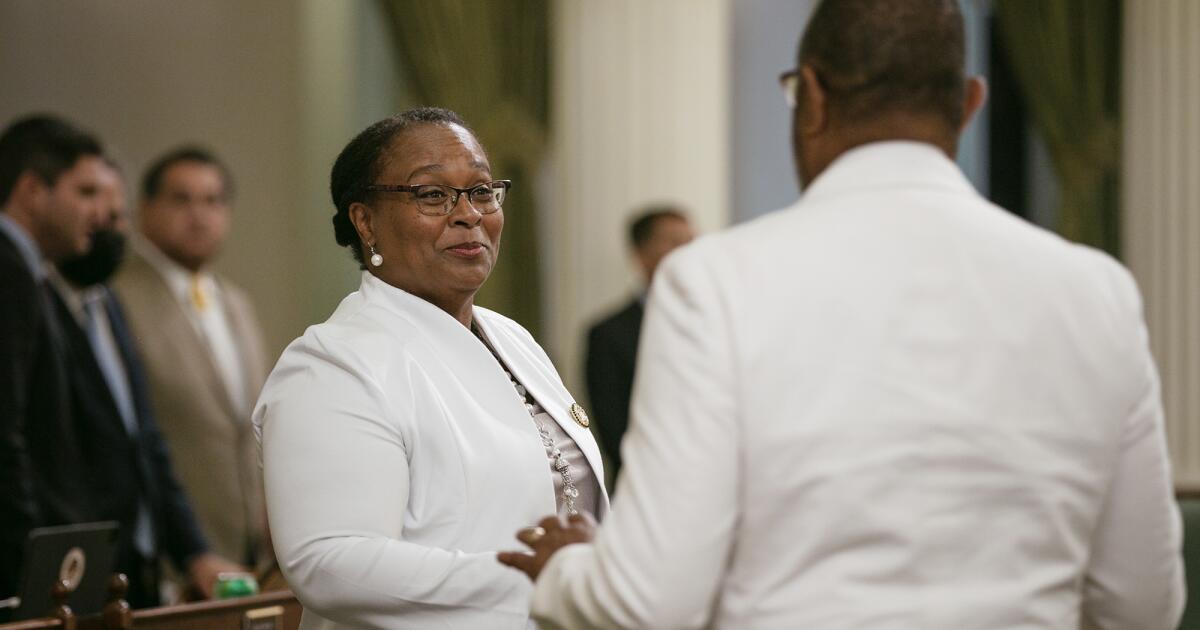
The California Legislative Black Caucus on Wednesday outlined the first set of reparations for the descendants of African Americans who were enslaved in the United States, with proposals that include a call for the state to issue a formal apology, to prohibit involuntary servitude in prisons and to return property seized by governments under race-based eminent domain.
The caucus is not yet calling for cash payments in a list of 14 reparations bills it hopes to pass this year that would enact wide-ranging reforms in education, civil rights, criminal justice, health and business.
The package of legislation is based on recommendations issued by California’s Reparations Task Force at the conclusion of a two-year historic process to study the effects of slavery and suggest policy changes to state lawmakers.
Assemblywoman Lori D. Wilson (D-Suisun City), chair of the California Legislative Black Caucus, said the apology is the first priority on the list of bills that she hopes will begin the conversation at the Capitol about reparations as she and her colleagues launch a campaign to educate the public about the state’s legacy of racism.
The decision to forgo an immediate call for cash payments comes as Gov. Gavin Newsom and lawmakers struggle to offset a budget shortfall of at least $37.9 billion. Newsom has proposed dipping into the state’s rainy-day reserves, cutting $8.5 billion from climate change initiatives and reducing more than $1.2 billion for housing programs as means to reduce spending to account for lower than expected tax revenue.
“We started realizing with the budget environment we were going to have to do more systemic policy change to address systemic racism versus big budget asks because there just wasn’t the budget for it,” Wilson said. “Our priorities centered around policy changes or creating opportunities.”
Newsom has echoed statements from the task force and Black lawmakers that reparations are about more than cash payments. In a recent interview, he said he finished reading through the task force’s report at the end of the year and his office is working on a detailed 30-page analysis of the recommendations that examines the work the state has already done and what more can be done.
When asked why his budget didn’t include reparations proposals, he said he knew the Black Caucus planned to share its own list of priorities and he didn’t want to get ahead of the group’s process.
“So we wanted to engage them,” Newsom said. “Remember, this was initiated by the Legislature. This is a partnership, and they recognize that there are a lot of things in that report they recommended that we’ve already done and that we’re doing. This gave us time to assess all that. So, it’s been actively worked on.”
Cash payments, in particular, have struggled to earn support among California voters, according to recent opinion polls. Newsom disregarded the idea that reparations could be tough to pass in an election year.
“That’s not been part of my thinking,” Newsom said. “My thinking is just accountability to be honest and responsible and to take seriously the recommendations.”
Wilson described the legislative package as the first phase of a multi-year effort to pass reparations. She said she hopes educating the public about California’s role in slavery and the harm caused by racist policies will help her colleagues and Californians understand the need for the state to atone.
The list of proposed bills the California Legislature Black Caucus wants to pass this year would do the following:
- ACA 7 — Amend the California Constitution to permit the state to fund programs for specific groups of people that help to increase life expectancy, improve educational outcomes and lift them out of poverty.
- ACA 8 — Amend the California Constitution to prohibit involuntary servitude for incarcerated people.
- ACR 135 — Formally recognize and accept the state’s responsibility for the harms and atrocities of state representatives who promoted, facilitated, enforced and permitted slavery.
- AB 1815 — Prohibit discrimination based on natural and protective hairstyles in all competitive sports within California.
- AB 1929 — Offer competitive grants to increase enrollment of African American descendants in STEM-related career technical education.
- AB 1975 — Offer medically supportive food and nutritional interventions as permanent Medi-Cal benefits in California.
- AB 1986 — End the California prison system’s practice of banning books without oversight and review.
Proposals that the caucus intends to introduce in the next two weeks would seek to:
- Offer career education financial aid to redlined communities.
- Restore property taken under race-based eminent domain or offer other remedies to the original owner.
- Issue a formal apology for human rights violations and crimes against humanity on African slaves and their descendants.
- Restrict solitary confinement in correctional detention facilities.
- Offer state-funded grants for African American communities to decrease violence.
- Require notification to community stakeholders before the closure of a grocery store in an underserved community.
- Eliminate barriers to occupational licenses for people with criminal records.

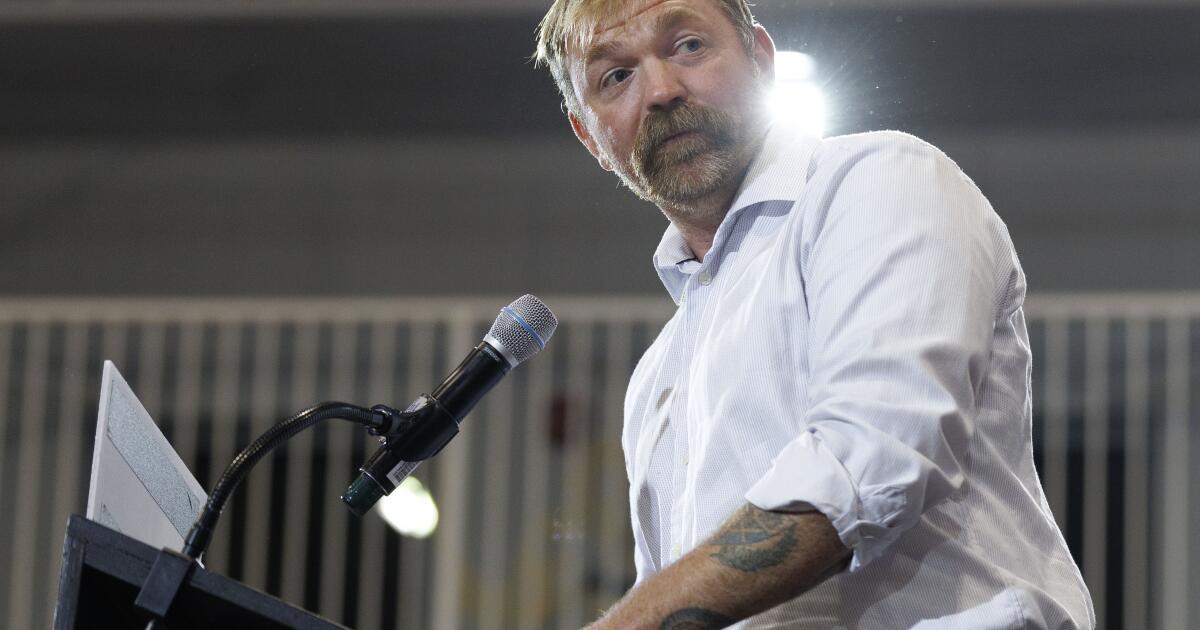
WASHINGTON — The campaign of U.S. Senate nominee Graham Platner was buckling in Maine on Tuesday after he was accused of rape, injecting uncertainty into a contest that is central to determining which party wins Senate control in November’s midterms.
The situation set off swift debate about how state Democrats would choose Platner’s replacement if he were to withdraw, and which Maine figures might be best positioned to play off the progressive messaging he used to win over voters.
With Maine viewed by Democrats as a key seat to win in their long-shot bid for a Senate majority, the decision would be high stakes, analysts said. In the meantime, with uncertainty clouding the race, the shake-up could put additional pressure on the party to win Senate races in states seen as more difficult to flip.
Platner has denied the rape allegation, which came in a Politico report Monday from a woman who said Platner forced her to have sex with him when he was intoxicated. Platner said Monday that he would “reflect” on his candidacy but has not withdrawn.
“The calculation that almost everyone on the Democratic side is making is that with Platner in it, it is an unwinnable race,” said John Cluverius, director of survey research for the Center for Public Opinion at UMass Lowell, “and without Platner in it, they have a much better chance.”
An oyster farmer and Marine veteran, Platner had entered the race to challenge Republican Sen. Susan Collins as an outsider and was seen as riding an anti-establishment wave of support.
His candidacy highlighted the split within his party between progressives and establishment Democrats and represented a matchup between an older incumbent and a younger outsider candidate.
By Tuesday afternoon, Platner’s financial backing was disintegrating and prominent Democrats had withdrawn their support — including Sen. Bernie Sanders (I-Vt.), a key endorser of Platner’s, who said Tuesday afternoon that he had told Platner to withdraw.
A spokesperson for Platner’s campaign did not immediately respond to a request for comment Tuesday.
Rep. Ro Khanna (D-Fremont), who had been one of Platner’s most visible backers, quickly withdrew his endorsement Monday.
“I’ve been very clear that sexual assault or violence against women is a red line. These allegations are very serious and credible,” Khanna, who has been a prominent supporter of victims of the late sex offender Jeffrey Epstein, wrote on X.
The California congressman had been among progressives, including Sanders and Sen. Elizabeth Warren (D-Mass.), who previously stood by Platner. Khanna had rallied for Platner at a pre-primary event in June after a set of allegations about the candidate’s “unsettling” conduct from his exes reported by the New York Times and the revelation that he had sent sexually explicit messages to women outside his marriage.
Platner’s collapse comes after the fall of former California Rep. Eric Swalwell, whose ascendant campaign for governor was ended in April after he was accused of sexual assault.
As in Swalwell’s case, Platner’s support has unraveled quickly, leaving him with little path forward.
The Democrats’ formal Senate campaign arm and the Senate Majority PAC, which is aligned with Senate Minority Leader Chuck Schumer, both pulled investment from the race, their leaders said in statements. Swing Left, an organization working to flip seats for Democrats, removed Maine from its target Senate races for now.
“We continue to believe this seat is winnable if Platner is not on the ballot,” said Senate Majority PAC spokesperson Lauren French.
Under state law, Platner has until Monday to withdraw in order for the Maine Democratic Party to be able to nominate a replacement. The committee would have until July 27 to do so.
For Collins, facing a new candidate could make for a harder race than going up against Platner, analysts said.
The fifth-term senator has survived reelection repeatedly, including in 2020, when the state went blue in the presidential election, but drawn ire from some moderate and left-leaning voters who want her to push back more forcefully against President Trump.
Without Maine, Democrats would have to pick up an additional race in a state that went for Trump in 2024 in order to flip the four seats required to win a majority.
To get to four, the party needs to win some mix of Maine, North Carolina, Ohio, Texas and Iowa and must also retain its seats in Michigan, Georgia and New Hampshire.
That scenario could be within reach for Democrats but they face a steep climb, a New York Times/Siena poll released last week found.
“This does put enormous pressure on Democrats across the country with every viable race,” said David Niven, who teaches American politics at the University of Cincinnati. “The margin of error was already slim, and it’s approaching none.”
In Texas, a heated and expensive race has shaped up between Democrat James Talarico, a state representative who is facing Republican Ken Paxton, the state attorney general.
“I would suspect that Democrats are going to be relatively all-in on Texas simply because they can no longer rely on Maine in the way they thought they were going to be able to,” said Mark Jones, a political science professor at Rice University.
The Politico report came after a string of other controversies for Platner, who had successfully batted them away ahead of the state’s June primary.
His quick rise in the campaign excited Democrats looking for younger, non-establishment leaders. His primary opponent, Maine Gov. Janet Mills, suspended her campaign in late April, clearing his path.
But questions about the rushed vetting of Platner soon arose.
He faced scrutiny over a tattoo on his chest that was widely recognized as a Nazi symbol, which he then said he had covered up, and a tranche of deleted Reddit posts that he said were “stupid” comments from a time when he had post-traumatic stress disorder.
Ahead of the primary, the report of his extramarital texts and the allegations by exes about volatile behavior revived questions about his candidacy; Platner described them as politically motivated and privately assured Democratic leaders that nothing else was coming.
The situation “reinforce[s] the need for more careful vetting [of] first-time outsider candidates,” said Dan Schnur, who teaches political communications at USC, UC Berkeley and Pepperdine.
“Every political professional knows that the most important type of candidate research is not opposition research — it’s research on your own candidate,” Schnur said.
Progressive leaders on Monday sought to validate the success of Platner’s campaign in energizing Maine voters while disavowing Platner. They urged Democratic leaders to stick with a candidate who shares Platner’s working-class image if he withdraws — something Platner may hope to influence, the New York Times reported.
“To the Democratic establishment: this is not your opening,” Joseph Geevarghese, executive director of the progressive organization Our Revolution, said in a statement. “Whoever leads this movement forward must be someone who has actually lived the fight Graham Platner ran on.”
Some Democrats were already looking to the party’s gubernatorial primary candidates as possible replacements, including Maine Secretary of State Shenna Bellows, former state Sen. Troy Jackson and former state health official Nirav D. Shah.
The July deadlines would leave enough time before November for Democrats to persuade voters of a new candidate, said Mark Brewer, a political science professor at the University of Maine, but how the party chose to select a replacement would probably be as important as whom it chose.
“Having a 100-person executive committee select it on their own would probably not sit well with Platner’s supporters,” Brewer said. “A caucus they could pull off; if they want to be as open and inclusive as possible, that’s probably their best option.”
McDaniel reported from Washington and Kwok from Los Angeles.

NEWYou can now listen to Fox News articles!
President Donald Trump said Tuesday he plans to lift U.S. sanctions on Turkey and signaled he is prepared to move forward with the long-stalled sale of F-35 stealth fighter jets, marking a dramatic reversal in U.S. policy toward the NATO ally years after Ankara was expelled from the program for its purchase of a Russian missile defense system.
Speaking alongside Turkish President Recep Tayyip Erdoğan during a bilateral meeting at the NATO summit in Ankara, Turkey, Tuesday, Trump said his administration would remove sanctions imposed on Turkey’s defense sector.
“I can tell you we’re going to be taking the sanctions off, OK?” Trump said. “I don’t want him to waste his time answering that question. It’s time. We don’t sanction friends.”
TRUMP BETS ON FORMER NATO TROUBLEMAKER AS TURKEY’S STRATEGIC VALUE SURGES
Turkish President Recep Tayyip Erdogan welcomes US President Donald Trump at Ankara Airport, who is paying an official visit to Turkey ahead of the 36th NATO Heads of State and Government Summit in Ankara, Turkey, on July 07, 2026. (Dogukan Keskinkilic/Pool via REUTERS)
Asked whether he would sell F-35 fighter jets to Turkey despite existing legal restrictions tied to Ankara’s purchase of the Russian-made S-400 air defense system, Trump indicated he was open to doing so.
“Many people, including the people sitting right here thinks why wouldn’t we do that?” Trump said. “Turkey has been in many ways much more loyal than other countries that we think would be loyal.”
Pressed on concerns about Turkey’s continued possession of the S-400, Trump dismissed them.
“I have no concerns about anything.”
The remarks represent Trump’s clearest indication yet that he intends to restore defense ties with Turkey, building on months of efforts to revive military cooperation with one of NATO’s largest armed forces after years of strained relations.
Turkey was removed from the multinational F-35 program in 2019 after taking delivery of the Russian-made S-400 air defense system, prompting Washington to argue that operating the Kremlin-built system alongside America’s most advanced stealth fighter could expose sensitive U.S. technology. Congress subsequently imposed sanctions under the Countering America’s Adversaries Through Sanctions Act, or CAATSA.
‘WRITTEN IN OUR DNA’: POLISH PILOTS WHO REMEMBER SOVIET RULE PREPARE FOR AMERICA’S MOST LETHAL FIGHTER JET
Congress long has been one of the biggest obstacles to restoring Turkey’s access to the F-35, with bipartisan lawmakers arguing that Ankara should not receive America’s most advanced fighter aircraft while it continues to possess the Russian-made S-400 air defense system and pursues policies they say run counter to U.S. interests.
A U.S. airmen watches an Air Force F-35 Lightning II joint strike fighter aircraft approach for the first time on July 14, 2011 at Eglin Air Force Base in Florida. (Samuel King Jr./U.S. Air Force)
Beyond political opposition, the Trump administration also faces legal hurdles.
While the president has authority over sanctions policy, Congress enacted additional restrictions after Turkey’s purchase of the S-400. Section 1245 of the fiscal year 2020 National Defense Authorization Act bars the transfer of F-35 aircraft to Turkey unless the executive branch certifies that Ankara has met statutory requirements related to the Russian missile system.
In recent days, a bipartisan group of House lawmakers urged Trump not to move forward with an F-35 sale, arguing that doing so without satisfying those legal requirements would violate U.S. law and undermine national security.
Lawmakers also have warned that Turkey’s continued possession of the S-400, support for Hamas and tensions with fellow NATO allies Greece and Cyprus raise broader concerns about restoring Ankara’s access to the stealth fighter.
Russian S-400 missile air defence systems are seen before the military parade to commemorate the 75th anniversary of the battle of Stalingrad in World War Two, in the city of Volgograd, Russia February 2, 2018. REUTERS/Tatyana Maleyeva – UP1EE220T3A2B
CLICK HERE TO DOWNLOAD THE FOX NEWS APP
The Pentagon has maintained that the S-400’s sophisticated radar could collect data on the F-35’s radar signature and electronic profile during routine operations, potentially allowing Russia to better detect and defeat the aircraft in a future conflict if that information were shared with Moscow.
When the Trump administration removed Turkey from the F-35 program in 2019, the White House said “the F-35 cannot coexist with a Russian intelligence collection platform that will be used to learn about its advanced capabilities.”
Pentagon acquisition chief Ellen Lord similarly warned at the time that allowing Turkey to operate both systems would jeopardize the long-term security of the F-35 program because “much of the F-35’s strength lies in its stealth capabilities.”
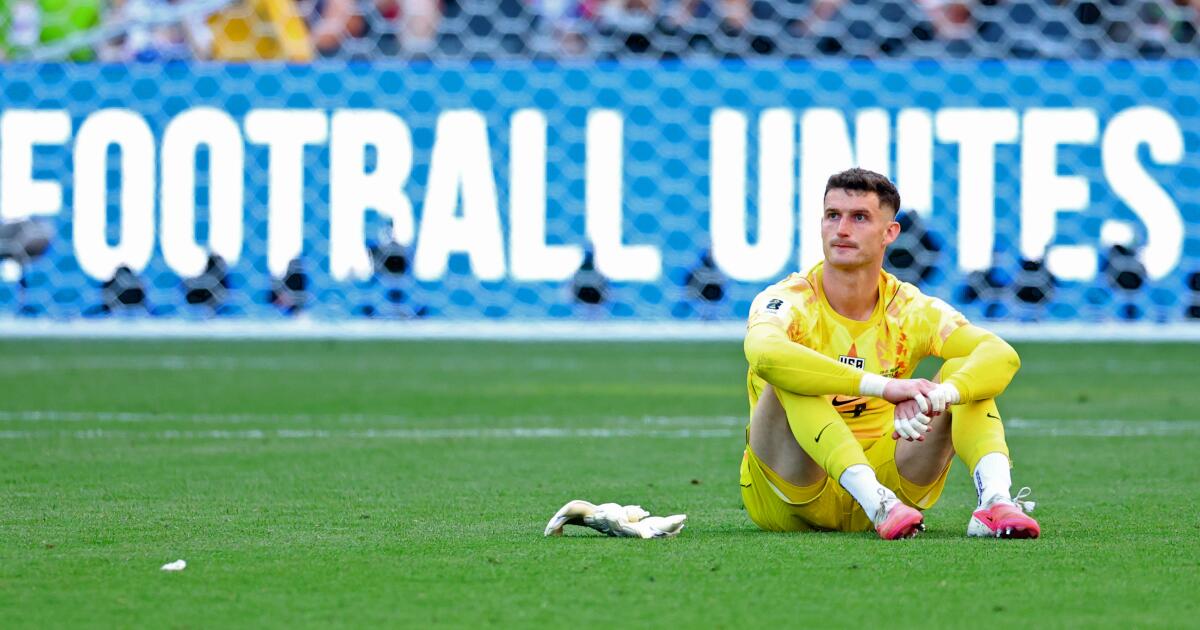
SEATTLE — Is everybody happy now? You good, Mr. President?
Put our boys in a blender, President Trump did, with those phone calls to FIFA President Gianni Infantino. Messed with their mojo by politicking to get American striker Folarin Balogun’s red card rescinded.
We’ll have to check VAR, but it might be the first time Trump succeeded at having a decision overturned.
Probably because this time what he sought to overturn — discipline stemming from Balogun’s accidental contact in the United States’ victory over Bosnia and Herzegovina — actually was unjust. Balogun should not have received a red card.
The problem is, having our President butt in here was a joke. Unfunny and out of bounds, offsides, an own goal — all of the things.
It put the U.S. team at the center of a geopolitical maelstrom, which is exactly what they did not need in the hours before the biggest match of their lives and the biggest match in the history of the U.S. men’s soccer program.
Some 40 or 50 million viewers were expected to tune in; how many of them watched for the first time? And what sort of impression did Monday’s 4-1 blunder-filled meltdown against Belgium make? That we stink at soccer — still?
If you were one of them, please, believe your soccer-fan friends when they tell you the Americans played much better in previous matches.
But so much for a magical run. On their home turf, the Americans pulled up lame before the finish line (aka, for the U.S. team’s purposes, its first quarterfinals since 2002).
To their credit, after the debacle, members of the U.S. team didn’t complain about anything being rigged. They didn’t use the distraction as an excuse. And they didn’t point fingers at anyone — anyone at all.
U.S. striker Folarin Balogun (20) walks to the locker room at halftime against Belgium in the World Cup on Monday at Lumen Field in Seattle.
(Allen J. Schaben / Los Angeles Times)
“We’re playing on home soil,” defender Chris Richards said. “So the only pressure we put on ourselves is to perform for our country, and ultimately didn’t feel the way we wanted to today. But I don’t think the antics of the last 24 hours had anything to do with it.”
No, they said the “debate,” or “outside noise” or “political manipulation” — as Tim Ream, Alex Freeman and coach Mauricio Pochettino described what others are calling “Balogate” — were not to blame for the gut-punch that answered the question: Why not us?
Because the U.S. is not yet good enough to beat the world’s great teams. Especially not when their pregame preparation includes having to try to block out an international uproar.
To have any hope against the Belgians in the round of 16 — a matchup between FIFA’s Nos. 9- and 17-ranked sides — the Americans needed to be going full-tilt, to be focused and ferocious and probably also a little bit lucky.
Instead, they looked shook, rattled. And they got rolled.
They were the worst version of themselves at the worst time, which was so weird from a team that had been on its front foot from the first whistle against Paraguay.
Not Monday. Against Belgium, they were on their heels from the outset. Heavy touches, slow afoot, playing like they had the weight of the World Cup on their shoulders.
And all that White House maddening meddling — for what?
Balogun started and played most of the match, but it could just as well have been reserve striker Ricardo Pepi. Or you or me, Balogun was that ineffective.
His play of the day came postmatch, when he approached Belgian coach Rudi Garcia and the two had a respectful exchange. A real diplomat, that Brooklyn-born, Britain-raised American by birthright.

This loss was a real team effort, of course. Christian Pulisic came off in the 59th minute after twisting his right ankle — leaving this World Cup without a goal in the four matches he appeared.
Matt Freese, the Harvard-educated starting goalkeeper, had a brain cramp of epic proportions when he stepped outside of the box and failed to corral a ball. Belgium’s Charles De Ketelaere kicked it loose and set up Hans Vanaken, whose shot traveled behind Ream for an easy score that made it 3-1 in the 57th minute.
There was a lot of poor decision-making with this match, on and off the pitch.
In the end, Trump’s appeal to Infantino did more harm than good. But what if some good could come from it?
Hey, FIFA, what about giving teams a process to appeal cards, like our American athletes in the NBA, NFL and MLB have?
Offering a suggestion box wouldn’t be opening Pandora’s box, not if it were a transparent and regular part of the game that would, hopefully, offer increasingly fair outcomes in a tournament where every match is so monumental — as our President recognized, much too enthusiastically.

U.S. coach Mauricio Pochettino waves to the crown after a 4-1 loss to Belgium at the World Cup on Monday.
(Allen J. Schaben / Los Angeles Times)
-
Politics13 minutes ago
Platner’s collapsing campaign in Maine adds new midterm pressures for Democrats nationwide
-
 Science16 minutes ago
Fans slam FIFA’s cooling breaks. Why the U.S. World Cup team doctor disagrees
-
 Sports21 minutes ago
Cowboys’ Marshawn Kneeland had early-stage CTE when he died by suicide
-

 World31 minutes ago
Russian missiles strike Ukraine’s capital, Kyiv, for third time in a week
-
 News58 minutes ago
Reigning champion Argentina escapes with remarkable World Cup victory over Egypt
-

 Los Angeles, Ca2 hours ago
Punk legends unite for special Ramones tribute in Los Angeles
-

 Detroit, MI3 hours ago
Firefighters battle large blaze at vacant apartment complex on Detroit’s west side
-
San Francisco, CA3 hours ago
49ers Sign DL Gracen Halton to a Four-Year Deal


