
Northeast
Weinstein rape retrial to open, with majority-female jury
NEWYou can now listen to Fox News articles!
Opening statements are set for Wednesday in former movie mogul Harvey Weinstein’s rape retrial, this time with a majority-female jury deciding the landmark #MeToo case.
After a dayslong selection process yielded a seven-woman, five-man jury and five alternate jurors by Monday, prosecutors and Weinstein’s lawyers finished choosing a sixth and final alternate on Tuesday. Alternates step in if a member of the main panel can’t see the trial through.
The main jury is more female than the five women and seven men who convicted Weinstein at his first trial five years ago. The verdict marked a signature moment for the #MeToo movement against sexual misconduct, which had been fueled in 2017 by a slew of allegations against Weinstein, then a high-flying movie producer of a string of Oscar winners including “Pulp Fiction” and “Shakespeare in Love.”
But in a reversal that dismayed #MeToo activists, New York’s highest court last year overturned Weinstein’s 2020 conviction and 23-year prison sentence. The court found that the original trial judge allowed prejudicial testimony. That judge’s term expired in 2022, and he is no longer on the bench.
HARVEY WEINSTEIN’S TEAM STRESSES SEX CRIME RETRIAL COULD LEAD TO DEATH, REQUESTS HOSPITAL STAY
Weinstein, 73, has pleaded not guilty and denies raping or sexually assaulting anyone.
Drawn from Manhattan’s jury pool, the 12 members of the main jury for the New York retrial include a physics researcher, a photographer, a dietitian, a therapist, an investment bank software engineer and a fire safety director. Others have experience in real estate, TV commercials, debt collection, social work and other fields.
One has a high school equivalency degree. Others have master’s degrees. Some have served as jurors or grand jurors multiple times before; others, never.
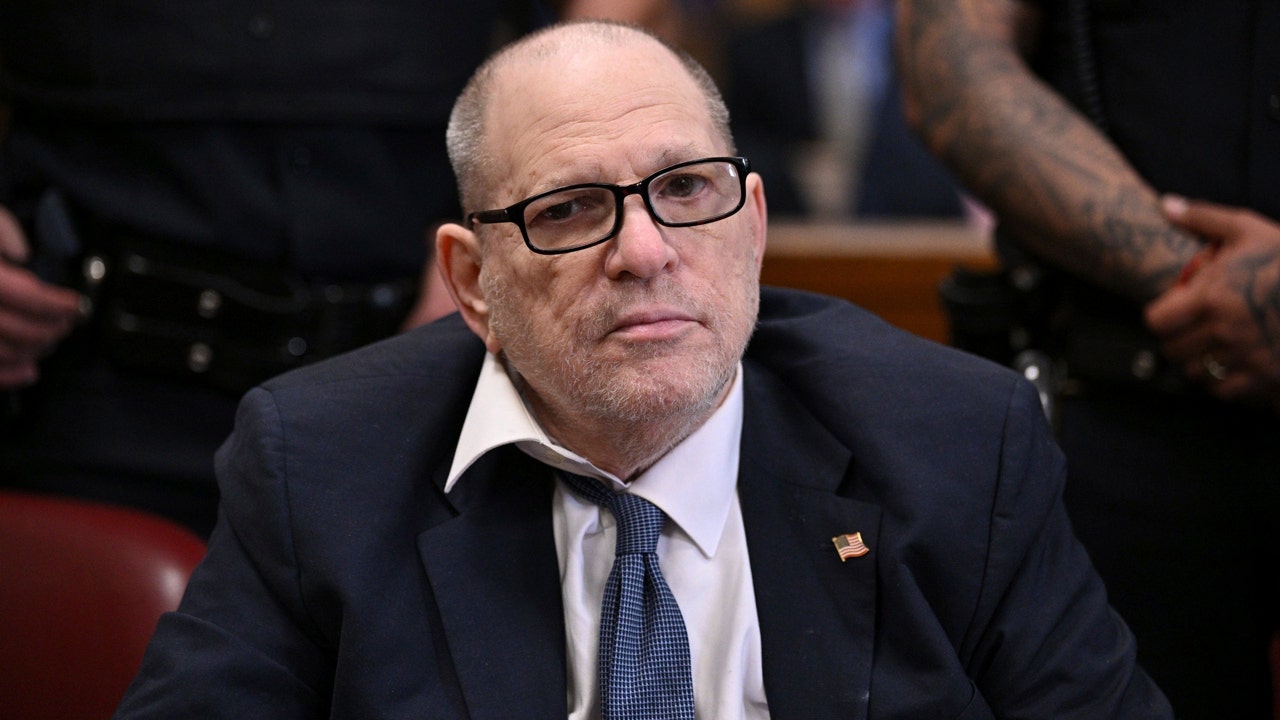
Harvey Weinstein appears in state court in Manhattan as jury selection continues in his retrial on Monday, April 21, 2025 in New York. (Curtis Means/Pool Photo via AP)
Hundreds of other potential jurors were excused for reasons ranging from language barriers to strong opinions about Weinstein — “the first word that came in my head was ‘pig,’” said one man who was soon let go.
Those chosen were quizzed about their backgrounds, life experiences and various other points that could relate to their ability to be fair and impartial about the highly publicized case.
“You may hear sexual allegations here of a salacious nature — graphic, perhaps. Would hearing that indicate that … Mr. Weinstein must be guilty?” defense attorney Mike Cibella asked one prospective juror on Monday. The woman, who ultimately was chosen, answered no.
HARVEY WEINSTEIN MANDATED RESHOOTS MADE ACTRESS FEEL ‘SLIMY’
Prosecutor Shannon Lucey sought assurances that prospective jurors could put aside any position or feelings they had about the #MeToo movement.
“Is there anyone who is going to think of the movement and think, ‘OK, that’s just something that I have to keep in the back of my mind when I’m deciding this case’? Everyone can put that aside?” Lucey asked a group of 24 possible jurors. All indicated they could do so.
Weinstein’s rape and sexual assault retrial involves accusations from three women: an aspiring actor who said he raped her in 2013, and two women who made separate allegations of forced oral sex in 2006. One of the two wasn’t part of the original trial.
Meanwhile, Weinstein is challenging a separate 2022 rape conviction in Los Angeles.
Read the full article from Here
Pittsburg, PA
Pittsburgh Presbytery fundraiser will eliminate medical debt for thousands across Allegheny County
Connecticut
At least four injured after multi-vehicle accident involving bus in Bridgeport, per police
At least three people were taken to local hospitals after a multi-vehicle accident involving a public transit bus in Bridgeport, Connecticut, on Tuesday, according to the Bridgeport Police Department.
The collision took place at around 7:40 p.m. on the 500 block of Water Street, where officials located a Greater Bridgeport Transit Authority (GBTA) bus that struck at least six other vehicles and a wall of the Bridgeport train station.
Once at the scene, emergency medical officials transported several individuals to local hospitals for evaluation and treatment. Two people were taken to Bridgeport Hospital, and two others to St. Vincent’s Medical Center; the extent of their injuries was unknown, per authorities.
An MTA Facility Manager has responded to the scene to assess the structural damage, according to police.
Train service was not impacted on the Metro-North lines as a result of the nearby collision. However, traffic was impacted by the closure of the northbound lane of Water Street between State Street and John Street.
The Bridgeport Police Department Accident Reconstruction Team reported to the site of the crash to examine the circumstances surrounding the accident.
Anyone with information related to this incident is asked to contact the Bridgeport Police Department Traffic Division, Sergeant Darryl Wilson, at 203-576-7640.
Maine
A Maine cop warned of interpreter fraud 5 years ago. The state is just catching up.
The Bangor Daily News was the first to report this story. What you’re reading here would likely not be made public without the efforts of professional journalists asking questions, interviewing sources and obtaining documents.
In late 2020, a federal investigator identified a concerning pattern within MaineCare, the state’s Medicaid program: Providers were billing for suspiciously high levels of interpreter services in what appeared to be a pattern of waste, abuse or fraud.
Interpreter claims surged by 283% between 2011 and 2017, with costs rising from roughly $800,000 to over $4.1 million annually. The increase occurred even as the number of refugees and immigrants arriving in Maine declined. The investigator wrote a report for fellow police, taking a closer look at billing trends following the high-profile prosecution of two interpreters, two social workers and a counselor in 2019.
In the years since the report was written, prosecutors have not brought any additional criminal cases. Under state law, interpreters are not required to have licenses. Providers have also continued to bill MaineCare at similar annual amounts to those that raised the investigator’s suspicion.
The report, which was obtained by the Bangor Daily News along with a partial copy of a second memo from 2021 that validated the findings through an additional analysis, has never been disclosed before. The findings are coming to light in the wake of a federal inquiry by a Republican-led congressional committee into welfare fraud.
That probe began after Minnesota federal prosecutors in November charged dozens of people, largely from that state’s Somali population, with stealing hundreds of millions of dollars from social programs. The House panel’s inquiry recently expanded to include a Maine behavioral provider that serves immigrants and refugees, Gateway Community Services.
There’s still time to make a gift in 2025 to power BDN reporting for the year ahead. Make a donation now.
On Tuesday, the Maine Department of Health and Human Services halted MaineCare payments to Gateway, alleging the company overbilled for interpreter services by more than $1 million. Gateway denies the state’s claim. Since May, the organization has faced allegations of overbilling from a former employee, first published by The Maine Wire, the media arm of the conservative Maine Policy Institute.
The 2020 report shows that concerns of systemic fraud in the MaineCare system among providers who serve the state’s immigrant population were raised years ago. It is unclear how state officials responded to it. Gateway was the second-highest biller for interpreter services in the past 10 years, state data show.

A spokesperson for Attorney General Aaron Frey said the office was aware of Pellerin’s memo and referred the BDN to a 2019 case as its most recent example of prosecuting MaineCare fraud. The U.S. attorney’s office has not prosecuted any healthcare fraud cases pertaining to interpreters in Maine since 2019.
The author of the report, Brian Pellerin, who wrote it while serving as an agent focused on Maine with the inspector general’s office of the U.S. Department of Health and Human Services, declined an interview. He is now the No. 2 to Cumberland County Sheriff Kevin Joyce.
His report followed Maine’s last round of prosecutions around MaineCare fraud centered on the state’s Somali community. Federal prosecutors found that two interpreters had targeted newly arrived refugees — largely from Somalia — and brought them to specific providers for care. Those providers then charged MaineCare for interpreter services that were either overinflated or never happened, then gave the interpreters a cut of the money.
One of the interpreters, Abdirashid Ahmed, was estimated to have made off with at least $1.8 million, prosecutors said. He pleaded guilty in 2019. Nancy Ludwig, Heather Borst, and Danielle Defosse-Strout, all of whom worked for Lewiston-based Facing Change, were the providers also convicted in the scam.
Pellerin suspected that the same scheme might explain the high billing levels for interpreter services he discovered across the system. His investigation looked at the number of claims filed, patients served, and the total amount of MaineCare dollars distributed by MaineCare for interpreter services each year between 2011 and 2019.
Over those years, the number of claims filed steadily rose, from 16,300 in 2011 to 43,806 in 2019, according to Pellerin’s report. At the same time, the total number of patients ebbed and flowed with a low of 2,856 in 2011 to a peak of 4,559 in 2016. Meanwhile, the number of newly arrived refugees stayed flat, then declined — a notable fact given that the scheme Pellerin suspected depended on recruiting new arrivals, according to the report.
When certain MaineCare providers became reliant on immigrants, the interpreters started making demands, Pellerin found. They would ask providers to bill MaineCare for more units of interpreting services than they actually did and negotiate illegal kickbacks outside the MaineCare fee structure. If providers wanted to continue making money, they would have to listen to the interpreters or else they would lose their patients, the report found.
Pellerin’s report did not mention the names of the specific providers whose billing levels indicated potential fraud, waste or abuse. He noted that the scams not only defrauded Maine’s taxpayer-funded health system but also hurt vulnerable refugees, saying bad actors were taking advantage of fellow members of the state’s Somali community by treating them as a “harvested commodity” with little regard for their actual health needs.
“These MaineCare beneficiaries are often newly arriving immigrants who are potentially receiving lifesaving or life-altering medical treatment,” the report said.
Instead, they were potentially receiving poor quality services, or none at all, he concluded. Ludwig’s trial presented examples of that potential harm. A Somali refugee testified that Ahmed had brought him to see Ludwig, a social worker, to treat a toothache and asthma, according to federal court documents. Another testified he didn’t know why he was brought to Ludwig.
It is not clear what happened after Pellerin completed his report. But the spending trends observed in Pellerin’s report remain true, according to a BDN analysis of MaineCare data obtained in a public records request.
In the last 10 years, providers filed more than 45,000 interpreter claims, totaling more than $41.4 million. Half of that money went to only a few providers. The BDN contacted the top 10 providers and asked if they had ever been contacted by federal law enforcement. Only two responded, with one of them saying they had not. (The BDN is not naming that provider because it has not been charged with a crime.)
The other, Gateway, said through a lawyer that it also had not been contacted in the last 10 years by federal law enforcement. The audit that prompted state officials to pause MaineCare payments to the company on Tuesday began in early 2023 and looked at claims submitted between 2021 and 2022, according to a notice of violation.
Prior to the announcement that the organization’s MaineCare payments had been suspended, the provider’s lawyer, Pawel Bincyzk, denied allegations of fraud or being aware of Pellerin’s report.
“Gateway stands by its previous statements on this issue and will continue to cooperate with the state as it has in the past,” Bincyzk said.
Maine is one of 18 states in the country that provides direct reimbursement for language interpreters under Medicaid. The state pays $20 per 15 minutes for interpreting, according to the MaineCare manual. Interpreters don’t bill the state directly. Instead, a provider such as a doctor or mental health counselor bills MaineCare for services rendered, as well as interpreting. The provider then pays the interpreter, according to state regulations.
When Pellerin’s report was written and still today, MaineCare’s manual says interpreters must hold a state license. DHHS reminded providers in 2021 that they were supposed to provide the interpreter’s appropriate certification and licensure, along with other documentation to prove their qualifications.
However, the state’s licensing office doesn’t oversee interpreters except for those focused on American Sign Language. In 2019, the Maine Legislature approved a measure that eliminated the licenses that governed other interpreters, getting rid of the mechanism to license foreign language interpreters despite the requirement in state regulations.
Maine DHHS follows the procedures outlined in the MaineCare manual and can do reviews after a payment is made, department spokesperson Lindsay Hammes said. That review typically includes documentation related to qualifications, date, time, and duration of service, language used and costs.
But the agency did not specifically answer questions about how many times its internal auditing unit has found billing violations for interpreter services. It also did not clarify how interpreters are supposed to be licensed as required by MaineCare when no specific foreign language licensure exists in Maine, other than saying it was under the purview of the budget department.
To address the issues, Pellerin’s report included several things the state could take to correct the programmatic weaknesses identified. Those included incorporating similar requirements and qualifications used by courts for interpreters and requiring interpreters to become MaineCare providers so they could bill directly. At a minimum, it could enforce the regulations in the benefits manual, the report said.
Even among the 18 states that directly reimburse interpreters, every state has slightly different regulations around qualifications, said Mara Youdelman, the managing director of federal advocacy for the National Health Law Program. After spending nearly two decades studying the issue, she helped create the only group in the country that can certify foreign language interpreters for work in healthcare. The certification has been available since 2009.
Youdelman helps track how the 18 states across the country utilize interpreters and the regulatory framework those states use. While the state of Maine is spending millions of dollars each year on interpreting, she cautioned that it can be hard to tell if something nefarious is going on. In fact, Maine’s model of having providers bill MaineCare for interpreting is common among the 18 states, she said.
While she’s looked at interpreting services for many years, Youdelman said she’s never heard of interpreters defrauding the system. She worries that some will use instances of fraud as an excuse to cut language services.
“The competency of interpreters is critical,” she said. “We really do need to make sure that interpreters are actually qualified to do the job, because if not, and we have ineffective communication, then medical errors occur, negligence occurs, malpractice occurs, and people literally die.”
Bangor Daily News investigative reporter Sawyer Loftus may be reached at sloftus@bangordailynews.com.
-
Iowa1 week agoAddy Brown motivated to step up in Audi Crooks’ absence vs. UNI
-
Maine1 week agoElementary-aged student killed in school bus crash in southern Maine
-
Maryland1 week agoFrigid temperatures to start the week in Maryland
-
New Mexico1 week agoFamily clarifies why they believe missing New Mexico man is dead
-
South Dakota1 week agoNature: Snow in South Dakota
-
Detroit, MI1 week ago‘Love being a pedo’: Metro Detroit doctor, attorney, therapist accused in web of child porn chats
-
Health1 week ago‘Aggressive’ new flu variant sweeps globe as doctors warn of severe symptoms
-
Maine1 week agoFamily in Maine host food pantry for deer | Hand Off
