Northeast
Trump shooter Thomas Crooks' parents unlikely to face criminal charges, experts say

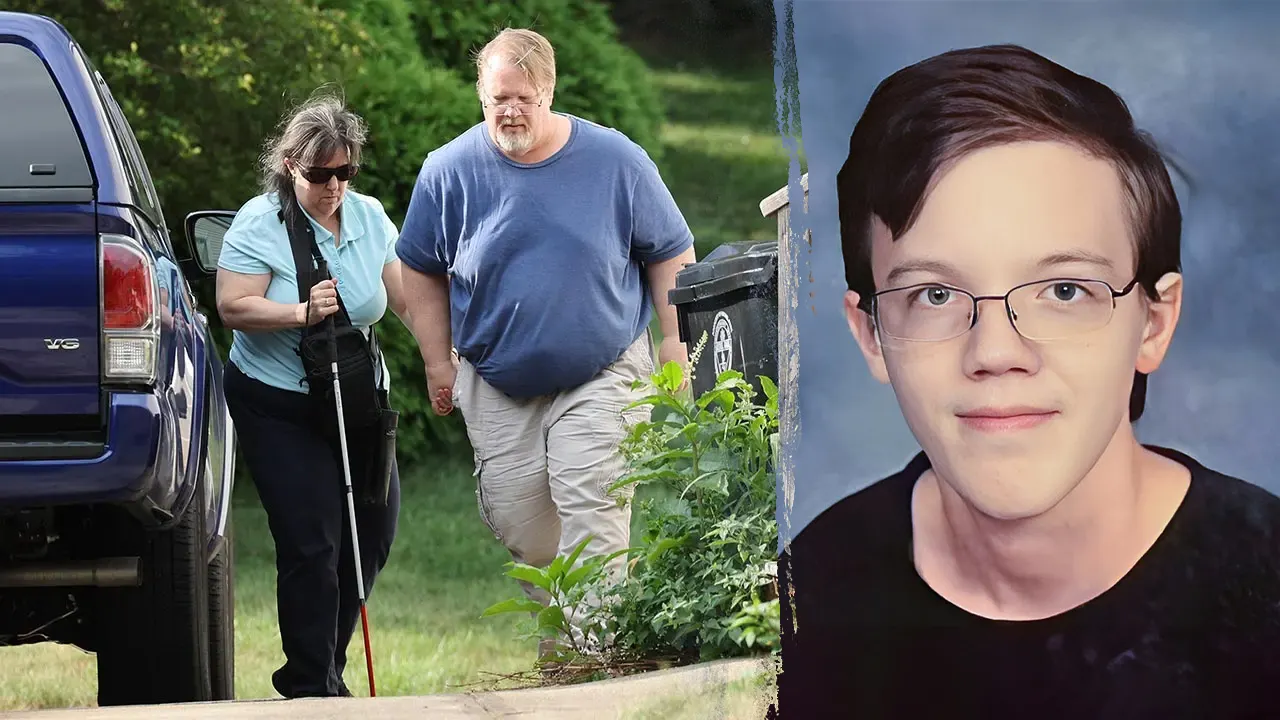
Questions about whether the parents of would-be Trump assassin Thomas Crooks could face charges resulting from their son’s shooting crimes have arisen as officials release more information about his secluded personality and lack of a social life.
“You’d have to prove in some way beyond a reasonable doubt that [Crooks’ parents] aided and abetted his ability to plan this attempted assassination or, in some way, knew what he was doing and provided him some means to do it,” Pennsylvania-based attorney Matthew Mangino of Luxenberg, Garbett, Kelly and George told Fox News Digital. “That would be difficult to prove, I would think, beyond a reasonable doubt.”
Mangino added, however, that “civil liability is a completely different story.”
Pursuing civil action against Crooks’ parents would require “a preponderance of the evidence that … they could have or should have intervened to protect, not only the former president, but the public,” as well as the victim who died.
TRUMP SHOOTING: TIMELINE OF ASSASSINATION ATTEMPT
An undated image of Thomas Matthew Crooks. (Handout via AFP)
Crooks apparently researched Oxford High School shooter Ethan Crumbley sometime prior to the assassination attempt, a source familiar with the matter previously told Fox News Digital. In Crumbley’s case, both of his parents were charged and convicted on four counts of involuntary manslaughter related to their son’s crimes. One major difference between the Crumbley case and the Crooks case, however, is Crooks’ age.
Crooks was 20 when he was fatally shot by snipers while carrying out the assassination attempt on July 13. The FBI said during a Monday press conference call that Crooks’ father legally owned the AR-15 Crooks used to fire at the president and transferred ownership to his son sometime prior to the shooting.
TRUMP ASSASSINATION ATTEMPT: FBI SAYS GUNMAN CLIMBED HVAC, TRAVERSED ROOFTOPS TO SHOOTING PERCH
Pictures of Thomas Mathew Crooks taken by a sniper. (Sen. Ron Johnson’s Office)
Crooks also purchased 25 firearms and six chemical precursors “of materials used to create the explosive devices recovered in the subject’s vehicle and home” after the assassination attempt, said Kevin Rojek, special agent in charge at the FBI Pittsburgh field office.
Crooks’ parents apparently told investigators that he had always been interested in science experiments, so they were used to getting packages addressed to their son at home.
TRUMP ASSASSINATION ATTEMPT: TEXTS REVEAL OFFICERS WERE AWARE OF CROOKS 90 MINUTES BEFORE SHOOTING
The parents of Thomas Crooks, Matthew and Mary Crooks, return to their home in Bethel Park, Pennsylvania, on Wednesday, July 24, 2024. (Derek Shook for Fox News Digital)
Crooks’ father, Matthew Crooks, was seen on Monday leaving a Pittsburgh office building that houses two law firms.
He declined to answer questions about whether his family had noticed warning signs before his son’s assassination attempt.
The shooter’s father previously told Fox News Digital that “We’re going to release a statement when our legal counsel advises us to do so – until then, we have no comment. We just want to try to take care of ourselves right now. Please, just give us our space.”
Matthew Crooks waits outside an office building in Pittsburgh, Monday, July 29, 2024. Matthew Crooks is the father of would-be Trump assassin, Thomas Crooks. (DWS for Fox News Digital)
Brian Stewart, trial attorney at Parker & McConkie in Utah, said “no one” should require parents to supervise an adult “at all times (or at any time).”
“Based on the updated information the FBI has provided, it appears unlikely that Crooks’ parents will face criminal or civil liability for their son’s actions.”
Rojek said Crooks’ parents have been “extremely cooperative” with the FBI so far in their investigation. FBI officials also do not have evidence suggesting Crooks worked with any coconspirators to carry out his plan.
Investigators visit Thomas Crooks’ neighbor. (Derek Shook/Fox News Digital)
“If the ongoing investigation were to reveal that Crooks’ father transferred the AR-15 to his son illegally or had some reason to expect it would be used to commit a crime, then criminal charges or civil claims could be possible,” Stewart said. “However, so far, the FBI reports that they have not found any information tying anyone else to the attack and do not believe that his parents had any indications of his plans to attempt to assassinate Trump.”
Stewart also said that if “any proof is found that the parents were in any way aware of the son’s plans to assassinate Trump, or if the parents were reckless in ignoring any alarming behavior or activities, a case against the parents could be made, and its success would obviously depend on the strength of the evidence.”
PENNSYLVANIA SWAT SNIPER SAYS TRUMP SHOOTER ‘JUST SEEMED OUT OF PLACE’ AS OFFICER WARNED OF GUNMAN BEFOREHAND
FBI agents visited the home of would-be Trump assassin Thomas Crooks’ home in Bethel Park, Pennsylvania. (AFP | Reuters/Aaron Josefczyk)
Nicole Brenecki, a New York City-based attorney, also pointed to Crooks’ age as a potential issue in filing criminal charges against his parents.
“Following the sentencing of James and Jennifer Crumbley in the Michigan school shooting case, the DA may consider bringing charges against the father of the Trump shooter. The biggest weakness of such a case would be Matthew Thomas Crooks’ age. He was almost 21 at the time of the shooting,” Brenecki said.
The FBI on Monday described Crooks as a “loner” and “highly intelligent,” citing his college education and his ability to hold a full-time job. Officials are still working to determine Crooks’ motive in the assassination attempt against Trump.
Read the full article from Here



It’s a scheme made famous by a nearly 30-year-old episode of the sitcom Seinfeld.
Hoping to earn a quick buck, two characters load a mail truck full of soda bottles and beer cans purchased with a redeemable 5-cent deposit in New York, before traveling to Michigan, where they can be recycled for 10 cents apiece. With few thousand cans, they calculate, the trip will earn a decent profit. In the end, the plan fell apart.
But after Connecticut raised the value of its own bottle deposits to 10 cents in 2024, officials say, they were caught off guard by a flood of such fraudulent returns coming in from out of state. Redemption rates have reached 97%, and some beverage distributors have reported millions of dollars in losses as a result of having to pay out for excess returns of their products.
On Thursday, state lawmakers passed an emergency bill to crack down on illegal returns by increasing fines, requiring redemption centers to keep track of bulk drop-offs and allowing local police to go after out-of-state violators.
“I’m heartbroken,” said House Speaker Matt Ritter, D-Hartford, who supported the effort to increase deposits to 10 cents and expand the number of items eligible for redemption. “I spent a lot of political capital to get the bottle bill passed in 2021, and never in a million years did I think that New York, New Jersey and Rhode Island residents would return so many bottles.”
The legislation, Senate Bill 299, would increase fines for violating the bottle bill law from $50 to $500 on a first offense. For third and subsequent offenses, the penalty would increase from $250 to $2,000 and misdemeanor punishable by up to one year in prison.
In addition, it requires redemption centers to be licensed by the state’s Department of Energy and Environmental Protection (previously, those businesses were only required to register with DEEP). As a condition of their license, redemption centers must keep records of anyone seeking to redeem more than 1,000 bottles and cans in a single day.
Anyone not affiliated with a qualified nonprofit would be prohibited from redeeming more than 4,000 bottles a day, down from the previous limit of 5,000.
The bill also seeks to pressure some larger redemption centers into adopting automated scanning technologies, such as reverse vending machines, by temporarily lowering the handling fee that is paid on each beverage container processed by those centers.
The bill easily passed the Senate on Wednesday and the House on Thursday on its way to Gov. Ned Lamont.
While the bill drew bipartisan support, Republicans described it as a temporary fix to a growing problem.
House Minority Leader Vincent Candelora, R-North Branford, called the switch to 10-cent deposits an “unmitigated disaster” and said he believed out-of-state redemption centers were offloading much of their inventory within Connecticut.
“The sheer quantity that is being redeemed in the state of Connecticut, this isn’t two people putting cans into a post office truck,” Candelora said. “This is far more organized than that.”
The impact of those excess returns is felt mostly by the state’s wholesale beverage distributors, who initiate the redemption process by collecting an additional 10 cents on every eligible bottle and can they sell to supermarkets, liquor stores and other retailers within Connecticut. The distributors are required to pay that money back — plus a handling fee — once the containers are returned to the store or a redemption center.
According to the state’s Department of Revenue Services, nearly 12% of wholesalers reported having to pay out more redemptions than they collected in deposits in 2025. Those losses totaled $11.3 million.
Peter Gallo, the vice president of Star Distributors in West Haven, said his company’s losses alone have totaled more than $2 million since the increase on deposits went into effect two years ago. As time goes on, he said, the deficit has only grown.
“We’re hoping we can get something fixed here, because it’s a tough pill to be holding on to debt that we should get paid for,” Gallo said.
Still, officials say they have no way of tracking precisely how many of the roughly 2 billion containers that were redeemed in the state last year were illegally brought in from other states. That’s because most products lack any kind of identifiable marking indicating where they were sold.
“There’s no way to tell right now. That’s one of the core issues here,” said state Rep. John-Michael Parker, D-Madison, who co-chairs the legislature’s Environment Committee.
Parker said the issue could be solved if product labels were printed with a specific barcode or other feature that would be unique to Connecticut. Such a solution, for now, has faced technological challenges and pushback from the beverage industry, he said.
Not everyone involved in the handling, sorting and redemption of bottles is happy about the upcoming changes — or the process by which they were approved.
Francis Bartolomeo, the owner of a Fran’s Cans and Bart’s Bottles in Watertown, said he was only made aware of the legislation on Monday from a fellow redemption center owner. Since then, he said, he’s been contacting his legislators to oppose the bill and was frustrated by the lack of a public hearing.
“I know other people are as flabbergasted as I am because they don’t know where it comes out of,” Bartolomeo said “It’s a one sided affair, really.”
Bartolomeo said one of his biggest concerns with the bill is the $2,500 annual licensing fee that it would place on redemption centers. While he agreed that out-of-state redemptions are a problem, he said it should be up to the state to improve enforcement.
“We’re cleaning up the mess, and we’re going to end up being penalized,” Bartolomeo said. “Get rid of it and go back to 5 cents if it’s that big of a hindrance, but don’t penalize the redemption centers for what you imposed.”
Lynn Little of New Milford Redemption Center supports the increased penalties but believes the solution ultimately lies with better labeling by the distributors. She is also frustrated by the volume caps after the state initially gave grants to residents looking to open their own bottle redemption businesses.
“They’re taking a volume business, because any business where you make 3 cents per unit (the average handling fee) is a volume business, and limiting the volume we can take in, you’re crushing small businesses,” Little said.
Ritter said that he opposed a move back to the 5-cent deposit, which he noted was increased to encourage recycling. However, he said the current situation has become politically untenable and puts the state at risk of a lawsuit from distributors.
“We’re getting to a point where we’re going to lose the bottle bill,” Ritter said. “If we got sued in court, I think we’d lose.”

Posted inSports, Varsity Maine
Press Herald sports writers nominate high school athletes from the prior week’s games.
Readers vote for their top choice and the winner will be announced in the newspapers the following Sunday all season long!
Pittsburgh International’s T. rex could soon disappear from view

Popn’ Off Gourmet Popcorn opens on Broad Street in Augusta

Pleasant, spring-like weekend for Virginia, Maryland, DC ahead of active start to March

House explosion in Cleveland’s Slavic Village neighborhood catches neighboring houses on fire

A total lunar eclipse will turn the moon blood red on Tuesday

Florida High School Football Rankings: Top 25 teams – Oct. 21

Cleary's 21 help Le Moyne down Central Connecticut State 69-64 in OT

How old is Bo Nix? What to know about Oregon quarterback ahead of 2024 NFL Draft

99th annual Pony Swim held in Virginia

Indiana Members Credit Union announced as new anchor tenant at Bottleworks District

Where Iran’s ballistic missiles can reach — and how close they are to the US

Has India’s influence in Afghanistan grown under the Taliban?

Bill Clinton to testify before House committee investigating Epstein links

Read Judge Schiltz’s Order

Vulnerable House Dem lashes out at Trump’s ‘racist’ SOTU challenge: ‘That was uncomfortable’
-

 World2 days ago
Exclusive: DeepSeek withholds latest AI model from US chipmakers including Nvidia, sources say
-

 Massachusetts2 days ago
Mother and daughter injured in Taunton house explosion
-

 Montana1 week ago
2026 MHSA Montana Wrestling State Championship Brackets And Results – FloWrestling
-

 Oklahoma1 week ago
Wildfires rage in Oklahoma as thousands urged to evacuate a small city
-

 Louisiana5 days ago
Wildfire near Gum Swamp Road in Livingston Parish now under control; more than 200 acres burned
-

 Denver, CO2 days ago
10 acres charred, 5 injured in Thornton grass fire, evacuation orders lifted
-

 Technology6 days ago
YouTube TV billing scam emails are hitting inboxes
-

 Technology6 days ago
Stellantis is in a crisis of its own making