Connect with us

Northeast

Trump motions to have judge in New York civil fraud case recused

Published

on

Trump motions to have judge in New York civil fraud case recused
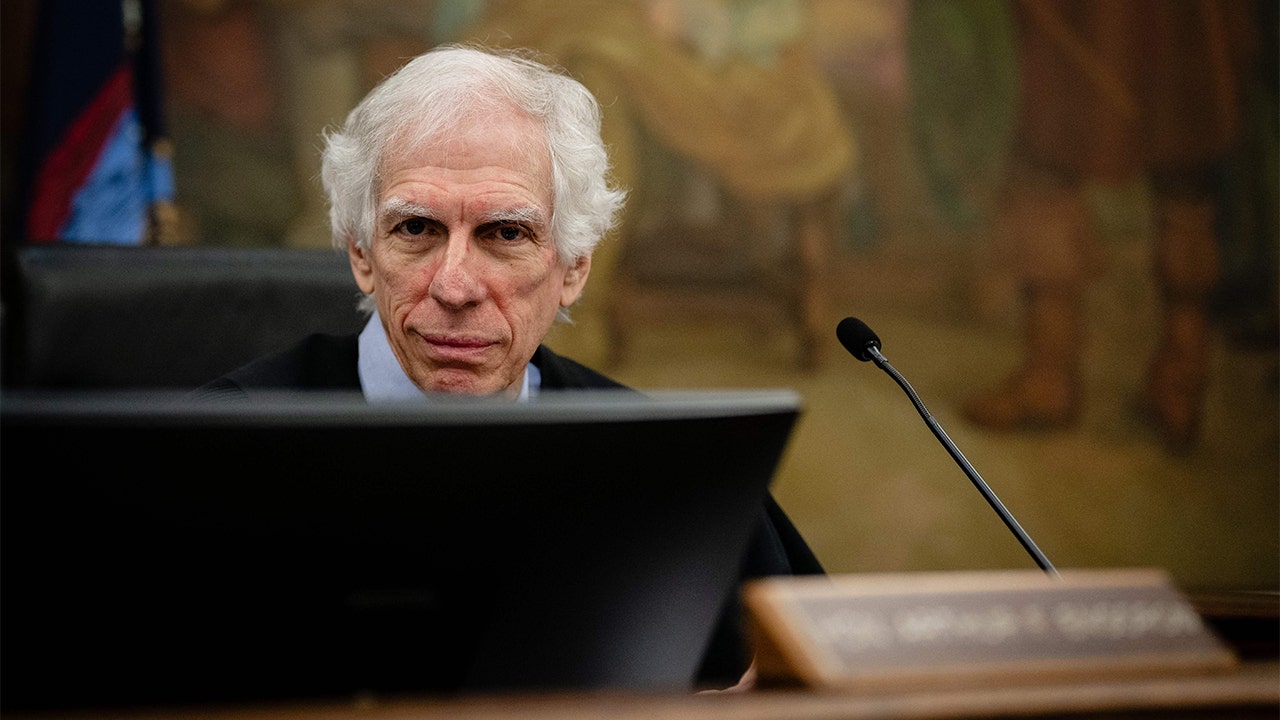
Lawyers for former President Trump have filed a new motion in his New York civil fraud case alleging that the judge engaged in “prohibited communications” and should recuse himself. 

In a motion filed with the New York State Supreme Court, Trump’s lawyers accuse Judge Arthur Engoron of engaging in actions “fundamentally incompatible with the responsibilities attendant to donning the black robe and sitting in judgment.”

That action refers to a conversation Engoron allegedly had with New York City real estate attorney Adam Leitman Bailey “regarding the merits of this case, the permissible scope of the New York State Attorney General’s and this Court’s own authority under Executive Law… and the consequences of this Court’s decision on business in the State.”

“The New York Code of Judicial Conduct exists to ensure that litigants are afforded a fair and impartial trial. Justice Engoron’s communications with Attorney Adam Leitman Bailey regarding the merits of this case, however, directly violate that code and demonstrate that Judge Engoron cannot serve as a fair arbiter. It is clear that Judge Engoron should recuse himself immediately,” Alina Habba, spokesperson for Trump, said in a statement. 

TRUMP POSTS $175M BOND IN NY CIVIL FRAUD CASE, AVERTS ASSET SEIZURE

Advertisement

Justice Arthur Engoron presides over the civil fraud trial of the Trump Organization at the New York State Supreme Court in New York City on Nov. 13, 2023. (Erin Schaff/Pool/AFP via Getty Images)

According to the filing, Bailey told ABC in an interview that he had tried to advise Engoron weeks before the judge’s decision. 

“Although Mr. Bailey claims that President Trump was not mentioned by name in the conversation, when asked whether ‘it was obvious that [his] input was related to this case,’ Mr. Bailey stated ‘well[,] obviously we weren’t talking about the Mets,’” the filing says. 

Engoron in February found Trump liable for more than $350 million in damages in the civil fraud case brought against him by New York Attorney General Letitia James.

James’ case also targeted Trump’s family and the Trump Organization. Engoron ruled that Trump and defendants were liable for “persistent and repeated fraud,” “falsifying business records,” “issuing false financial statements,” “conspiracy to falsify false financial statements,” “insurance fraud” and “conspiracy to commit insurance fraud.”

Advertisement

The judge criticized Trump’s behavior during the trial, saying that he “rarely responded to the questions asked, and he frequently interjected long, irrelevant speeches on issues far beyond the scope of the trial.”

TRUMP UNLOADS ON JUDGE, NYAG FOR TARGETING HIM ‘FOR POLITICAL REASONS’ DURING UNPRECEDENTED TESTIMONY

New York Attorney General Letitia James speaks during a press conference in New York on Sept. 21, 2022. (AP Photo/Brittainy Newman, File)

According to the ABC report cited in the filing, a spokesperson for the court said: 

“[N]o ex parte conversation concerning this matter occurred between Justice Engoron and Mr. Bailey or any other person. The decision Justice Engoron issued February 16 was his alone, was deeply considered, and was wholly uninfluenced by this individual.”

Advertisement

The filing notes that since those allegations have come to light, “it is reported that the New York State Commission on Judicial Conduct has launched an investigation into this Court’s conduct” and that “at least a dozen news outlets have reported on both the alleged ex parte communication and the pending investigation.”

“The law is clear that any communication outside of the presence of the parties or their lawyers must be strictly scrutinized,” lawyers for Trump argue in the filing. “The Court is obligated to avoid attempted ex parte communications, and if an ex parte communication does occur, the Court should, at minimum, promptly notify all parties of the communication.”

“The appropriate remedy for the ex parte communication is notification to the parties and recusal,” it states. 

“Here, it is beyond dispute that neither Defendants nor the Attorney General were present during the purported communication with Mr. Bailey. Nor did this Court ever notify either party that the purported communication took place, which would have at least permitted an opportunity for comment on the substance of the conversation, as conveyed by this Court,” the filing states. 

“Worse yet, Mr. Bailey’s account indicates that this Court not only permitted but welcomed such prohibited communication. According to Mr. Bailey, this Court was an active participant in a conversation concerning the merits of the case, wherein this Court asked Mr. Bailey a ‘lot of questions.’” 

Advertisement

BILL MAHER GRILLS ESPER FOR NOT BACKING BIDEN AFTER CALLING TRUMP A ‘THREAT TO DEMOCRACY: A ’BINARY’ CHOICE

Former President Trump arrives at Trump Tower in New York on May 30 after being found guilty on 34 counts of falsifying business records in the first degree. (Felipe Ramales for Fox News Digital)

Bailey did not immediately respond to Fox News Digital’s request for comment. 

Notably, Bailey years ago successfully sued then-real estate mogul Trump over a condo dispute. 

Advertisement

“For the foregoing reasons, Defendants respectfully request that this Court recuse itself, or, in the alternative, set the matter down for an evidentiary hearing, and grant any such other and further relief it may think proper,” the filing concludes. 

Fox News Digital’s Bradford Betz and Brooke Singman contributed to this report. 

Read the full article from Here

Advertisement
Continue Reading
Click to comment

Leave a Reply

Your email address will not be published. Required fields are marked *

This site uses Akismet to reduce spam. Learn how your comment data is processed.

Connecticut

Study: Late-Night Gamers in Connecticut Are Dragging Down Productivity

Published

on

Study: Late-Night Gamers in Connecticut Are Dragging Down Productivity


According to a study published by Win.gg, all those late-night gaming sessions aren’t just wrecking your sleep—they’re wrecking Connecticut’s bottom line. Yeah, apparently your midnight raid or Fortnite grind comes with a side of lost productivity, and it adds up fast.

Win.gg surveyed 2,000 working gamers across the U.S., then crunched the numbers with data from the U.S. Census and the Bureau of Labor Statistics. The results? Roughly 47% of employed gamers in Connecticut admit they’re dragging the next day after a late-night session. On average, that translates to about 2.6 hours of work that… well, never really happens. If you put a dollar figure on it, that’s about $104 lost per worker in a single day. Multiply that by the state, and we’re looking at a staggering $74 million in lost productivity. Yup, you read that right—$74 million just because people stayed up too late chasing loot or finishing that last level.

Read More: Three Arrested for Burglary in New Fairfield 

It’s not just your career that’s taking a hit, either. Gamers in the state report cutting their sleep by an average of 1.8 hours to fit in those extra hours of gaming. And we all know what happens when you skimp on sleep: coffee consumption goes up, focus goes down, and suddenly responding to emails feels like decoding hieroglyphics.

Advertisement

So, what does this mean for Connecticut? Employers are essentially paying for productivity that doesn’t happen, and the state as a whole is bleeding money. But let’s be real—nobody’s about to stop gaming. If anything, this is a reminder that maybe those late-night raids are best saved for the weekend, or at least capped so the Monday grind doesn’t feel like a marathon through molasses.

If you want to dive into all the numbers and methodology, Win.gg has the full breakdown here. But the takeaway is clear: your gaming habit might be costing more than you think—both in sleep and in dollars.

Exploring Beyond the Rusty Gates of Danbury’s Oldest Cemetery on Wooster Street

I live just down the block from the Wooster Street Cemetery and whenever I pass, I am always struck at how odd it is. You have this quiet, beautiful place that is dedicated to the people who were buried there, in the middle of a busy city and almost no one ever goes there. I decided to go take a deeper look around and see what was beyond the iron gates and stone walls. 

Gallery Credit: Lou Milano

7 of the Most Beautiful Towns in the State of Connecticut

Connecticut is overflowing with both manmade and natural beauty. In some places, the two intersect to create a magical, almost fictional feel. Here are 7 Connecticut Towns that look like they came straight from a storybook.

Advertisement

Gallery Credit: Lou Milano

Top 10 Chain Restaurants with the Most Locations in Connecticut

The other day the boys and I were talking about KFC’s new “gravy flights,” and it got me wondering—do you know which fast-food chain has the most locations in Connecticut? None of us did, so I looked it up.

The top of the list is mostly what you’d expect, but there are a few surprises. Here’s a look at the Top 10 Chain Restaurants with the Most Locations in Connecticut according to Stacker

Gallery Credit: Lou Milano


Source link

Advertisement
Continue Reading

Maine

Lawmakers advance bill to provide death benefits after two DOT workers killed on the job

Published

on

Lawmakers advance bill to provide death benefits after two DOT workers killed on the job


After a fatal car crash in Waterville killed two Maine Department of Transportation employees in January, state lawmakers are backing a bill to expand death benefits to the families of DOT workers killed on the job.  The Labor Committee unanimously voted Tuesday to advance LD 669, which will make DOT employees eligible for the same […]


Source link

Continue Reading

Massachusetts

Marijuana prices have been taking a nosedive. What comes next? – The Boston Globe

Published

on

Marijuana prices have been taking a nosedive. What comes next? – The Boston Globe


Grocery prices are rising. Rents are up. There is one product, though, that’s actually getting cheaper: marijuana.

The price of a gram of weed — the amount in a large joint — was down to just above $4, on average, in January, the latest continuation of a years-long nose-dive that has brought prices plummeting over 70 percent since pot stores first opened in Massachusetts in 2018. In those days, a gram cost more than $14.

“I’m taking advantage definitely,” Tori Wells, a Boston customer, said of current rock-bottom prices as she left downtown dispensary Pure Oasis one recent afternoon.

While consumers are happy, low prices have launched the industry into turmoil. It’s a far cry from the visions of wealth in cannabis that laid the foundation for many entrepreneurs to enter the industry and the state’s efforts at enriching Black and Latino communities that were targeted by the war on drugs.

Advertisement

“Profitability is tough to reach,” said Gabriel Vieira, CEO of Zyp Run, the first cannabis delivery service to open in Greater Boston in 2023. Delivery business licenses remain exclusive to equity operators, but many have struggled to find success. Just last month, Vieira’s company had to settle a state tax debt of more than $410,000 in order to continue operating this year, he said.

Marijuana growers and manufacturers said retail businesses are increasingly stiffing them on payments as money runs thin across the industry. There are signs that lawsuits, debts, and unpaid taxes are piling up, while business closures accelerate. Last fiscal year, 13 retail stores closed after either having their licenses revoked or choosing not to renew their licenses operations — more than in all previous years of legalization combined. And of the 71 cannabis business licenses of all kinds surrendered since recreational pot sales began, almost half were given up in the most recent fiscal year.

“Every state has a bottom, and we are in it,” said Derek Ross, CEO of Nova Farms, a company with six dispensaries across Massachusetts, Connecticut, Maine, and New Jersey, and hundreds of cultivation acres in the Northeast. “If we didn’t have opportunities in other states, we’d be struggling to keep our head above water.”

The industry’s dismal state is the result of an oversaturated market with too many marijuana plants being grown, said Commissioner Kimberly Roy, of the Cannabis Control Commission.

The commission is considering whether to freeze new cultivation licenses, with a public hearing on the matter likely soon. It’s a measure Roy supports.

Advertisement

“We need to hit the brakes,” Roy said. “Quite frankly, it’s overdue.”

By the end of 2025, the industry had the capacity to grow over 4.5 million square feet of cannabis plant canopy, up from 3.65 million in 2023.

Now cultivator competition is driving “razor-thin margins,” Roy added, and becoming a pain point for the entire industry.

Andrew Kazakoff, of Fathom Cannabis, a cultivator in West Boylston, said he supports a freeze on new growers.

“We need to take a halt,” Kazakoff said, adding: “Let the industry settle, work on itself, and come to equilibrium.”

Advertisement

As companies jockey for business there is also a “race to the bottom” on prices in the retail market that has led to “a lot of these businesses kind of cannibalizing each other,” said Ryan Dominguez, executive director of the Massachusetts Cannabis Coalition, a trade group. He added that a freeze could be a necessary step in righting the industry.

What’s happening in Massachusetts is something that other states have experienced, said Beau Kilmer, co-director of the RAND Drug Policy Research Center.

Cannabis prices have fallen nationwide, particularly in early legalizing states such as Colorado, California, and Oregon, whose head start in infrastructure building has quickly turned to rampant oversupply. Oregon has imposed various pauses on its cannabis licensing dating back to 2018, with new license approvals of any kind currently banned.

“If you’re not going to limit the amount that’s produced, you should expect to see these price declines,” Kilmer said. Likewise, other New England states, including Connecticut and Maine, have retained higher prices than Massachusetts, the first pot stronghold on the East Coast and still its largest grower, since going legal.

The low prices mean cannabis businesses are mired in money problems, even as demand has continued to grow for their products. The number of cannabis sales that occurred last year increased by 8 percent over 2024, but revenues from those sales essentially plateaued, totaling around $1.65 billion for both 2024 and 2025.

Advertisement

Ross, the CEO of Nova Farms, said he cut 25 percent of his multi-state workforce in the last 18 months, as even diversified outfits have had to become “lean and mean,” to weather today’s market.

Two dozen companies, including four cultivators and 12 retailers, were in court-appointed receivership, the state’s legal alternative to bankruptcy, in January, according to commission data. More have been added since. Bankruptcy isn’t an option for cannabis companies as long as the drug remains federally illegal.

Designated as participating in “trafficking,” cannabis sellers also pay significantly more in federal taxes, often at rates of 60 to 80 percent, and are barred from making some regular deductible expenses.

Brian Keith, cofounder of Rooted In, said his Newbury Street dispensary, which opened in 2022, would be profitable if it weren’t for the heavy burden of the federal tax code, which places the most strain on retail stores.

Advertisement

Brian Keith, owner of Rooted In, is one of many small cannabis shops facing plummeting retail prices on cannabis and a compression that is making it difficult for local owners to stay afloat.
(David L. Ryan/Globe Staff)

Advertisement


A future VIP social consumption private room is set up downstairs at Rooted In.
(David L. Ryan/Globe Staff)

He filed his taxes on time this year but didn’t have the funds, he said, and now it may take over 12 months to settle over $170,000 in outstanding debts through a payment plan with the IRS.

“We’re seeing the same number of people walking through the door, but less revenue,” Keith said.

Keith is a member of the state’s social equity program, aimed at helping communities disproportionately impacted by the war on drugs build wealth.

His company has raised more than a quarter million dollars from communities of color in Dorchester, Roxbury, and Mattapan to fund its initial operations, he said, but the profits he planned to bring back to those communities haven’t materialized because of the prices plummeting.

Advertisement

Keith’s business is one of about 100 owned by people in the state’s two equity programs — about 15 percent of all open businesses in the state. Many of these entrepreneurs are struggling to make ends meet, the Globe has reported.

The CCC has approved a framework to allow the opening of marijuana lounges, giving exclusive access to equity entrepreneurs and smaller operations, though that rollout is just getting off the ground.

Many cannabis cultivators and manufacturers are seeing an escalating issue of unpaid debts.

Kazakoff, the grower in West Boylston, said half his orders last year were not paid on time by retailers, and a few not at all. That was barely a problem before 2025, he said.

“I grapple with the fact every single month of: Do I stay in business when I’m not getting paid by dispensaries?” he said. “Or how am I going to pay my employees?”

Advertisement

Currently, the CCC has no authority to police these business-to-business transactions, Commissioner Roy said, though she said it’s time for them to try and address it. Cannabis reform bills pending in the State House and Senate look to reshape cannabis regulations, including by mirroring alcohol enforcement, by restricting delinquent companies to having to pay their bills as soon as they receive products and publishing their names. Both versions of the legislation would also dissolve the current five-member cannabis commission, replacing it with a smaller three-member body.

Zyp Run cannabis delivery advertisements are glued on many trash cans around South Station.David L. Ryan/ Globe Staff

Cultivators such as Kris Foley, CEO of Berkshire Roots, have taken matters into their own hands, initiating legal action to retrieve funds he said he is owed from around a half dozen retailers.

“A lot of partners that we worked with early on, they were good payers,” but that changed suddenly, said Foley, who runs two Pittsfield cultivation facilities and a nearby dispensary, as well as another shop in East Boston. He hasn’t been paid on time for between $150,000 and $200,000 worth of product since 2024.

Nova Farms has been shorted payment for an estimated $4.5 million in product in Massachusetts in the past two years, far more than its other states, Ross said.

Steve Reilly, co-owner and head of government relations at INSA, a large cannabis operator in Massachusetts and four other states, worries that debt issues in the industry have driven away investment.

“Most of these companies are just struggling to keep the lights on and they’re doing what they can do,” he said. “But as they’re doing that, they’re dragging everybody else down.”

Advertisement

Bryan Hecht can be reached at bryan.hecht@globe.com. Follow him on Instagram @bhechtjournalism.


Source link

Continue Reading
Advertisement

Trending