Northeast
Survivor of 9/11 shares unparalleled story of resilience, bravery while fleeing 78 floors of the North Tower

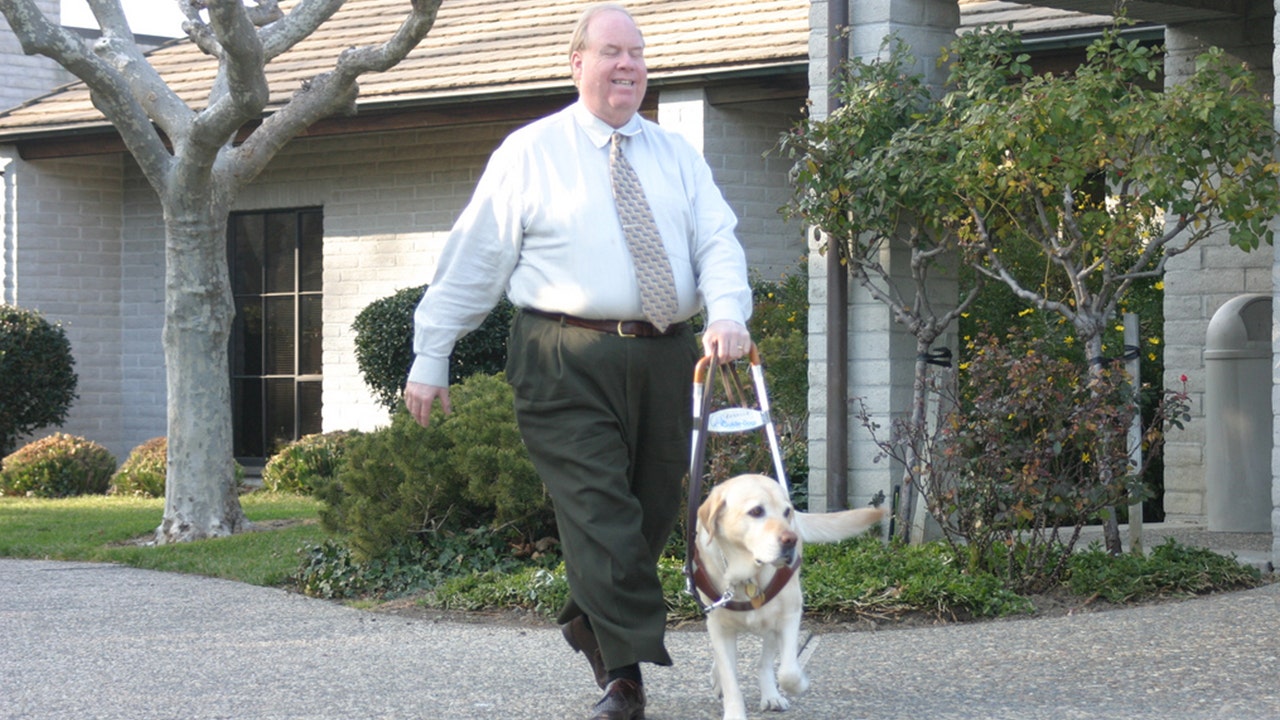
It’s been 23 years since the most deadly attack on American soil and, in the wake of the commemoration of Sept. 11, 2001, one survivor who escaped from the North Tower of the World Trade Center is looking back at the resilience shown that day and encouraging a new generation of learners to listen in.
Michael Hingson, a best-selling author and keynote public speaker, was a computer hardware sales manager recruited in 1999 to open an office and manage a team of people on the 78th floor of 1 World Trade Center.
“We were going to be doing some sales training that day,” Hingson told Fox News Digital during a video interview.
On a crisp, clear September morning, the entire world fixated on their televisions and radios in horror as four American planes hijacked by terrorists crashed into a field in Pennsylvania, the Pentagon and the Twin Towers in New York City.
VICTIMS TRAPPED IN TWIN TOWERS ON 9/11 SOUGHT HELP FOR THEMSELVES, OTHERS THROUGH PHONE CALLS
Michael Hingson worked as a sales manager in the North Tower of the World Trade Center beginning in August 2000 when his offices on the 78th floor opened. (Michael Hingson)
“I was in my office. A colleague, David Frank, was also with me,” Hingson said. “He was from our corporate office. The two of us were going to be doing these sales seminars.”
At 8:46 a.m., jihadist terrorists on American Airlines Flight 11 struck the North Tower.
The Boeing 767 with 92 persons aboard plowed into floors 93 through 99, according to the National September 11 Memorial & Museum.
Unbeknownst to them, Hingson, with his colleague and terrified survivors at the top half of the North Tower, were the first victims of a terrorist attack on the United States of America.
“None of us knew what happened,” Hingson said.
Hingson called his wife, Karen, at 8:47 a.m.
Only seconds after the first tower was struck, the media had yet to understand the magnitude of the attacks, and Karen could not relay any information to her husband.
HOW TO TALK TO CHILDREN ABOUT 9/11 AND THE TRAGIC EVENTS THAT UNFOLDED
Michael Hingson and his guide dog Roselle were in the North Tower on Sept. 11, 2001, when the building was struck by American Airlines Flight 11. (Michael Hingson)
“Tall buildings are made to flex in windstorms, and the building just started tipping and tipping,” Hingson said.
“We actually moved maybe about 20 feet. David and I actually said ‘Goodbye’ to each other because we thought we were about to take a 78-floor plunge to the street. But then the building stopped flexing, and it came back and became vertical.”
As soon as the building stood upright, Hingson, a blind man, returned to his office and met his guide dog, Roselle, who was lying under his desk sleeping.
“About that time, the building dropped straight down about six feet,” Hingson said. “The reason it did is because the expansion joints went back to their normal configuration. The building did everything that it was supposed to do.”
As the city skies were clouded with smoke and debris, and amid panic and disarray inside the building, Hingson remained calm.
HEROISM, BRAVERY DISPLAYED ON 9/11 BY PLANE PASSENGERS WHO MADE PHONE CALLS FROM HIJACKED AIRCRAFT
The former sales manager spent a lot of time adapting to his surroundings, locating exits and consulting with the New York City Port Authority, law enforcement officers and the fire department. In case of an emergency, Hingson learned his whereabouts to easily retreat both himself and his team members out of the North Tower.
Roselle, at the time, was wagging her tail, which provided Hingson with a clear mindset to help coordinate the evacuation.
“She was exhibiting no fear at all, which told me that whatever was occurring wasn’t such an imminent threat that we couldn’t try to evacuate in an orderly way and that we didn’t need to panic,” Hingson said.
Guide dogs are taught to work with their handlers as a team, and when they demonstrate obedience and knowledge of commands and cues to assist their owners in safe navigation, they are certified.
MEMORIALS HONORING 9/11 VICTIMS ACROSS THE UNITED STATES WHERE YOU CAN PAY YOUR RESPECTS TO THE FALLEN
Roselle was sleeping under Michael Hingson’s desk in the North Tower when the plane struck the building, according to Hingson. (Michael Hingson)
“Guide dogs don’t know where we want to go,” Hingson said. “The job of the dog is to make sure we walk safely. It’s a team effort. We have to work together.”
The decision to flee the 78th floor was quick, and a group of people, including Hingson, began the hellish journey to the first floor.
“At about the 50th floor, David suddenly said, ‘Mike, we’re gonna die. We’re not gonna make it out of here,’” Hingson said. “I just said ‘Stop it, David. If Roselle and I could go down these stairs, so can you.’”
“I did that very deliberately and in a very sharp voice because I needed to get him back,” Hingson said.
Later, Hingson said his colleague revealed that snapping at David regrounded him.
By way of distracting himself from the uncertainty, Hingson said David chose to walk one floor in front of him to advise him on the scene ahead and safety precautions while descending.
LEGNEDARY 9/11 FIREFIGHTER BOB BECKWITH WHO STOOD WITH PRESIDENT GEORGE W BUSH AT GROUND ZERO DIES AT 91
The U.S. flag rests on the memorial in Boston for Massachusetts victims of the attacks of Sept. 11, 2001. (Reuters)
“David, by shouting up to me, was actually a focal point for anyone within the sound of his voice who could hear him,” Hingson said.
“Anyone who could hear him knew that somewhere on the stairs, there was someone who was okay and going down the stairs. That had to keep a lot of people from panicking. And we worked really hard, all of us, to keep panic from occurring on the stairs. I think it’s one of the most miraculous things I saw that day.”
At 9:03 a.m., the South Tower was hit by hijacked United Airlines Flight 175.
At 9:49 a.m., one hour and two minutes after the North Tower was struck, the South Tower collapsed.
With their feet planted on the New York City streets, Hingson and David heard the deafening sound of 2 World Trade Center plummeting just feet away from them.
FDNY SLAMS 9/11 PLEA DEAL ‘WE ARE DISGUSTED AND DISAPPOINTED’
“David looked around and said, ‘Oh my God, Mike, there’s no Tower 2 anymore.’ And I asked him what he saw, and he said ‘All I see are pillars of smoke hundreds of feet tall,’” Hingson said. “‘It’s gone.’”
Hingson said David indicated to him that a dust cloud was coming, so with Roselle by their side, they ran through the streets of the Financial District of Lower Manhattan, losing each other for a short while.
At 10:28 a.m., the North Tower was gone.
In the 102 minutes it took from the time the plane crashed to the shattering of the building, Hingson, David and the others they fled with escaped.
“Less than three hours before, we had gone in just to do our jobs and mind our own business and in the blink of an eye, essentially it was all gone,” Hingson said.
ICONIC 9/11 PHOTOS AND THE PHOTOGRAPHERS WHO SHOT THEM: HERE ARE THEIR STORIES
People can pay their respects to fallen victims of the Sept. 11, 2001, terror attacks at the various monuments across the U.S. (Liao Pan/China News Service via Getty Images)
In Arlington, Virginia, the lives of 184 people, both on board American Airlines Flight 77 and in the Pentagon, were taken when a third hijacked plane crashed into the government building at 9:37 a.m.
At 10:03 a.m., aboard United Airlines Flight 93, four members of al Qaeda meant to crash into the nation’s capital, but 40 passengers and crew heroically took back the plane in an attempt to save lives.
Nearly 3,000 people lost their lives on Sept. 11, 2001.
“It really did happen, and we should remember it and we should learn lessons about how to prepare for emergencies, how to deal with things that come along,” Hingson said. “How to work together as a team.”
Family members of 9/11 victims and people tribute their loved ones on the 22nd anniversary of the Sept. 11 attacks at the 9/11 Memorial & Museum in New York City on Sept. 11, 2023. (Fatih Aktas/Anadolu Agency via Getty Images)
Hingson, the author of “Thunder Dog,” “Running with Roselle” and “Live Like A Guide Dog,” said that he expected Roselle to keep him safe amid his escape, which he says she did.
“The dog wasn’t trained to deal with that kind of emergency,” Hingson said. “None of us were.”
However, Hingson advises that preparedness ahead of an emergency situation can help save lives and maintain calmness in the wake of one.
“We are so afraid of everything in our world,” he said. “Fear is all around us. And usually, we’re afraid of things over which we have no power, no control or no influence, but we worry about them, and we become afraid anyway.”
Read the full article from Here


Good morning. It’s Monday. Today we’ll look at raccoons carrying rabies in the city.
New Yorkers don’t usually spend much time thinking about raccoons. Rats and roaches are far more visible. But even if you don’t always see them, raccoons are everywhere.
In September, the Metropolitan Museum of Art asked raccoon experts for guidance in gently redirecting a juvenile raccoon who was drawn to the exterior of their building on Fifth Avenue.
Back in 2021, Laura Dudley Plimpton, a researcher who tracked city raccoons with GPS collars when she was a Ph.D. student, found one living above a bar in Brooklyn near Green-Wood Cemetery.
At the Delacorte Theater, where Shakespeare in the Park is performed, raccoons who live near the stage often make cameos.
“I have particular memories of one raccoon running off with Teagle Bougere’s flip-flops during ‘The Tempest,’” a stage manager once told The New York Times, referring to one of the show’s actors.
And in 2022, a college student filmed a raccoon trying to claw its way out of a light fixture in her Brooklyn apartment.
“They are experts at utilizing whatever is available to them and using it well,” Plimpton said.
While many of the city’s raccoons are healthy, some are infected with rabies, a deadly virus that attacks the central nervous system and is transmitted via saliva. Other animals, such as skunks, bats and rodents, also carry the virus, but raccoons are the most commonly reported rabid animal in New York City.
The numbers fluctuate each year, but recent city data shows that rabid raccoons have most often appeared on Staten Island and in Queens. This year, however, the New York City Department of Health and Mental Hygiene has already logged two rabid raccoons in areas of Brooklyn where it has never seen them before: Midwood and Sheepshead Bay. In addition, a third and “unusually aggressive” raccoon in West Midwood was presumed to be rabid but was not tested, the Health Department said in a public health advisory issued in April.
To date this year, nine raccoons and one skunk have tested positive for rabies in New York City. It may not sound like a lot, said Dr. Andie Newman, a public health veterinarian in New York State, “but there’s potentially more lurking behind the numbers that we actually see.”
In May, to prevent further spread of the virus, the city placed fish-scented bait packets in the parks and wooded sections of Brooklyn and Queens, including Prospect Park, Forest Park and Marine Park.
“When they bite into it with their little sharp teeth, there is a liquid vaccine that gets into the mouth,” Newman said.
In the fall, the city is planning to place the bait in other areas as well. It’s important that people and dogs avoid touching the packets. They’re not considered harmful, but dogs may vomit if they were to eat many of them. And if the pink vaccine liquid gets on human hands, there is a small risk of becoming infected with the vaccinia virus, which is used to make the wildlife rabies vaccine.
Rabid animals are often assumed to be aggressive. But that’s not always the case. They may instead appear to have a wobbly gait, act confused or stagger and fall down, said Sarah Bookbinder, the executive director of the Charles N. Gordon Wildlife Rehabilitation Center in Earlville, N.Y., who advised the Met about the loitering raccoon.
According to the Health Department, other signs that an animal may be rabid include low energy; paralysis; chewing unusual objects like wood, soil or plants; having a vacant stare; and drooling or foaming at the mouth.
Given that raccoons are most active during dawn and dusk, people sometimes assume that raccoons are rabid if they’re out during the day, said Bookbinder, who specializes in the treatment of raccoons.
But in the spring, she added, it’s common for mother raccoons to forage for food to avoid leaving their kits alone in their den at night.
To protect your dog or cat (and yourself) from rabies, make sure that your pets are vaccinated. New York State requires that all domesticated dogs and cats be vaccinated for rabies, but some owners skip the vaccine, often out of concerns that the vaccines could be harmful to pets or unnecessary or could lead to illness. A 2024 survey estimated that about 22 percent of dog owners and 26 percent of cat owners could be classified as vaccine hesitant.
Even indoor cats need to be vaccinated, experts say, in part because of bats, which can enter homes. In 2025, two people in New York City received rabies antibodies and a vaccine series for exposure to a rabid bat.
If your pet has been in contact with an animal that may be rabid, report it to the Health Department and contact your veterinarian, Newman said. Dogs and cats who have already had the rabies vaccine will require a booster.
And when you’re outside, avoid contact with wild or stray animals.
“Enjoy nature from a distance,” Newman said.
Weather
It will be a sunny day today with a high near 78. The sky will remain clear tonight as temperatures drop near 61.
ALTERNATE-SIDE PARKING
In effect until June 19 (Juneteenth).
QUOTE OF THE DAY
“When I look at the state of housing, I feel a lot of anger.” — Emely Rodriguez, 24, who grew up in Williamsburg and began engaging in housing advocacy at a young age.
METROPOLITAN diary
The Glow
Dear Diary:
On an unseasonably warm Brooklyn night, I was on my way to meet friends when I stumbled upon a glowing, heavy, orb-like glass sculpture on the sidewalk.
Something about it pulled at me. I scooped it up and carried it onto the train.
It moved with me through bars and parks and city blocks, unveiling itself as an invitation for connection. It passed tenderly from hand to hand, stranger to stranger, each of us sharing the weight and the moment.
On the way home that evening, I stood on the subway platform buzzing from the interactions the sculpture had touched off and with a renewed love for the city.
A handsome man gesturing toward the unusual item I was holding motivated me to remove my earbuds and fall into an easy, flirty rhythm as we fell onto the G train together, until his stop pulled him away.
Arriving home, I chastised myself for letting the moment close. With the residue of the evening’s magic still on my skin and feeling a swaggering confidence, I posted a missed connection on Craigslist.
The next morning, there it was: a note from orb man.
“I think it’s more of a nest shape, but we can argue about it when we see each other,” he wrote, the words levitating up and out of my phone.
We met again two days later. I left the orb at home.
— Billie Hirsch
Illustrated by Agnes Lee. Tell us your New York story here and read more Metropolitan Diary here.

A 17-year-old Boston Public Schools student took the skies on Monday, flying a plane for the first time. Messiah Dennison is part of Boston STEM Flight Academy and carefully went through his flight safety check with his instructor.
The two departed from Norwood Airport for a 45-minute discovery flight over Gillette Stadium and back, and from take-off to landing it was a smooth trip.
“I just flew a plane,” Dennison said. He’s beaming from ear to ear because for the first time he was able to see his future as clear as the sky above. “I can’t compare it to anything. Something I never experienced before and it’s unique and made me want to do it again,” he said.
Dennison got introduced to Boston STEM Flight Academy at his high school, Another Course to College in Hyde Park. “I think it’s really great actually, because it helps our students get exposed to new opportunities that they normally wouldn’t have the opportunity to be exposed to,” Another Course to College Head of School Demitri Curry said.
Founder Marcus James said Dennison is one of those students who never missed an aviation class. “I got to say Messiah, this kid is very exciting to watch in class, and we figured he was perfect for this flight today,” James said.
The students have been practicing flying this route from Norwood to Boston and to Foxboro on a simulator twice a week for the past two months. “We flew over Gillette Stadium, that was great. Everything felt so small, and I was enjoying it,” Dennison said. He said this experience has changed his perspective of what he can achieve in life and believes aviation is the path for him.
“Before I took the flight I couldn’t see it. Now I can envision it. Growing up in Boston you see the same thing every day. And being able to see myself doing something this cool opened the gateway for a lot of cool things,” Dennison said.
His mother watched nervously but proudly. “I’m very proud of him, this is his first time flying a plane ever, so I am proud he had this big opportunity,” she said.
James says he hopes Boston STEM Academy will help deal with the nation’s pilot shortage and plans to expand the program to other public schools in underserved communities. “By 2030 we need about 10,000 pilots. I want them to know the sky’s the limit, and they can do anything they would like to do the opportunity is available to them,” James said.
And Dennison got a real hands-on bird’s eye view of what he can achieve. “If you are going to give me the opportunity to do something great, why not be great,” he said.

The Pittsburgh Steelers signed veteran wide receiver Adam Thielen at the tail end of the 2025 NFL season amidst struggles at the position. Thielen had returned to the Minnesota Vikings in 2025, the team that drafted him for which he carved out a very respectable career before signing with the Carolina Panthers in 2023.
Thielen appeared in five regular season games with the Steelers, catching 11 passes. He joined Good Morning Football on Monday and was asked about his experience in Pittsburgh, to which he couldn’t say enough nice things.
“What an amazing experience,” Thielen said. “First of all, just to experience the Pittsburgh Steelers organization. it was so cool to see it first hand. You hear a lot about it, you play against it, but you don’t really understand it until you get in that building. You just feel the culture and just kind of see how it’s different. It’s a family-owned business and it’s got that family aspect to it that they’re always in the building, they’re always around – it’s a really cool place.”
Thielen then discussed his time with Aaron Rodgers, and praised the four-time MVP for his approach to the game.
“Being around Aaron, I’ve known him for a long time,” Thielen said. “Played a lot of golf with him, built a strong relationship with him outside of football. But to seem in the building and in practice and his communication and the way he does things and his detail, it really showed me why he’s been so great for so long. A lot of times… you just think, ‘Oh, they’re really skilled…‘ these guys are great and separate themselves because of their process. He treated every single practice like it was the Super Bowl. it was unbelievable to see first hand just how hard he practiced, what it meant to him, how much communication there was through the week of trying to get everybody on the same page – whether that be coaches or players. So it was really cool to see that first hand and get to know him on the football side of things.”
Thielen retired after the 2025 season, finishing his career with 704 catches for 8,497 yards and 64 touchdowns.
Let us know what you think in the comments. Be sure to bookmark Behind the Steel Curtain for all the latest news, breakdowns, and more!
-
 Lifestyle39 minutes ago
As ‘The Book of Mormon’ turns 15, its original stars pop in to say ‘Hello!’
-

 Technology51 minutes ago
Instagram is finally letting everyone reorganize their profile grid
-

 World54 minutes ago
Finland’s foreign minister says Ukraine ‘is now holding the cards’ as Russia signals talks
-

 Politics59 minutes ago
Massachusetts lawmakers pass bill to scrap ‘offensive language’ from state’s General Laws
-

 Health1 hour ago
Why do some people get sepsis while others don’t? Scientists point to the gut
-

 Sports1 hour ago
Victor Wembanyama puts hand on Jalen Brunson’s head, pushes him down as refs look the other way in Game 3
-

 Technology1 hour ago
Robot pets with AI could soon live with you
-
 Business1 hour ago
Musicians shortchanged by AI deals with labels, lawsuit alleges

