Rhode Island
There’s a big problem with co-op teams in the RIIL. These five programs have fixed it.


I hate co-ops in the Rhode Island Interscholastic League.
It’s not the schools. It’s not because of the players. It’s not what it represents — communities unable to fill teams themselves, so they’re forced to combine together to play as one.
It’s the names.
When I quit The Journal and run the RIIL, the first thing I’m going to do is ban the multi-school, no-nickname teams. It’s annoying. People I talk to say they can’t find a solution or can’t make a decision on what to call themselves.
If you can decide you have to join forces with another school, you can decide on an obvious solution — find a regional and unique nickname. That’s it.
Why? Marketing 101. You can build a brand, drum up interest and get people excited about playing. Are you telling me kids would rather play for the Times2/St. Patrick/Paul Cuffee girls basketball team rather than the Providence River Cats? (That was first thing that came to mind. I’m sure the kids in the program could do better. Let them — that’s how you created interest.)
Some schools — we’ll call them “the smart ones” — have realized this.
Hopefully enough administrators, coaches and players read this and realize playing under a multi-school moniker is dumb.
And my five best RIIL co-op names list shows why.
5. Cranston East/Johnston Thundercats, boys lacrosse
You had me at Thundercats.
They didn’t win a single game in Division IV this season but they earn a spot on this list because I grew up watching the cartoon and it was awesome. I don’t know if they went full Thundercats and busted out the old-school logos but the possibilities are endless. If they can figure a way to change Cranston East/Johnston into some sort of regional name it will be No. 1 next summer.
4. Blackstone Valley Knights, boys hockey
Two co-ops came together to form one and they saved everyone a mouthful by embracing the region and coming up with a new nickname instead of going by the Johnston/North Providence/North Smithfield/Providence Country Day/St. Raphael Whatevers. Not a lot of good headlines.
It’s Johnston, North Providence, North Smithfield, St. Raphael and Providence Country Day and while they’re not all in the Blackstone Valley, who cares. The name works, the nickname works and, if this contest was based on uniforms, they’d be in the top three.
3. South County Storm, girls hockey
In 2011 Narragansett, North Kingstown and South Kingstown started a girls hockey program. Working at a community paper in South Kingstown at the time, I was panicked about how I was going to fit that in a headline.
South Kingstown’s athletic director Terry Lynch solved the problem. I wish I could say he was doing it for the local media, but he, too, wasn’t a fan of how it looks with three schools in one single name and nobody knowing what to call them.
The program found early success, with runner-up finishes in 2014 and 2015 before winning the state title in 2017.
But that’s not why they’re here. As far as names go, this is perfect. Regionalized location name — when you say South County, you know the communities. A nickname that makes sense and is connected to the area. Uniforms as crisp as anyone’s in the state.
They’re the example every co-op should follow.
2. Pawtucket Bucket, girls basketball
When Shea and Tolman started co-ops in various sports, they started adopting the “Sholman” name, which was a terrific move — combining the schools’ names in a way that flowed off the tongue. What they didn’t do was adopt a universal nickname.
The baseball team elected to use “Pawtucket” instead of “Sholman,” which seems to make a lot more sense. Other teams followed in a push to bring the two city schools together.
There has been an underground push to adopt “Bucket” as a nickname. It’s a youth movement; who wants to take a word that’s had a negative connotation with the city and turn it into a positive. The community’s older — leaders are against it, but it seems like something that can be used in a way that helps restore the city’s reputation.
The girls basketball team proved as much. In their run to the Division II title, players had warm-up shirts adorned with “Bucket” on the front.
At some point the schools will come together and they shouldn’t have to do a search for a nickname.
Long live the Pawtucket Bucket.
1. Nariho Gulls, boys hockey
Narragansett and Chariho joined forces in 2015 and for a few years, did the whole “Narragansett/Chariho” thing, even creating an interlocking logo that wasn’t the most awful thing in the world.
But what they have now is the best thing going.
I couldn’t pinpoint a date, but at some point the unofficial “Nariho” title stuck and the Gulls nickname soon followed.
Nariho works brilliantly. Chariho’s school name is a combination of the region’s three towns — Charlestown, Richmond and Hopkinton. Throwing Narragansett’s N on the front gets everyone invited to the party.
Gulls is a great nickname. It works with Narragansett and Charlestown being beach communities and no other team in the state (at least at the high school and college level) have it.
To top it off, the Gulls have the best jerseys in Rhode Island. There’s no debate, no arguments to be made for anybody else. The interlocking N/C green sweaters are strong, but the white jerseys with the angry Gulls logo are the best the state’s ever seen.
If anyone wanted to send some XXL Gulls swag to 75 Fountain Street, I wouldn’t be mad about it.
HONORABLE MENTION
RMT Hurricanes, boys hockey
They’ve already won a championship, but titles don’t earn you a spot in my top five. A weather-based nickname for a coastal area is perfect, but much like their tennis brethren, this program should have embraced a regional location instead of the three towns’ initials — Rogers, Middletown, Tiverton. Love this one and wanted to put it top five, but RMT doesn’t exactly roll off the tongue.
LNP Wildcats, Softball
Lincoln and North Providence co-opted like a week before the season started and I loved their approach, mainly because the idea of writing “the Lincoln/North Providence softball team” was something that gives me nightmares.
Initials for the two towns was probably easiest. While they didn’t receive formal approval, Wildcats became the unofficial —but as far as I was concerned, official — nickname. They represented both programs, wearing NP unis when they played games at Notte Park and Lincoln unis for games in Lincoln.
If this co-op stays together, they need two quick fixes: a regionalized nickname, and official Wildcats uniforms.
RM Tides, Boys Tennis
Unique nicknames certainly stand out and this new co-op between Rogers and Middletown did. My only gripe is using the initials of the towns instead of using a regional name. I’m wildly unfamiliar with the area, but certainly there’s a road or location the two towns share that could have been used instead? Still, give me RM Tides over Rogers/Middletown Tides every single day of the week.
St. Ponaganset, boys tennis
OK, so nobody actually called them this except for me, but it makes perfect sense for this co-op that just finished its first — and maybe only — year in D-I tennis. Tough to regionalize a co-op of St. Raphael and Ponaganset, so St. Ponaganset works.
As far as a nickname? I’m stuck. But there’s got to be something out there they can come up with before next spring.



(WJAR) — A Rhode Island couple took home a big surprise from their vacation in Florida: a newborn baby.
The two had just arrived in Tampa to go on a cruise, when the mom started having severe abdominal cramps.
She was rushed to the emergency room where doctors broke the news:she was pregnant and the baby was on it’s way.
Neither one even knew they were expecting.
But they said their new baby boy “Sebastian” is a more than welcome souvenir.

Patrol officers were dispatched to the bridge shortly before 11 p.m. Tuesday and found a 40-year-old man with stab wounds to his chest, Josh Estrella, the director of communications for the city of Providence, said in an email.
The Providence Fire Department transported the man to Rhode Island Hospital, Estrella said.

I think we may have found the most terrifying porta potty in New England. Here’s how it happened.
We were lucky enough to broadcast The MGM Show live from DeWolf Tavern in Bristol, Rhode Island this morning.
Why Bristol Is Worth the Trip
Aside from being one of the most patriotic towns in America, Bristol is also one of the most beautiful seaside towns.
There’s only one problem: the bridge that you need to use to get to Bristol scares me to death. Don’t get me wrong, I don’t scare easily with things like bridges, tunnels, or airplanes. However, the Mount Hope Bridge is one that makes me want to close my eyes and “hope” for the best. Maybe that’s where the name comes from.
What Is Happening With the Mount Hope Bridge Construction?
If you live in the area of the Mount Hope Bridge, you know all too well about the construction that has been happening over the spring and summer. I noticed the construction today and it got me wondering if any of them were afraid of heights.
The Porta Potty That Might Be Rhode Island’s Scariest
If heights bother you, there’s definitely one added feature that could make working construction on the Mount Hope Bridge even more difficult, if not impossible.
The porta potty that is perched on top of the bridge is the stuff nightmares are made of. I’m not sure how badly I’d need to have to use a bathroom before I succumbed to opening the door of this porta potty and climbing inside.

How can anyone get in there and not picture themselves slowly free falling in the smelly chamber as indelible blue goo leaves the toilet as you prepare for your humiliating doom?
Take a look at these pictures and ask yourself if you could ever use it. This might be Rhode Island’s most terrifying porta potty.
15 Busiest Places to Eat in New Bedford
Here is data from the past 12 months that ranks the food spots with the busiest foot traffic in New Bedford.
Gallery Credit: Michael Rock
Unwritten Rules For Living in New Bedford
Here are the rules you might not know if you don’t live in New Bedford.
Gallery Credit: Michael Rock
-

 Technology5 minutes ago
HalluSquatting AI attack could hijack your computer
-
 Business11 minutes ago
Amazon delivery companies lay off more than 150 people in the San Francisco Bay Area
-
 Entertainment17 minutes ago
Nara Smith says 2-year-old daughter Whimsy’s cancer is in remission
-
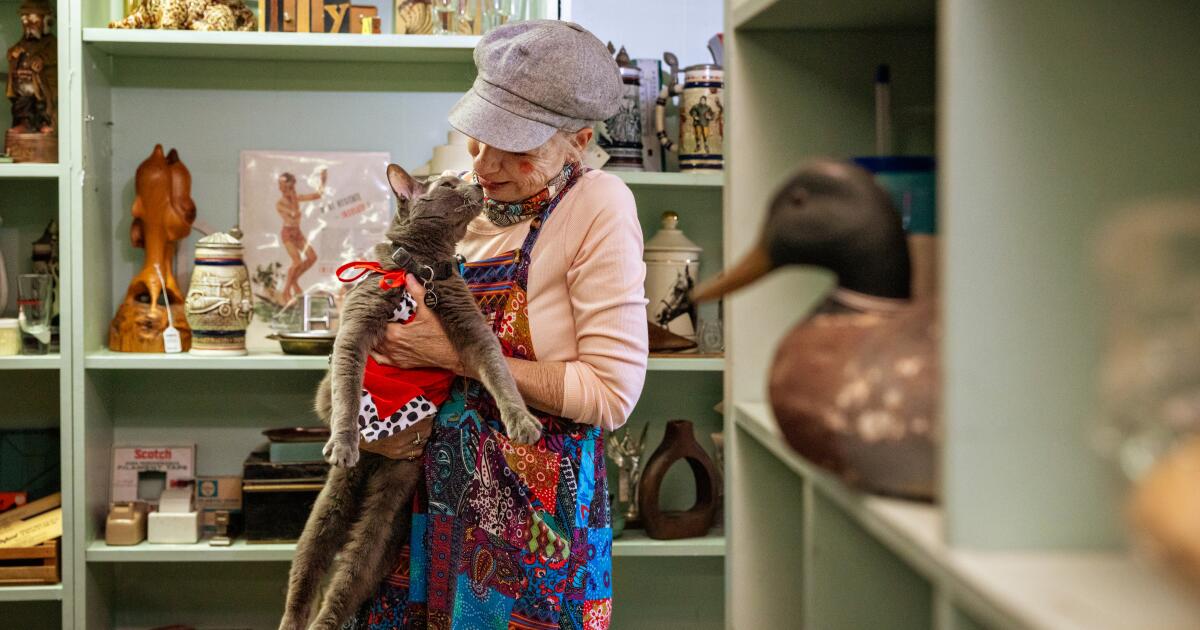 Lifestyle23 minutes ago
One-eyed rescue cat with Long Beach cult following celebrates 15th birthday in style
-
 Politics29 minutes ago
Commentary: Trump’s voter fraud speech was bait. Stop biting
-
 Science35 minutes ago
Commentary: The doctor who helped save her is in another state, and telemedicine follow-up is prohibited
-
 Sports41 minutes ago
Commentary: LAFC star Son Heung-Min proves life after the World Cup can offer hope and redemption
-

 World53 minutes ago
Death toll from the two earthquakes that hit Venezuela hits 5,069

