Rhode Island
LEOBOR reform, safe firearms storage clear legislative hurdles, heading to McKee • Rhode Island Current


The Rhode Island General Assembly took historic steps Thursday to pass contested reforms on disciplining police officers accused of misconduct and safe storage of firearms.
The updates to the Law Enforcement Officers Bill of Rights (LEOBOR) and safe gun storage now head to Gov. Dan McKee’s desk.
McKee has already signaled his support on social media for the safe storage bill, but spokesperson Olivia DaRocha did not immediately respond to questions Thursday about whether he would sign the LEOBOR reform bill.
Ruggerio’s return
The long-awaited updates to the LEOBOR bill came the same day that Senate President and bill sponsor Dominick Ruggerio returned to Smith Hill, making his first appearance in the chamber in roughly six weeks due to illness.
Ruggerio did not preside over the chamber.
The Senate’s 33-4 vote to pass his bill, along with identical legislation by Deputy House Speaker Raymond Hull, came after roughly 45 minutes of debate, including a last-minute update intended to assuage concerns about whether police body camera footage could be made public.
“I am grateful to the many stakeholders from all sides of this issue who have worked over the past several years to develop and refine this legislation,” Ruggerio, a North Providence Democrat, said in a statement. “While there will be some who say this bill goes too far and others who say it doesn’t go far enough, I think the bill strikes a responsible balance that brings necessary and appropriate reforms to LEOBOR.”
Adopted in 1976, LEOBOR protects police officers from being fired immediately or put on leave without pay when misconduct charges against them arise. The law has been criticized by social justice advocates who say it’s unfair for police to review internal misconduct.
Under the existing law, accused officers appear before a panel of three active or retired police officers — with one picked by the chief, one by the officer under investigation, and a third chosen by both or a presiding Superior Court judge.
The approved legislation calls for the three hearing officers to be randomly chosen by the Police Officers Commission on Standards and Training. The panel would also include a retired judge and an attorney “selected in consultation with the Rhode Island Supreme Court’s committee on racial and ethnic fairness.”
The legislation also removes the prohibition preventing police chiefs from making public statements about cases that have not yet had a LEOBOR hearing or releasing video evidence.
Amending the amended bills
Ruggerio’s bill previously cleared the Senate 35-0 in January before it was changed to match Hull’s in the House. The bills were again amended Thursday to address concerns brought by a coalition of open government groups in a May 10 memo that warned the bill could potentially decrease the transparency lawmakers intended.
The group pointed to a provision that would prohibit police chiefs from releasing video evidence for minor violations. The legislation, advocates wrote, does not point out what constitutes as “minor,” which, they argued, could open the door for departments to hide any video recordings.
“It is deeply troubling and sadly ironic that, as a result of this provision, a bill designed to promote greater police transparency does the opposite,” the memo read.
Sen. Dawn Euer, a Newport Democrat, introduced a floor amendment to ensure LEOBOR bill does not limit release of police body-worn camera video under the state’s Access to Public Records Act (APRA) — a move the chamber unanimously approved.
“This basically makes it clear that no matter the tier of offense, the rules around APRA would still apply,” Euer said.
The Rhode Island chapter of the American Civil Liberties Union and Common Cause Rhode Island appeared not totally satisfied with the update.
“We appreciate the Senate’s action in amending the bill to eliminate the House version’s ban on public access to body camera footage involving so-called minor incidents of police misconduct,” the groups said in a joint statement Thursday. “At the same time, by also tying public access to Attorney General regulations, we believe this amendment could allow future restrictions on access to body camera footage.”
Sen. Jonathan Acosta, a Central Falls Democrat, unsuccessfully proposed another floor amendment giving police chiefs power to immediately fire an officer found to have used deadly force in violation of departmental rules — a move that was also attempted by House progressives last month, only to get tabled by members of that chamber.
Acosta’s amendment failed by a vote of 12-25. Following the vote, Black Lives Matter Rhode Island PAC Director Harrison Tuttle issued a statement expressing disappointment.
“The Rhode Island General Assembly must confront the challenge of overcoming the overwhelming influence of police unions so that Black and Brown people can be protected from police violence and communities are safer for everyone,” Tuttle said. “It is only then that we commit to centering police accountability to make that positive vision a reality.”
The amended bills were subsequently approved by House 57-10 without discussion.

Safe storage likely on the way
In a landmark victory for gun safety advocates, the Senate voted 30-6 to approve bills mandating that all firearms not in use be stored in a locked container or equipped with a tamper-resistant lock.
The companion bills by Rep. Justine Caldwell, an East Greenwich Democrat, and Sen. Pamela Lauria, a Barrington Democrat, make unsafe storage of firearms a civil offense punishable by a fine of up to $250 for the first offense and $1,000 for the second. A subsequent violation would be a criminal charge punishable by up to six months in prison and a fine of up to $500.
“We have insurance mandates for the coverage of pediatric cancer because it’s unacceptable not to do all we can to prevent children from dying of cancer. We require appropriate restraints in vehicles because it’s unacceptable not to protect children from dying in car crashes,” Lauria said in a statement. “But gun violence, not cancer or car collisions, is the leading cause of death for children, and that’s unacceptable when we have the tools to decrease its occurrence.”
Under an existing state law passed in 1995, gun owners convicted of “criminal storage of a firearm” can be fined up to $1,000 if a loaded firearm left within reach of a child 16 or younger causes an injury.
The pair of bills would also revise the existing law to increase the severity of the criminal charge to a first-degree charge, punishable by up to five years in prison and up to $5,000 in fines in cases where an injury results.
Before they were approved on the House floor May 28, House Judiciary Chairman Robert Craven declared that the bill would make Rhode Island’s gun storage legislation the most comprehensive in the nation.
“That sounds to me like hyperbole,” Gregg Lee Carter, a professor emeritus of sociology at Bryant University who researches gun control, said in an interview Tuesday.
Still, he said it is a lot stronger than the existing law on Rhode Island’s books.
Carter said 26 states have safe firearms storage and child access protection laws. The strongest of the laws hold a gun owner accountable for storing a gun unsafely such that an unauthorized person, child or adult, can gain access to it.
The weakest laws only make the gun owner liable if the unauthorized user actually uses the gun to harm themselves or others. Of the 26 states having a safe storage law, only five are at the strongest level: Colorado, Connecticut, Massachusetts, New York, and Oregon.
Rhode Island now joins the list.
GET THE MORNING HEADLINES DELIVERED TO YOUR INBOX



(WJAR) — Thirty-two years ago was the commissioning of a Navy submarine named after the Ocean State.
Maria Stephanos was on board the USS Rhode Island on July 9, 1994.
Rhode Island was the Navy’s 15th Trident class ballistic submarine.
It was commissioned in Newport and was the first to be christened in its namesake state.

PROVIDENCE, R.I. (WJAR) — They come from all walks of life, including many professionals in the community, taking time out of their busy days to welcome students to school with enthusiasm and handshakes.
“We learn a lot of new handshakes, too,” Kobi Dennis said. “High-fives. Pounds with an explosion. We get a little bit of everything.”
It’s the Handshake Initiative, the brainchild of now Central Falls Police Chief Anthony Roberson.
Everybody can use some encouragement, and students in Rhode Island get that the minute they head toward the school building.
Initially, the students and parents didn’t know what to think.
“I was confused because I thought it was going to be a normal day,” said one student.
“Their parents were getting out of their cars trying to see what’s going on,” Reservoir Avenue School Principal Cynthia Torres said.
But now, they crave it.
“It makes me feel motivated,” another student said.
Dennis adds in an etiquette component.
“Teaching the kids how to shake hands, look one another in the eyes with a firm grip — girl or guy — firm grip and say ‘hello’ and introduce yourself, that’s part of the initiative as well,” Dennis said.
Providence school superintendent Dr. Javier Montañez said it sends a strong message.
“We hear you, we see you, and we’re here for you,” Montañez said.
Torres strategically uses them on standardized test days.
“They say, ‘I’m going to do really good today,’” she said.
“It makes me feel encouraged to do better in school,” a student said.
They’ve connected with thousands of students across Rhode Island.
“It’s about shaking hands and building relationships, but it’s also about letting young people know that there are professionals in the community cheering for them every single day,” Dennis said.
Do you know of a nonprofit organization or volunteers doing great work in your community? Fill out a short nomination form for “Community Treasures.”

A man was critically hurt in a stabbing in Providence on Tuesday, NBC affiliate WJAR-TV reports.
Police were first called to Smith Street around 7 p.m. for the reported stabbing. They found the victim on Chalkstone Avenue.
He was taken to the hospital where he remains in critical condition.
The case remains under investigation and no arrests were announced.
-

 Utah3 minutes ago
Man suspected in 2006 Utah murder left suicide note in Las Vegas jail cell: police
-
 Vermont6 minutes ago
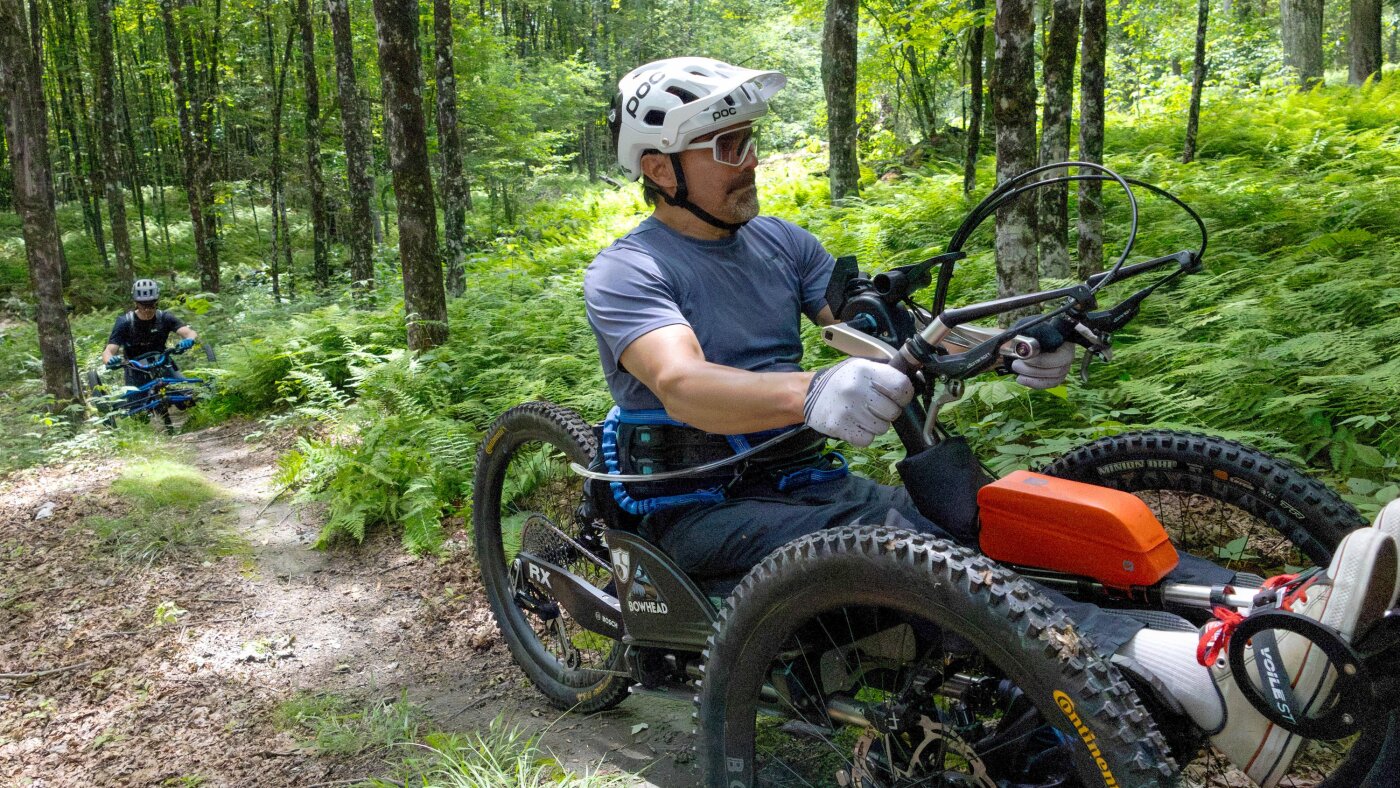
OUTDOOR ACCESS FOR DISABLED IN VERMONT
-
 Virginia11 minutes ago
4 indicted in Virginia double homicide; second victim ID’d as grandmother of 6
-

 Washington18 minutes ago
Washington Commanders are retiring Hall of Famer John Riggins’ No. 44
-

 Wisconsin21 minutes ago
Wisconsin State Patrol rides with truck and bus drivers to spot violations in five areas
-

 West Virginia26 minutes ago
West Virginia town fires entire police force after chief resigns, sergeant alleges evidence room break-in
-

 Wyoming33 minutes ago
WHP: July 5 single-vehicle rollover north of Riverton resulted in one death, one injury
-

 Crypto36 minutes ago
British Airline Jet2 Shares Jump 9% After $536M Fuel Hedge Gain Offsets Middle East Travel Fears

