Rhode Island
Divided Board of Elections backs proposal to let voters drop off mail ballots earlier – Rhode Island Current
A seemingly innocuous proposal to let voters drop off their mail ballots earlier has divided Rhode Island elections administrators.
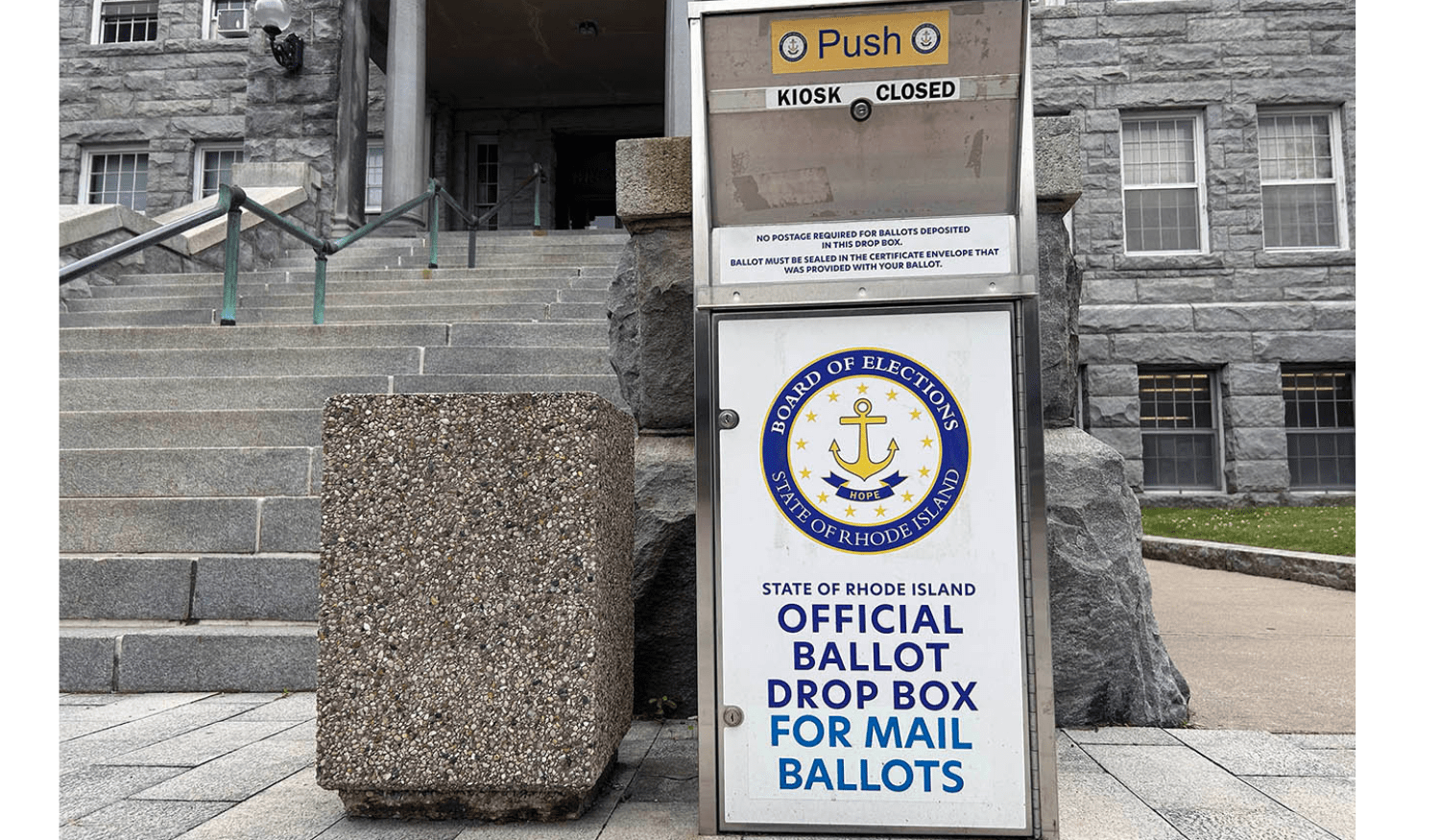
The Rhode Island Board of Elections (BOE) on Thursday narrowly backed a proposal to let voters deposit ballots in state-certified, secure drop boxes 35 days prior to Election Day. The 3-2 vote serves as a recommendation, requiring legislation and approval by the Rhode Island General Assembly, to amend existing law, which says drop boxes stationed outside city and town halls must stay locked until 20 days prior to an election.
The vote came after nearly an hour of discussion and debate, clouded with questions over logistics, and the specter of public doubt over election integrity.
Chair Jennie Johnson, along with members David Sholes and Marcela Betancur, supported the earlier opening. Board members Randy Jackvony and Michael Connors opposed the earlier opening date.
Proponents including the Rhode Island Department of State, local boards of canvassers and the Rhode Island Town and City Clerks’ Association backed the change as a way to make voting easier and more convenient for voters eager to exercise their civic duty.
“Voters love to use the drop box,” said Kathy Placencia, elections director for the Department of State.
An earlier opening date also allows drop boxes to be used for voter registration forms, which are due 30 days before an election. Typically, city and town halls have to open their offices on the Sunday registration deadline to accept registration forms from stragglers.
But some BOE members hesitated, concerned about confusion created by combining registration forms and mail ballots in the same collection box. Not to be discounted: public trust in election safety and security, which has taken a hit nationwide.
“There is a lot of distrust in elections around mail ballots already,” said Michael Connors, a board member who also serves on the three-member legislative subcommittee. The subcommittee on Feb. 20 voted 2-1 not to support a change in drop box opening dates.
Even Miguel Nunez, BOE deputy director (who will take the helm as executive director next week), acknowledged the solution was imperfect.
Identical legislation was submitted last year on behalf of the state elections board, and approved by both chambers, but was pulled at the eleventh hour due to conflicts with local special elections.
There is a lot of distrust in elections around mail ballots already.
– Michael Connors, a Board of Elections member who opposed to the earlier start for opening drop boxes
Existing state law requires local boards of canvassers to lock drop boxes at 8 p.m. on Election Day, the same time polls closed. When a special election is held a month before a regular state or federal election, the earlier drop box opening might overlap with a time when the drop box has to be locked for a local election.
Nunez presented BOE members with a few options to minimize this conflict. They included getting rid of the requirement that local elections administrators lock the drop box when polls close. Or keeping the 8 p.m. locking time but reopening the drop box the next morning. A third option: opening drop boxes 30 or 32 days prior to the election, rather than 35.
Board member Sholes also suggested another hack to assuage concerns about ballot confusion: color-coded ballots to make it easier for local election workers to differentiate between special, local races and state or federal ones.
‘Can of worms’
But the multitude of Band-Aid fixes suggested to Jackvony that perhaps the best solution was no change at all.
“I think we’re opening up a can of worms,” Jackvony said. “We’re very concerned about giving people a positive sense of the integrity of elections. I think we’re going in the wrong direction with something like this.”
“Very few” mail ballot applications get sent out by the Secretary of State’s office 35 days before an election, Nunez said.
But the handful of voters who want to turn in mail ballots early would benefit by opening up the drop boxes, which are already paid for, under surveillance, and otherwise sitting empty, said Nick Lima, Cranston elections director and chairperson for the Rhode Island Town and City Clerks’ Association Elections Committee.
Lima has heard from a few Cranston voters who already received their mail ballots for the upcoming April 2 presidential preference primary but can’t drop off their ballots in the drop boxes until March 13, based on the 20-day opening date.
“That voter will show up at City Hall at 4:35 p.m. today with that mail ballot in-hand and have nowhere to drop it,” Lima said.
Meanwhile, the city of Cranston is spending $2,000 across its four special elections this year to pay its staff to sit in City Hall on the Sunday when voter registration forms are due, Lima said. That cost could be eliminated if voters could drop their registration paperwork in a secure container.
“It’s a large expense for us, and it really isn’t a necessity,” said Lima, adding he “never” sees city voters dropping off registration forms on that final Sunday deadline.
The proposed changes in drop box openings was one of 25 election-related bills considered by the BOE Thursday, ranging from repealing constitutional requirements for 30-day residency prior to voting, to the maximum number of voters a single polling place can serve.
The drop box legislation has not been introduced yet, but must be submitted by Feb. 29 to be considered by the General Assembly.
Board members Diane Mederos and Louis DeSimone did not attend the meeting.
GET THE MORNING HEADLINES DELIVERED TO YOUR INBOX

Rhode Island
Proposed tax hike would hurt small businesses and our communities | Opinion
RI House speaker answers why RI won’t ‘pause’ millionaires tax push
House Speaker K. Joseph Shekarchi fielded a question on whether lawmakers might pause efforts to pass a millionaires tax.
Rhode Island is built on the strength of small, family-owned businesses. They are the backbone of our economy, the employers of our neighbors, and the reason our communities have character and opportunity. I know this not just as a legislator, but as someone who works every day in a family business alongside the people I care about most. That’s why I am concerned about the impact of the proposed “millionaires tax” on businesses and our communities.
While it may sound like a measure aimed at a narrow group of high earners, the reality is far different. Many family-owned businesses – especially those structured as pass-through entities – report their business income on personal tax returns. That means this tax doesn’t just target “millionaires” in the traditional sense; it directly impacts small and mid-sized businesses that reinvest their earnings into payroll, equipment, expansion and employee benefits.
In my case, our family business is a private ambulance service. Every day, we are responsible for delivering critical care to Rhode Islanders, particularly seniors and our most medically fragile neighbors. That responsibility comes with significant costs. Ambulances, lifesaving medical equipment, and the technology needed to support our crews are expensive, and they must be maintained and updated regularly to meet the highest standards of care.
Tax increases like this directly impact our ability to make those investments. These are not abstract tradeoffs – they have real consequences for the level of care we can provide. For businesses like mine, margins matter. Every dollar that goes out the door in taxes is a dollar that can’t be used to hire another worker, increase wages, buy new equipment or sponsor the local Little League team. These are real decisions that affect real people.
Supporters of this proposal often frame it as a fairness issue. But fairness should also mean recognizing the role that employers play in creating opportunity. When government makes it more expensive to operate a business in Rhode Island, we risk pushing investment – and jobs – elsewhere. Policies like this don’t exist in a vacuum; they shape decisions about where businesses grow and where families choose to put down roots.
We don’t have to guess what would happen if we raised taxes here – we can just look to Massachusetts. They passed a millionaires tax and the latest data shows a steady stream of high earners leaving for lower-tax states like New Hampshire and, you guessed it, Rhode Island. We could take advantage of Massachusetts’ mistake and build on the momentum we have built in recent years. We’ve seen the benefits of thoughtful policy decisions that encourage investment and support job creation and tax revenues are up. But progress is fragile. Policies like the millionaires tax risk undoing that work by sending the message that success will be penalized rather than encouraged.
As both a business owner and a legislator, I believe strongly that we can – and must – strike a better balance.
We can support public services, invest in our communities, and maintain fiscal responsibility without resorting to policies that put our local businesses at a disadvantage. We can grow our economy by creating an environment where businesses want to stay, expand and hire.
Let’s focus on solutions that strengthen our economy, support our workforce, and ensure that family-owned businesses like mine and so many others across our state continue to thrive.
Rhode Island’s future depends on it.
Jacquelyn Baginski is a state representative from Cranston.
Rhode Island
RI Lottery Mega Millions, Numbers Midday winning numbers for May 8, 2026
The Rhode Island Lottery offers multiple draw games for those aiming to win big.
Here’s a look at May 8, 2026, results for each game:
Winning Mega Millions numbers from May 8 drawing
37-47-49-51-58, Mega Ball: 16
Check Mega Millions payouts and previous drawings here.
Winning Numbers numbers from May 8 drawing
Midday: 9-8-9-7
Evening: 7-9-8-9
Check Numbers payouts and previous drawings here.
Winning Wild Money numbers from May 8 drawing
10-13-15-16-30, Extra: 09
Check Wild Money payouts and previous drawings here.
Winning Millionaire for Life numbers from May 8 drawing
14-16-21-43-51, Bonus: 03
Check Millionaire for Life payouts and previous drawings here.
Feeling lucky? Explore the latest lottery news & results
Are you a winner? Here’s how to claim your prize
- Prizes less than $600 can be claimed at any Rhode Island Lottery Retailer. Prizes of $600 and above must be claimed at Lottery Headquarters, 1425 Pontiac Ave., Cranston, Rhode Island 02920.
- Mega Millions and Powerball jackpot winners can decide on cash or annuity payment within 60 days after becoming entitled to the prize. The annuitized prize shall be paid in 30 graduated annual installments.
- Winners of the Millionaire for Life top prize of $1,000,000 a year for life and second prize of $100,000 a year for life can decide to collect the prize for a minimum of 20 years or take a lump sum cash payment.
When are the Rhode Island Lottery drawings held?
- Powerball: 10:59 p.m. ET on Monday, Wednesday, and Saturday.
- Mega Millions: 11:00 p.m. ET on Tuesday and Friday.
- Lucky for Life: 10:30 p.m. ET daily.
- Millionaire for Life: 11:15 p.m. ET daily.
- Numbers (Midday): 1:30 p.m. ET daily.
- Numbers (Evening): 7:29 p.m. ET daily.
- Wild Money: 7:29 p.m. ET on Tuesday, Thursday and Saturday.
This results page was generated automatically using information from TinBu and a template written and reviewed by a Rhode Island editor. You can send feedback using this form.
Rhode Island
TGIF: Ian Donnis’ Rhode Island politics roundup for May 8, 2026
The tectonic plates of Rhode Island politics keep shifting, but does the state really change? Thanks for stopping by. You can follow me through the week on Bluesky, threads and X. Here we go.
*** Want to get my column in your inbox every Friday? Sign up right here ***
Listen up: Ocean State Media now has a single powerful statewide radio frequency at 103.7
1. STORY OF THE WEEK
Fifteen years after starting his first term in the Rhode Island House of Representatives, Chris Blazejewski has ascended to the pinnacle of power, winning an overwhelming 65-10 vote Thursday to become the new House speaker. Blazejewski’s path was paved when he teamed up with Joe Shekarchi on the leadership team after Nicholas Mattiello lost his state rep seat in 2020. Over time, a few things stand out about the 46-year-old lawyer variously known as Chris, Blaz, and Blaze. He has impressive academic credentials, including two degrees from Harvard. Blazejewski is known for his devotion to his wife, Ami Gada, and their two young children, Aria and Liam. Blazejewski represents a safely Democratic seat based in Fox Point. He was a loyal ally to Shekarchi, patiently biding his time. At his essence, Blazejewski has an appreciation for progressive politics, but he’s also an institutionalist steeped in the culture of the House of Representatives and grounded by the fiscal challenges of Rhode Island’s budgetary outlook. A fanciful skit for the bygone Providence Newspaper Guild Follies could feature Blazejewski pursuing a utopian scheme – perhaps nationalizing Rhode Island’s strategic reserve of coffee milk. Back in the real world, though, a number of factors – including the array of Democratic views in the House and the state’s structural deficit – seem likely to temper the new speaker’s progressive impulse. In the first question he took after his win, Blazejewski told me his core values as a Democrat include helping working people, improving healthcare and public education, protecting the environment and guarding against federal overreach. The devil is in the details, of course, and the proof of how Blazejewski influences state policy will be in the pudding. He’ll have his initial test next month when the House rolls out its version of the budget, with a big potential impact from President Trump’s spending bill.
2. WINDS OF CHANGE
Speaker Blazejewski is 17 years younger than his predecessor and he’s one of just six state representatives left from the incoming class of 2010. (The others are Reps. David Bennett of Warwick, Teresa Tanzi of South Kingstown, Ray Hull of Providence, Robert Phillips of Woonsocket and GOP House Leader Michael Chippendale of Foster). His ascent reflects generational change and how progressives have nudged the House in a more progressive direction over the last 15 years. Blazejewski’s predecessor in District 2, David Segal – once dubbed the hippest guy in state government – was among those who came to the House chamber to congratulate him. Segal was part of an early boomlet of progressive wins in the House, along with Chris Fierro and the late Ray Sullivan. But none of them stayed long. Instead, the growing proportion of women lawmakers over time has fueled a move away from the socially conservative/pro-2A Democratic center of gravity that formerly typified the House. That also explains how former House Majority Whip Katherine Kazarian of East Providence made history this week, beaming in her new role as the first female majority leader in the House. “I have a feeling, Katie,” Blazejewski said in his speech from the rostrum, “that this is not the last of your firsts.”
3. REALITY CHECK
The passing of the torch from Joe Shekarchi to Chris Blazejewski mixed celebration and bittersweetness in the House chamber. For Blazejewski, it’s the culmination of a long journey. It’s also the end of an era for Shekarchi, whose voice broke with emotion as he gave a parting speech reflecting on more than five years in what is sometimes called Rhode Island’s most powerful political post. He took credit for changing the House culture “into a more positive member-driven body where all perspectives are heard, respected and valued.” Speaking to what he sees as his legacy, Shekarchi cited progress on housing, healthcare, education funding, pay equity and other issues. There was a buzz of goodwill in the House chamber for the departing speaker and the new team rising in power. But Rhode Island’s thorniest challenges – the housing crisis, insufficient drivers of economic growth, under-performing public schools, and lower insurance reimbursement than in neighboring states – never remain far away.
4. NEXT STEP
Roger Williams University School of Law professor Michael J. Yelnosky is the most outspoken critic of former Speaker Joe Shekarchi’s application to move directly to the Rhode Island Supreme Court from the General Assembly. Shekarchi said he has studied the revolving door law and is convinced it doesn’t apply to the Supreme Court. A complaint filed by Yelnosky with the state Ethics Commission may be taken up during the commission’s next meeting, on June 2. A number of prominent people, including Gov. Dan McKee and candidate Helena Foulkes, have said they don’t see a problem with Shekarchi’s application. Speaking from the rostrum Thursday, Speaker Blazejewski said he believes Shekarchi will make a great justice.
5. THE MILITARY
The Pentagon’s recent $25 billion estimate for the cost of the war in Iran doesn’t come close to resembling the true amount, according to Stephanie Savell, director of the Costs of War Project at Brown University. “That is just the very smallest tip of the iceberg,” Savell said during a One on One interview with me this week. The bigger point is the huge amount of economic cost being accumulated by the U.S., she said, with no end in sight. Savell said the U.S. now owes $31 trillion in debt, largely from post-9/11 wars and a series of tax cuts, and she said 15% of the federal budget goes for that each year. “I have to get in front of my college students and tell them ‘Our leaders have made a decision to saddle you with a tremendous amount of debt that’s gonna affect all of the things that you care about,’” Savell said. We also talked about drones, Rhode Island’s defense sector, whether other forms of spending are more efficient and more.
U.S. Rep. Gabe Amo joined CNN to talk about the cost of gas.
Stephanie Savell, director of the Costs of War project at Brown University, says much of the United States’ massive defense budget could be better spent on education, health care and green energy
6. CITY HAUL
Providence City Councilor Ana Vargas pulled in the biggest campaign fundraising of her career – more than $16,000 – as the council was approaching a vote on rent stabilization. Landlords flooded her campaign account, as my colleague Ben Berke reports, and she took their side in two votes. As Ben reports, “Prior to the rent control debate, Vargas had been one of the city council’s least prolific fundraisers, raising an average of $873 per quarter. She began 2026 with just $426 in her campaign account, and received only two campaign contributions all of last year.” Vargas declined an interview request and she did not respond to additional requests for comment.
Providence City Councilor Ana Vargas supported rent control during her election campaign. As she prepared to vote on it, she received the largest political donations of her career
7. BARGAIN HUNT
Democrat Wil Gregersen got in touch after going unmentioned in last week’s column in an item on first-quarter fundraising by candidates for governor. As Gregersen noted, he has more in his campaign account ($473.60) than some of those who were mentioned. “I’m serious about my candidacy,” he wrote. “Money is corrupting, and I’m purposely staying off the usual path candidates take to get elected.” Gregersen, a librarian in Warwick, proposes single-payer healthcare, a publicly owned energy utility and more – without explaining how he would pay to do this. Candidates like Gregersen and independent candidate for governor Paul Rianna Jr. run in every statewide election cycle, attracting a small amount of votes. Like it or not, campaign fundraising is a big part of our politics – a situation intensified by the U.S. Supreme Court’s Citizens United decision in 2010. The only counter-example in recent Rhode Island history is the late Robert “Cool Moose” Healey, who won 21% of the vote for governor in 2014 while barely spending any money. But that was after a half-dozen or so runs for statewide office and Healey understood how to use schtick to gain wider recognition. Something he told me in 2002 about the challenge facing third-party candidates seems apt for those hoping to run a statewide campaign without significant fundraising: “It’s about being outside the mainstream, being able to challenge the status quo. As one person said to me, `You can’t beat City Hall, but you can piss on the steps.’”
8. THE KIDS ARE NOT ALRIGHT
The latest data from Rhode Island KIDS COUNT shows that more Rhode Island children (16.3%) live in poverty than the national average. The rate in Newport, a city known more for tourism and Gilded Age mansions, is 32%. “We see kids with mental health challenges, challenges in school, difficulty in school, mental behavioral health,” KIDS COUNT Executive Director Paige Parks told Luis Hernandez in an interview. “It all stems from poverty.” She urges state lawmakers to continue to invest in early childhood programs and Rhode Island Works, a workforce development program for low-income families.
9. RI POLI-MEDIA PEOPLE ON THE MOVE
State Rep. Julie Casimiro (D-North Kingstown) is not seeking re-election, and former Sen. James Sheehan – motivated by the controversial sludge proposal – may run for the seat. Casimiro had been considered a top target for the League of Rhode Island Businesses …. Nick Fede, who spoke with me for a previous story about the challenge facing small brewers in RI, has won election as president of American Beverage Licensees, a leading national trade association …. Haley Gervino is the new executive director of the Rhode Island Coalition Against Gun Violence. A graduate of Providence College and Brandeis University, she serves as VP of operations for Sisters in Public Health …. Will this be the year when Drinking Liberally seeds new statewide leaders? Speaker Blazejewski hosted the bygone beer-and-chat series at the Wild Colonial back in the day. Another host was Kim Ahern, one of four Democrats running for AG …. Danica Iacoi, who served as chief legal counsel for former Speaker Nicholas Mattiello, is back in that role with Blazejewski.
10. OLD SCHOOL
Eighty percent of Americans think there should be age caps on serving in Congress, according to a new NPR/PBS News/Marist poll. As NPR’s Elena Moore reports, “The current Congress is now the third-oldest in U.S. history, and has seen five members die since last March. Each was 65 or older. For some voters, the widening age difference between them and members of Congress is contributing to an already growing disconnect that they feel with leaders.”
11. KICKER
Betting has become inextricably intertwined with professional sports, with predictable results. Now, as NPR’s Luke Garrett reports, campaign staffers are getting in on the action, making thousands by betting on their own candidates. What could possibly go wrong, eh? U.S. Rep. Seth Magaziner said his office has implemented a prohibition on participating in prediction markets or wagering on political, legislative, regulatory, geopolitical or other outcomes.
-
Health3 minutes agoGuava for Weight Loss Is a Real Thing—Here’s the Juicy Truth
-
Culture15 minutes agoWhy Is Everyone Obsessed With Bogs?
-
Lifestyle21 minutes agoHow ‘Mile End Kicks’ Nailed the Indie Sleaze Look
-
Technology33 minutes agoThese great digital gifts will arrive just in time for Mother’s Day
-
World39 minutes agoNorth Korea updates constitution to require automatic nuclear strike if Kim Jong Un is assassinated: report
-
Politics45 minutes agoHarris accuses Trump allies of trying to ‘rig’ 2026 midterms after Virginia court tosses redistricting measure
-
Health51 minutes agoSingle workout cuts cravings, offering new hope for smokers trying to quit
-
Sports57 minutes agoWings rookie Azzi Fudd sets dubious WNBA record with lowest-scoring debut by top pick