Northeast
Rare and mysterious whiskey bottles found washed up on beach

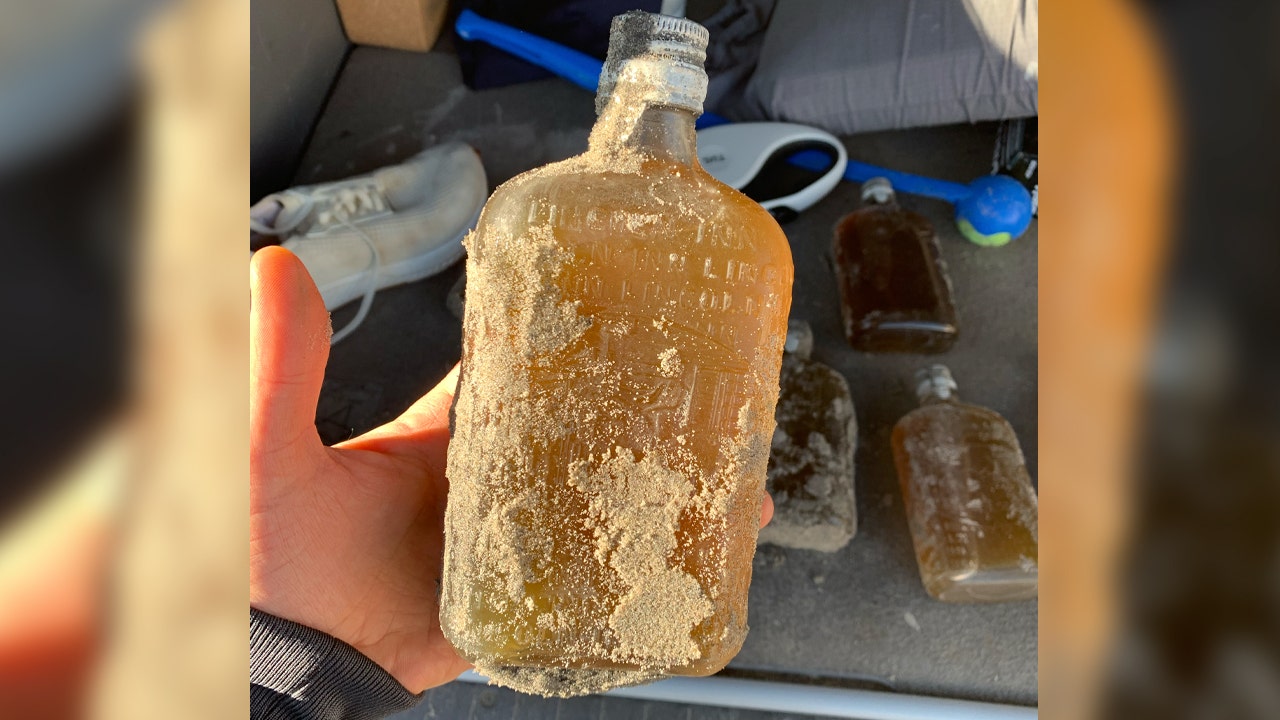
A whiskey river wasn’t on Austin Contegiacomo’s mind when he found an ocean of it — a Prohibition-era stash, to be exact — washed up on a New Jersey beach while he was walking his dog last month.
Even for a guy who doesn’t drink, it was a rare find. And it has made an even better story to tell.
“The history behind it is part of the mystery and really adds to the allure,” Contegiacomo, 28, a Coast Guard helicopter rescue swimmer from Northfield, New Jersey, told Fox News Digital.
GRATEFUL DEAD AND NEW BEER CELEBRATE ‘LONG STRANGE TRIP’ TOGETHER
He had just gotten off a 24-hour duty and decided to take his fuzzy sheepadoodle, Koda, for a walk near Margate Pier, south of Atlantic City.
“I take him to the beach to play just about every day,” Contegiacomo said.
“I was throwing the ball — and my dog tends to rub himself in stuff that smells weird. So there’s this brown bottle in the sand and he starts rubbing on it.”
A New Jersey resident found nearly a dozen Prohibition-era bottles of whiskey that appear to have been perfectly preserved since the 1930s or so. (Austin Contegiacomo)
Contegiacomo said his dog forgot about playing and became very focused on whatever was in the sand.
“I thought, ‘Oh man, it looks like a bottle of pee,’” he said.
“So I was yelling at him to get off it, then maybe five feet ahead was another one. And as soon as he got off that one, he ran up to the next one and started rubbing on that.”
AMID CANCER CONCERNS, COULD MORE DRINKERS TURN TO NO- AND LOW-ALCOHOL DRINKS?
After Koda discovered a third bottle, Contegiacomo said he began to realize they’d stumbled on something much more interesting than he’d originally thought.
“They were pretty much at the surface,” he said. “And there were a ton of conches and shells and all types of other debris on the beach that day.”
Austin Contegiacomo’s dog Koda is shown sniffing around, head on the sand, on the beach near Atlantic City, New Jersey — where man and dog found 11 mysterious bottles of whiskey. (Austin Contegiacomo)
He added, “I think it was from dredging because they’ve been repairing the beaches and they do it in the winter to get ready for the summer. There hadn’t been any storms, but it was a crazy amount of stuff washed up.”
In total, Contegiacomo and his dog found 11 completely full glass bottles of rare, old whiskey, all with the name Lincoln Inn etched on them.
WHISKEY BRAND ATTRACTS ‘YELLOWSTONE’ ACTRESS AMID INCREASE IN FEMALE BOURBON DRINKERS
Contegiacomo called a friend who did a quick internet search. They learned that Lincoln Inn was produced at a distillery in Montreal in the 1930s and that the company went out of business in the 1970s.
“He said, ‘Dude, there’s really not much info on this, but it looks like it’s old,’” Contegiacomo said. “He said I should definitely keep it and find out more about it.”
Contegiacomo and a friend did some research into the whiskey bottles that turned up on a New Jersey beach. They learned the distillery was located in Montreal and dated back to the 1930s. (Austin Contegiacomo)
So Contegiacomo took off his jacket. He picked up all the bottles — each positioned not far from the others — and stashed them in his jacket.
Then he tied it up like a sack.
‘Bottle-digging’ community
After he got them home, Contegiacomo posted about his find on Reddit, where a “bottle-digging” community as well as a group of whiskey aficionados began to weigh in on the discovery.
WHISKEY VALOR FOUNDATION IS UNITING VETERANS, HERE’S HOW A ‘CRAZY IDEA’ BECAME REALITY
Members of the groups directed Contegiacomo to a diamond shape that was embossed on the bottom of the bottles. It was a mark that was initiated in 1928.
“The bottles have a flask shape,” Contegiacomo said, “and given the type of screw and stuff, most people said it was between 1930s and 1940s.”
The diamond symbol embossed on the bottom of the bottles dates back to 1928, according to some whiskey aficionados who weighed in. (Austin Contegiacomo)
Some of Contegiacomo’s work buddies went back to the beach the next day and found one more bottle — bringing the discovered treasure to an even dozen.
Contegiacomo decided to gift a bottle to each of his friends and to his father.
FLORIDA PROFESSOR FINDS EVIDENCE THAT ANCIENT EGYPTIANS DRANK HALLUCINOGENIC COCKTAILS
“A lot of the guys thought it was super cool,” he said.
“There’s about 10 of us. A lot of the guys are from New Jersey and most people have family around here, so it’s kind of a part of New Jersey’s history – so I ended up giving pretty much all the bottles away to guys I work with.”
A few of the whiskey bottles were clear and others were hazy, which Contegiacomo learned could have to do with filtration.
The shape of the bottles and the screw-top style are among the indicators of the year the whiskey was produced. (Austin Contegiacomo)
“Given the age of it, some people said that could be due to the way it was filtered or the charring, because they used to burn the [whiskey] barrels,” he said.
“The one that I kept for myself is probably the best quality one.”
Contegiacomo said the fact that the bottles were all still sealed and the whiskey at relatively the same level in each bottle gives him hope the liquor inside is still good.
“The ocean temperatures usually don’t get anywhere near 70 degrees, even at the bottom of the waters in New Jersey,” Contegiacomo said.
At left, Contegiacomo is shown on the beach in New Jersey with his dog, Koda, and his wife, Brooke; at right, one of the bottles he found, cleaned up and gleaming now — but still unopened. (Austin Contegiacomo)
Exactly how the bottles of whiskey ended up in the water remains a mystery.
“Apparently [bootleggers] used to bring it down to about the Jersey Shore – and then small boats would take off from the Jersey Shore and they would pick the liquor up. I guess the boardwalk was pretty much a hot spot for rum running and stuff during Prohibition.”
That’s why Contegiacomo said he’s not interested in drinking it or cashing in on his find.
For more Lifestyle articles, visit www.foxnews.com/lifestyle
“If any of us intend to try it, I don’t think it’d be me that opens it,” Contegiacomo said.
“Opening it and then seeing it empty or even half-empty kind of detracts from it. Even if it’s a great whiskey or something, I don’t think I’d appreciate the whiskey itself nearly as much as I appreciate the story and how it got here.”
Sydney Borchers of Fox News Digital contributed reporting.
Read the full article from Here



We’re now officially less than a week before we spring forward in New Jersey, and everyone has an opinion on it. The clock change, by the way, will happen on Sunday, Mar. 8, 2026. We’ll essentially skip the 2 a.m. hour and gain the extra hour of daylight in the evening.
But the reality is, we don’t gain a thing when we do this. We’re so conditioned to believe we gain sunlight, but all we’re doing is shifting the clocks. Animals don’t do this, and are unaffected by what a clock says.
ALSO READ: Snow vs. no snow: How most in NJ feel after latest blizzard
Our pets, on the other hand, are forced to change with our practice of doing this. It really is an outdated practice, but we can’t stop it just like that simply because we’ll either complain about it being too dark during winter mornings under daylight saving, or getting dark too soon during summer nights under standard time.
It should be a lot simpler. And for those of us in New Jersey, it can be. Here’s what I think we should do.
Time clocks calendar thumbs up green check approve sunrise sunset
Leave the clock, adjust our day
When I worked on a golf course, all we did was adjust when we came in based on when the sun came up. During the longer days, we started at 6 a.m. And when the sunrise was later than 6 a.m., we adjusted our start time to 7 a.m.
Why can’t we just do this when it comes to work and school? Leave the clocks in standard time since that’s the one truly aligned with the Earths rotation. During the winter, make the regular workday from 9 a.m. to 5 p.m., then adjust it to 8 a.m. to 4 p.m. in the summer. It’s just that simple.
In other words, we’d be following Natural Daylight Time. Just get rid of the clock change, and adjust our day based on the sunrise. Problem solved.
Final flakes: When does snow season end in NJ?
Gallery Credit: Dan Zarrow
Significant or historical events in New Jersey for March (in chronological order)
Gallery Credit: Dan Alexander
The above post reflects the thoughts and observations of New Jersey 101.5 weekend host & content contributor Mike Brant. Any opinions expressed are his own.

Some Pennsylvania towns make it easy to feel included within a day of arriving. In Lititz, summer concerts at Lititz Springs Park turn into informal reunions, with families setting up lawn chairs side by side and local shop owners joining once they lock their doors for the evening. In Boiling Springs, the path around Children’s Lake doubles as a daily check-in point where walkers greet each other by name before drifting into the cafés along Front Street. And in Ligonier, the Diamond and its bandstand pull residents downtown for markets and community events that rely on volunteers rather than outside organizers. The same pattern carries through the rest of the towns on our list.
Lititz
Lititz is in Lancaster County, about 6 miles north of the city of Lancaster. Founded in 1756, the town was named after a castle in Bohemia and initially served as a Moravian congregation settlement. Lititz is home to the Julius Sturgis Pretzel Bakery, established in 1861 as the first commercial pretzel bakery in the United States.

Lititz Springs Park, a historic community hub since 1756, hosts various yearly events, notably the well-known Lititz Fourth of July Celebration. For dining, the Appalachian Brewing Company provides locally brewed beers and a distinctive menu showcasing regional dishes. The Wilbur Chocolate Factory, a landmark since the late 1800s, includes a museum and shop where visitors can explore chocolate-making processes and buy unique confections.
Boiling Springs
Boiling Springs, in Cumberland County, owes its name to the natural artesian springs that maintain a constant temperature and were crucial to early ironworks in the area. Established in the 18th century, it is also part of the Appalachian Trail community, underscoring its long-standing connection to nature and history. The town’s historic district includes the Iron Furnace, dating to 1760 and a testament to Boiling Springs’ early industrial role.
The town features a variety of attractions for visitors and residents. Allenberry Resort and Playhouse, a historic venue since the mid-20th century, provides entertainment, dining, and lodging options. The Boiling Springs Tavern, founded in 1832, offers classic American cuisine in a historic environment. For outdoor enjoyment, Children’s Lake is perfect for fishing and relaxing walks, and the Appalachian Trail runs through the center of the community, offering great hiking opportunities.
Jim Thorpe
Jim Thorpe sits in the Lehigh Gorge in eastern Pennsylvania, and was originally known as Mauch Chunk and played a pivotal role in the coal and railroad industries. Renamed in 1954 to honor the legendary athlete Jim Thorpe, the town retains a Victorian era charm, with much of its architecture preserved and celebrated. This heritage is evident in attractions such as the Asa Packer Mansion, built in 1861 by a philanthropist and railroad magnate, which now serves as a museum.
Visitors to Jim Thorpe can choose from various recreation and dining options. The Lehigh Gorge Scenic Railway provides a scenic ride through the mountains, perfect for enjoying the area’s natural beauty. Dining choices include Moya, famous for its upscale American dishes, and Stone Row Pub & Eatery, offering a relaxed atmosphere with local ingredients. Outdoor lovers can enjoy boating and hiking at Mauch Chunk Lake Park, making the town an attractive destination.
Ligonier
Ligonier was established in the 1760s and features a rich colonial history highlighted by Fort Ligonier, a British fortification from the French and Indian War. The town square, known as the Diamond, is circled by original structures and a bandstand from the 19th century, reinforcing its historical ambiance.
Fort Ligonier functions as both a museum showcasing 18th-century artifacts and a venue for reenactments and educational activities. The Southern Alleghenies Museum of Art enriches visitors with American art exhibitions. Dining options in Ligonier include the historic Ligonier Tavern, known for its local cuisine, and The Wicked Googly, famous for its vibrant atmosphere and live music. For outdoor leisure, Ligonier Beach offers a distinctive swimming experience with a historic pool from 1925.
Wellsboro
Wellsboro, located in Tioga County, was established in 1806 and acts as the gateway to the Pennsylvania Grand Canyon, also known as Pine Creek Gorge. The town exudes nostalgic charm with its gas-lit streets and historic Victorian buildings, offering a window into its storied history. A prime example of this history is the Penn Wells Hotel, which has been serving visitors since the early 1900s.
For those wanting to explore Wellsboro, the restored 1920s movie theater, The Arcadia Theatre, regularly features films and performances, serving as a cultural center for locals and visitors. The Native Bagel offers a relaxed dining atmosphere with dishes made from locally sourced ingredients. Outdoor lovers can enjoy Leonard Harrison State Park, which offers stunning views of the Pennsylvania Grand Canyon, along with trails and picnic spots. Furthermore, the annual Pennsylvania State Laurel Festival attracts crowds with its parade, arts and crafts, and local food stalls, honoring the area’s cultural traditions.
Foxburg
Foxburg, situated along the Allegheny River in Clarion County, was founded in 1870. It is famous for being home to the oldest golf course still in operation in the United States, the Foxburg Country Club, established in 1887. This historical feature adds to its charming and distinctive character, blending small-town American charm with a deep golf tradition.
The Foxburg Wine Cellars offers tastings of locally produced wines, complemented by a scenic setting. For dining, the Allegheny Grille provides riverfront views alongside a menu featuring regional cuisine, emphasizing the town’s picturesque location. Culture enthusiasts can explore the American Golf Hall of Fame, located within the Foxburg Country Club, which houses a collection of golf memorabilia and artifacts. For outdoor activities, the nearby Allegheny River Trail offers miles of biking and walking paths, making Foxburg a destination with diverse appeal.
Honesdale
Honesdale serves as the county seat for Wayne County and was founded in 1826. It has historical significance as the terminus of the Delaware and Hudson Canal, pivotal in the transport of coal to major markets in the northeast. Notably, Honesdale is credited with being the site of the first commercial steam locomotive run on rails in the United States, the Stourbridge Lion, adding a rich layer to its industrial heritage.
The Wayne County Historical Society presents exhibits on canal and railroad history, shedding light on the town’s growth. For dining, visitors can choose the upscale Hotel Wayne, known for its fine dining and bistro bar, or the more relaxed Trackside Grill, offering views of the historic railroad. Outdoor lovers can visit Honesdale Park, which has walking paths and recreational facilities, serving as a popular venue for community events and gatherings.
Milford
Milford is situated at the crossroads of the Delaware River and the Pocono Mountains’ foothills. Established in 1796, it rapidly gained popularity as a resort in the 19th century, thanks to its scenic landscape and fresh mountain air. The town is also renowned for the Milford Historic District, which features a range of well-preserved buildings that reflect its prosperous history.
The Columns Museum houses the famous Lincoln Flag, believed to be stained with Abraham Lincoln’s blood from the night of his assassination, providing a profound historical experience. For dining, Bar Louis at the Hotel Fauchère offers a contemporary menu in a stylish setting, while the Waterwheel Café provides a rustic atmosphere with live music and local cuisine. Additionally, Grey Towers National Historic Site, the former home of Gifford Pinchot, founder of the U.S. Forest Service, offers guided tours and scenic grounds.
Mount Joy
Mount Joy was founded in 1759 and has a name derived from an old Irish ship, the “Mountjoy,” which played a pivotal role in breaking a siege during the Irish Confederate Wars. This town, nestled among the rich, rolling farmlands of the county, has historically been a hub for agriculture and today melds historic charm with modern vibrancy, evident in its revitalized downtown area.
Bube’s Brewery, an intact historic 19th-century brewery and museum, offers unique dining experiences in its catacombs and regularly hosts murder mystery dinners. The Country Table Restaurant is known for its comfort food and welcoming atmosphere, reflecting the town’s friendly spirit. For outdoor activities, Little Chiques Park provides scenic walking paths and picnic areas, perfect for family outings. Additionally, the annual “Mount Joy Winterfest” brings the community together with craft vendors, food, and entertainment, showcasing the town’s lively community spirit.
Lewisburg
Lewisburg is a vibrant town established in 1785. It is home to Bucknell University, established in 1846, which adds a youthful energy and cultural richness to the town. Lewisburg’s downtown is listed on the National Register of Historic Places, featuring well-preserved 19th-century architecture and a tree-lined main street that enhances its historic charm.
In terms of activities and dining, Lewisburg offers a variety of choices that cater to both residents and visitors. The Campus Theatre, one of the few remaining single-screen art deco movie theaters in the country, offers a unique cinematic experience. For dining, Elizabeth’s American Bistro provides a fine dining experience using local ingredients, while the Bull Run Tap House offers a more casual atmosphere with a comprehensive selection of craft beers. For outdoor enthusiasts, Hufnagle Park offers a green retreat in the heart of the town, complete with walking paths and garden areas, making it a popular gathering place for community events and casual recreation.
As we journey through Pennsylvania’s coziest corners, we discover that these small towns do more than just charm visitors with their picturesque settings and historical backdrops. They invite us into a world where community spirit thrives and every street and alley tells a story. These towns, from Lititz’s pretzel-perfumed air to Lewisburg’s university vibes, showcase the true heart of Pennsylvania through their unyielding warmth and hospitality. Whether you’re seeking a serene retreat or a peek into America’s storied past, these towns offer a refuge where friendliness is the native language.

Former president of NH-based charity sentenced after stealing $350K

Natural Daylight Time: What is it, and why New Jersey should adapt this practice instead

New Mexico veteran cemetery coming to Carlsbad via $8M in federal funds – Carlsbad Current-Argus

How to buy tickets for Duke basketball vs NC State in ACC contest

Presidential Searches at 3 North Dakota Colleges Narrowing

Florida High School Football Rankings: Top 25 teams – Oct. 21

Cleary's 21 help Le Moyne down Central Connecticut State 69-64 in OT

How old is Bo Nix? What to know about Oregon quarterback ahead of 2024 NFL Draft

99th annual Pony Swim held in Virginia

Indiana Members Credit Union announced as new anchor tenant at Bottleworks District

Video: What the Texas Primary Battle Means for the Midterms

Dems’ potential 2028 hopefuls come out against US strikes on Iran

At least nine killed after Iranian strike on Israel’s Beit Shemesh

Mass shooting at Austin, Texas bar leaves at least 3 dead, 14 wounded, authorities say

Mamdani’s response to Trump’s Iran strike sparks conservative backlash: ‘Rooting for the ayatollah’
-

 World4 days ago
Exclusive: DeepSeek withholds latest AI model from US chipmakers including Nvidia, sources say
-

 Massachusetts4 days ago
Mother and daughter injured in Taunton house explosion
-

 Montana1 week ago
2026 MHSA Montana Wrestling State Championship Brackets And Results – FloWrestling
-

 Denver, CO4 days ago
10 acres charred, 5 injured in Thornton grass fire, evacuation orders lifted
-

 Louisiana7 days ago
Wildfire near Gum Swamp Road in Livingston Parish now under control; more than 200 acres burned
-

 Technology1 week ago
YouTube TV billing scam emails are hitting inboxes
-

 Technology1 week ago
Stellantis is in a crisis of its own making
-

 Politics1 week ago
OpenAI didn’t contact police despite employees flagging mass shooter’s concerning chatbot interactions: REPORT