Pittsburg, PA
For nearly 4 decades, a crossing guard has been helping Pittsburgh students:


Wednesday morning, Pittsburgh Mayor Corey O’Connor traded the suit and tie for a safety vest and a little stop sign, all so the city could honor one of its longest-serving crossing guards.
The chilly morning was nothing unfamiliar to Bobbi Valentine, who has been in the same spot in Carrick for 37 years.
“I like the kids, the kids are the main thing,” she said.
Valentine said she doesn’t want the spotlight, but if you’ve ever driven through or walked through the neighborhood, chances are you’ve seen her, and chances are your child has too.
“You develop the skill along the way,” she said. “You learn along with everybody else, but I like it.”
Valentine is just one of the crossing guards across the city, making sure that students and families can safely make it to the classroom, because without them, there are certainly dangers.
“They face a lot of challenges daily with distracted drivers, people speeding through school zones, people going through bus lights, so my people are basically the first line of defense for school safety,” said Donna McManus, Supervisor of School Crossing Guards for the City of Pittsburgh.
Those challenges are exactly why Mayor O’Connor spent the morning at the intersection of Biscayne and Brownsville.
“Talking to crossing guards, people who see kids every day, and understanding what intersections need, and [giving them] as much support as possible,” O’Connor said.
While the city has already put traffic-calming measures in place around some schools, that work began under the previous administration.
Those efforts continue and are far from over.
“We have to look at everything,” O’Connor said. “It’s going to be easy to fix, but at least our administration is paying attention to it, and when you want families raised in Pittsburgh, these are the conversations you have to have.”
While those talks continue at the city level, in the meantime, Valentine will be in the same place she’s been for nearly four decades.
“Make sure you listen to the crossing guards,” McManus said. “I don’t want anybody making rude gestures or screaming out the windows and calling [them] nasty things, or calling them nasty, because that’s not it.”



Pittsburg, PA
Parent group claims Pittsburgh Public Schools’ closure plan violates children’s civil rights

The Pittsburgh Public Schools board of education has been under intense scrutiny since its “Future Ready Plan” was first introduced — and then eventually approved — in late May. But a group of parents has filed a complaint with the Pennsylvania Human Rights Commission in an effort to prevent it from being carried out.
Advancement Project, a national civil rights organization, along with 412 Justice and the Education Rights Network, have filed a complaint against the school board on behalf of five PPS students, claiming the plan, which will close or repurpose several district buildings across the city, violates those students’ civil rights.
Those students represented in the complaint attend Miller Pre K-5 in the Hill District, Manchester Pre K-8 on the North Side and Woolslair Pre K-5 in Bloomfield, all of which would close under the plan, with the students relocating.
“This is part of what we’ve seen across the country, this national school closure crisis,” said Adaku Onyeka-Crawford, a staff attorney and director of education justice for Advancement Project. “We’ve seen it play out in urban, suburban and rural communities, affecting Black and brown children, and it has come to Pittsburgh.”
The complaint is calling for an investigation into the plan and for the district and school board to act in good faith during that investigation. They hope it will lead to a preliminary injunction, allowing the commission to get a court order for the district to stop the implementation of the plan.
One of the main claims in the complaint is that the school board “based school closure decisions on utilization (enrollment divided by building capacity), despite being notified that doing so would disproportionately close schools in Black neighborhoods. Black students make up 62% of students that will lose their schools, but only 49% of students district-wide.”
“Utilization has no ties to education quality at all,” said Onyeka-Crawford. “In fact, smaller class sizes are tied to better outcomes for students. Community members had flagged that relying on this metric would disproportionately harm Black students.”
Onyeka-Crawford said alternatives were presented to the school board, some that have had success in other cities, but the district went forward with their own plan instead.
“We need to ask: who is Pittsburgh Public Schools and the board accountable to?” she said. “It’s the parents and families, and if this is what parents and families are asking for, it’s up to them to be accountable to those communities, and give parents and students the education and resources that they need.”
KDKA reached out to the district, but it said it will not comment on pending litigation.

It’s going to be another hot week in the Pittsburgh area with high temperatures back into the 90s.
Any Alert Days Ahead? I have us hitting 90 degrees starting on Tuesday through Friday, so that stretch of 4 days are First Alert Weather Days. A severe storm setup looks to be in place for Saturday, so we may also see a FAWD issued for Saturday.
Aware: So far this year, we have seen five 90° days. Tuesday may be our 6th of the year.
Heat index values today are expected to be in the mid-90s, near 100 degrees.
The hottest days of the week will be on Wednesday & Thursday. I have both days seeing highs at 92°.
Rain chances start to tick back up on Friday, late in the afternoon. I have Friday highs still hitting 90, with highs in just the mid-80s on Saturday and Sunday.
There still remains a concern for severe weather on Saturday, with all the ingredients in place. Right now, the chance looks low due to morning rain keeping instability numbers low.
Congress again considering making Daylight Saving Time year-round
I am not surprised that the U.S. Congress is taking up making Daylight Saving Time standard year-round again. The Sunshine Protection Act is the latest attempt by Congress to solve the issue of time and daylight. It’s a plan that you may not realize has been attempted before, and people disliked it so much that it didn’t even last a year.
Let’s start with a brief history of changes to the clock and what we will call Daylight Saving Time. Before World War 1, there was very little in the way of guidelines for states to follow when it came to time. WWI changed things, as the government dictated that Daylight Saving Time be in effect until the war was over in the hopes of conserving energy. Farmers were glad after the war to see the changes come to an end because the later sunrise in the winter meant less time to get out in the fields and get produce to market. Overall, the move to permanent DST was seen as unpopular.
The next big push for DST came during World War 2, and again, the reason for the change was the conservation of energy. Franklin Roosevelt, the president, called year-round DST ‘war-time.’ Once again, after the war, states were allowed to do their own thing. There remained no real federal policy on DST through 1966. That all changed in 1966 with the passing of the Uniform Time Act, signed into law by Lyndon Johnson. This put into effect a mix of daylight saving time and standard time, similar to what we have today; standard time lasted around 3 months longer than what we have today.
Our next energy crisis came in 1967 with the worldwide oil embargo by the Organization of Arab Petroleum Exporting Nations (OAPEC). Our Congress decided to try out a year-round DST across the country. They put the trial period beginning at the start of 1974 and going through the spring of 1975. What could go wrong, right? Well, everything. The public hated the changes, and even worse, nearly 10 kids were killed in early morning hours that first winter period due to low visibility. A program that was supposed to last just two winter seasons was cancelled before we even got to the second winter.
It appears to be a big push again to get Congress to push for permanent Daylight Saving Time hours. I hope they are considering the impact on everyone. For Pittsburgh, that would mean sunrise on some days in the winter around 9 a.m. Sunsets during that time would still be before 6 p.m. The issue is that during the wintertime, Pittsburgh only has around nine and a half hours of ‘daylight.’ We have to figure out the best way to align our clocks to that time. I think what we are doing right now is pretty close to perfect. What do you think?
Pittsburg, PA
Pittsburgh files lawsuit against fire truck companies over alleged anticompetitive schemes

-
Science4 minutes ago
New Winged Robot Can Fly and Swim Like a Puffin
-
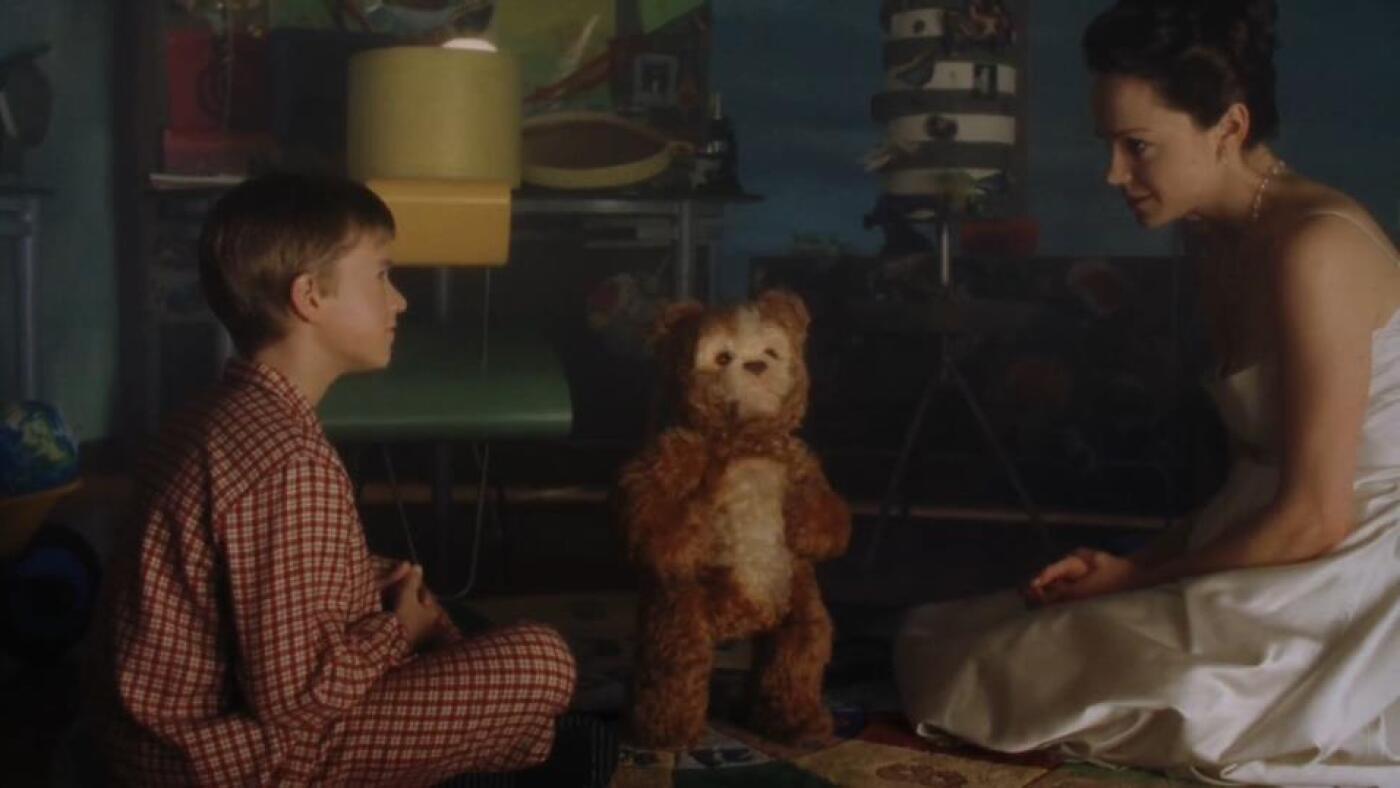 Lifestyle28 minutes ago
‘The Trojan Teddy Bear’: The promise and peril of childhood in the age of AI
-

 Technology40 minutes ago
Google and Epic give up fighting — third-party Android app stores are coming next week
-

 World46 minutes ago
FBI snares an American heir indicted for allegedly bankrolling anti-cop, pro-Hamas communist revolution
-

 Politics52 minutes ago
Biden special counsel’s ‘runaway train’ scooped up sensitive lawmaker info: ‘Abuse of power’
-

 Health58 minutes ago
‘Miracle on the Hudson’ hero Captain ‘Sully’ Sullenberger reveals Alzheimer’s diagnosis
-

 Sports1 hour ago
American League stars outshine National League in 96th MLB All-Star game
-

 Technology1 hour ago
Before you connect another smart TV, tablet or phone, lock it down

