Connect with us

Northeast

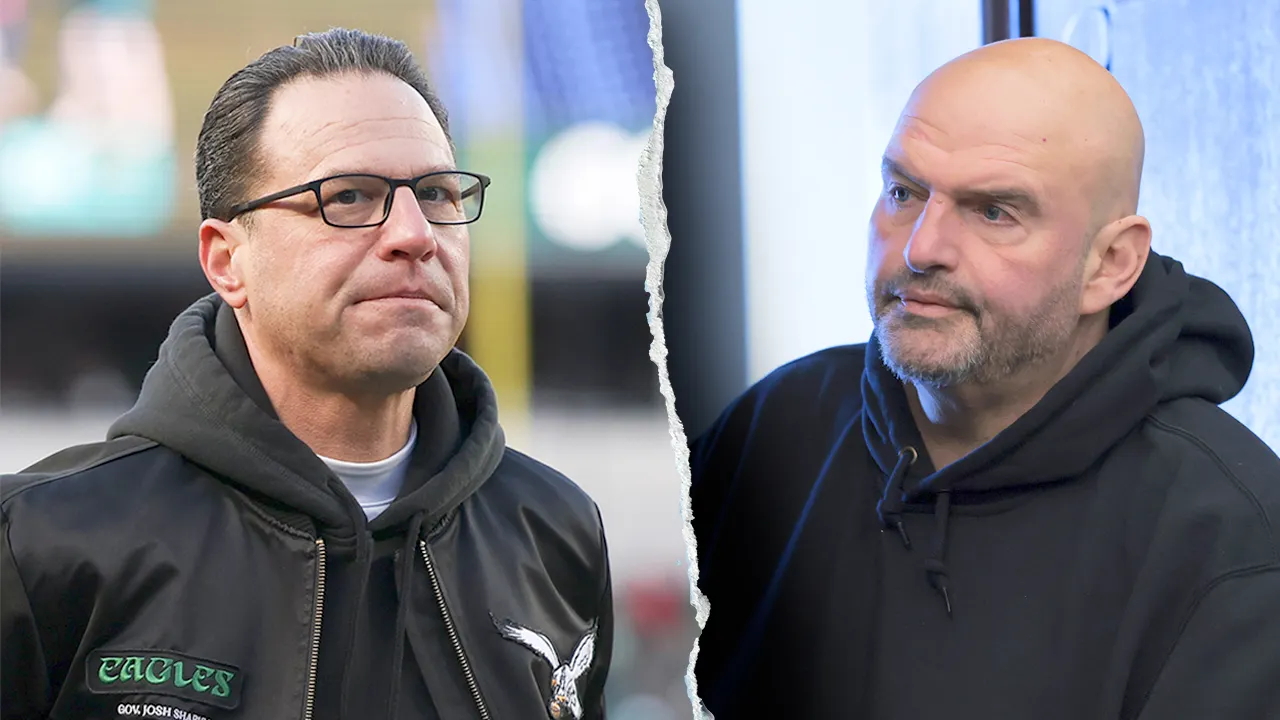
Pennsylvania Gov Josh Shapiro dismisses NYT reporting about drama between him and John Fetterman

Published

on

Pennsylvania Gov Josh Shapiro dismisses NYT reporting about drama between him and John Fetterman

NEWYou can now listen to Fox News articles!

Pennsylvania Go. Josh Shapiro dismissed a New York Times story about his relationship with Sen. John Fetterman, D-Pa., on ABC’s “This Week” Sunday. 

During the show, host Martha Raddatz asked the Democratic governor to comment on a New York Times article that claimed he and Fetterman “don’t speak.” Shapiro insisted the report was “not true” and was created by journalists to “conjure up a lot of drama.”

Raddatz then asked whether he would support Fetterman for re-election.

“Well, he has to decide if he’s seeking re-election,” Shapiro said. “That’s not for another cycle.”

Advertisement

FETTERMAN CALLS FOR BIPARTISAN COOPERATION AS HE CONTINUES WORKING ACROSS PARTY LINES ON KEY ISSUES

Pennsylvania Gov. Josh Shapiro told ABC’s Martha Raddatz that he is waiting for Sen. John Fetterman’s decision before offering any endorsements. (Rachel Wisniewski/Bloomberg via Getty Images)

He added, “I don’t know if he’s running for re-election. I think he needs to decide if he’s running, and then we’ll make a decision from there.”

Raddatz asked Shapiro to clarify whether he meant that he had not yet decided to support Fetterman.

“He needs to decide if he’s running for re-election, and then we’ll make a determination thereafter,” Shapiro repeated.

Advertisement

Though Shapiro did not answer whether he and Fetterman still speak, Shapiro described his relationship with Fetterman as “constructive.”

JOSH SHAPIRO SAYS TRUMP WARNED HIM ‘DON’T RUN’ FOR PRESIDENT AFTER ARSON ATTACK

“We have a constructive relationship to try to ensure that the people of Pennsylvania are served. He and I are obviously different people, he casts some votes and takes some positions that I strongly disagree with but at the end of the day my job is to serve the people of Pennsylvania,” Shapiro said.

 Sen. John Fetterman, D-Pa., declined to endorse Gov. Josh Shapiro for re-election earlier this month.  (Bill Clark/CQ-Roll Call, Inc via Getty Images)

Fox News Digital reached out to Fetterman’s office for comment.

Advertisement

Fetterman similarly declined to endorse Shapiro for re-election in 2028 when repeatedly asked by Politico’s Dasha Burns earlier this month.

“I appreciate his service. We both support our services,” Fetterman said.

FETTERMAN TELLS PHILADELPHIA DA TO ‘LIGHTEN UP, FRANCIS’ AFTER HEATED ICE REMARKS

Fetterman’s memoir “Unfettered” revealed an incident where he called Shapiro a “f—— a——” over a 2020 parole board dispute, threatening to run for governor in 2022 to primary Shapiro.

“I told him there were two tracks — that one and the one in which he ran for governor and I ran for the Senate (which was the one I preferred),” Fetterman wrote.

Advertisement

John Fetterman described tension between him and Josh Shapiro since a 2020 parole board dispute. (Bill Streicher/Reuters; Anna Moneymaker/Getty Images)

Fetterman wrote that his relationship with Shapiro never recovered after their dispute.

CLICK HERE TO DOWNLOAD THE FOX NEWS APP

“I sincerely wish him the best,” Fetterman wrote. “He is a credit to the state and may one day be a credit to the country. I remember fondly the days when we were nobodies trying to climb the ladder. Even if we no longer speak.”

Advertisement

Read the full article from Here

New Hampshire

Not For Granite: New Hampshire Man Isn’t Laughing At Anti-Cyclist Comments From State Elected Official — Streetsblog USA

Published

on

Not For Granite: New Hampshire Man Isn’t Laughing At Anti-Cyclist Comments From State Elected Official — Streetsblog USA


In a speech last month criticizing a state bill that would permit local governments to impose lower speed limits, New Hampshire state Rep. Thomas Walsh joked about how it was “very tempting” to “run bicycles off the road.” Bob Manley, a resident of the Granite State, sent a version of the following letter to Walsh in protest, and we are printing it to draw larger attention to the blithe way that many Americans demean cyclisxts. The letter has been lightly edited for clarity.

Dear Rep. Walsh,

I am writing to you as a resident of New Hampshire and a frequent cyclist on our state’s roads. I was disturbed and outraged by your statement on the House floor on April 23, 2026. “It is against the law to run over pedestrians,” you said. “It’s against the law to run bicycles off the road, even though it’s sometimes very tempting.”

Rep. Thomas Walsh Photo: New Hampshire legislature

This is not a harmless remark. It is dangerous, irresponsible and completely inappropriate — particularly coming from the chair of the House Transportation Committee, a position responsible for promoting and protecting the safety for all road users.

Advertisement

As highlighted in a recent piece by Paul Susca and Amanda Gourgue of the Bike-Walk Alliance, New Hampshire faces a troubling and worsening pattern of fatalities that involve pedestrians and cyclists. These are not abstract statistics. These are human beings: neighbors, friends and family members whose lives are permanently altered or cut short altogether.

It is unacceptable for a public official to suggest — even in jest — that harming cyclists is “very tempting.” Doing so sends several dangerous messages: that the safety and wellbeing of cyclists and pedestrians are negotiable; that reckless and aggressive driving is acceptable; and that vulnerable road users do not deserve protection. 

Those of us who ride on New Hampshire’s roads already understand the risks. We experience close passes, endure hostility, and witness moments where a split second determines whether we make it home. We rely on our elected representatives to take these risks seriously, not diminish and normalize them.

Your role demands leadership, accountability, and a commitment to safety. Your comment suggests the opposite.

I urge you to publicly retract your statement, issue a sincere apology and reaffirm your commitment to the safety of all road users — especially those who walk and bike.

Advertisement

More importantly, I urge you to take meaningful action to improve safety on our roads, rather than dismissing or undermining efforts to do so.

We all share these roads. Every person on them deserves to get home safely.

Respectfully,
Bob Manley


Source link

Advertisement
Continue Reading

New Jersey

24 hours with 3 teenage birders: Welcome to the World Series of Birding

Published

on

24 hours with 3 teenage birders: Welcome to the World Series of Birding


Otys Train, 16, (left) and teammate Jack Trojan, 17, search for different bird species while competing in the world series of birding at High Point State Park in New Jersey on May 9. They competed in the 43rd annual World Series of Birding where they counted as many bird species within New Jersey as they could in 24 hours.

Mohamed Sadek for NPR


hide caption

Advertisement

toggle caption

Mohamed Sadek for NPR

It’s just after midnight in north New Jersey when a white SUV pulls up next to a deserted park, and three teenage boys leap out into the dark. They sprint across a field, vault a fence and peer through binoculars — up toward giant nests atop a pole — all in the hopes of catching a momentary flash of a sleeping parrot’s tail.

By the light of street lamps, they strain to get a look through the nests’ dark holes. Then, after 10 minutes of waiting, 16-year-old Otys Train calls out: “I’ve I got it, I got it, I got it, I got it, I got it, I got the monk parakeet!”

Advertisement

He and his friends, 17-year-old Jack Trojan and 16-year-old Zade Pacetti, have repeatedly come to this park late at night to try to find this bird. And tonight, the work has paid off. They’ve found their first bird of the 43rd annual World Series of Birding. The competition started at midnight on Saturday, and they have until the last seconds of the day to count as many bird species within New Jersey as they can — and claim victory.

A snowy egret flys by nesting, near the welcome center in Ocean City, NJ.

A snowy egret flies by a nesting area in Ocean City.

Mohamed Sadek for NPR


hide caption

toggle caption

Advertisement

Mohamed Sadek for NPR

The teenagers are accompanied by their dads: Mark Trojan, Chris Pacetti and Jeff Train. They’re in charge of driving the van and ensuring that their sons remember to drink water and eat food, not just energy drinks and a family-sized bag of M&Ms.

To keep warm, the team sports matching gray sweatshirts, emblazoned with their team name: The Pete Dunnelins. It’s a portmanteau of dunlins, a shorebird often spotted along the New Jersey coast, and a local birding hero: Pete Dunne, who founded the World Series of Birding back in 1984. It’s put on by the nonprofit New Jersey Audubon, part competition for birding glory and part fundraiser for conservation.

It’s become an intergenerational gathering of bird lovers: This year, 87 teams are participating in several divisions sorted by age. They range from birders who have competed for decades, to first-graders who are just learning the ropes. Smack dab in the middle, in the high school division, are The Pete Dunnelins, who have been friends since 2021, around the time they really fell in love with birding.

Advertisement
Pete Dunne uses binoculars during the World Series of Birding in an estuary in Cape May in 2007.

Pete Dunne uses binoculars during the World Series of Birding in an estuary in Cape May in 2007. He founded the event in 1984.

Stan Honda/AFP via Getty Images


hide caption

toggle caption

Stan Honda/AFP via Getty Images

Advertisement

For them, it’s not just a casual hobby. They’ve placed first in the competition for the past two years — the result of years of practice, mentorship from older birders and training their eyes and ears to catch every bird, no matter how swift the appearance or faint the call. The three of them have been preparing for this year’s competition for months, even creating a spreadsheet with the day’s schedule planned “down to the minute,” Jack Trojan says.

It’s a strategy they hope will lead to another win — or, at the very least, help them reach their goal of 200 species. (Last year, they got 199, tying for first place with their fellow high school competitors and “nemeses,” the Flying Penguins from southeast Pennsylvania.)

“Every minute we’re driving, we’ve accounted for,” Trojan, the team captain, says. But they can’t account for the whims of nature. “Birds are animals, and you can’t really predict too well when you’re going to see or hear everything.”

The clock is ticking, and they have to move on to other locations, Trojan says: “It’s owl time.”

Advertisement

3 a.m. in marshland

After a few hours of looking for owls, bitterns and rails, the team has moved onto a marshland trail on the edge of the state. It’s still pitch-black, and they’re listening to the tell-tale sounds of the marsh birds they want to add to their list — in particular, the elusive sora, which hides in the reeds.

This is when their years of training their ears pays off, says Jeff Train, Otys’ dad and the team’s mentor. The teens can’t see the birds, but they can pick out their calls.

Teammate Jack Trojan, 17, right, makes bird calls at High Point State Park.

Trojan (right), makes bird calls at High Point State Park in northern New Jersey.

Mohamed Sadek for NPR


hide caption

Advertisement

toggle caption

Mohamed Sadek for NPR

It’s something Otys Train excels at. He went through a list of all the birds that were possible to hear at the World Series. “I memorized them to the point where I would get [them] like, immediately,” he says. “When you go into the field and hear the actual birds and see them, it kind of imprints the song in your head.”

Train, Trojan and Pacetti whisper to each other as they listen to the marsh starting to come alive as the minutes tick by. There’s the whinny of a sora, then the cheep of a swamp sparrow and the nasally “peent” of an American woodcock. “Am I hearing a green heron to the left?” Otys asks. They confer and either agree or disagree on what they hear; competition rules require unanimous team agreement before they can list it.

Advertisement

Jeff Train watches them from a short distance away. He’s careful to stay quiet, keeping his voice to a whisper and walking slowly in the grass; the teenagers are quick to shush anyone making unnecessary noise. The dads have learned this the hard way. “We always used to have a lot of laughing fits,” Train says – but no longer.

Further away on the trail is Chris Pacetti. How’s he holding up? “I’m cold,” he says. “I’m ready for the sun to come up.”

Sunrise in the woods

Zade Pacetti, 16, looks through binoculars at Edwin B. Forsythe National Wildlife Refuge in southern New Jersey.

Zade Pacetti, 16, looks through binoculars.

Mohamed Sadek for NPR


hide caption

Advertisement

toggle caption

Mohamed Sadek for NPR

When the sun comes up a little before 6 a.m., Mark Trojan is driving the crew down a long, winding road in nearby High Point State Park — and The Pete Dunnelins are stressed. They’re running behind schedule, and they need to get back on track.

During this stretch, they’re trying to count as many warblers as possible. For maximum efficiency, they’re staying in the car as it cruises slowly down the road, windows rolled down.

Advertisement

The teenagers stick their heads outside the car to get a better look. “There’s a lot of yellow warblers, there’s a lot of thrushes,” Zade Pacetti murmurs, looking through his binoculars.

Then, all of a sudden, Otys Train sees something and cries out: “Mark! No! Stop!” The senior Trojan groans quietly, and brings the car to a halt.

The teammates begin to “pish” — blowing air through their clenched teeth and lips to make “a pish-pish-pish” sound, trying to draw out the birds from hiding. But not much happens, and after a minute, they continue driving. “We can’t spend too much time on this,” Jack Trojan says.

But not long after, their luck changes: there’s a sharp-shinned hawk’s nest up in a tree. “Sharpie nest is good,” Trojan says. Train agrees: “Ho-ly.”

Pacetti (left), Train and Trojan sit ledges of their car's rolled-down windows while looking for birds at High Point State Park.

The teammates sit on the ledges of their SUV’s rolled-down windows while looking for birds at High Point State Park.

Mohamed Sadek for NPR

Advertisement


hide caption

toggle caption

Mohamed Sadek for NPR

Advertisement

As the car continues to move along, Pacetti, Train and Trojan all sit on the ledges of their rolled-down windows, torsos sticking out of the car, arms on the top of the car to balance. It’s a move that they saw one of the top college student teams do during the competition a few years ago, Jeff Train says. And when he saw Otys sit on the ledge for the first time, he “freaked.”

But now that their sons are older, Train says, the dads have agreed that the move helps them hear better and compete. “They are really in their element, and they’ve learned so much, and they’re safe about it,” he says. “We don’t want to hold them back in any way.” After all, he says, birding is where he’s seen his son and his friends really thrive.

It’s not always been something their peers have understood; Jack Trojan says birding is “not seen as cool, actually.” But, Zade Pacetti says, “if you come across as confident … [classmates] respect that. And it’s not something to be made fun of.”

Otys Train used to “get made fun of a good amount for it,” he says. “But I kind of just learned to be myself and now I’m more open about it. And I guess people see it as interesting now.”

Early afternoon, on the side of the road

Teammates Otys Train, 16, (left), Zade Pacetti, 16, and Jack Trojan, 17, look through a scope and binoculars as they aim to identify as many bird species as possible during the World Series of Birding at Malibu Beach Wildlife Management Area in New Jersey.

Train (left), Pacetti and Trojan look through a scope and binoculars at Malibu Beach Wildlife Management Area.

Mohamed Sadek for NPR

Advertisement


hide caption

toggle caption

Mohamed Sadek for NPR

Advertisement

Near the coastline of the south Jersey Shore, the team pulls off to the road shoulder, scoping out, among other birds, the piping plover. The fluffy, dull-feathered shorebird camouflages into the sand, hard to pick out among the dunes on an overcast day, Trojan says. They’re peering through the scope, but no dice.

With the day more than half over, they’ve started to use a timer to make sure they don’t linger. Trojan starts the countdown: in 1 minute and 40 seconds, they have to leave, no matter what.

At the 11th hour, Train calls over Pacetti and Trojan — he’s scoped a small, pale dot among other distant birds. His teammates peer through the lens, confirm his sighting, then bolt for the car.

Shorebirds forage along the marsh at Edwin B. Forsythe National Wildlife Refuge.

Shorebirds forage along the marsh at Edwin B. Forsythe National Wildlife Refuge in southern New Jersey.

Mohamed Sadek for NPR


hide caption

Advertisement

toggle caption

Mohamed Sadek for NPR

Later, Jeff Train marvels at the teens’ planning acumen. “It’s funny, because I have to remind my son to pack his bag before he goes to baseball. But the spreadsheet he has created, telling him where a bird is and when he’s going to see it and what time he has to get there, it’s pretty funny to see that he definitely has those skills.”

Advertisement

Sunset at the wildlife refuge

The sun is starting to go down when The Pete Dunnelins step out of the car at the coastal Edwin B. Forsythe Wildlife Refuge, a migration hotspot. The team has dozens of species that they need to find in the next two hours: It’s time to do or die.

As the trio walks around the refuge, they dial into the cacophony of wildlife surrounding them. Meanwhile, their fathers hang back, observing, cracking wise about their teens’ antics. Over the years, the six of them have become like family, Jeff Train says; the three sons interact more like brothers than they do teammates. (That brotherliness is particularly apparent that evening: When Zade Pacetti gets the hiccups during a chorus of birdsong, his teammates hiss at him to “shut up.”)

The teammates have grown as birders and as people over the years, Train says, thanks to a village of mentors and teachers. They’ve attended birding camp, been coached by college students, and gotten tips from experts at Cornell’s famed lab of ornithology. And along the way, they became obsessed with not just birds, but nature and conservation, Train says.

Teammates all have to see the bird to count towards their number, at Edwin B. Forsythe National Wildlife Refuge in New Jersey. A mile marker sign depicts a Canadian goose.

Train and Pacetti jog over to Trojan, who has spotted a bird. All teammates all have to see the bird to count towards their total.

Mohamed Sadek for NPR


hide caption

Advertisement

toggle caption

Mohamed Sadek for NPR

“Teenagers get a bad rap sometimes that they don’t care about much,” he says. “And this is clearly an illustration that, you know, the younger generation is not apathetic. They actually care a lot and they’re actually doing a lot of really good things.”

Advertisement

The sun starts to sink below the horizon, and the sky fills with birds gobbling up their last insects of the day. Craning their necks, the three boys try to not miss anything; they’ve got a number of species they need to spot if they have any chance of cracking 200.

“Nighthawk, right up there,” Jack Trojan blurts out, “going right, coming towards us.” His teammates murmur in agreement.

Teammate Jack Trojan, 17, tries to identify as many bird species as possible during the World Series of Birding at Edwin B. Forsythe National Wildlife Refuge in New Jersey.

Trojan looks for birds out of the car window as the sun sets.

Mohamed Sadek for NPR


hide caption

Advertisement

toggle caption

Mohamed Sadek for NPR

Trojan picks up another sound — a yellow-breasted chat that has been eluding them. “It’s calling right now! That!”

Then, it chirps loudly, unmistakable. “Yes!” they yell in unison.

Advertisement

“And you say I’m not a good birder,” Trojan says, jostling his friends as they laugh. “I’m picking up so much more. I proved myself.”

The next morning in Cape May

The team stayed out until the very last minute, nabbing a king rail as their last bird of the day. The next morning, at the awards ceremony, the total counts are announced.

The Pete Dunnelins’ final count: 206 species, easily surpassing their goal.

But it wasn’t enough. The Flying Penguins — made up of team members Christian Scheibe, Noah Bieljeski, Ethan Kang and Ellie McDonald — got 209. In the end, three birds made the difference.

At sunset, Jack Trojan, 17, left, Zade Pacetti, 16, middle, and Otys Train, 16, right, look for a nighthawk at Edwin B. Forsythe National Wildlife Refuge.

Trojan (left), Pacetti and Train look for a nighthawk at Edwin B. Forsythe National Wildlife Refuge after the sun set.

Mohamed Sadek for NPR

Advertisement


hide caption

toggle caption

Mohamed Sadek for NPR

Advertisement

The trio say they found out about their loss not long after midnight. “We were pretty pissed last night,” Pacetti says. Then, they woke up the next morning in a better mood. There were things Pacetti says they could’ve done better — running behind schedule at times didn’t help. But other factors were beyond their control: Rainy conditions quieted some of the birds, and peak migration hadn’t quite hit the area yet.

Many teams of skilled young birders compete at a high level, so chance is a big part of the day, according to Tom Reed, the migration count coordinator at the Cape May Bird Observatory and a mentor of The Pete Dunnelins.

A mixture of great egrets, snowy egrets, and white ibis nesting, near the welcome center in Ocean City, NJ.

A mixture of great egrets, snowy egrets and white ibis nesting near the welcome center in Ocean City.

Mohamed Sadek for NPR


hide caption

Advertisement

toggle caption

Mohamed Sadek for NPR

“These birds have wings, they have their own lives they’re going about each day. You try to be in the best place at the best time or the best tide level to try to see each bird. But part of it is luck,” Reed says. “And then, there’s some years when you don’t get those lucky breaks.”

When The Pete Dunnelins go up to congratulate the Flying Penguins on their win, they swap notes on routes – though each is careful to not reveal the locations of their most prized birding spots. Sure, there’s no cash prize at stake in this competition, but they’re still rivals.

Advertisement

The team is already thinking about next year. They’re considering strategy, but there’s a bigger problem at hand: Trojan is heading to college in the fall, meaning he’ll age out of the high school division. Pacetti and Train will need to find a new teammate.

Trojan (left), Train and Pacetti counted 206 bird species but their rivals, The Flying Penguins, got 209.

Trojan (left), Train and Pacetti counted 206 bird species but their rivals, The Flying Penguins, got 209.

Mohamed Sadek for NPR


hide caption

toggle caption

Advertisement

Mohamed Sadek for NPR

Trojan has a possible solution: “I was thinking that since I’ll be over 18, at that point, I can be a mentor” to his friends, he says. “So, it’d be like I’m still participating, but I’m just verifying their words and verifying their methods and strategies.”

Pacetti and Train, on the other hand? A little less sure about that plan. “I don’t know if that would be … I don’t know about that one,” Pacetti says, laughing.

After all, they’re still teenagers. Who wants their best friend to tell them what to do?

Advertisement


Source link

Continue Reading

Pennsylvania

PA targets AI developers for allegedly misleading users

Published

on

PA targets AI developers for allegedly misleading users


HARRISBURG — A new task force under Pennsylvania’s Department of State has been working since February to hunt down AI chatbots that may be misleading users into believing the bots are licensed professionals.

Last week, the Shapiro administration filed what it said was the first lawsuit to stem from its AI investigations and the first enforcement action of its kind announced by a governor in the United States. Pennsylvania officials indicated there could be more to come.

The high-profile litigation comes as lawmakers across the country are pursuing, and in some cases enacting, legislation to address concerns brought on by the growing artificial intelligence industry — from banning the creation of sexual images of minors to requiring age verification for all users. A number of proposals from Gov. Josh Shapiro’s most recent budget address await action in the legislature.

The administration’s lawsuit alleges that software known as Character.AI, which creates fictional personalities for users to interact with, posed as a licensed doctor and offered medical advice to a state investigator, violating state law governing the practice of medicine. The suit was filed by Pennsylvania’s State Board of Medicine.

Advertisement

“We will continue to take action to protect the public from misleading or unlawful practices, whether they come from individuals or emerging technologies,” Secretary of the Commonwealth Al Schmidt said in a statement following the Character.AI lawsuit.

Shapiro made a similar promise in a statement, saying Pennsylvania will continue “holding bad actors accountable and setting clear guardrails so people can use new technology responsibly.”

The lawsuit says it stems from an investigation in which an employee with the Department of State created an account with the service and began a dialogue with “Emilie” — an AI-generated character the software described as a “Doctor of psychiatry.”

The character allegedly claimed it went to Imperial College London, had been practicing for seven years, and is licensed in Pennsylvania.

“In fact, I did a stint in Philadelphia for a while,” it told the investigator, according to the lawsuit.

Advertisement

The software also provided what the lawsuit said was a fake license number.

Those claims, the Shapiro administration argues, trick users into believing they are receiving medical advice from a licensed practitioner.

“Pennsylvanians deserve to know who — or what — they are interacting with online, especially when it comes to their health,” Shapiro said in a statement. “We will not allow companies to deploy AI tools that mislead people into believing they are receiving advice from a licensed medical professional.”

The lawsuit seeks for Character Technologies Inc. (developer of Character.AI) to “cease and desist from engaging in the unlawful practice of medicine and surgery.”

A Character.AI spokesperson said in a statement Tuesday that the company’s “highest priority is the safety and well-being of our users.” The spokesperson said that before the lawsuit, Character.AI already featured disclaimers warning that its AI characters are not real, and that they “should be treated as fiction.”

Advertisement

The spokesperson declined to comment on the lawsuit.

Pennsylvania’s lawsuit is not the first Character Technologies has faced. At least one case was brought by the parent of a minor who died by suicide. The company last year adopted a policy to ban minors from engaging “in open-ended chat with AI on our platform.”

The Federal Trade Commission last year also opened an inquiry into the company, along with six other chatbot providers, regarding how they “measure, test, and monitor potentially negative impacts of this technology on children and teens,” according to an agency news release.

It’s unclear what led Pennsylvania regulators to specifically investigate Character.AI. A Department of State spokesperson said the source of the complaint was “confidential.”

Shapiro told CNN, one of several national media outlets that covered the novel lawsuit, that his administration “challenged” the Department of State to conduct these types of investigations “to go and use this technology and see what kind of risks it posed” to Pennsylvanians.

Advertisement

Some details about the effort, which Shapiro first teased in his February budget pitch, are not yet public. Members of the task force are not disclosed online, and the Department of State did not answer questions from Spotlight PA asking for their names or how they were selected. A Department of State spokesperson said the task force consists of 12 of its employees.

As part of the AI fraud initiative, Pennsylvania is crowdsourcing tips on what software the state should investigate through its “Unlicensed Practice by a Chatbot” complaint system and hotline. According to the Department of State, it has received 18 complaints since it launched in February.

Pennsylvania’s moves against AI companies come as they rapidly grow their user bases nationwide, especially children and teenagers.

According to a survey last year from Common Sense Media, a California-based child safety nonprofit, more than half of teenagers access AI platforms at least a few times per month. One-third said they use or view the software as a tool to socialize, including for conversation or relationship practice, emotional support, role-playing, friendships, and romantic interactions.

At least five states have enacted laws restricting chatbots or requiring disclosures, according to the National Conference of State Legislatures. California, for example, requires companies to disclose to children that they are interacting with AI. Pennsylvania is not one of them, but the state medical board alleges Character.AI’s actions violated existing law.

Advertisement

In his February budget address, Shapiro called on the General Assembly to take action on artificial intelligence. He urged lawmakers to prohibit chatbots from creating sexually explicit or violent content of minors, mandate that developers require age verification from users, and detect when children mention self-harm or violence. He also wants companies to frequently notify users they’re not interacting with a human.

While You’re Here

Spotlight PA’s nonprofit reporting is a free public service, but it depends on your support. Give now to ensure it can continue.

Lawmakers have not yet adopted those proposals.

House Communications & Technology Committee Chair Joe Ciresi (D., Montgomery) said the body’s staff is “constantly” meeting with Shapiro’s office to discuss how lawmakers should address growing concerns from the public regarding AI.

Advertisement

Ciresi’s counterpart in the GOP-controlled state Senate, Tracy Pennycuick (R., Montgomery), did not respond to questions about the Character.AI lawsuit, Pennsylvania’s AI Task Force, or her staff’s coordination with Shapiro.

Two years ago, Shapiro signed a bill banning ownership or distribution of AI-generated sexual images of children and non-consenting adults, which Pennycuick had sponsored. Last year, he signed another Pennycuick bill criminalizing the use of AI to create a nonconsensual “digital likeness” (including deepfakes) to “defraud or injure” another person.

Pennycuick’s now pushing for legislation that would require disclosures and restrictions for chatbots when they interact with children. In the legislative memo, Pennycuick pointed to past lawsuits filed against chatbot developers to argue “heartbreaking cases underscore the urgent need for safeguards to protect children from unsafe and unvetted AI systems.” Her proposal passed the state Senate in March but has not advanced through committee in the House.

Lawmakers have also been working to address another aspect of the AI industry, the growth of data centers and backlash to them in some communities. In Shapiro’s February budget address, he said, “no sector of our country’s economy is growing faster than data centers and artificial intelligence.” He announced incentives for data center developers to follow stricter environmental and transparency standards.

BEFORE YOU GO… If you learned something from this article, pay it forward and contribute to Spotlight PA at spotlightpa.org/donate. This story was funded in part thanks to the support of the Lancaster County Local Journalism Fund. Learn more about how we are supported here.

Advertisement


Source link

Continue Reading
Advertisement

Trending