New Jersey
What New York Can Do to Survive Flooding


New York is experiencing extreme rainfall events with increasing frequency and intensity, according to a 2024 study in Nature.
Since 1970, the city’s stormwater system has been built to handle up to 1.75 inches of rain per hour. Hourly precipitation recorded by Central Park’s rain gauge didn’t exceed this limit until 1995. It’s been eclipsed in three of the last five years.
Annual maximum hourly rainfall at Central Park
One major problem is how little of that rainfall is absorbed or stored before reaching the stormwater system. A whole suite of solutions focuses on building and expanding the city’s capacity to do so.
Understanding New York’s historical environment is crucial to imagining a more resilient urban future, one based on the city’s past topography, according to Eric Sanderson, a landscape ecologist and vice president for Urban Conservation Strategy at the New York Botanical Garden and the author of “Mannahatta: A Natural History of New York City.”
“I was trying to imagine a configuration of the landscape that could work with the understanding of climate change at the time,” Sanderson said of his book. “Part of that is restoring streams, wetlands and agricultural lands, connecting the urbanized parts of the city, and depaving a lot of what we have.”
He and a team of researchers have spent years reconstructing the past ecological landscape of the city, producing data that they hope will inform its future.
Embracing absorption could allow the city to restore those natural features, allowing floodwater places to drain.
Rain gardens, curbside planted pits designed to siphon water away from drainage systems, and permeable pavement are already turning streets and sidewalks into sponges. And as part of its Cloudburst program, the city is designing parks and public spaces to flood intentionally, enhancing their innate ability to act as natural catch basins. The first to be completed, a basketball court in South Jamaica, Queens, recently opened.
But these initiatives are in their infancy. Only a handful of Cloudburst sites have been identified, and the need is most likely far greater: Sanderson and his team mapped out 540 potential locations.
Policymakers have offered several incentives to private property owners, making it easier for real estate developers to install green infrastructure. Similarly, waterfront properties above a certain size are now required to provide stormwater solutions.
Sewer and storage upgrades are also on the table. In Gowanus, Brooklyn, Department of Environmental Protection engineers recently installed an eight-million-gallon underground tank at an artificial canal, redirecting water that would otherwise flood the space. The agency is planning another tank, and once it is complete, a new public park will sit on top of it.
Then there’s daylighting, in which onetime waterways, covered by buildings, pavement and landfill, are unearthed and restored, allowing floodwater to go elsewhere.
A project at Tibbetts Brook in the Bronx will test the concept. Concrete and other artificial materials will be removed to reroute water aboveground and into a dedicated underground pipe, reducing sewer overflow that ends up in the Harlem River.
A more dramatic example of leveraging the city’s natural landscape is the successful Bluebelt project in Staten Island, which strings together streams, ponds and wetlands — some natural, some engineered. It has already reduced flooding in parts of the borough.
But for greater effect, the city will have to rapidly expand this work to feasible locations. “Our imaginations have not caught up to what nature can and will do,” Sanderson said.
On a recent tour of the Staten Island Bluebelts, Rohit Aggarwala, the commissioner of the New York City Department of Environmental Protection, said the agency had listed 86 “priority areas” citywide for flood mitigation. “We’re asking, ‘What is the solution for this specific place?’” he said.
That work has its hurdles, though, and not every part of the city is as spacious as Staten Island. A major overhaul of local sewer capacity in Bushwick, Brooklyn, for example, will cost $390 million and take years. Expect disruption, Aggarwala said: “The residents will be less happy when they find out how long Knickerbocker Avenue will have to be ripped up.”
But for too long, he added, the city’s work was not focused enough on the future: “We have to build for 2075, not 1975.”



New Jersey
What to know about Freedom Fuel Network as Trump urges cheaper gas prices in Pennsylvania, NJ

PHILADELPHIA (WPVI) — There are 25 new Freedom Fuel Network gas stations opening across the Philadelphia area and South Jersey as Americans closely watch gas prices.
This comes after President Trump announced the privately-owned network on social media last week, saying it will help drivers save money at the pump.
There are 25 new Freedom Fuel gas stations opening across the Philadelphia area and South Jersey as Americans closely watch gas prices.
The first location in Dresher, Montgomery County, opened on Friday, with the price of $3.47 per gallon.
This cost was a nod to President Trump serving as the nation’s 47th president.
However, that price has already started to rise after the president announced new U.S. strikes, sending oil and gas prices higher.
Some of those locations with gas stations participating in the Freedom Fuel Network include Lansdowne, Bensalem and Pottstown in Pennsylvania; and Marlton in New Jersey.
Gas Calculator: Find out how much it costs to fill your tank
A White House official told ABC News the administration is not involved with the company and is not providing any funding or subsidies.
Instead, the company says it is cutting its own profit margins to offer lower prices.
Some drivers are applauding this move while others, including gas analysts, are skeptical.
“$3.47 a gallon is a Godsend, honestly,” said one consumer. “Great price because this was a Sunoco before and prices were a lot higher.”
“I want Americans to be asking, ‘Where is that money coming from? Why are corporations and businesses willing to subsidize gas 50-cents a gallon for people, to make President Trump look good,” said another consumer.
Trump is also encouraging other gas retailers to lower their prices. He has not identified the company behind Freedom Fuel, saying only that it’s a private retailer.
Action News is still working to learn how long these lower prices will last and whether more stations will open.
Copyright © 2026 WPVI-TV. All Rights Reserved.

JAMESBURG, New Jersey (WABC) — When it comes to home deliveries, having your order stolen right off your doorstep can be infuriating, so one New Jersey man did it right.
Peter Tsistinas had his brand-new cell phone delivered to a so-called safe pickup site, designated by the seller, where it was stolen.
Delivery services can drop off your item at any number of safe locations, where you can later pick up your order. But as exclusive video obtained by 7 On Your Side shows, porch pirates are upping their game.
Captured on a security camera, a man calmly walks into the CVS store, asks for a delivery, shows an ID, signs for it, and walks off with a brand-new iPhone. There’s just one problem.
“They saw somebody that was not me getting my package,” said Tsistinas when asked what the police were seeing on the tape.
The real Peter, a popular DJ for hire, was dumbfounded. He chose the safe drop to avoid being porch pirated, but the thief still got the goods.
“Yeah, I actually paid extra for it. It wasn’t much. It was $7.99,” Tsistinas said.
Tsistinas got a notification from UPS that the phone was dropped off at 12:39 p.m., less than two hours later, he got a notice it was picked up.
But Tsistinas didn’t pick it up. It was the unknown suspect who went into the CVS, walking off with the brand-new iPhone for Peter’s son.
Tsistinas reported the crime to the police and alerted UPS, CVS and T-Mobile, which shipped the smartphone. The response to the DJ was what he called, “crickets.”
“I was watching, you know ABC News, and I saw 7 On Your Side and I’m like, ‘you know, you’re the first thing I thought of,’” Tsistinas said
7 On Your Side reached out to both CVS and the cell phone provider.
Within a week, T-Mobile responded, saying, “Our care team is working with Mr. Tsistinas directly to get him the device he ordered from us, and we’re working closely with CVS and our other partners to further protect our customers’ orders from theft. Our dedicated fraud, crime and logistics teams collaborate with vendors to address these issues and improve delivery processes.”
CVS also sent 7 On Your Side an official statement, saying, “We’ve connected with the customer and apologized for his experience. T-Mobile is now working directly with Mr. Tsistinas to help resolve the matter. Anyone picking up a UPS package at CVS Pharmacy must present identification matching the person and name on the package to be released. We’re working with the store team to help prevent similar situations from occurring in the future.”
After weeks of back and forth with the companies, Tsistinas could finally focus on his beats again.
“I paid almost $500 in deposit, and then it was going to be like so much per month. So, they just squashed all that,” Tsistinas said.
Referencing the Rolling Stones, he says he not only got his satisfaction, but also his money back.
“Nina, you’re the best!” Peter said.
Police are still looking for the suspect in the video and say he’s part of a crime ring. If you recognize him, call Jamesburg police in New Jersey.
———-
SHARE YOUR STORY
Do you have an issue with a company that you haven’t been able to resolve? If so, 7 On Your Side wants to help you!
Fill out the form below or email your questions, issues, or story ideas by filling out the form below or by emailing 7OnYourSideNina@abc.com. All emails MUST INCLUDE YOUR NAME AND CELLPHONE NUMBER. Without a phone number, 7 On Your Side will not be able to respond.
Copyright © 2026 WABC-TV. All Rights Reserved.

A police investigation took place at a Walmart in Cherry Hill, New Jersey on Wednesday morning and shoppers may have noticed an increased presence of officers at the shopping center, officials said.
On social media, the Cherry Hill Police Department alerted residents that an investigation was underway in a Walmart, located along Route 38 in Cherry Hill, New Jersey, at about 9 a.m. on Wednesday.
However, officials did not immediately detail the cause of this increased police presence, other than saying an investigation was underway and “the scene has been secured.”
Police were asking people to avoid the area, if possible, to allow officers the ability to complete this investigation.
However, as of about 10 a.m., police said on social media that the incident was resolved and there was no threat to the public.
OFFICIAL UPDATE: INCIDENT RESOLVED
The police activity at Walmart (500 Route 38) has been resolved without incident. There is no threat to the public.
Thank you to residents and motorists for their patience and cooperation while officers worked in the area. #CherryHillPD pic.twitter.com/668By2Ttht
— Cherry Hill Police Department (@CherryHillPD) July 8, 2026
As of about 10:15 a.m., police had not provided further information on the nature of this investigation, nor did they say if anyone was arrested through the course of this incident.
NBC10 is working to learn more.
This is a breaking news story. It will be updated as new information becomes available.
-
 Science2 minutes ago
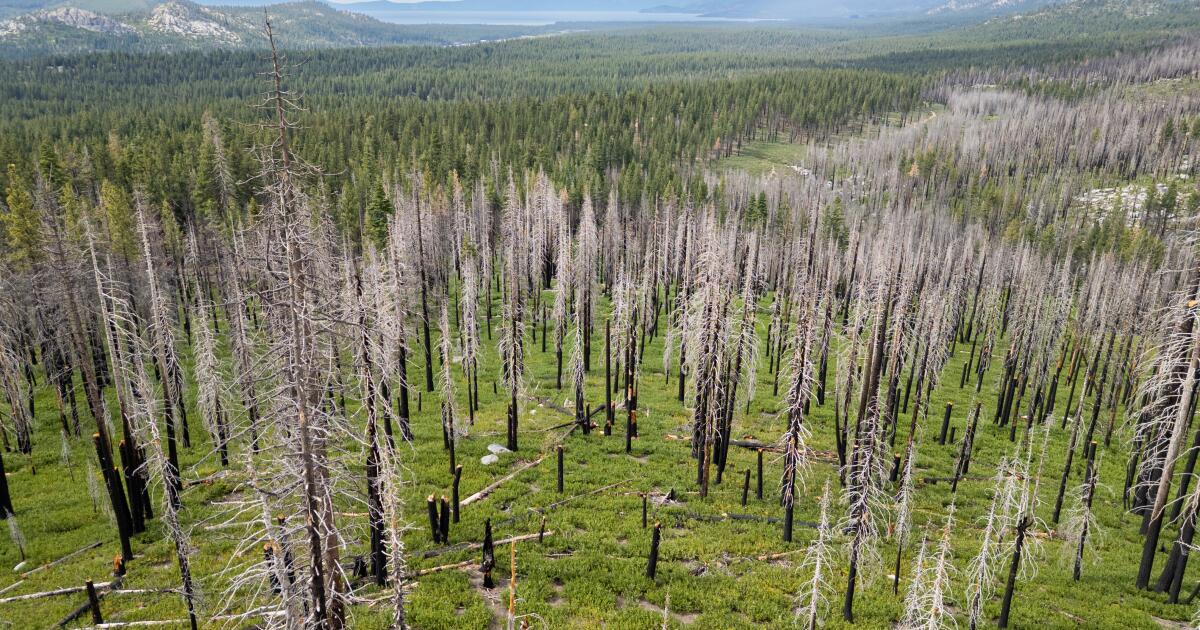
‘I’d rather my house burn down than get cancer’: Herbicide use upends California’s fight to save forests
-
 Sports7 minutes ago
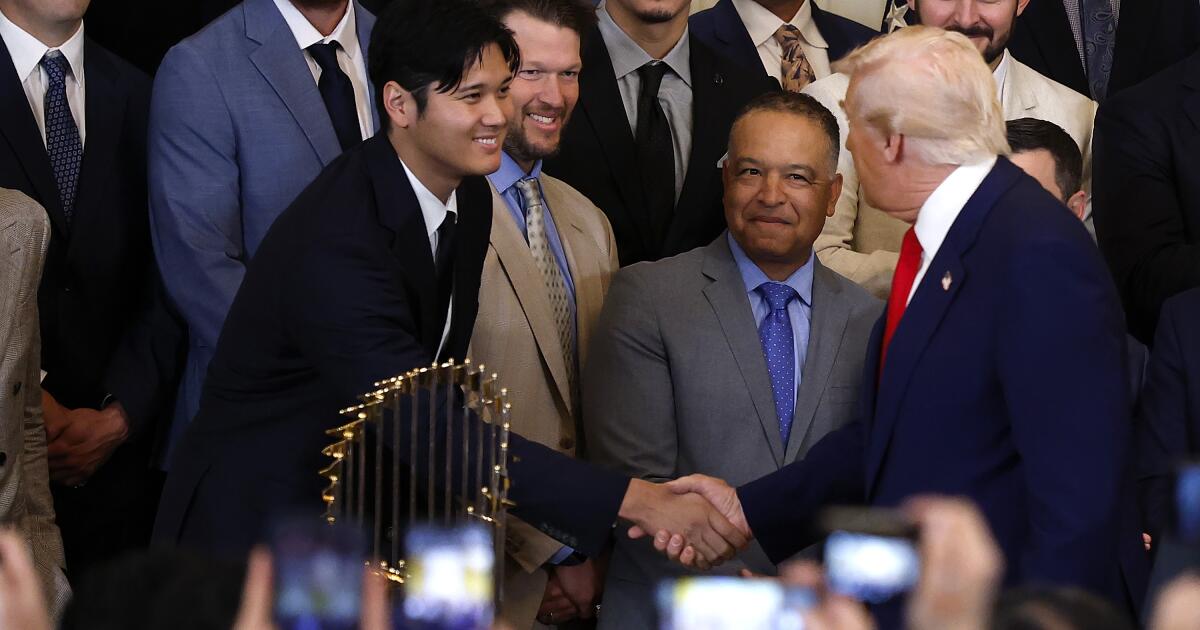
Dodgers scheduled to visit White House in late July to celebrate 2025 World Series win
-

 World17 minutes ago
Former US Olympian pleads not guilty in DC reflecting pool vandalism case
-
 News44 minutes ago
Former Olympian pleads not guilty in reflecting pool vandalism charges
-

 Los Angeles, Ca2 hours ago
Heat advisory, beach hazards in effect as Southern California sizzles
-

 Detroit, MI2 hours ago
Teen on moped hit by car after cruising through stop sign in Detroit
-

 San Francisco, CA3 hours ago
Flight of fancy: San Francisco moves to build private luxury airport terminal
-

 Dallas, TX3 hours ago
Dallas’ digital creator economy is booming. Burnout is too.

