New Hampshire
Here’s why the verdict in New Hampshire’s landmark trial over youth center abuse is being disputed – The Boston Globe


No hearing has been scheduled, but here are some things to know about how the dispute unfolded.
THE TRIAL
Meehan, 42, went to police in 2017 and sued the state three years later. Since then, 11 former state workers have been arrested and more than 1,100 other former residents of what is now called the Sununu Youth Services Center have filed lawsuits alleging physical, sexual and emotional abuse spanning six decades.
Meehan’s lawsuit was the first to go to trial. Over four weeks, his attorneys contended that the state encouraged a culture of abuse marked by pervasive brutality, corruption and a code of silence.
The state portrayed Meehan as a violent child, troublemaking teenager and delusional adult lying to get money. Defense attorneys also said the state was not liable for the conduct of rogue employees and that Meehan waited too long to sue.
THE VERDICT
Jurors unanimously agreed that Meehan filed his lawsuit in a timely fashion, that he was injured at the facility and that the state’s negligence caused his injuries. They awarded him $18 million in compensatory damages and an additional $20 million in enhanced damages after finding the state acted with reckless indifference or abused its power.
Jurors were unaware of the state law that caps damages at $475,000 per incident. When asked on the verdict form how many incidents they found Meehan had proven, they wrote “one.”
WHAT COUNTS AS AN INCIDENT?
That’s where it gets tricky.
In pre-verdict discussions without the jury present, lawyers for the state argued that all of Meehan’s claims arose out of a single incident of alleged negligence. Meehan’s lawyers insisted that each act of physical or sexual abuse be counted as a separate incident, even those that happened simultaneously.
“Merely raping a kid is bad enough, but it’s even worse, and a separate incident, if it also involves hitting him in the head or kicking him in the ribs or other things to get him to comply,” Meehan’s attorney David Vicinanzo said.
At one point, the judge considered including a list of the type of abuse alleged on each date on the verdict form and asking jurors to determine whether an injury occurred and whether the state was liable. But the state argued that providing such a list would be prejudicial to Meehan’s side.
Judge Andrew Schulman said he disagreed with both parties and if forced to define “incident,” he would consider all the acts that happened in a given “episode” to be one incident. That put him closer to the plaintiff’s view, but in the end, he said he would leave it up to the state Supreme Court to settle.
“Why go out and define something that there’s a 50% chance of being wrong if it doesn’t need to be defined in the first place?” he said. “They can deal with it, but I don’t think I have to.”
Attorney Martha Gaythwaite, representing the state, did not address the issue in her closing statement to jurors. Vicinanzo told the jury that Meehan was raped an estimated 200 times, beaten 200 times and held in unjustified solitary confinement for roughly 100 days.
“I want to emphasize to you that the numbers are very important,” he said.
In his verbal instructions to the jury, Schulman said that rather than asking jurors to list “incident by incident” decisions, he asked for “just the number of incidents for which you find liability based on timely claims.” The verdict form itself defined incident as a “(a) single episode during which the plaintiff was injured; (b) for which injuries the jury has found DHHS liable in response to previous questions; (c) on claims the jury found to be timely claims in response to question 1.”
In response to that question, the jury wrote “one.”
BUT WHAT DID THEY MEAN?
One juror explained it like this: “We wrote on our verdict form that there was 1 incident/injury, being complex PTSD, from the result of 100+ injuries (Sexual, Physical, emotional abuse),” the juror wrote in an email to Meehan’s attorneys. “We were never informed of a cap being placed per incident of abuse and that is wrong how the question was worded to us.
“The state is making their own interpretation of the ruling that we made, and that is not right for them to assume our position,” the juror wrote. “David should be entitled to what we awarded him, which was $38 million.”
In separate emails to the attorneys, the jury foreperson described a sleepless night of crying after learning about the cap.
“We had no idea,” the jury foreperson wrote. “Had we known that the settlement amount was to be on a per incident basis, I assure you, our outcome would have reflected it. I pray that Mr. Meehan realizes this and is made as whole as he can possibly be within a proper amount of time.”


New Hampshire
Missing Berlin Motorcyclist Found Dead After Route 2 Crash: New Hampshire State Police Roundup

06/19/2026 02:16, EAST KINGSTON, BOLDUC, NATHAN RICHARD (22); ASHFORD, CONNECTICUT, 635:1,I (BURGLARY-NIGHT / HOME / WEAPON), 635:1,V (BURGLARY TOOLS-POSSESSION), 637:7 (RECV STOLEN PROP; $1501+), 637:7 (RECV STOLEN PROP; $1501+), 634:2,II (CRIMINAL MISCHIEF).
06/15/2026 19:49, RAYMOND, KETCHEN, DANA CANNEY (63); BROOKLINE, 265-A:2,I(A) (DUI-IMPAIRMENT), 264:25 (CONDUCT AFTER ACCIDENT), 265-A:2,I(B) (DUI; ADULT>.08; MINOR>.02), 172-B:3 (PROTECTIVE CUSTODY-ALCOHOL), 265-A:44 (TRANSPORTING ALCOHOLIC BEVERAGES OR MARIJUANA).
06/15/2026 21:05, GILFORD, SEXTON, JALEN R. (26); ALTON, 263:64,VI (DRIVE AFTER REV/SUS-SUBSQT), 263:64,IV (DRIVE AFTER REVOCATION/SUSPENSION; RECKLESS DRIVING), 263:1,II (LICENSE REQD; OP W/EXPIRED LICENSE W/IN 12 MONTHS OF EXPIRATION), 265:60 (SPEEDING 25 MPH OVER LIMIT OF 55 OR LESS).
06/16/2026 02:40, PORTSMOUTH, LANE, MICHAEL CORY (29); HUBBARDSTON, MA, 631:3 (RECKLESS CONDUCT), 265-A:2,I(A) (DUI-IMPAIRMENT), 265:79,I (RECKLESS OPERATION).
06/16/2026 17:16, GILFORD, COSTARELLI, ROBERT L. (55); EAST BRIDGEWATER, MA, 631:2-B,I(A) (DV; SIMPLE ASSAULT; BODILY INJURY OR PHYSICAL CONTACT), 634:2,III (CRIMINAL MISCHIEF).
New Hampshire
Concord City Manager Receives ‘Satisfactory’ Review, 2.5% Raise, But Sabbatical Request Gets Trimmed

Schultz said she “highly respects” Aspell, too, but there was a “dissonance between reality” when eyeing what the public and city employees were earning.
Ward 6 City Council Aislinn Kalob, too, would not be voting for the increase, saying it had been “heavily on my mind since we’ve had our nonpublic sessions,” which lasted about six hours of work. She appreciated Kretovic clearly outlining the job of city manager. But people were frustrated with the city manager, and she saw that in the comments in online forums.
“I do feel, after really digging into this, and learning about his job,” she said, “and thinking toward the future when, eventually, at some point, somebody new will be sitting in that seat, we are the ones who direct policy and he is the one that implements it… there is anger out there that should be directed more toward us.”
Kalob said, too, a room full of firefighters, upset about their contract, also made voting for the wage increase something she could not consider.
Michele Horne of Ward 2 echoed similar concerns to Schultz, saying there was significant “wage disparity” between the public and staff and the city manager. She also agreed with Kalob’s point that previous councils created this contract.

Sunflowers are my absolute FAVORITE flowers. I truly feel like they have magical uplifting abilities. Hence, why I’ve always kept fresh sunflowers in my house, brightening up my kitchen table or even my TV stand.
Obviously, it was a dream of mine to have my maternity photos taken in a sunflower field. They reflect sunshine and exude happiness.
Not to mention, one of my favorite quotes is about sunflowers! “Keep your face to the sunshine and you cannot see the shadow. It’s what sunflowers do.” Helen Keller
A beautiful reminder to keep an optimistic outlook on life and not dwell on the negative.
So, you can imagine the joy I felt when I learned that New Hampshire had its very own Sunflower Festival at Coppal House Farm in Lee!
About the Sunflower Festival:
During the summer, the farm transforms into a sea of golden blooms, giving visitors the chance to wander through thousands of sunflowers, snap photos, enjoy local food vendors, artisan crafts, listen to live music, and experience one of New Hampshire’s most beautiful summer traditions.
Other unique activities on the itinerary? Sip-n-snip! Guests can enjoy a cocktail or mocktail of their choice and cut their own fresh bouquet of flowers.

Or maybe you’re a yoga fan? You can join a 60-minute sweat session from Lee, New Hampshire yoga instructors right in the heart of the flower field.
And because the farm grows oilseed sunflowers for culinary oil (which they harvest in the fall months), the flowers only stay at their peak for a brief window, making the festival a limited-time experience, according to the festival organizers…
What makes this event even more special is the reason behind it. The festival started as a way to share the beauty of the sunflower fields, but it has grown into something much bigger. Organizers say the event has raised more than $90,000 for Make-A-Wish New Hampshire over the years and now shares a portion of its proceeds with several local nonprofit organizations serving the Seacoast community.
Anyone who knows me knows that paying it forward is something that’s incredibly important to me. It’s right up there with my love of sunflowers because both fill my cup in the best way. So, when I found out this festival celebrates my favorite flower and gives back to the community, I knew I had to share it.
Sunflower Festival Details:
This festival only runs from Saturday, July 25th until Sunday, August 2nd. You can get the full list of activities and more on the Coppal Farm website.
Daily Field Hours
10:00 AM – 6:30 PM
(last admission at 6PM because fields close at 6:30)
Weekend Tickets (prepurchased online – day before)
$12 per person ages 13 & older
$10 per person ages 5-12
$10 per person Seniors (65+) & Military
4 yrs & under are always free
Weekend Tickets (purchased day of – online or at farm):
$16 per person ages 13 & older
$14 per person ages 5-12
$14 per person Seniors (65+) & Military
4 yrs & under are always free
includes: access to sunflower fields, craft fair, food vending area, tented shade area, picnic area, farm animals, & live music
Weekday Tickets (prepurchased online – day before)
$8 per person ages 13 & older
$6 per person ages 5-12
$6 per person Seniors (65+) & Military
4 yrs & under are always free
Weekday Tickets (purchased day of – online or at farm)
$12 per person ages 13 & older
$10 per person ages 5-12
$10 per person Seniors (65+) & Military
4 yrs & under are always free
What tickets include:
Access to sunflower fields, food vending area, tented shade area, picnic area, and farm animals
READ MORE: A Classic Fairy Tale Comes To Life At Portsmouth’s Prescott Park This Summer
This festival might just leave you smiling long after you leave the fields!
What Flowers Thrive in New England
See what flowers thrive in New England weather: Maine, Massachusetts, and New Hampshire.
Gallery Credit: Logan
14 of the Best New Hampshire Farms Offering Locally Grown Strawberries
14 of the Best New Hampshire Farms Offering PYO Strawberries
Gallery Credit: Sarah Sullivan
-

 Politics46 seconds ago
Canadian woman accused of slapping Trump-supporting teen turned over to ICE
-

 Health7 minutes ago
Popular diet trend could boost mental health among older adults, study finds
-

 Sports13 minutes ago
Conor McGregor makes 3-word promise for UFC career in video after another devastating injury
-

 Technology19 minutes ago
Insurance breach exposes 7M driver’s licenses
-
Business25 minutes ago
Grocery Outlet restarts expansion with new California branches
-
 Entertainment31 minutes ago
Review: Christopher Nolan’s ‘The Odyssey’ is a mighty Trojan horse of his thematic obsessions
-
 Lifestyle37 minutes ago
They just completed all of L.A. Times’ 101 Best California Experiences — and we’ve got questions!
-
 Politics43 minutes ago
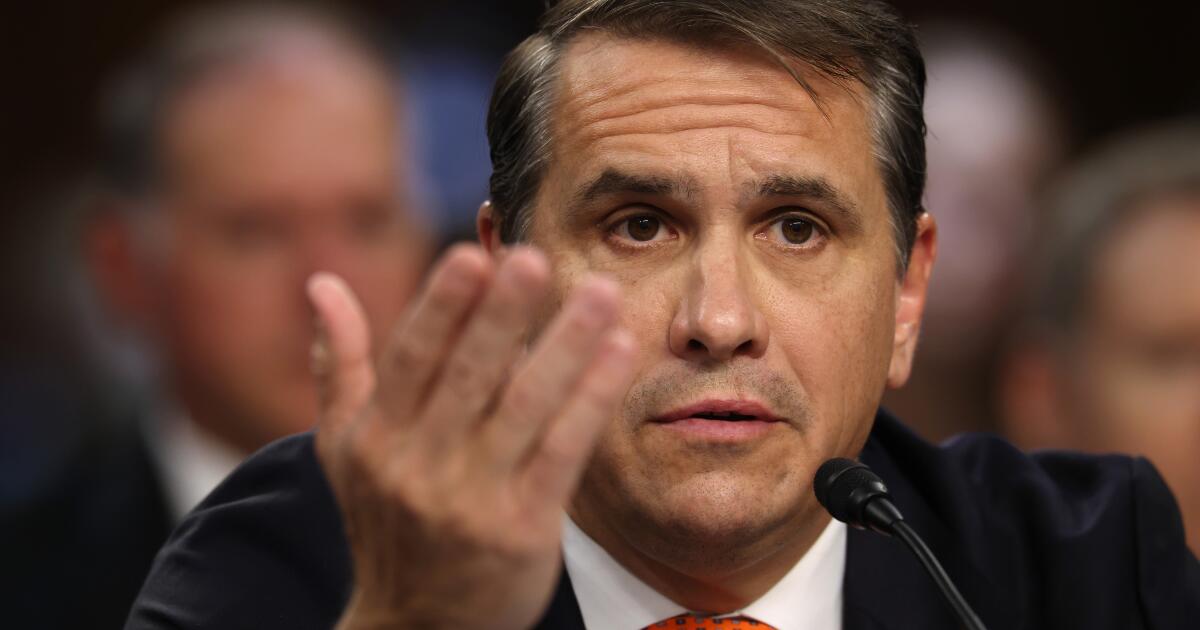
Blanche to face questions about his independence at attorney general confirmation hearing

