Northeast
New Hampshire sent message, but it wasn't about Haley, Trump, Phillips or DeSantis

NEWYou can now listen to Fox News articles!
I learned something Tuesday night as I came to realize that somehow, in the very strange place we call New Hampshire, anything can happen.
Nothing that I expected came to pass in the primary there, and like a loser at the racetrack tearing up tickets, I shook my head in stern consternation.
But something gave me pause because this column that you are reading was supposed to be a requiem for the New Hampshire primary, and it still might be, but, suddenly, I’m not so sure.
HALEY LIVES TO FIGHT ANOTHER DAY AGAINST TRUMP, BUT FACES ‘CHALLENGING ROAD’ AHEAD IN GOP PRESIDENTIAL RACE
The Democrats may never vote first in New Hampshire again, and GOP primaries may not be enough to sustain its storied position, but even this down at the heel iteration of the event offered some important surprises.
As I outlined in earlier columns here, there was no juice this time in the Granite State, the circus did not come to town, this was the consensus of everyone I talked to, lifelong residents whose memories stretched to Truman and Muskie said so.
But for Republicans there were two possibilities, either Trump would knock Haley out with a blow out, or she would stay close and live to fight on.
The results from the voters were right down the middle, you’d need instant replay review to splice the difference between a big Trump win and a Haley moral victory.
There is a fluidity about the New Hampshire primary that courts surprises and game changers, in 1972 it was Ed Muskie’s emotional breakdown, in 2024 it was Ron DeSantis’ surprise move to drop out less than 72 hours before voting started.
FOX NEWS LEADS CABLE COVERAGE OF NEW HAMPSHIRE PRIMARY, CRUSHES CNN AND MSNBC’S COMBINED PRIMETIME VIEWERSHIP
That decision profoundly changed expectations, with DeSantis in, the conventional wisdom was that Haley needed to get within single digits of Trump, with the Florida governor out, and the two person race a reality, as Haley predicted, the 11 point deficit by which she lost punched her ticket to South Carolina.
That is what the New Hampshire Primary does and why it may have redeemed itself as the rightful first primary in the nation.
There was never a particularly good reason why New Hampshire should go first, the best is probably that it is small enough for residents to kick the candidates’ tires, but it’s not the only small state.
And traditions do go by the wayside over time, but the potential loss of New Hampshire’s primary status feels like more than a loss of mere trappings, it feels like it would break a connection to our past.
CBS NEWS ANCHOR ADMITS NO ONE HE TALKED TO OUTSIDE NH GROCERY STORE IS ‘FEELING GOOD ABOUT ECONOMY’
The New Hampshire primary creates beautiful weirdness like Vermin Supreme, who has been running for president here since 1992, wearing a rubber boot on his head with a platform of free ponies and time travel. He is a local legend.
He and many others are part of a unique fanfare and pageantry, one in which this year former Senator Scott Brown’s rock band headlined a political event, and all of it is in celebration of one very important and very American idea, the joy of voting.
The potential erasure of the New Hampshire primary would not be the only political norm we have lost of late.
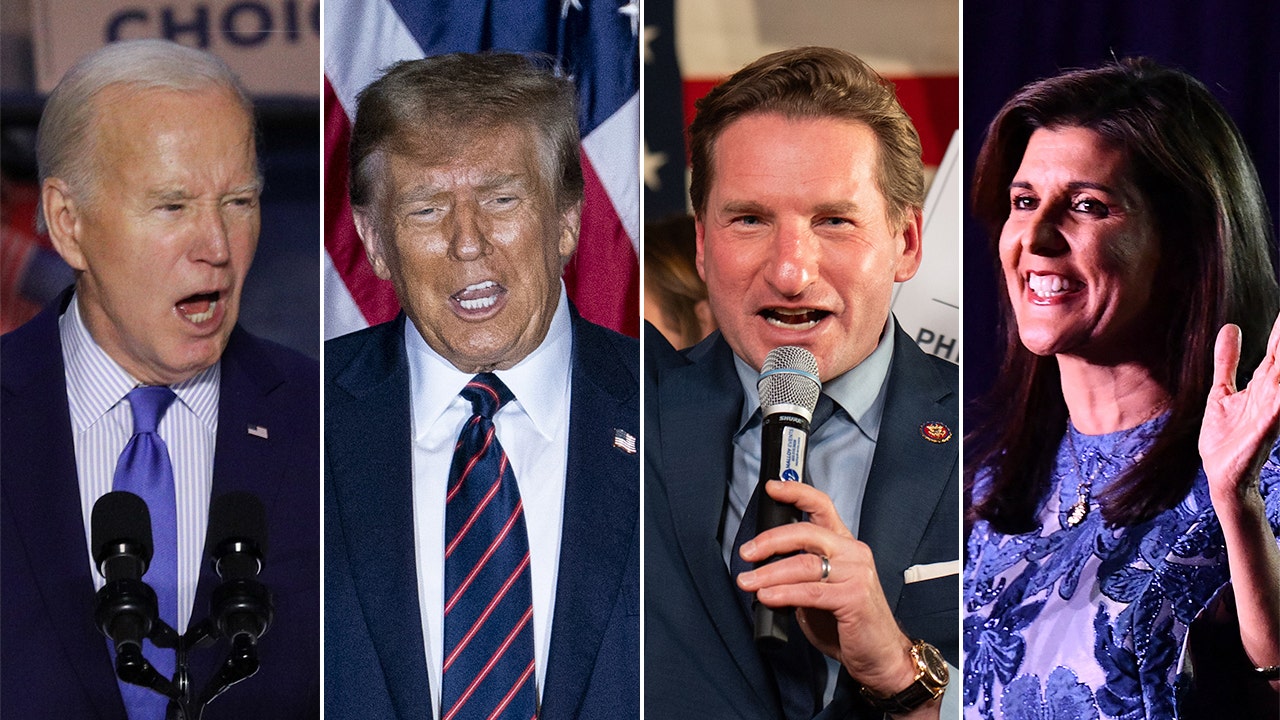
Consider the likelihood that neither of the two candidates in the general election will have participated in a single primary debate, consider further the bizarre but real possibility that there will be no debates between Joe Biden and Donald Trump.
RAMASWAMY: HALEY SHOULD DROP OUT FOR THE GOOD OF THE COUNTRY, AS OBSERVERS SAY SHE’S STILL ‘ALIVE AND KICKING’
Meanwhile, and in large part thanks to Covid, we no longer have election day, we have election weeks or months in which early voting is the norm, not the exception.
We can’t say we weren’t warned, this is all part of that new normal we were promised.
So here we are, the Democrats all but canceled the New Hampshire primary, there won’t be any debates, oh, and the presumptive GOP nominee is under 91 indictments and might be banned from the ballot in several states.
Also, nobody seems to want a rematch between Biden and Trump but somehow it is as inevitable as the sunrise.
The basic infrastructure and style of American presidential elections is transforming before our eyes.
All of this should make us consider comments last year from Klaus Schwab at the World Economic Forum in which he wondered whether we even still need elections.
“…since the next step could be to go into prescriptive mode, which means you do not even have to have elections anymore because you can already predict,” Schwab asked an expert in AI adding, “Because we know what the result will be. Can you imagine such a world?”
CLICK HERE FOR MORE FOX NEWS OPINION
When Americans envision the end of elections, or the end of our democratic republic, we tend to imagine bold proclamations, or military coups, but what if that isn’t how it happens?
What if it is a slow erosion of tradition, of participation, what if the holy hijinx of American elections is replaced by a cold analytics, giving us the leadership we didn’t even know we wanted?
This is why we need the New Hampshire primary, debates, a celebratory election day, and to avoid any plans coming out of the WEF like the plague.
Andy Warhol said that in the future everyone will have 15 minutes of fame, New Hampshire says that every 4 years anybody can have 15 minutes to try to become president, and some of them do.
As one local put it to me, “The spirit of the New Hampshire primary is stronger than the quality of the candidates in 2024.” I sincerely hope this is true because we continue to lose so many traditions in this post-COVID world, this awful new normal.
We need the New Hampshire primary, it is part of who we are, and once again, in 2024 the people of that great state showed why, this primary season is only moving on to South Carolina because they decided that it should.
CLICK HERE TO READ MORE FROM DAVID MARCUS
Read the full article from Here


The World Cup economic windfall boosting Boston gives rise to a question: Could the Hub host the Olympics?
Certainly Bostonians have more than risen to the occasion in terms of welcoming international visitors to our city and showing them a good time (and vice versa, Tartan Army). But it takes more than great hosts and a convivial atmosphere to pull off an epic sporting event.
It takes money, lots of it, political transparency, and a process open to public scrutiny and feedback. In other words, no, we couldn’t.
Public reception to the 2014 Olympics bid was tepid at best, as it would entail multiple construction projects. And when big construction projects are presented in Boston, taxpayers get suspicious. Big Dig, anyone?
Boston 24 announced it estimated the Games would produce at least $4.8 billion in revenues from television broadcast rights, ticket sales, corporate sponsorships and other revenues, the Associated Press reported. They assumed nearly $4.6 billion in costs, including $176 million for a temporary Olympic Stadium, $90 million for the athletes’ village, about $754 million to build other Olympic venues and another $132 million to rent other locations.
They reportedly announced all this to answer critics who said the privately funded Boston 2024 withheld details of the bid to prevent the public from assessing whether the Games could be staged, as promised, without the need for taxpayer money.
We learned the answer to that soon enough.
In this case, as the Herald reported that year, details from Boston 2024’s so-called bid book indicated that plans sent to the U.S. Olympic Committee called for the Hub to fund “land acquisition and infrastructure costs” at Widett Circle, where a temporary Olympic stadium was being proposed. It came after months of promises that the group planned to run a privately funded Olympics.
“They’ve been saying for months, ‘No taxpayer (money),’ ” said Evan Falchuk, a vocal bid critic who pushed for a statewide ballot question on hosting the games. “Then you read what they told the USOC. … It’s a devastating blow to their credibility. There’s a reason why voters don’t trust what they’ve heard and (Boston 2024 has) got a lot of work to do to earn that trust.”
And all this talk of money came before any cost overruns made an appearance. London’s budget for the 2012 Summer Games escalated by about 300%, ending somewhere in the $14 billion range. What were the chances we’d fare any better?
No wonder Bostonians gave the Olympics idea the cold shoulder.
But what of the city’s World Cup success story? For starters, Gillette Stadium is already built, and the only large element requiring a cash infusion was the MBTA, which shelled out $35 million to upgrade Foxboro Station in advance of the Cup. They’ll make a nice chunk of that back, as the T spiked round-trip Commuter Rail ticket prices between South Station and Gillette Stadium for fútbol fans to $80.
In this case, Bostonians are on the winning side, reaping benefits from free-spending (and thirsty) visitors, and reveling in the good vibes.
It would be great for the city if megaprojects, or even minor ones, came with the guarantee of financial transparency before shovels hit the dirt. Optimists should look at White Stadium before calling it a day.

Pittsburgh ranks among the top 25 best places to live, work and visit in the U.S., according to a new report.
The 2026 “America’s Best Cities” report from Resonance, an international business consulting company, ranks the top 100 U.S. metro areas overall based on factors such as economic data, quality of living and public perception. Pittsburgh scored in the top quarter of cities nationwide.
Here’s a breakdown of how Pittsburgh ranks.
Pittsburgh ranks among top U.S. cities
Overall, Pittsburgh scored at No. 25 among U.S. cities.
Top-scoring cities almost all “made the visitor and resident experience a strategic priority,” according to the report. Rankings were also further broken down based on each key scoring components.
Pittsburgh has put a focus on its cultural amenities and food scene, as well as in revitalizing its neighborhoods, the report noted. While other similarly sized cities in the ranking have fallen, Pittsburgh climbed by five spots in 2026.
Pittsburgh among best cities for livability
Pittsburgh scored at No. 24 among U.S. cities for its livability.
The report’s livability scores were ranked in accordance to the quality of daily life in a city based on factors such as walkability, transit access, air quality, climate risk, green space, housing costs relative to income, broadband connectivity, healthcare access and life expectancy, as well as if the location is somewhere people would want to live.
Pittsburgh ranks in top 30 cities for lovability, prosperity
Pittsburgh ranked among the top 30 U.S. cities for both its lovability and its prosperity, scoring at No. 26 for lovability and No. 28 for prosperity.
Lovability was scored based on factors like the quality and quantity of venues such as restaurants, arts and entertainment sites, museums, outdoor experiences and nightlife. Digital data such as search trends, social media activity and other user-generated content was also considered.
Prosperity rankings were based on factors such as gross domestic product per capita, labor force participation, innovation capital intensity, educational attainment, unemployment and poverty rates, the presence of major corporate headquarters, university quality and the number of direct air connections.
Philadelphia ranked just a few spots above Pittsburgh at No. 20 overall.
Top 10 cities in 2026 ‘Best Cities’ ranking
The top 10 cities in the ranking are:
- New York, NY
- Los Angeles, CA
- Chicago, IL
- Miami, FL
- San Francisco, CA
- Seattle, WA
- Las Vegas, NV
- Dallas, TX
- Houston, TX
- Boston, MA
Finch Walker is the Pittsburgh Connect Reporter for the USA TODAY Network. Contact Walker at FWalker@usatodayco.com. Instagram: @finchwalker_. X: @_finchwalker.

-
 Sports2 minutes ago
‘A great vibe.’ Pacific Northwest joins Los Angeles in an embrace of World Cup fever
-

 World12 minutes ago
What the US and Iran agreed – and disagreed – on first day of talks
-
 News39 minutes ago
Five years after the Surfside condo collapse, killing 98, what’s changed?
-

 Los Angeles, Ca2 hours ago
School Superintendent Alberto Carvalho steps down. Now what for LAUSD?
-

 Detroit, MI2 hours ago
Police investigation at Monica and Clarita streets in Detroit
-

 San Francisco, CA3 hours ago
Where to watch Athletics vs San Francisco Giants: TV channel, start time, streaming for June 23
-

 Dallas, TX3 hours ago
Dallas Man Convicted of Distributing Fentanyl
-

 Miami, FL3 hours ago
Fiery, fatal crash shuts down southbound lanes of Don Shula Expressway in southwest Miami-Dade

