Entertainment
Netflix expands library of kid-centric programs

Netflix on Monday announced more content for kids is coming to the streamer, with a new baking and crafting competition series inspired by popular animated show “Gabby’s Dollhouse.”
Kids programming is a key part of the Netflix‘s ecosystem, accounting for nearly 22% of all viewing on the platform last year, the company said. “Gabby’s Dollhouse,” an animated series about a young girl who goes on adventures in her dollhouse, is among Netflix’s most popular shows, ranking fourth in the second half of last year with about 108 million views.
The new competition show might benefit from its existing fan base, as its challenges are inspired by “Gabby’s Dollhouse” and features young baker duos.
“Since Gabby’s Dollhouse first premiered on Netflix in 2021, a world of creativity and imagination has exploded for our young audience and it only continues to grow,” said co-creators Jennifer Twomey and Traci Paige Johnson in a statement.
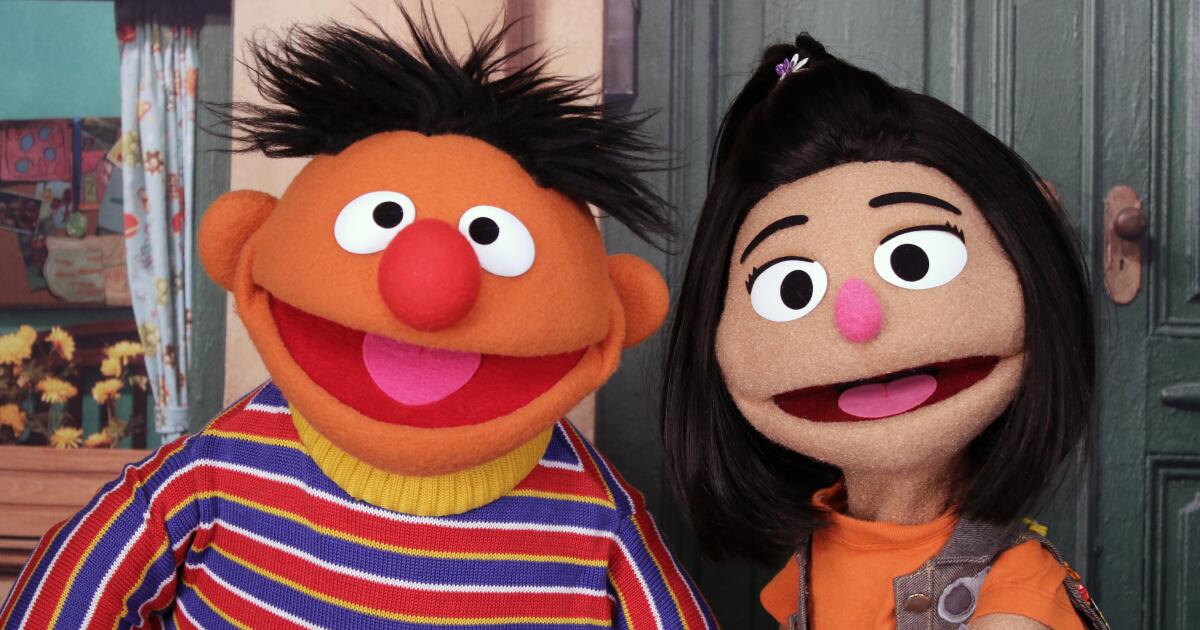
The program is part of a larger wave of kids programming coming to Netflix. Last year, Netflix struck a deal for the worldwide premiere rights to Sesame Street, after Warner Bros. Discovery said it would no longer fund production on new episodes. On Monday, Netflix said the Sesame Street collection with more than 100 episodes will be on the streaming service and next month other library programs including “Sesame Street Classics” and “My Sesame Street Friends: My Abby Season 2” will be on Netflix.
Some analysts say kids programming can be attractive to streaming services because if shows become popular, it can help retain customers. It may be more difficult for parents to say no to young children when canceling a subscription.
Other upcoming kids shows on Netflix include the third season of preschool comedy “Dr. Seuss’s Red Fish, Blue Fish” and the second season of “Sheriff Labrador,” which helps children learn safety tips, which both come out in August.
Netflix also said its podcast “Bedtime Stories with Netflix Jr.” which tells stories from worlds including “Gabby’s Dollhouse” and “Dr. Seuss” will be available for streaming on Netflix for the first time on Monday. Netflix Playground, the company’s game app, will also add more games including “My Very Hungry Caterpillar” later this year.
Visitors to Netflix House locations such as Dallas will also get to meet some of their favorite characters from kids shows, including JJ from CoComelon Lane and Elmo from Sesame Street.

Movie Reviews
Saari Review: Memory, Betrayal and Identity Converge at River Valley Film Festival – Hollywood Times


Premiering at the 2026 River Valley Film Festival, Saari uses fragmented memories, Finnish landscapes and restrained performances to explore betrayal, identity and reconciliation.
By Valerie Milano
Palm Springs, CA (The Hollywood Times) 7/14/26 – In the visually striking short film Saari—Finnish for “island”, a peaceful family retreat becomes the setting for the slow collapse of a relationship.
Co-written by Justin Seegmueller, Corey L’Esperance and Suvi Härkönen, the film follows Daniel, played by Seegmueller, as he reflects on the choices that damaged his relationship with Liina, portrayed by Ilona Karppanen. Told through fragments of the past, present and future, Saari gradually reveals how secrecy and betrayal can transform a place of safety into one of emotional confinement.
The nonlinear structure was not simply a stylistic choice. The project was developed and filmed over more than a decade, with footage captured in Finland, Boston and the desert. L’Esperance explained that the filmmakers divided the story into “past, present and future,” allowing audiences to experience the relationship from both characters’ perspectives.
Click below for our exclusive interview:
He described Daniel and Liina as two people who are “stuck in these moments in time,” making the fragmented narrative especially appropriate.
Seegmueller said Daniel’s internal struggle is rooted in the questions, “Am I that person? Am I still that person?” His restrained performance captures a man attempting to reconcile his current identity with the damage caused by earlier decisions.
For Seegmueller, the film is fundamentally about choice.
“It’s all about decision-making,” he said. “Are you an accumulation of all your decisions?”
Finland’s lush island scenery contrasts sharply with Daniel’s later isolation in the barren desert. Seegmueller described the progression as “lush and then dead,” a simple but effective visual representation of a relationship moving from intimacy and possibility to emotional aftermath.
For Liina, the island represents family history, comfort and security. By inviting Daniel there, she welcomes him into her sanctuary. His secrets, however, begin to contaminate that protected space.
“You let me into your life,” Seegmueller explained, “and now I’m here almost ruining your sense of security.”

 Because the couple reaches the island by rowboat, the setting also creates a sense of entrapment as suspicion and resentment begin to surface. L’Esperance noted that once they are there, “there’s not really anywhere you can go.”
The film’s cross-cultural perspective was strengthened by the collaboration between American co-director L’Esperance and Finnish co-director Härkönen. Their responsibilities shifted according to which character dominated a scene. L’Esperance generally led sequences centered on Daniel, while Härkönen took a stronger role when Liina’s experience was at the emotional forefront.
That approach helps prevent Liina from existing only as a reaction to Daniel’s behavior. Her journey eventually becomes more compelling than his guilt.
Karppanen traveled to the United States for the first time to film the Boston scenes, which were completed approximately three years after the original Finland footage. Seegmueller said the friendship they developed during production can be seen in the warmth between their characters during the relationship’s happier moments.
The filmmakers deliberately avoid explaining every detail of Daniel’s betrayal. Earlier edits revealed even less, but test audiences needed additional narrative guidance.
“We do need to have some breadcrumbs,” L’Esperance said, explaining that without them, the story became “a little too lost on the audience.”

 The challenge was to provide enough information while maintaining the film’s quiet, interpretive tone. L’Esperance said they wanted to leave room for viewers to “fill in some of the blanks.”
The lengthy production process also changed how the filmmakers viewed Daniel. L’Esperance acknowledged that they initially saw him as “this hero,” but over time recognized that “he is kind of a bad guy in some of these aspects.”
That evolving perspective gives the film greater moral complexity. Daniel is not granted an easy redemption, and his introspection does not erase the harm he caused.
Karppanen brings strength and emotional restraint to Liina, who emerges from the experience as what L’Esperance called “a completely different person.” A final city scene suggests that she is beginning to reclaim her identity and imagine a future beyond Daniel and the relationship that betrayed her.
Subtle, atmospheric and open to interpretation, Saari asks whether people are defined by their worst decisions, and what reconciliation means when the damage cannot simply be undone.
After more than 10 years of work, the film’s world premiere at the River Valley Film Festival is especially meaningful. Both L’Esperance and Seegmueller attended film school in Philadelphia, making the Pennsylvania premiere a return to the state where their filmmaking journeys began.

 Seegmueller hopes the film encourages audiences to examine their own choices and personal histories.
“What does that say about you?” he asked. “What does that say about your story and your own narrative?”
Saari will have its world premiere at the 2026 River Valley Film Festival. Seegmueller will attend the premiere in person, while members of L’Esperance’s family are expected to represent him at the festival.
Entertainment
‘Hail Satan? Not me.’ Charley Crockett fires satanic duo Twin Temple, so Jack White hires them
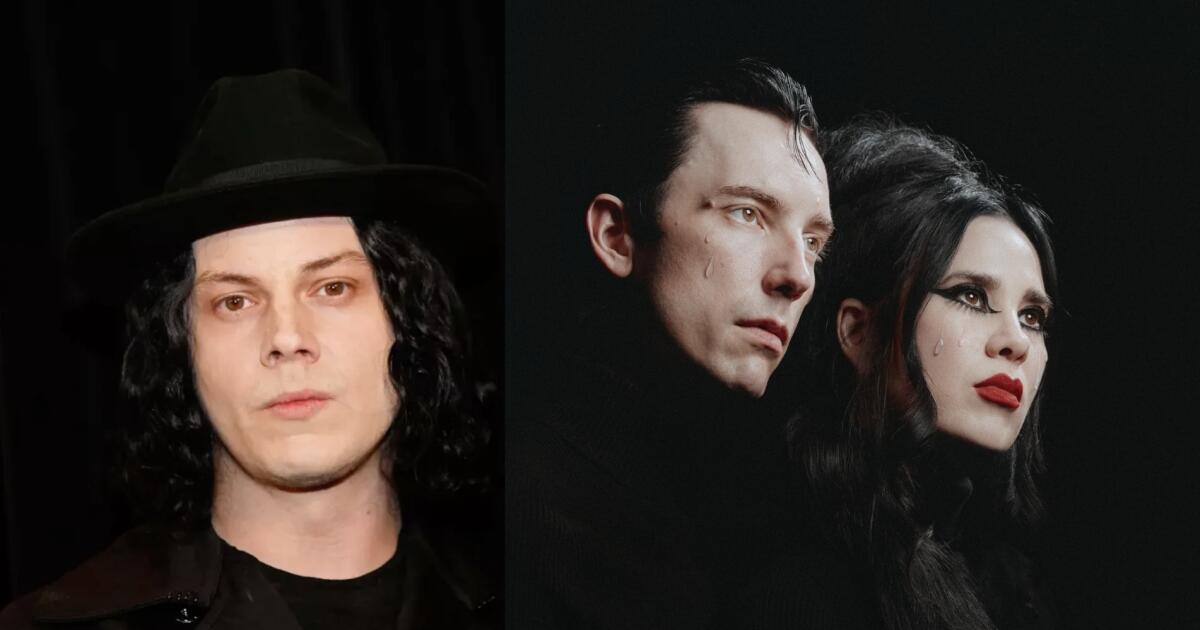
Jack White stepped in when Charley Crockett accidentally hired, then fired, a satanic doo-wop duo. Happens to everyone, right?
The outlaw country singer apparently thought the husband-and-wife duo known as Twin Temple were like Black Sabbath when he invited them to open two shows for him this week, a July 14 date in Troutdale, Ore., and another on July 18 in Paso Robles. With songs including “Satan’s a Woman,” “Lucifer, My Love,” “Let’s Have a Satanic Orgy” and “Burn Your Bible,” it’s anyone’s guess how Crockett missed the duo’s shtick.
“Today we were informed that Charley Crockett has decided to remove Twin Temple from his upcoming shows next week due to our Satanic imagery,” the musicians wrote on Instagram last week.
“Unfortunately, that means we will not be able to perform for you next week as planned. We are really disappointed as we were looking forward to getting back out and seeing you, and also what it meant as far as bringing different types of people and music lovers together. We are sorry to everyone who was planning to see us.
“We’re grateful for your support, not only of Twin Temple, but more importantly of artistic freedom. HAIL SATAN! 93/93”
Crockett, who dropped his 16th studio album, “Age of the Ram,” in April, posted his own since-deleted message on social media, writing, “Hail Satan? Not me Jack.”
Twin Temple, composed of married couple Alexandra and Zachary James, weren’t out of work for long. White, the former White Stripes frontman, who happened to be kicking off a world tour in support of his new album, “Frozen Charlotte,” caught wind of the debacle and stepped in.
“Twin Temple, Would you like to open my show in L.A. on September 29th at the Hollywood Palladium? Let me know,” White posted on Friday, adding, “Get in front of me Satan!”
The duo was quick to accept, commenting on White’s invite, “Unholy hell…. Sir Jack, you have no idea what this means to us. Lifelong fans- dead leaves on the dirty ground was one of the first songs I (Alex) ever learned on guitar. We were actually planning on coming to this show. It would be a most infernal pleasure to play the devils music with you.”
On Tuesday, Twin Temple announced their third record, “Doomed Lovers,” produced by Shooter Jennings (who also produced Crockett’s “Age of the Ram” and other recent albums). The album will drop Oct. 9 via their own Pentagrammaton Records. The duo told Rolling Stone on Tuesday that they were sad about the turn of events with Crockett but confirmed that their swanky Satan-loving doo-wop isn’t a sham.
“Satan’s the original outlaw, right? He’s a rebel angel,” Alexandra told the outlet. “He’s the one who questioned authority, fought for himself, refused to bow down or conform, and was like non serviam. That was a metaphor that resonated very strongly with me.”
She added, “It’s really fun to go shopping for a human skull and a Ronettes record in the same day, and we get to do that with our band.”
While Twin Temple has been booking shows and working on the album announcement, Crockett has continued to post about the drama from the road. “Well, now I know how it feels when they try to cancel you on the right AND the left,” he wrote on Facebook on Monday. “The thing is, I never subscribed. America can be a One Eyed Jack, but I’ve seen your other side.”

New Year’s Absolution, 2024
Directed by Nick Leisure.
Starring Michael Copon, Joel Brady, Josh Gilmer, Rafael Siegel, Shala White, Victoria Brandart, Siddalee Diaz and Lamondo Hill II.
SYNOPSIS:
Four longtime friends reunite for their traditional New Year’s Eve party. But things start to go awry with the arrival of a mysterious resolution: Kill Someone.

The amateur production values of New Year’s Absolution leak off the screen from the opening frame, as a cheap-looking title card appears over stock drone footage, followed by the actors’ names in a bold yellow font, dancing on and off the screen with only the flashiest of iMovie transitions. It’s effective, in letting you know exactly what kind of ride you’re in for.
We get the first sense of this film’s ‘humour’ as we meet Stuart and Travis, a couple played by Rafael Siegel and Lamondo Hill II. As Travis drives toward the home of Damon (Joel Brady), who’s hosting this year’s annual New Years’ Eve party, director Nick Leisure attempts to shock us with a rude joke, as Stuart bends down towards Travis’ crotch, a visual that would almost work if Travis didn’t have a small dog sitting on his lap. Turns out Stuart was just reaching down to pick up his phone. Hilarious.

Stuart and Damon are both members of ‘the five of ’99’, a friend group who met in 1999, of which only four remain (watch for the shocking revelation to this mystery). Damon is more concerned with arranging the coasters, and bickering with his wife Clare (Shala White) over the canapés, than making sure his friends have a good time. Don’t worry, Damon, we’re not having any fun either.
As everyone starts trickling in, the lack of chemistry between the cast members becomes increasingly apparent. ‘Lifelong friends’ Stuart and Damon interact like coworkers at an after-hours event, while ‘best friends’ Travis and Clare stand around rehearsing dialogue. This involves a lot of bitching about the others, especially the next arrivals Jacob (Josh Gilmer), an off-duty cop, and his wife Misty (Victoria Brandart). They are both vain and image-obsessed, showing off their bodies while the others snigger behind their backs about how fat they used to be.

The last to arrive are narcissistic surgeon Roy (Michael Copon), and his new girlfriend Kira (Siddalee Diaz), a shallow parody of Gen Z shallowness, whose entire character is constructed around her social media presence, and who physically cannot stand being separated from her phone. That’s the caliber of subtle social satire you can expect here.
What with the vanity, body shaming, and some casual racism and homophobia, it becomes clear that these are not nice people. There’s an obscenity to their wealth; Stuart blew 50k on a vintage car that can’t drive in the rain, and Damon forked out for a pool that he’s never swam in. Yet Leisure fails to make any kind of satirical point about the superficiality on display, because his approach to filmmaking lacks any depth of its own.

Damon’s hesitancy to get into his own pool is a key point, as his friends jokingly threaten to throw him in, and Stuart later threatens to drown him if he harms his dog Cookie, whom Damon fears will crap on his precious floors. It’s not much, but it’s nice to get some foreshadowing in a plot that’s mostly lacking in structure or craft.
Said plot eventually coughs and sputters to life when Jacob picks his new year’s resolution out of a ceremonial hat, and reads – kill someone. You might expect the group to laugh this off, but Jacob flips out, and deeper, sinister connotations are revealed. Jacob, who has been doing coke with Roy all night, then draws a loaded firearm in his drug-fueled haze, which he accidentally fires, injuring a member of the party.

This leads to some impromptu bathtub surgery from the coked-up doctor, that further highlights the film’s disconnection from reality. None of the characters react in a normal way to this development, continuing the party as if there isn’t a dude with a gunshot wound in the tub.This could’ve been an interesting satirical point about the hollowness of the upper class, except so little has been established about these characters and their relationships, that it just comes across as lazy writing.
However, it’s after this point that the film finally begins to find some (admittedly ironic) entertainment value, as the plot descends into a chain reaction of over-the-top carnage, with each character blaming another for the night’s misfortunes, and perpetuating them in grisly fashion. It’s in this last half hour that Nick Leisure’s vision of a bloody dark comedy begins to come through, and the kills are as exaggerated as they are unexpected, sparing no amount of fake blood. That said, it’s too little too late, as we’ve already wasted an hour watching these unbearable characters exchange dialogue that’s in turn laughable and dull.

New Year’s Absolution is a tonally confused, poorly put-together piece of work that is unclear in its goals, and fails to achieve them. Director Nick Leisure seems to be going for a broad black comedy, but the only laughs I found were from the piss-poor acting, ridiculous deaths, dumb editing gimmicks, and the autogenerated subtitles while rewatching the surgery scene – “It’s bleeding!” “Boobs tend to do that.”
It’s supposedly a horror/thriller, but it’s not scary or thrilling, because there’s no singular antagonistic force, and the deaths are too random, while the characters are so flat and unlikable that we neither feel nor fear for them. Though it’s possible Leisure is going for some kind of ‘eat the rich’ social satire, his approach is too bland for this to come through, and we don’t get any grounded perspective outside of these awful characters.
One question remains, however – who wrote the resolution? Don’t know. Don’t care.
Flickering Myth Rating – Film: ★ / Movie: ★
Dan Carville
https://www.youtube.com/watch?v=embed/playlist
-

 California5 minutes ago
California man who killed estranged wife’s lover while they slept sentenced
-
 Colorado11 minutes ago
10 Colorado sporting events that speak to Colorado’s outdoors culture
-

 Connecticut17 minutes ago
Early morning forecast for July 15
-

 Delaware23 minutes ago
How a Delaware Chinese restaurant became a musical sensation
-

 Florida29 minutes ago
Florida Cracker Trail predates America, honors history by annual ride
-

 Georgia35 minutes ago
Mayor Kelly Girtz Inducted Into Georgia Municipal Hall of Fame
-

 Hawaii41 minutes ago
Hearings set for men charged in attempted murder case – Hawaii Tribune-Herald
-

 Idaho47 minutes ago
Bond revoked for indicted Idaho mother

