Massachusetts
Massachusetts hospital employee who was fired after not getting COVID vaccine scores win in appeals court


A Beth Israel employee who was fired after she refused to get the COVID vaccine has scored a win in federal appeals court.
Amanda Bazinet, who worked as an executive office manager at Beth Israel Deaconess Hospital in Milton, sued the hospital when she was terminated over the vaccine mandate.
She had tried to get a religious accommodation for the COVID vaccine in 2021, which the hospital rejected and then sent her packing.
When Bazinet sued Beth Israel over religious discrimination, the federal district court dismissed the case. But now, the federal appeals court has tossed the district court’s ruling.
“Whether Bazinet’s religious discrimination claims will succeed or even survive summary judgment is uncertain. But these claims should have advanced…” the U.S. Court of Appeals for the First Circuit wrote in its ruling on Tuesday.
“Accordingly, we vacate the district court’s order dismissing Bazinet’s religious discrimination claims and remand for further proceedings consistent with this opinion,” the appeals court added.
The hospital’s mandatory vaccine policy had exemptions, including for medical and religious reasons.
When the lower district court dismissed the religious discrimination claims, the judge said Bazinet failed to allege that she maintained a “sincerely held religious belief” that prevented her from taking the COVID vaccine.
Also, the judge ruled that the hospital would “suffer an undue hardship” by granting Bazinet’s request for an accommodation from the vaccine requirement.
“The complaint sufficiently alleged that taking the vaccine would violate Bazinet’s religious beliefs,” the appeals court wrote on Tuesday. “Moreover, determining whether an undue hardship would result from the Hospital excusing Bazinet from the vaccine requirement cannot be accomplished at this preliminary stage of the litigation.”
In her religious accommodation request, Bazinet noted her understanding that the available COVID vaccines were developed using fetal cell lines that originated from aborted fetuses. She also explained that taking the vaccine would make her complicit in the performance of abortions which would be “an aberration to (her) Christian faith.”
Bazinet provided quotations from religious sources that she said supports her view.
“Accepting those allegations as true for present purposes, she has sufficiently pleaded a religious belief that conflicts with receiving the COVID-19 vaccine as required by the Policy,” the appeals court wrote.
“Bazinet… grounded her objection to taking the vaccine in a religious belief connecting the COVID-19 vaccine to opposition to abortion,” the court later added. “Whether few or many share that religious view is irrelevant. For similar reasons, it is also irrelevant at this stage of the litigation that the Hospital tells us that Bazinet is mistaken in believing that the COVID-19 vaccines were developed from fetal tissue obtained from aborted fetuses. That the Hospital disputes Bazinet’s factual foundation for her belief about the development of the vaccines does not change the religious character of the belief.”



BOSTON (WWLP) – The Massachusetts Broadband Institute (MBI) announced Wednesday that it is distributing 5,063 internet-enabled devices to 45 organizations across the state.
The statewide effort, administered through the Connected and Online program, aims to expand economic opportunity by increasing digital access. This program is a $31.6 million initiative funded through the U.S. Treasury’s Capital Projects Fund that provides Massachusetts-based organizations with laptops, tablets, and desktop computers to help residents access the internet.
Equipment provided through the program also includes supportive items, such as braille keyboards, intended to assist vulnerable populations.
Both Gateway Cities and rural communities are supported by the Connected and Online program, as residents are provided with direct access to devices through lending programs or resources at publicly accessible locations.
“The Connected and Online program opens doors for communities to access critical services and build relationships with their neighbors,” said Governor Maura Healey. “By partnering with trusted local organizations, we’re helping more people get online, access essential services, and connect to new educational and economic opportunities.”
To date, the program has provided nearly 32,000 devices and more than 13,000 pieces of supportive equipment. These devices have been distributed to hospitals, municipalities, nonprofits, public libraries, elder and youth aid groups, and workforce training organizations across the Commonwealth.
This latest award announcement follows a prior distribution launched by MBI on April 2, which included nearly 27,000 devices to over 200 organizations across the state.
“MBI is leveraging strong relationships with local and regional organizations to deliver digital devices for Massachusetts residents,” said MBI Program Executive Jody Jones. “The Connected and Online program is a statewide effort to expand access, increase digital skills training, and, at its core, expand the ability to connect to the internet.”
For a full list of awardees, visit broadband.mass.tech.org.
Local News Headlines
WWLP-22News, an NBC affiliate, began broadcasting in March 1953 to provide local news, network, syndicated, and local programming to western Massachusetts. Download the 22News Plus app on your TV to watch live-streaming newscasts and video on demand.
All facts in this report were gathered by journalists employed by WWLP. Artificial intelligence tools were used to reformat information into a news article for our website. This report was edited and fact-checked by WWLP staff before being published.

If you want to help people in poverty, don’t drive the wealthy out of state.
That might be something the state senators in the Committee on Children, Families and Persons with Disabilities should keep in mind after they advanced a sweeping bill going full bore at reducing the state’s poverty rate.
Sen. Sal DiDomenico told the State House News his proposal (S 3095) “is a compilation of many bills that have already been filed.” According to his office, the bill, as originally filed, included provisions that would increase the Transitional Aid to Families with Dependent Children cash benefits for pregnant people, families and caregivers; increase Emergency Aid to the Elderly, Disabled and Children cash benefits; codify related benefits and allowances; and bar the government from taking any amount of child support payments from low-income parents.
His office also said the bill would direct the state to replace Supplemental Nutrition Assistance Program cash benefits “stolen by criminal rings through skimming or phishing”; ensure access to free menstrual products in public schools, homeless shelters, prisons and county jails; raise farmworker wages to at least the state’s minimum wage; establish a “baby bonds program”; and “enhance” the attorney general’s ability to “ensure companies pay their employees the wages they deserve and hold employers accountable when they steal workers’ wages.”
It’s a tall order, and an impressive one. But the hurdle isn’t just getting it on the Senate’s agenda before the July 31 deadline, it’s how to pay for it.
The idea of front-loading assistance appears sound: helping people escape poverty means they won’t need to rely on social services down the line. But it will still take a sustainable revenue source to keep it all going.
And Massachusetts has been shooting itself in the foot when it comes to keeping revenue inside state borders.
According to Moneywise, Massachusetts millionaires took $4.2 billion in income out of the state in 2023, new Internal Revenue Service data revealed.
As reported by Bloomberg, that’s an 8% increase from the year before, and it comes just as the state began enforcing a new 4% surtax on incomes above $1 million. Higher-income households are now accounting for a larger share of total departures from the state. In 2023, top earners accounted for roughly 70% of total income outflow. That doubles their share from just a few years earlier.
We need to keep them, and their tax payments, here.
But that won’t happen if efforts to lower taxes are met with derision, and the notion that tax breaks only benefit the very rich. The deep-pocketed set that’s heading to tax-friendlier states are gifting their new home turf with a cumulative windfall, even if the individual tax amount is lower than the Bay State.
The same goes for companies who see better opportunities elsewhere.
The senators working on anti-poverty measures have some great ideas, and they should have a budget to implement them. Lifting people up from poverty uplifts the state.
But we can’t pay the bill if we keep driving out high-earning taxpayers. To help the poor, we must keep the rich.

Trombetta’s Farm, at 655 Farm Rd., is listed as a Central Massachusetts stop on the Massachusetts Ice Cream Trail, a state-backed guide launched in 2024 to promote ice cream shops, farm stands, and dairy farms that use Massachusetts dairy products, according to GBH.
The trail features more than 100 destinations across Massachusetts and is managed by the Massachusetts Department of Agricultural Resources. The map includes dairy farms with ice cream stands, farms selling packaged ice cream, and shops selling Massachusetts ice cream products, according to the tourism office.
-

 Technology7 minutes ago
Skullcandy’s bass-boosting Crusher headphones now come with Bose’s ANC
-

 World13 minutes ago
WATCH: Russian soldier thrown through air as Soviet-era helicopter gun spins out of control
-

 Politics19 minutes ago
Lindsey Graham’s final act reverberates in Senate as sister is urged to “keep pedaling”
-

 Health25 minutes ago
Is lettuce still safe to eat amid Taco Bell illness probe? Doctors answer
-

 Sports31 minutes ago
Marcello Hernández roasts Jake Paul, Tiger Woods and Bill Belichick in ESPYS monologue
-

 Technology37 minutes ago
You paid for it. So why is your device showing ads?
-
 Business43 minutes ago
Paramount shareholder lawsuit accuses Ellisons of corruption
-
 Entertainment49 minutes ago
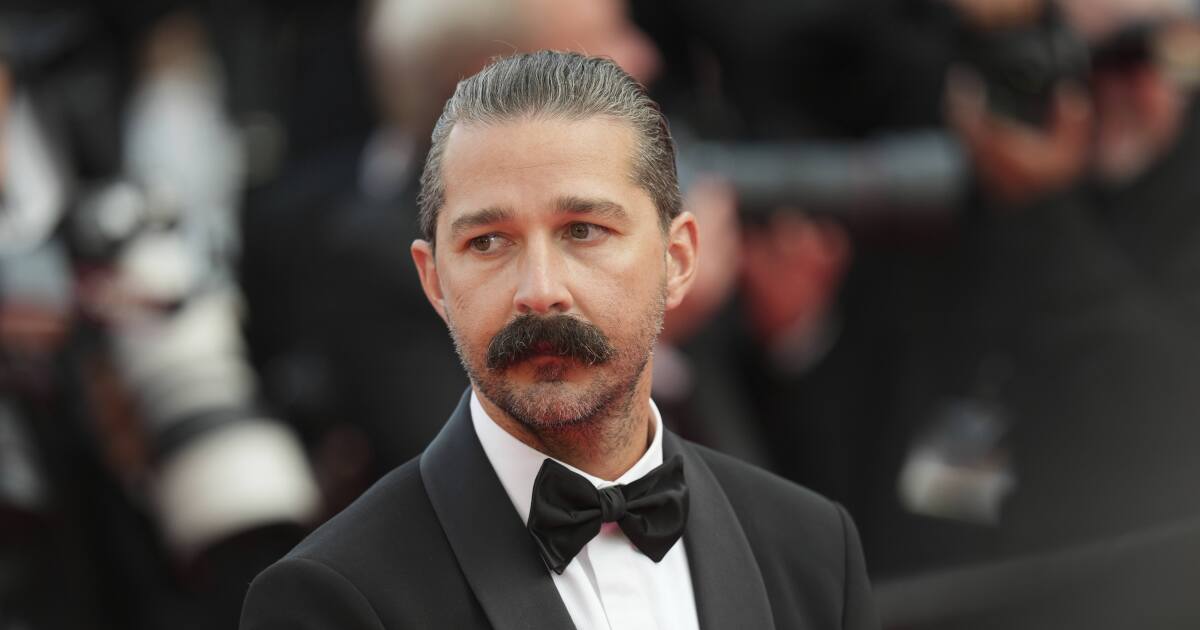
‘You’re scaring my people.’ Shia LaBeouf’s alleged stalker arrested after posting viral video

