Maine
‘It absolutely happens here’: Labor trafficking in Maine

This is part one of a two-part series in honor of Human Trafficking Awareness Month.
What industries run Maine’s economy? The farmlands full of blueberries and potatoes, the seafood processing centers on our coasts, or the hospitality services that accommodate visitors all year round?
Those are only some of the many employment fields in the state, and across the country, where people are subjected to labor trafficking.
What is it?
Labor trafficking is using fraud, force, or coercion to secure involuntary labor. Many who end up in environments where their labor is being exploited can’t leave due to external factors, such as poverty, lack of housing, and unstable immigration status, among other things, according to Hailey Virusso, director of anti-trafficking services at Portland’s Preble Street.
The key distinction is the use of coercion within the job environment to keep people from leaving. According to the United Nations’ International Labour Organization, an estimated 27.6 million people were trafficked worldwide in 2021, 77% of whom were victims of forced labor.
There are no such statistics for Maine, which Virusso said is not for lack of occurrence but because most funding is used to research sex trafficking.
“One of the biggest misconceptions, specifically here in Maine, is the mentality that it doesn’t happen here. It absolutely happens here, and that is why our program is in existence,” she said.
Since 2013, Preble Street’s anti-trafficking division has been working across Maine to support all ages, genders, sexualities, races and immigration statuses, whether they are actively being trafficked or have experienced it in the past. The organization helps an average of 100-150 victims of both labor and sex trafficking every year, a third of which are under the age of 18 either then or when the trafficking occurred.
Virusso said these numbers have grown over the past year as new resources have allowed Preble Street to expand its outreach programs to rural areas where information is harder to come by, most recently Down East. This includes providing training to different sectors, placing awareness posters in public places, and going to schools to educate young people.
The realities of trafficking
There are sectors where labor trafficking is more likely to occur: Professions that see higher exploitive practices due to fewer regulations or oversights; ones that employ large migrant workforces or immigrants who may lack a lawful presence – although it’s a misconception that most forced labor victims are in the U.S. illegally, as the National Institute of Justice found that 71% of victims enter the country on lawful work visas. Meanwhile, most people Preble Street encounters are survivors of domestic servitude: forced labor within a private home.
When identifying possible victims of trafficking, the organization shies away from using physical descriptors or behaviors that may perpetuate stereotypes and instead takes a needs-based approach.
“Trafficking certainly can be folks being held against their will, but I would also argue that the conditions that perpetuate trafficking are structural. When people don’t have their needs met, they’re at higher risk of being victimized so without housing, without food, without health care, without social connection,” explained Virusso.
This also means minority groups that are statistically more likely to have unmet social needs are also at an increased risk of being trafficked, such as Indigenous men and women who experience violent crime at rates higher than the national average or LGBTQ youth who account for a disproportionate number of runaways and minors experiencing homelessness.
Preble Street endeavors to target the systematic issues that make people vulnerable to trafficking, like offering transitional and rapid rehoming services as 90% of the people they serve, both adults and youth, identify lack of stable housing as a main issue. Providing these resources allows people to remove themselves from harmful cycles where they could potentially be revictimized.
In addition to social factors, Virusso also identified forced criminality as a tactic used by traffickers to control victims: forcing them to work in illicit environments (such as unlicensed marijuana growing or harvesting sites), transport or possess drugs, write false checks or do other illegal activities.
The web can be hard to disentangle as these victims are often misidentified as criminals when there is coercion occurring. This becomes harder with juvenile offenders. In cases of sex trafficking, anyone under 18 who is induced to perform a commercial sex act is considered a victim, regardless of whether they were forced or coerced. This isn’t true for youth victims of forced criminality who need to prove external pressure, but Virusso said this requirement doesn’t take into account that children are socialized to listen to adults.
“There’s no more powerful force than to leverage a crime that somebody’s committed over them,” she said.
What can be done?
One of the main components of Preble Street’s outreach program is providing training to help different sectors identify signs of trafficking, particularly in the healthcare industry as 68% of victims are seen by a healthcare professional while being trafficked. Some indicators could include being repeatedly treated for the same injuries or frequent STIs.
Virusso also advises people to vote for policies that increase access to social services and immigration relief as ways to alleviate trafficking and labor exploitation.
Above all else: Listen to survivors. They know what they need better than anyone else.
“We want to make sure that anytime somebody is seeking to exit a situation, they have their resources to do so, but we don’t believe in a rescue mentality. Survivors are savvy, resilient, smart people who are making decisions for themselves daily about what they need, and what they don’t need, to make sure that their situation is as safe as possible,” said Virusso.
Preble Street will host an event in honor of Human Trafficking Awareness Month at the Healing Center, 55 Portland St., Portland on Jan. 22, 3-5 p.m. All are welcome.
Resources
National Human Trafficking 24/7 Hotline: 1-888-373-7888, Text: 233733
Preble Street: (207) 775-0026. Not sure if you’re experiencing exploitation or trafficking? Take the online self-identification on Preble Street’s website.


Central Maine Power customers will see some relief in electric costs this summer after state utility regulators approved new distribution rates for the company.
The new prices reflect CMP’s revenue needs after the company paid more than a $100 million spent to recover from damaging winter storms in 2023 and 2024.
Households using an average of 550 kilowatt hours a month should save about $8.55 on their bills, according to the Maine Public Utilities Commission. The new prices go into effect July 1.
Commissioners also rejected CMP’s request to delay enacting new distribution prices while the agency considers the company’s separate rate case.
“It is uncertain when temporary rates may be approved or at what amount, but at a time when customers are struggling with high costs across the economy I cannot support a delay in rate relief,” said Commission Chair Phil Bartlett.
Electric prices in Maine have soared in recent years, because of expensive storm recovery, volatile natural gas prices and financial incentives for a community solar farm program, among other factors.
Maine Public Advocate Heather Sanborn said the rate reduction was welcome for electric customers dealing with high costs.
Sanborn said the commission’s decision to pay off a $20 million “storm recovery balance.” The account is basically money loaned to ratepayer by CMP that is owed to the company with carrying costs of about $140,000 per month, according to the PUC.
“That is a lot of interest every year that we have been paying,” Sanborn said.
Central Maine Power has submitted a proposal for new rates that would raise prices about $18 a month, according to the PUC.
In its rate proposal, CMP said it needs more revenue to help harden its infrastructure to future storms, improve reliability and hire full time staff to avoid hiring expensive contractors.
Even though the company is asking for higher rates, it says the package will amount to a slight decrease for customers because it has repaid storm recovery.
The company did not immediately respond to a request for comment about the rate adjustment approved by the PUC.

Outdoors
The BDN outdoors section brings readers into the woods, waters and wild places of Maine. It features stories on hunting, fishing, wildlife, conservation and recreation, told by people who live these experiences. This section emphasizes hands-on knowledge, field reports, issues, trends and the traditions that define life outside in Maine. Read more Outdoors stories here.
The weeks after ice-out are prime time for trout and salmon fishing in Maine.
While many anglers rely on live smelts, tandem streamer flies or classic lures like DB Smelts and Mooselook Wobblers, several Maine companies are producing lures that catch plenty of fish of their own.
I reached out to four Maine lure makers and asked them to send me their best catches from the last month, along with the lure that caught them.
Here’s what they sent.
Pine State Sports Supply
Owned by Justin Blouin and based in Lisbon, Pine State Sports Supply was founded in 2023. The company offers several styles of spoons and plugs designed to imitate smelt, dace, shiners, alewives and other baitfish. All trolling spoons are made by hand.
The Harry Lure
The Harry Lure is owned by Adam Bergeron. Founded by Harry Ellison, the lure was developed on New Hampshire’s Lake Winnipesaukee. Bergeron moved the company to Kennebunk and began stamping lures there in March 2024. Unlike traditional concave spoons, the flat lure is designed to swing side to side and flash light as it moves through the water.

Northeast Troller
Founded by Christian Carlson in 2016, Northeast Troller produces custom trolling and casting spoons from its shop in Thorndike. Carlson, who is also a taxidermist, began making spoons as a passion project and thank-you gift for his clients. The spoons are CAD-designed, painted and assembled in Thorndike, and tested on the water before production.
Dream Catcher Lures
Dream Catcher Lures are made by Jesse Dicker in Lincoln. Established in 2020, the company produces a variety of lures for salmon, lake trout and other species.
Its lineup includes a smelt series, trout casting and trolling spoons, dodgers, jerkbaits, bass poppers, jigs and worm-bait rigs.
Earlier this spring, Registered Maine Guides Jake Rackliff and Adam Bergeron landed a 10-pound rainbow trout on a Dream Catcher Lures Solid Pink UV.

WASHINGTON (AP) — There’s no shortage of competitive, high-stakes races and candidates with famous last names in Maine’s state primary on Tuesday.
Primaries for U.S. Senate and U.S. House will set the stage for a midterm general election in which Maine is expected to play a critical role in deciding control of both chambers. Maine voters will also have the opportunity in November to demonstrate the state’s fiercely independent streak when it comes to electing a new governor.
READ MORE: Amid controversial Senate campaigns, Paxton and Platner visit Washington to shore up support
The races feature the son of a U.S. senator, the daughter of a congresswoman, the brother of a former governor and the nephew and cousin of two presidents.
Republican Sen. Susan Collins is unopposed for renomination to a sixth term, which would put her on track to become the chamber’s longest-serving member from Maine.
Collins, the only Senate Republican to represent a state that Democratic presidential nominee Kamala Harris carried in 2024, is a pivotal figure in the effort to win control of the chamber in November. The 51% of the vote she received in her 2020 election bid was her poorest showing since the 49% she received in her first successful run in 1996. She is frequently at the top of Democrats’ list of incumbents to oust, but her Democratic opponents have never surpassed the 44% mark in her five previous races.
READ MORE: Platner’s wife calls reports about Senate candidate’s explicit texts with women ‘shameful’
Graham Platner is the leading contender for the Democratic nomination to challenge Collins. He’s a Marine and U.S. Army veteran who took up oyster farming following combat tours in Iraq and Afghanistan. Platner originally faced a competitive primary against Gov. Janet Mills, the preferred candidate among some national Democratic leaders, but the second-term governor dropped out of the race in April citing fundraising challenges.
Platner has two remaining primary opponents, one of them a write-in candidate. Mills is still on the ballot, despite suspending her campaign.
As of May 20, Platner led all candidates, including Collins, in fundraising for the cycle, although Collins sat atop a larger war chest.
WATCH: Dissecting what the latest primary races mean for November elections
He received key early backing from Vermont U.S. Sen. Bernie Sanders, who reiterated his support despite recent allegations that Platner had sent sexually explicit text messages to several women while married. Platner was embroiled in another controversy earlier in the campaign regarding a tattoo he once had that was recognized as a Nazi symbol.
In the 2nd Congressional District, Democratic U.S. Rep. Jared Golden announced in November that he would not seek a fifth term in a district Trump won in 2024, along with its one electoral vote. Maine is one of two states that allocates some of its presidential electoral votes by congressional district.
The Democratic field to replace Golden includes former congressional aide Jordan Wood, state Auditor Matt Dunlap and state Sen. Joe Baldacci, brother of Democratic former Gov. John Baldacci.
The winner will face former two-term Republican Gov. Paul LePage, who is unopposed for the nomination.
Wood has far outraised the field, including LePage, in campaign contributions, although LePage had the most money in the bank as of May 20.
In the gubernatorial primaries, state Secretary of State Shenna Bellows, former state Senate President Troy Jackson, renewable energy company co-founder Angus King III, former state House Speaker Hannah Pingree and former Centers for Disease Control and Prevention Deputy Director Nirav Shah all seek the Democratic nomination.
The Republican field includes former healthcare CEO Jonathan Bush, former U.S. State Department official Bobby Charles, former state Senate Majority Leader Garrett Mason and businessman Ben Midgley.
King is the son of independent U.S. Sen. Angus King. Pingree is the daughter of Democratic U.S. Rep. Chellie Pingree. Bush is related to Republican former Presidents George H.W. Bush and George W. Bush.
The governor’s office in Maine frequently changes party hands. The state hasn’t elected consecutive governors from the same party in 74 years.
Maine is divided into 16 counties, but elections are run by the state’s hundreds of cities and towns, a practice common in New England. Portland is by far Maine’s most populous city and forms the heart of the state’s Democratic base. The two congressional districts largely track with the state’s political demographics. The 1st Congressional District along the Southern Maine Coast is heavily Democratic, while the massive 2nd District to the north includes the bulk of the smaller, more rural areas where Trump performed best.
The state uses a ranked-choice voting system in which voters rank the candidates in order of preference. If no candidate receives a majority of first-place votes, the last-place candidate is dropped, and votes cast for that candidate are reallocated among the rest of the field according to the preferences of the dropped candidate’s voters. This process repeats until one candidate emerges with a majority of votes.
Here are some of the key facts about the election and data points the AP Decision Team will monitor as the votes are tallied.
When do polls close?
Polls close at 8 p.m. ET.
What’s on the ballot?
The Associated Press will provide vote results and declare winners in contested primaries for U.S. Senate, U.S. House, governor, state Senate and state House.
Who gets to vote?
Registered party members may vote only in their own party’s primary. In other words, Democrats can’t vote in the Republican primary or vice versa. Independent or unaffiliated voters may participate in either primary.
How many voters are there?
As of January, there were about 354,000 registered Democrats, about 309,000 registered Republicans and about 334,000 voters with no party affiliation.
How many people actually vote?
About 69,000 Democratic primary votes and about 60,000 Republican primary votes were cast in the gubernatorial primaries in 2022, when both nominees ran unopposed.
How much of the vote is cast early or by absentee ballot?
About 26% of the Democratic primary vote and about 12% of the Republican primary vote in the 2022 primaries for governor was cast before primary day.
As of Thursday, about 56,000 ballots had already been cast in Tuesday’s election, about 33,000 from Democrats, about 13,000 from Republicans and about 10,000 from voters not affiliated with any party.
When are early and absentee votes released?
In the 2024 general election, the state’s most populous cities and towns tended to release results from all types of voting together at the beginning of the night.
How long does vote-counting usually take?
In the 2024 general election, the AP first reported results at 8:44 p.m. ET, or 44 minutes after polls closed. About 50% of the total vote had been counted by 12:54 a.m. ET, and counting stopped for the night at 4:11 a.m. ET. By 3:13 p.m. ET the day after Election Day, about 90% of the vote had been counted.
When will the AP declare a winner?
The AP does not make projections and will declare a winner only when it’s determined there is no scenario that would allow a trailing candidate to close the gap. If a race has not been called, the AP will continue to cover any newsworthy developments, such as candidate concessions or declarations of victory. In doing so, the AP will make clear that it has not yet declared a winner and explain why.
How do recounts work?
Under a 2025 law, recounts in Maine are automatic if the vote is tied. A candidate for statewide or multicounty office may request and pay for a recount, although the charges are waived if the vote margin is not more than 1% of the total votes cast or not more than 1,000 votes, whichever is less. The AP may declare a winner in a race that is subject to a recount if it can determine the lead is too large for a recount or legal challenge to change the outcome.
Are we there yet?
As of Tuesday, there will be 147 days until the 2026 midterm elections.
— Robert Yoon, Associated Press
A free press is a cornerstone of a healthy democracy.
Support trusted journalism and civil dialogue.
-
 Louisiana6 minutes ago
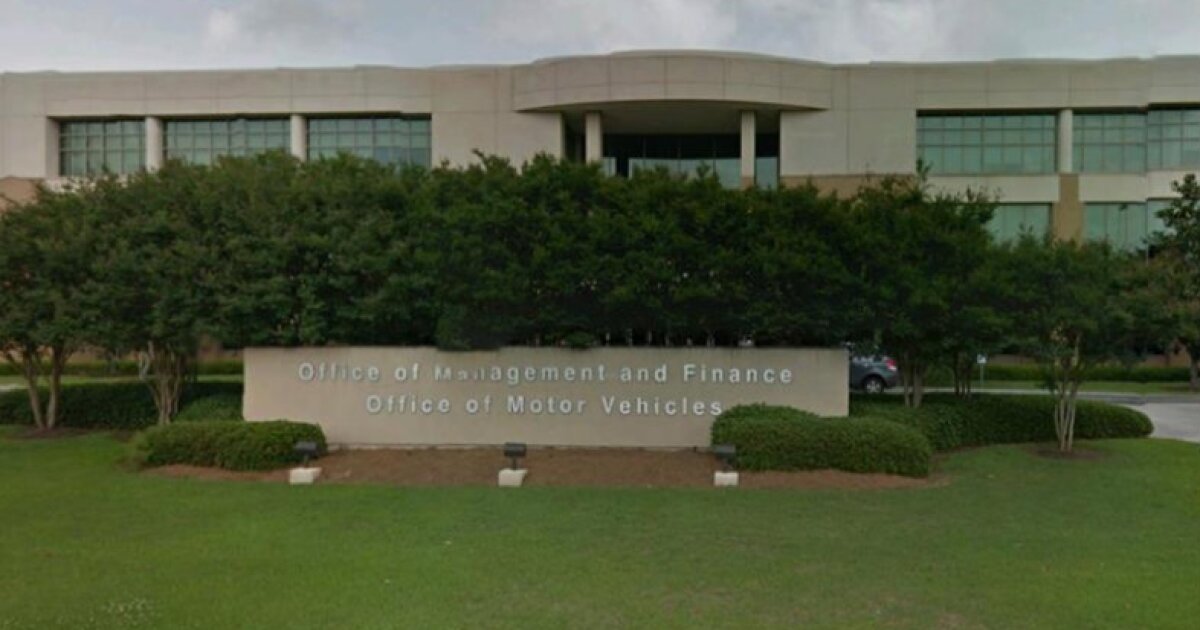
Network outage causing OMV closures across Louisiana
-
Maine9 minutes ago
Central Maine Power bills to fall this summer
-

 Maryland14 minutes ago
Maryland man charged with arson after investigators say he set his home on fire
-

 Michigan21 minutes ago
Port Huron artist named finalist in Michigan ‘I Voted’ sticker contest
-

 Massachusetts24 minutes ago
Massachusetts Man Arrested On Gun, Drug, Carjacking And More Charges: Cops
-

 Minnesota29 minutes ago
Minnesota Ranks Fifth for Child Well-Being, But Education Scores Continue to Slide
-

 Mississippi36 minutes ago
Manhunt ends after brothers arrested in Covington County deputy shooting
-

 Missouri39 minutes ago
Paragould woman airlifted after rollover crash in Missouri

