Maine
Holiday hiring up as Maine retailers prepare for strong selling season


Gavin Lawler watches as Cassidy Sawyer greets a customer at the cash register at Renys in Windham on Wednesday. It was Lawler’s first shift as a seasonal worker. Shawn Patrick Ouellette/Portland Press Herald
After years of enduring worker shortages, Maine retailers say they are having an easier time hiring people to keep up with holiday-season demand. Sales of items like clothing, electronics, home goods and toys this winter are expected to reach almost $1 trillion nationally, up slightly from 2023.
“We saw a pretty good improvement last year,” said Curtis Picard, president and chief executive officer of the Retail Association of Maine. “My sense is hiring has gotten better.”
But with the latest unemployment rate of 2.9%, considerably below the 4.2% U.S. rate, employers face tough competition for hiring. To attract workers, employers are offering shorter hours and flexible scheduling, he said. They’re also hiring high school and college students who want to earn some money and learn to work with customers.
Will McDowell, 18, was working his first day Wednesday at Renys in Windham. The American history student at Lawrence University in Appleton, Wisconsin, was looking for a job and his parents suggested the department store. He’s taking advantage of a school break extending from before Thanksgiving to Jan. 5.
“I can feel productive,” said McDowell, a North Yarmouth resident. “I would never see this many people on any given day.”
The $16 an hour job, or $640 a week full-time before taxes, will pay for groceries when he goes back to college, McDowell said.
Jason Sulham, spokesman for L.L.Bean, said the Freeport-based outdoor clothing and equipment retailer is on track for its hiring goal of about 3,500 “peak season hires” due to an “excellent rehire rate.” That’s slightly less than half the number during non-peak season, he said.
“Like most businesses, we experienced some challenges this year due to the low-employment rate,” he said.
Still, a “fluctuating retail landscape” is forcing the company to lay off up to 75 employees at its corporate headquarters in March, according to Sulham.
Holly Margaritis, human resources coordinator at Renys, said the chain of 18 department stores across Maine is always hiring for the holidays. “We ramp up for the additional customers,” she said.
Will McDowell plans to spend the money he earns as a seasonal worker at Renys in Windham on groceries when he goes back to college after winter break. Shawn Patrick Ouellette/Portland Press Herald
“In larger cities it’s easier to pull from. There’s a larger pool,” Margaritis said.
The company usually has about 490 workers at its stores, administrative offices and warehouse. The number rises to 560 at Christmas and during the summer, Margaritis said. Youngsters who work in the summer return to Renys for the holidays, she said.
The employees are quickly trained to work the cash register where they learn to handle money and face customers. Norm Robert, manager of the Windham Renys, says the goal is to “get the customer in and out of the store. Customers don’t want to wait.”
Glenn Mills, deputy director of the Center for Workforce Research at the state Department of Labor, said Maine’s retail industry has settled into an employment pattern that has prevailed for years: a spike in hiring in the run-up to the summer tourism season and again for Christmas shopping, and a leveling off during the other months.
The rise of online shopping has kept a lid on retail employment. The number of retail jobs in Maine has consistently been in the “low 80,000s, 70,000s,” he said. It’s not changed much even though Maine’s population has grown, he said.
Retail employment is flat and is dwindling as a share of overall employment, Mills said. “It’s amazing it’s held up as well as it has.”
Nationally, a strong economy is helping boost strong holiday sales that justify hiring.
On a conference call in mid-October, Matthew Shay, president and chief executive officer of the National Retail Federation, said that “overall, the economy has been in a good place this year.”
Retail represents 70% of economic activity, and holiday sales are projected to rise between 2.5% and 3.5% over 2023, to as much as $989 billion, according to the retail group. It compares with $955.6 billion last year. The industry group said it expects retailers will hire between 400,000 and 500,000 seasonal workers, which “tracks very much in line with hiring patterns of 2023,” Shay said.
Retailers are well staffed now and have already been adding workers so the “same kind of spike” in previous holiday hiring sprees may not materialize, he said.
David Lyman of Norridgewock shops for socks Monday while looking for gifts and other items at Renys in Madison. Sales of items like clothing and toys over the holiday season are expected to be up about 2.5% to 3.5% over last year. Rich Abrahamson/Morning Sentinel
Whether the healthy increase in sales “translates into job hiring is more uncertain than normal,” said Andy Challenger, senior vice president at Challenger, Gray & Christmas Inc., an outplacement and career consulting firm.
“We don’t know what employers are going to do,” he said.
Labor shortages following the COVID-19 pandemic are over. “I’m not hearing about major staffing issues,” he said.
“It was the greatest labor shortage in modern history. It’s been slowly cooling,” Challenger said.




WISCASSET, Maine (WMTW) – A Maine man has been arrested after police say he intentionally set a bed on fire after a dispute with his girlfriend, while they were still in it.
Police responded Monday, March 9, to a report of a fire that had been intentionally set inside a home on Beechnut Hill Road, according to the Wiscasset Police Department.
Investigators say the homeowner, Terry Couture, 41, set the bed on fire following an argument while both he and his girlfriend were in it. Authorities said the fire was extinguished and no serious injuries were reported.
Couture was arrested and charged with attempted murder, arson, aggravated criminal mischief, and domestic violence criminal threatening with a dangerous weapon.
The investigation is ongoing.
Copyright 2026 WABI. All rights reserved.

CLIFTON, Maine (WABI) – Maine Maple Sunday is less than two weeks away, and the Williams Family Farm in Clifton is gearing up for one of the sweetest seasons yet.
A long stretch of frost and snow meant a late start this year, but the first boil of sap has finally run through the evaporator, and maple season is officially underway.
At Williams Family Farm, everything is done by hand:
- Fresh maple syrup, bottled on-site
- Maple sugar, carefully extracted in small batches
- Baked candied pecans, cashews, and more
The Williams family has spent years working with whatever weather sends their way.
Long winters, surprise warmups, and everything in between—they’ve learned how to adapt so community members can enjoy their products.
As co-owner John Williams explains, the key is in the temperature.
“You need to have it warm during the day and still freezing at night, so typically that’s the middle of February,” said Williams. “We have a lot of trees, so we have to start tapping them before the conditions are ideal, so we start tapping way before it’s time for it to run just so we can get them all tapped. If you have ten trees in your backyard, you want to wait until roughly now, the middle of February to now, and when it’s actually running and put them in then because you can put all your taps in, in one day.”
They’re excited to welcome the community during Maine Maple Weekend on March 21 and 22.
They will be boiling up sap, hosting demonstrations, and providing free samples.
Locals can also join them for their third annual pancake breakfast where all proceeds are donated to Holbrook Recreation.
Follow the link to find out their hours for March and more.
Copyright 2026 WABI. All rights reserved.

The ad begins with a woman standing in a department store who sort of looks like Gov. Janet Mills, but not quite.
“Introducing the Janet Mills collection, featuring a confusing choice that forces girls to compete against biological males,” the female narrator says over banal instrumental music as the video cuts to “Mills” holding a stopwatch by an outdoor track.
The Mills collection comes “with a no-parent-permission-required estrogen kit,” the narrator continues, as the imposter holds a kit of syringes while patting a boy’s hair, which seems suspiciously stiff. The commercial ends with a real picture of the governor.
As far as ads generated by artificial intelligence go, the one from the National Republican Senatorial Committee is not very convincing. But the commercial serves as a reminder about how the emerging technology is being integrated into political campaigns and other areas of life in Maine.
If state Democratic leaders get their way, AI-generated ads like this won’t be allowed in Maine without a disclaimer.
As AI technology rapidly improves, state policymakers are weighing a variety of measures that could affect how Mainers interact with it. They are taking a two-pronged approach to protect people, especially children, from potential harms — while also preparing for the possible benefits.
The technology comes in the form of virtual personal assistants, internet search results and targeted advertising by businesses. It’s being used by governments for things ranging from traffic signals to budgets and policymaking to facial recognition to surveillance.
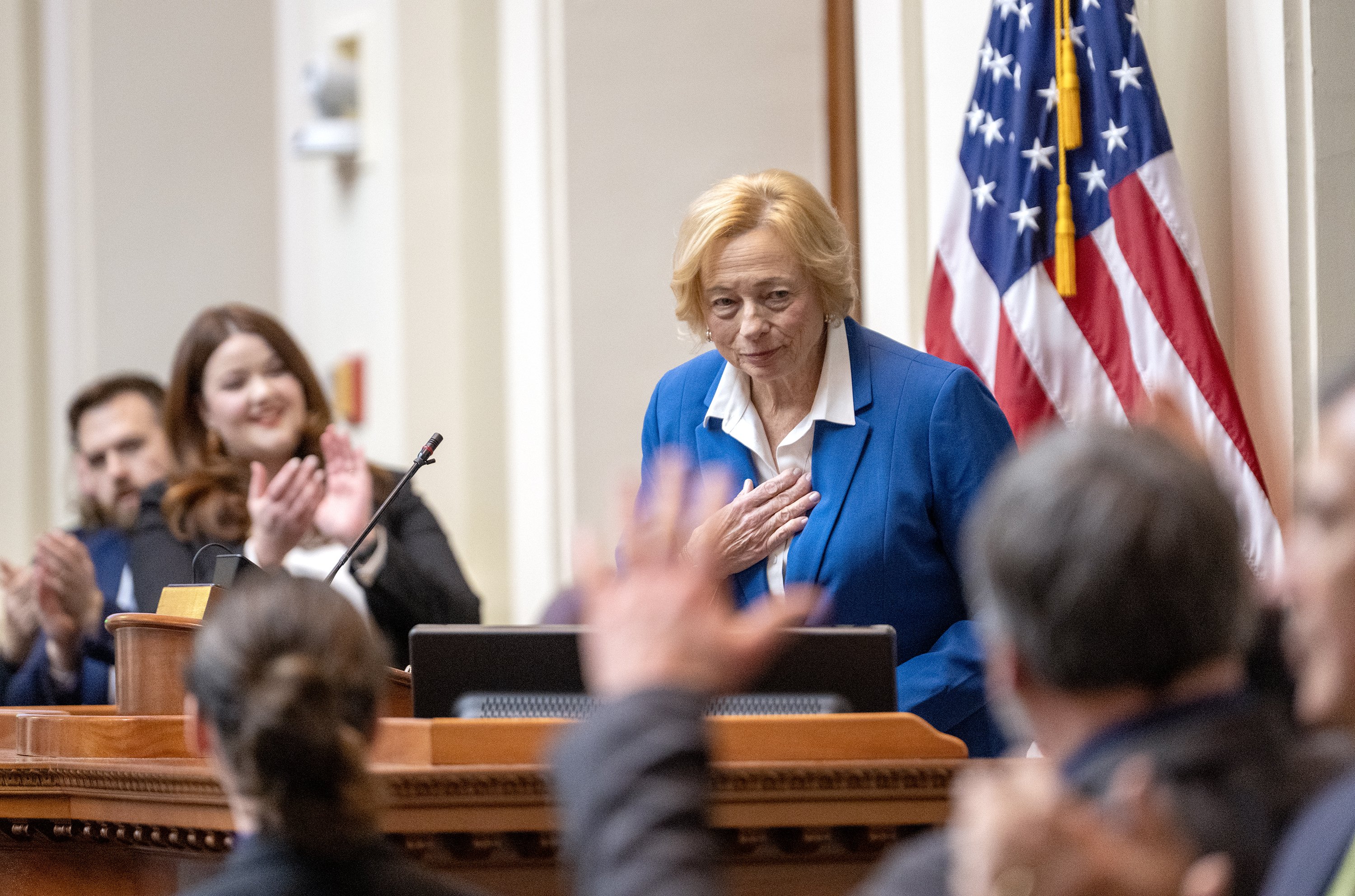
Mills said in a written statement that AI could help improve lives, drive economic growth and solve complex problems, but that it must be used in a “prudent, responsible, and ethical manner.”
“As AI becomes more prevalent in our society, its considerable promise must be balanced against harms — known and unforeseen — that can emerge from its widespread use,” she said. “It’s clear we’re only at the beginning of AI’s evolution.”
The governor has proposed $6.7 million in her supplemental budget to begin implementing some of the recommendations of a 21-member task force she created last year to study the issue.
Her proposal, which is being reviewed by lawmakers, would create a statewide AI literacy campaign; fund local and state partnerships to help municipalities use the technology and offer grants to support job training programs to keep Maine’s workforce competitive and productive in AI-enabled workplaces, among other things.
Lawmakers, meanwhile, are considering bills to address potential harms. In a rare bipartisan move, Republicans and Democrats voted unanimously last month in support of a bill (LD 524) making AI-generated child sex abuse material illegal. But that bill must receive about $55,000 before it can be sent to the governor.
They are also considering bills:
- To require political ads in state and local elections to include a disclosure when AI-generated or altered material is used (LD 517).
- To stop human-like chatbots or social AI companions from interacting with children (LD 2162).
- And to regulate how the technology is used in mental health settings (LD 2082).
Last year, lawmakers passed a measure including AI-generated images in the state’s ban on so-called “revenge porn,” and one requiring companies to inform consumers when they’re interacting with an AI assistant. Mills signed both into law.
Other proposals regulating AI use in medical and dental insurance claims and in setting rents died in committees. So did one prohibiting the use of AI in “dynamic pricing,” in which businesses use the technology to offer different real-time prices to different consumers.
Over 1,000 measures focusing on artificial intelligence were debated in state capitols last year, the National Conference of State Legislatures said.
Some states, such as Colorado and California, are taking steps to enact a broad regulatory framework for AI. California has provisions preventing discrimination in the workplace and requiring watermarks on AI content and transparency around data used to produce reports.
But Maine lawmakers are seeking to address potential harms on a case-by-case basis — at least for now.
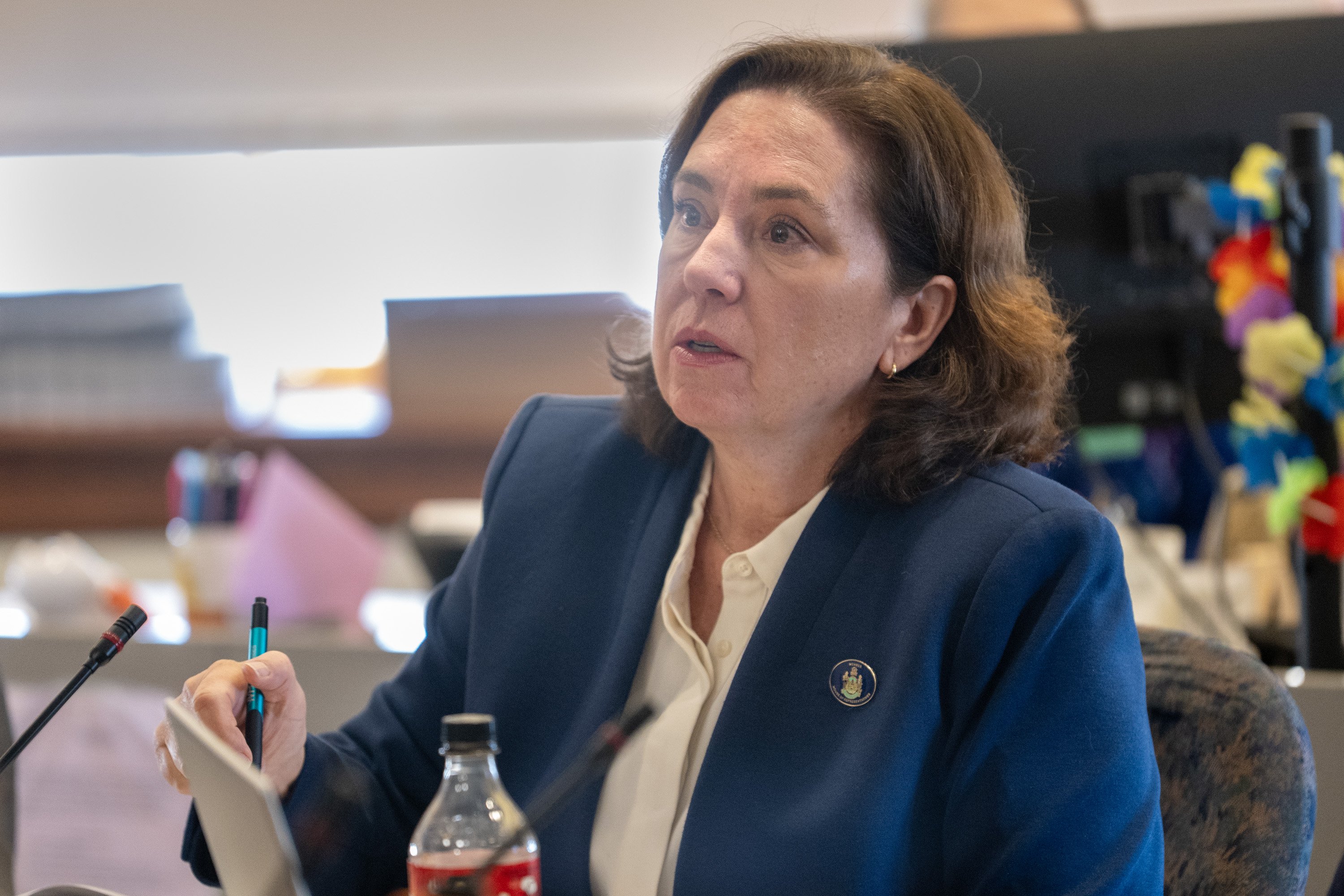
“I think of it as almost a whack-a-mole type of approach where we are developing legislation that very narrowly addresses specific harms of AI,” said Rep. Amy Kuhn, D-Falmouth, who is taking the lead for House Democrats.
“That sort of overarching regulatory framework just feels a little premature for Maine to me right now. I want to see that work its way through the states and let some other states take a swing before we get in there.”
Republicans, however, are worried about overregulation.
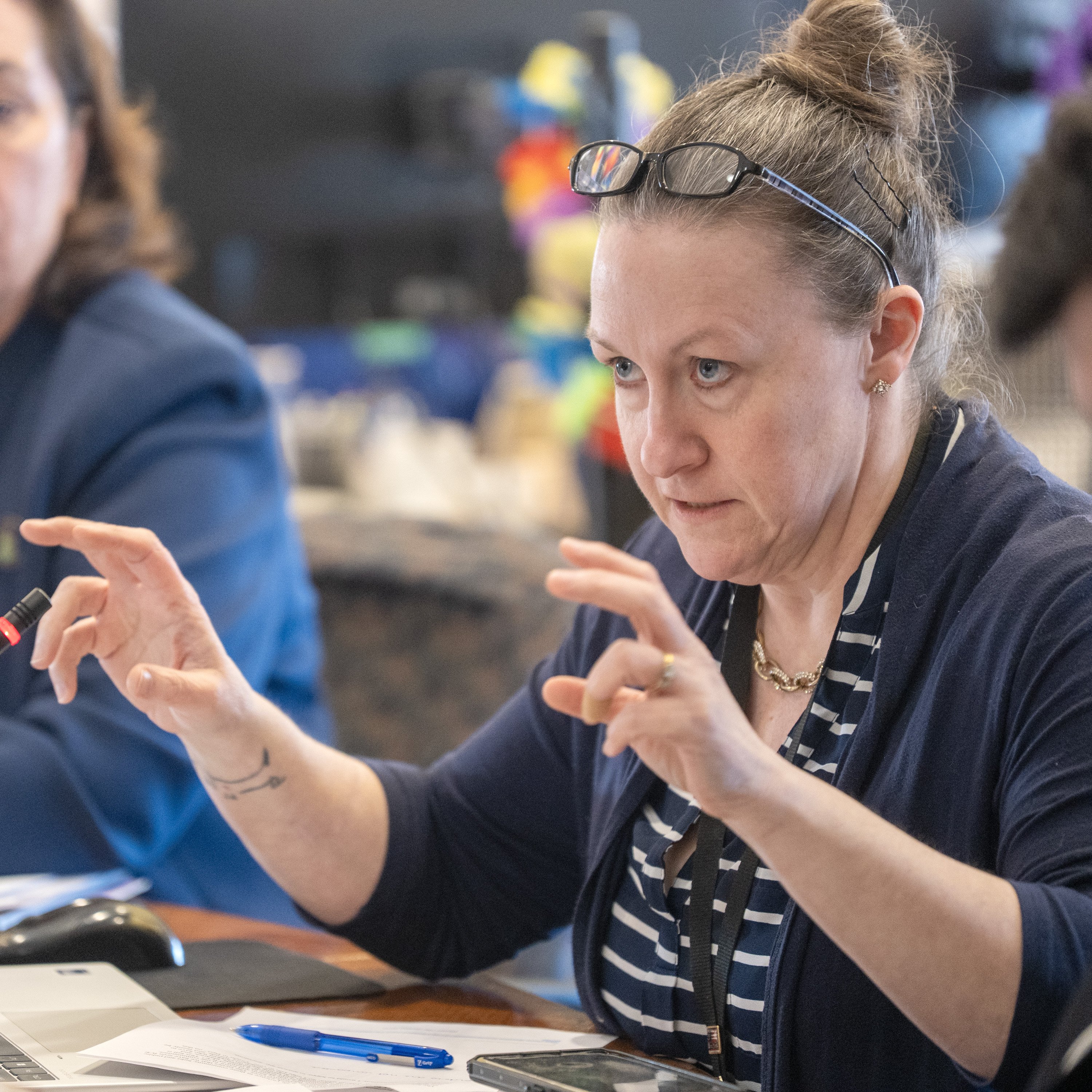
Rep. Jennifer Poirier, R-Skowhegan, said her caucus is focused on protecting children from potential harms associated with AI, but she worries that regulation will never keep up with AI’s evolution.
“You can’t always legislate your way out of everything,” Poirier said. “If you have a minor that has access to AI, and it can be used to harm them in any way, it’s our responsibility as adults to keep them safe. … But we are adults, and we need to use our own common sense.”
A recent poll from Pan Atlantic Research showed widespread concern about AI, with 66% of the 810 Mainers surveyed saying they’re mostly concerned about the potential problems of AI, while 25% were mostly optimistic.
More advanced programs can generate text, analyze reports and create increasingly lifelike images and videos. A recent AI video purporting to show Tom Cruise and Brad Pitt throwing down over the death of convicted sex offender Jeffrey Epstein raised alarm bells in Hollywood over its realism.
Other programs have been used by businesses in ways critics say can be exploitative. Consumer Reports recently published a story about how the online grocery shopping service Instacart used AI to charge certain customers higher prices — up to 23% more — if they were flagged as having higher incomes. Instacart reportedly stopped offering stores this option for “surveillance pricing” after the story was published in December.
A lobbying effort is underway to promote AI regulation in Maine. The “Protect What’s Human” campaign launched a website earlier this year, and a spokesperson said they have invested about $210,000 in ads supporting AI regulations. The commercials are targeting Republicans voters in the Bangor and Portland regions. The group is planning to spend another $110,000 on TV, streaming services, social media and podcasts.
Other proposals passed by the Legislature reflect lawmakers’ attempts to get ahead of the AI issue in indirect ways.
The House and Senate have each recently passed a strict data privacy law that would greatly restrict the amount of data — a person’s location, browsing and shopping histories and biometric information, for example— that companies can collect, store and sell. One of the main arguments was that such data can be used to train AI models. However, the chambers will have to iron out the differences between their two versions of the measure, LD 1822, if it is to become law.
And local residents are beginning to grapple with proposed data centers, which have been controversial in other parts of the county because they consume large amounts of water. This is especially true for centers powering AI.
Lawmakers are considering a bill, LD 307, to create a moratorium on such centers and establish a state council to study and review the impact of building them in Maine.
Construction is underway on a data center in Aroostook County, while another is being proposed in Sanford. Others have been proposed in Wiscasset and Lewiston, but did not move forward.
“This whole world is shifting to computer everything,” Poirier said, “and it’s important that we keep up with the times on that.”

Mayor Katie Wilson proposes $410 million Seattle Public Library Levy to city council

San Diego Bishop Is Out of a Job

Milwaukee County funeral home debt; committee advances collections plan

NBA cancels Hawks’ plans to celebrate Atlanta strip club

Paid Family Leave Act strains Minnesota businesses, Chamber says

Florida High School Football Rankings: Top 25 teams – Oct. 21

Cleary's 21 help Le Moyne down Central Connecticut State 69-64 in OT

How old is Bo Nix? What to know about Oregon quarterback ahead of 2024 NFL Draft

99th annual Pony Swim held in Virginia

Indiana Members Credit Union announced as new anchor tenant at Bottleworks District

Map: 2.3-Magnitude Earthquake Reported North of New York City

Trump stirs GOP primary drama with visit to Massie’s Kentucky home turf

Israeli air strike targets building in south Lebanon

Ed Martin, outspoken Justice Department lawyer, is formally accused of ethical violations | CNN Politics

Trump reveals top issues GOP should focus on to secure midterms victory: ‘I’ve never been more confident’
-

 Wisconsin1 week ago
Setting sail on iceboats across a frozen lake in Wisconsin
-

 Massachusetts1 week ago
Massachusetts man awaits word from family in Iran after attacks
-

 Maryland1 week ago
AM showers Sunday in Maryland
-

 Pennsylvania5 days ago
Pa. man found guilty of raping teen girl who he took to Mexico
-

 Florida1 week ago
Florida man rescued after being stuck in shoulder-deep mud for days
-

 Detroit, MI5 days ago
U.S. Postal Service could run out of money within a year
-

 Miami, FL6 days ago
City of Miami celebrates reopening of Flagler Street as part of beautification project
-

 Sports6 days ago
Keith Olbermann under fire for calling Lou Holtz a ‘scumbag’ after legendary coach’s death