Maine
Clients’ families say Maine funeral home director stole their money – and peace of mind


William Jipson Jr. with a portrait of himself, left, his father, William Jipson Sr., and his sister Lynette Krapf. Jipson is one of several people who allege that Harold Lee Lamson Jr., a funeral director based out of Lincoln, stole money from a loved one’s mortuary trust. Jipson’s father died in 2022. Ben McCanna/Staff Photographer
Long before he died nearly two years ago, William Jipson Sr. set aside thousands of dollars in a mortuary trust to soften the financial burden that his cremation and burial would put on his children.
The value of the fund had grown to roughly $14,000 by the time he died in December 2022 – more than enough to cover funeral expenses. But after the Lincoln funeral director he hired appeared to keep all of the cash, Jipson’s son and daughter found themselves paying nearly $5,000 out of pocket for a gravestone “after we already paid for it once,” William Jipson Jr. said.
After months of delays and excuses, Jipson’s family hasn’t seen a dime of their money.
“It’s all gone. He’s taken it and spent it, and that’s it,” Jipson said. “(It’s) an awful feeling, knowing that someone wronged you, and your father at the end of life.”
The Jipson family is among a number of Mainers at the center of a criminal case against Harold Lee Lamson Jr., who operates four funeral homes in Penobscot and Washington counties. He is accused of misappropriating thousands of dollars from their loved ones’ mortuary trusts between December 2022 and February of this year – adding undue cost and emotional turmoil to the painful process of grieving and organizing a funeral.
“It’s a big kick in the teeth. Everyone wants to move on with their lives and deal with their losses,” Jipson said. “We went through 12 years of hell trying to care for my father. … And then when he passes, you’ve got to continue dealing with more years of hell.”
At one point, Lamson told Jipson’s sister that he was waiting on the gravestone to be cut and would send the money when he received the final bill. But when she called the memorial company, they told her Lamson had never placed the order, and that “this has happened a few times,” Jipson said.
Lamson is charged with four counts of theft by unauthorized transfer, a felony-level Class C charge. Each count is punishable by up to five years in prison and a $5,000 fine, and Lamson may be ordered to pay thousands of dollars in restitution.
He first appeared in Penobscot County Superior Court this month but was not required to enter a plea. He will appear before the court again in November.
He also faces losing his state license as a funeral director and is currently under suspension after years of complaints.
Lamson declined to answer questions about the charges when reached by phone Thursday.
PROMISES AFTER PROMISES
Deborah Elms had hoped to bury her mother in Maine, where she spent much of her life before moving to North Carolina in her final years to be closer to Elms.
Joyce Nicholson died there in January. Years earlier, she had set up a mortuary trust. But that company went out of business and transferred responsibility over the trust to Lamson, Elms said.
“Although our family didn’t originally select (Harold) Lamson’s company, we appear to be stuck with him,” Elms wrote in a February letter to police, less than a month after Nicholson’s death.
She said Lamson was completely uninvolved in the funeral. But Elms still lost the nearly $4,000 her mother left behind after he failed to transfer the money to the out-of-state funeral home that handled her mother’s services.
After at least eight calls over more than two weeks, Elms said she spoke to Lamson on Feb. 12, at which time he promised to pay the North Carolina funeral home bill and send her whatever was left in the trust.
The funeral director in North Carolina also reached out to Lamson requesting the money. Lamson replied with an error-ridden email one month after Nicholson’s death, apologizing for the delay and citing “a volume in excess of 200 calls per year” as a factor in the slow response.
“While it was not my intention to wait this long, let alone 30 days, to pay this bill, time has a way of passing much quickly,” he wrote in an email to the North Carolina funeral director that Elms shared with the Portland Press Herald/Maine Sunday Telegram. Lamson promised to send a check later that day, “tomorrow at the latest.”
But he never did, Elms said.
Ultimately, she footed the roughly $3,100 bill using money she had set aside for a trip to Maine to bury her mother and son, who died a few months earlier, Elms said. Although she made it to Maine in June, the trip put an unplanned dent in her budget.
Elms said she suffered two stress-induced heart attacks and began having nightmares. She declined to be interviewed over the phone, citing fears that recounting the story could overwhelm her.
“I get all worked up when I think of him and the disrespect he pulled on me and the funeral home here in NC,” Elms wrote in an email.
HOPING FOR RESTITUTION
Both Jipson and Elms said they want restitution and to see Lamson imprisoned. But neither was confident any penalties could make up for the pain they say he caused.
Under Maine law, funeral homes are required to return any money left in certain types of mortuary trusts after funeral expenses have been paid. If a funeral home is unable to render any services, as was the case for Elms, it must return all proceeds from the trust.
There are three categories of mortuary trusts available in Maine: guaranteed service agreements, credit for service agreements and existing life insurance agreements. Only the latter two contain provisions requiring leftover money to be returned.
Though it’s not clear how many Mainers have set up mortuary trusts, as the state Board of Funeral Services does not keep count, they are commonly offered by funeral homes across the state.
Rebekkah Martin, a former funeral home director who spent about 15 years working in the industry, said it’s relatively rare that there are any funds left over after funeral expenses, but federal and state laws provide clear timelines for when those funds must be deposited and returned.
Jipson’s family should have been entitled to the nearly $9,000 left in the trust after the funeral, William Jipson Jr. said. But he’s not optimistic about getting restitution, citing worries that Lamson could file for bankruptcy to avoid paying.
Lamson did attempt to file for Chapter 13 bankruptcy in March, around the same time legal troubles began to mount, but the case was dismissed in April after Lamson failed to provide all the required documents or follow up on his request, according to federal court records.
According to his bankruptcy application, Lamson owns several vehicles, worth more than $27,000, including a 2008 Cadillac and a 2018 Chrysler, plus an $80,000 investment property in Sedgwick.
YEARS OF POTENTIAL ABUSE
Jipson said he could not understand why Lamson was given direct access to his father’s money without there being another layer of oversight, especially because Lamson had faced earlier disciplinary issues.
“Shouldn’t there have been a little bit of a safeguard in case someone’s going to abuse the money?” Jipson said. “It just seems a little odd to me, but I guess I don’t know the system.”
Complaints against Lamson stretch back decades.
In 2005, the state Board of Funeral Services placed his license on probation for six months after he pleaded guilty to attempted theft by insurance deception, according to state records.
The board suspended Lamson’s license in June after he violated a consent agreement. But until then, he operated funeral homes in Lincoln, Millinocket, East Millinocket and Danforth, according to his company’s website.
Mainers can report possible misconduct by funeral homes to the Board of Funeral Services, said Joan Cohen, deputy commissioner for the Department of Professional and Financial Regulation, which oversees the board. But she said the board is not notified when transfers are requested or executed unless someone makes an official complaint.
Cohen said discipline can depend on the specific mortuary trust agreements made, “but in general they include civil penalties, probation with terms, suspension or revocation.”
She added that Lamson’s suspension was the only one the board has issued so far this year. Suspensions and revocations are relatively rare in Maine: the board did not issue any in 2023, and it only issued one revocation in 2022, and one suspension and revocation in 2021, Cohen said.
Martin, the former funeral home director, said she dealt with Lamson a few times and faced excessive delays when she tried to transfer trusts for her clients.
“I was not the least bit shocked to hear this happened,” Martin said during a phone call Wednesday.
Martin said mortuary trusts are a valuable tool for consumers, but only as long as the funeral home is above board. Prices can be locked in at the formation of the trust, and the money may be easier to access than life insurance payouts, which she said can ease the planning process.
“If you can’t own up to your mistakes, then you shouldn’t be in the business,” she said.


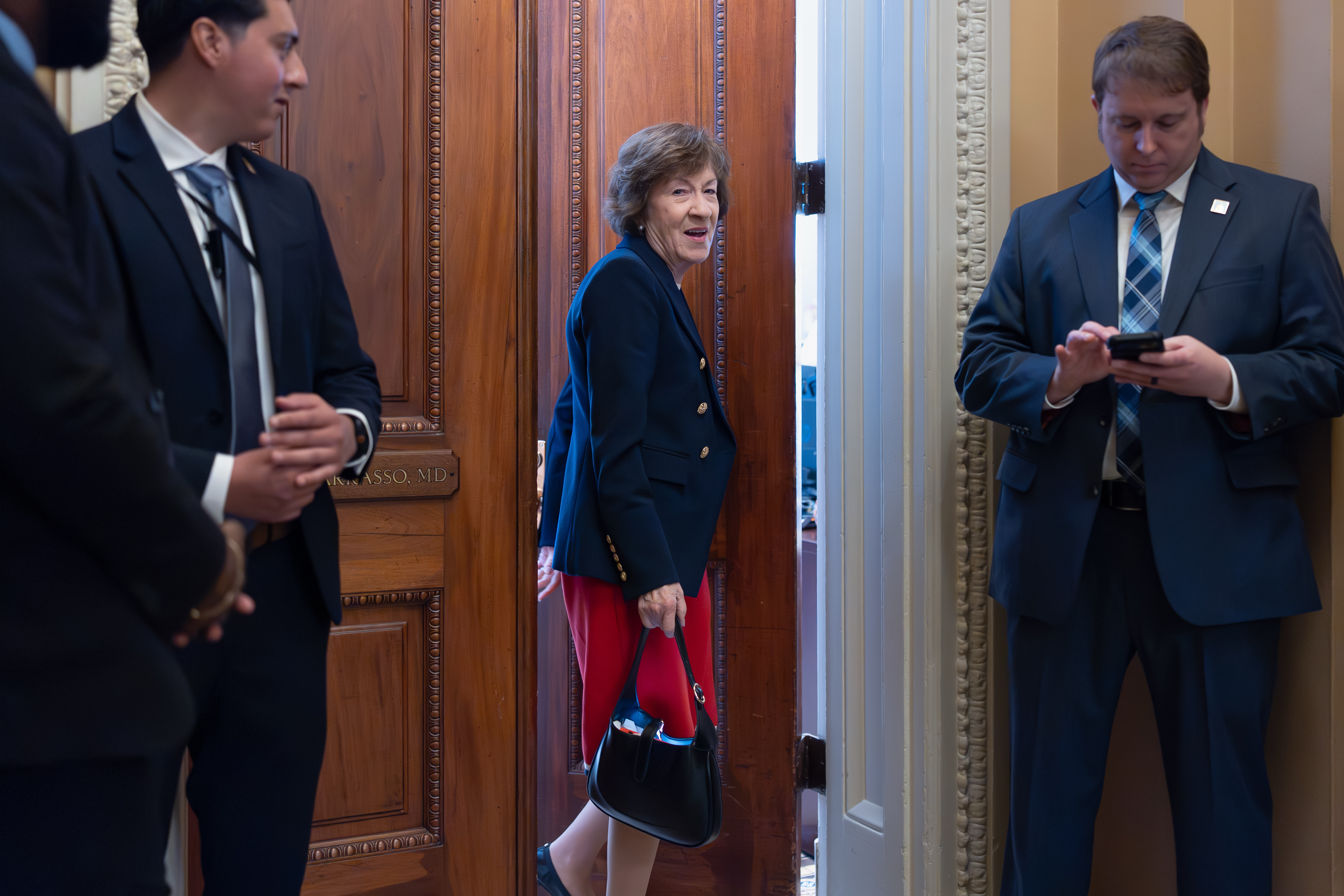
Sen. Susan Collins had just finished taking photos in front of a new fire station in the town of Sweden when a television reporter asked her about Graham Platner.
Four days earlier, on June 9, the political newcomer secured the Democratic nomination to take on Collins. Instead of addressing his victory, Collins pivoted to talk about her position on the Senate Appropriations Committee, a leadership role that in many ways is the culmination of her three decades in office.
The fire station, she said, was an example of what she has been able to do as chair “of the most powerful committee in the Senate.”
“These communities cannot, on their own, build a new fire station,” Collins said in an interview with the Portland Press Herald/Maine Sunday Telegram after the event. “They just don’t have the tax revenue.”
Maine’s top ranking Republican worked for years to get to the position of influence so she can make more fire stations like this a reality. As appropriator-in-chief, she directs earmark spending to cities, towns, hospitals, organizations and universities; influences selections for competitive grants for things like transportation infrastructure; and inserts programs and rules into congressional bills that specifically benefit Maine and its industries.
She’s running for reelection to her sixth term largely on these hard-won abilities. At every opportunity, she talks about the approximately $1.5 billion in earmarks she has brought to Maine since her last election. One of the major questions facing voters this year will be just how much that matters.
Collins’ federal earmarks since her last election have supported the construction or renovation of 45 firehouses in Maine, a Press Herald review shows, as well as 43 wastewater treatment facilities, at least 31 state road improvements, 17 childcare centers, six YMCAs and hundreds of other beneficiaries from affordable housing to historic preservation.
“The amount of funding she has secured for Maine is astonishing,” said Heideh Shahmoradi, an appropriations expert who worked for the Senate Appropriations Committee and is now a bipartisan consultant in Washington.
While all senators can bring money to their states, there is ample evidence that Collins’ success couldn’t be replicated by a freshman.
It’s attributable to more than her seniority, though. Collins has broken with the Republican Party to support programs that create pots of funding that could benefit Maine; and she’s having to defend Congress’ spending power against a Trump administration that wants to take some of it away.

But Platner argues that the money Collins has brought home has failed to address the underlying issues that have made Maine less affordable for many, which is a key motivating issue in this election.
As a senator, Platner says he would work to massively expand the country’s social safety net.
“For all of the money that Susan Collins brags about earmarking for Maine, the reason we’re still seeing housing become unaffordable, we are still seeing our healthcare system collapse, we’re still seeing our wages collapse while the price of goods and services go up,” he said at a May event in Phippsburg, “is that she never did a thing to change the structures.”
Platner’s ambitious policy talk would be difficult to achieve: Medicare for All would likely need 60 votes in the closely divided Senate to become law. Collins’ earmarks, officially known as Congressionally Directed Spending, and grant awards regularly get approved within a year.
Some voters, including people who supported Collins in the past, said in interviews that they don’t plan to vote for her this year, despite the funding she brings home.
On primary election day, outside a Sanford library that was recently expanded with a $3 million congressional earmark from Collins, Mallory Mulrath said she uses the library three or four days a week as part of her work with children.
“I love this library,” she said. “(But) I do feel like there’s more important things. The old library needed updates, but not to this extent.”
This November, Mulrath said she is voting on economic issues and does not plan to vote for Collins. She’s paying more for gas, groceries and car insurance.
“No one can afford to pay bills, let alone actually live and have fun,” she said.
PRIORITY ON APPROPRIATIONS
Earlier in her Senate tenure, Collins chaired the Homeland Security and Aging committees. She felt like she did important work, but said it became increasingly evident that, “You can pass the best legislation imaginable, but if it’s not funded by the Appropriations Committee, you can’t accomplish the goals.”
That’s one reason why she made it her focus to get on the committee.
She also noted that Maine is what she calls a “low-income state” that needs federal support, and that she could use her position to benefit the state’s defense and biomedical research industries.
Appropriators are able to go through each federal spending bill and write amendments to help their states. Collins was appointed to the committee in 2009, and in 2015 became chair of the subcommittee on transportation, housing and urban development. She was a leader of the subcommittee on defense, and became chair of the full committee in 2025.
Former staffers say Collins stands out for her attention to detail and passion for following Senate rules and that, as an appropriator, she makes sure she understands each budget request.
Shahmoradi, who was clerk and staff director of the subcommittee Collins chaired, said one of the questions Collins asked about each item in front of her was, “What are the benefits to Maine?”
Of the five senators she worked with, she said Collins was the most strategic about bringing money to her state.
One way she does that is by putting language directly into spending bills to solve a specific Maine problem or support an industry. Since the Appropriations Committee touches each obscure part of the federal government, the possibilities are vast.
For example, logging industry leader Dana Doran said Collins funded a grant program to support biomass for wood energy in 2018; and she incorporated language in appropriations bills starting in 2016 that classify wood biomass as a carbon-neutral fuel source.

Purchase this image
In another instance, starting in 2009, trucking business owner Brian Bouchard said his industry and big companies like Irving, Dead River and Poland Spring told Collins they were frustrated with a federal rule that prohibited them from driving 100,000-pound loads on interstates. It was causing safety issues on local roads, and made trucking less efficient.
Collins was able to use an appropriations bill to increase the weight limit along Maine’s section of Interstate-95.
“Senator Collins just bulldogged this thing,” said Brian Parke, president of the Maine Motor Carriers Association.
The longtime head of the construction industry group in Maine, Matt Marks, said infrastructure upgrades have been sorely needed in Maine and while he’s grateful for the entire congressional delegation, Collins in particular has become like the third leg of the stool to get any project done. (He counts the industry as one leg, and state and local governments as another.)
There is evidence that appropriators like Collins also help steer money to their states through competitive grants. For example, she was one of three members of her party who voted for the Obama-era stimulus package after the 2008 financial crisis (former Maine Sen. Olympia Snowe was another), which created a pool of money for states to compete to fund transportation projects.
The federal transportation department chose recipients for the so-called TIGER grants, but in Collins’ first campaign ad released this spring, she made clear that she had input on who got selected.
The ad shows a flash of light and rows of boats bobbing in the ocean when a breakwater collapsed in Eastport on the northeastern tip of the state in 2014. A local official in the ad thanks Collins for bringing $6 million to help restore the breakwater. According to a news release from Collins’ office sent when the rebuild was complete, the money was secured a year before the breakwater’s collapse through a TIGER grant, when it was already clear the breakwater was in bad shape.
Members of Congress routinely write letters of support for applications from their home states and try to help them get approved. Though Shahmoradi, who had previously worked at the federal transportation department and reviewed TIGER applications in years prior to the Eastport project, said there was not enough money to fund all the worthy applications.
During her time on staff, when the department needed a secondary way to choose among the high-scoring applications, it would look to politics.
“That’s the reality in making these selections,” she said.
Smaller states and projects would not have prevailed without the kind of influence members like Collins had, Shahmoradi believes. The nonprofit news outlet APM Reports came to a similar conclusion when it analyzed TIGER grantees and found that all of Maine’s 13 applications got funded.
Molly Reynolds, vice president of the centrist Brookings Institution, said that kind of power can extend across the federal government. “If you know that Sen. Collins has a lot of power in the appropriations process, you’re more likely to want to say yes to things she wants to see in other legislation.”
Collins’ office said since she joined the Appropriations Committee, she’s helped Maine win more than $1 billion in competitive transportation grants, including through a rural bridge program she helped create.
If she were voted out, said Daniel Schuman of the American Governance Institute, “You’re not going from all to nothing. You’re going from all to less.”
EARMARKS GALORE
Competitive grants gave appropriators a way to get money for their home states during a decade-long period in which Congress suspended direct earmarks. Since 2022, when Congress restarted them, senators can make an unlimited number of requests for specific projects, although members have to compete to get their requests funded.
“It truly is your seniority on the committee, your seniority in the Senate, that determines how much money you’re going to get,” Shahmoradi said.
Collins’ success in bringing money home increased as she moved her way up the committee’s ranks. In 2024, she had the most in earmarks of any member of Congress: $577 million. The only state that got more per capita was Alaska, according to the independent watchdog Citizens Against Government Waste.
Some of the requests go to tiny places, like the $1.15 million to support the fire station in Sweden, which has a population of about 450. Penobscot, Collins’ home county of Aroostook, and Washington have drawn the most funding from Collins per capita. All three lean significantly more conservative than southern parts of the state.
Maine’s most populous and most liberal county — Cumberland — has drawn 7% of Collins’ earmarks but has 22% of the state’s population. Collins said that’s in part because some places make fewer requests, and because when she’s selecting projects she considers an area’s ability to pay its own way.
At times that’s left communities off of Collins’ funding list even when their projects match the kinds of things she regularly touts. For example, Falmouth asked for funding for a new fire station this year, and South Portland is about to borrow $58 million to upgrade its wastewater infrastructure.
Both are on the request list submitted by Sen. Angus King, an independent who caucuses with Democrats, but his success rate has been much lower than Collins’: She gets nearly 100% of her requests funded, while King was at about 50% in 2024 and 26% in 2026 (though King asked for nearly twice as much funding).
“I very much value her position and what she brings to the table,” South Portland Economic Development Director Lea Duffy said of Collins. But Duffy is disappointed not to have Collins’ financial support to lessen the rate increases for residents and companies.
“We have some really important industries that happen to be located in South Portland,” she said, like technology companies she said keep the state relevant in the 21st century. They’ll see big increases in their sewer costs to pay for the upgrades.
In response to any suspicion that her selections are political, Collins pointed to several earmarks she’s directed to places that didn’t vote for her, like drinking water infrastructure in Brunswick and mental illness treatment in Rockland.
“If I made political assessments, Portland would not be getting any money,” she said. Instead, she pulled out a printed book to show where Portland has gotten funds for a food bank, teen shelter, a residential treatment center and more.
Some cities have had repeated success. Auburn has gotten an earmark from Collins each year since 2022, for a public safety center, a youth community center, a riverwalk expansion and utilities for housing. (Auburn is a politically purple city; voters supported both Collins and Democrat Joe Biden in 2020.)
VOTERS WEIGH IN
Collins hopes these community investments are persuasive in an election when the economy will drive decisionmaking, according to University of Massachusetts Lowell pollster John Cluverius. He said it’s the most important issue for the narrow slice of voters whose choices will determine the outcome of the election.
In Auburn in May, voter and retiree Mike Heon was asked about the Senate race. “Why would you want to give up Susan Collins? Are you kidding me?” he said.
If other voters disagree and replace her with a freshman senator, Mainers can expect its share of federal earmarks to drop. When Vermont Sen. Patrick Leahy left Congress, and his post as Appropriations chair, his successor brought in just 20% of Leahy’s total.
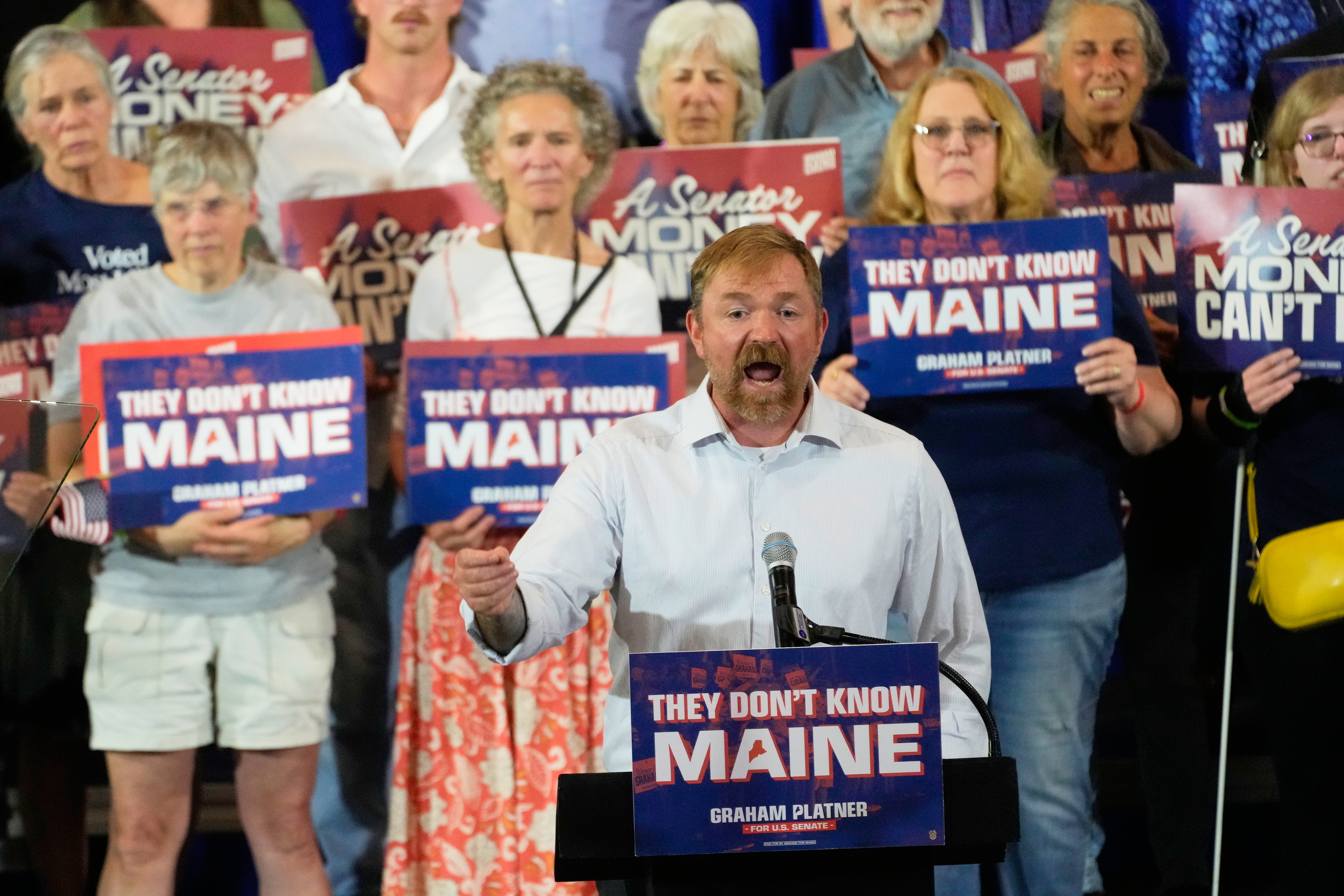
Platner said in Phippsburg that if he joins the Senate, he’ll have the time to rebuild the power she has, while also advocating for systemic changes.
Mainers could hope Platner follows in the footsteps of Georgia Sen. Jon Ossoff, who was appointed to the Appropriations Committee by party leaders just a few years into his first term.
Platner’s earmarks could differ from Collins’ ideologically, as well. Researchers at the University of Texas and the University of Illinois Chicago found liberal Democrats have used earmarks to accomplish their core policy goals, while moderate Democrats and Republicans spread them out on other issues, when they analyzed House appropriations requests from 2022.
While Maine’s members of Congress have largely used earmarks to support infrastructure, there are also some that reflect ideological priorities. Rep. Chellie Pingree’s lists include a couple of items to support clean energy and environmental sustainability, for example.
But no one, not even Collins, got earmarks in 2025, when Congress couldn’t agree on spending bills and decided to continue its prior year budget instead of passing new ones. That kind of gridlock resulted in three distinct federal shutdowns in just the last year. It makes Collins’ job much harder, and means she may not get to use all the power her position traditionally afforded, experts said.
She has also contended with a Trump administration that has tried to make big cuts to priorities she likes to fund, like the low-income energy program.
Bath resident Margaret Allen said on primary day this month that she’s voted for Collins five times before. “She’s done good things,” Allen said. But she doesn’t plan to vote for Collins again. This time around, she doesn’t care about the money Collins has brought home.
“The national issues are way more important than anything Susan Collins is going to do for fire stations,” she said.
Allen is a retired data researcher and said she worries about Social Security, America’s place in the world, the environment and what will happen when the One Big Beautiful Bill Act’s health insurance cuts take full effect.
Maine is expected to lose billions of dollars, not all of which will be replaced by a rural hospital fund Collins championed — one indication that while she has brought money home to Maine, money has also been taken away on her watch.
“I’m not OK with what the Republicans are getting away with,” Allen said.
In Sanford, voter Kevin Mulherin, who works in IT for an engineering firm, said he voted for Collins in 2020 but doesn’t plan to in November.
He said her ability to bring funding to Maine has favored some businesses and industries.
“That’s great for those people that’ll benefit, but at the end of the day I’m still working with less money,” he said.
Not all moderate voters agree. Also voting in Sanford during the primary, Bill Frederick said the cost of living matters to him quite a bit, and he doesn’t think the Trump administration is doing good things, but he plans to vote for Collins.
He said she keeps money coming to Bath Iron Works, which builds naval ships, and Pratt & Whitney in North Berwick, which manufactures aircraft engines, as well as the nearby Portsmouth Naval Shipyard.
That money could go elsewhere, Frederick said, but Collins makes sure it comes to Maine.
Coming soon: How Collins and the Trump administration are jockeying for control of the federal budget, and what it means for Maine.

VAN BUREN, Maine — Van Buren’s Acadian Village brought guests back centuries in time on Saturday as a blacksmith worked in his shop while others sewed quilts and prepared traditional French food.
It is northern Aroostook’s first large-scale immersion event. It coincides with the 50th anniversary of the Acadian Village. The village has seventeen buildings, with the oldest dating back to the 1790s, all of which are connected to early French heritage. The village is the second-largest of its kind in the United States.
The Saturday festivities cap off a “Living Acadia” (or “Acadie Vivante”) workshop that brought educators throughout the entire state together to learn about Maine’s French settlers and heritage. The workshop began Tuesday and ends on Sunday. Activities took place throughout the St. John Valley and included history lessons at the University of Maine at Fort Kent’s Acadian Archives, lectures on Acadian identity, French language lessons and cooking in a traditional outdoor bread oven.
Most of the workshop was specifically for instructors, but the Saturday immersion event was open to the general public.
Fort Fairfield French teacher Jonna Boure led the workshop’s activities. The immersion event at the Acadian was inspired by King’s Landing in Fredericton, which includes people acting out several historical roles. Boure has also worked at the Acadian Village for several years.
Boure, dressed in period clothing, said on Saturday morning after showing guests around the Roy House, the village’s oldest building, that everything was going fantastically. She also commended the work of Cindy Matthews, a Waterboro French teacher who also serves as vice president of the American Association of Teachers of French’s Maine chapter.
While Boure instigated the event, Matthews brought her prior experience with organizing institutes focused on studying Acadian history.
Matthews worked with Boure on creating the workshop. She ran the village’s post office during the event. Even the post office was tailored to accurately represent the experience of sending letters during the early days of French settlers. Guests could use hand stamps on their own postcards, and they would later be sent through the actual mail.
Some participants acted out roles based on historical figures and their heritage. Diane Michaud greeted guests in French as Evangeline, the protagonist in Henry Wadsworth Longfellow’s poem about a woman separated from her husband following the expulsion of Acadians in the 1700s. Michaud’s husband, Ron, was dressed as his ancestor Pierre Michaud, one of the first Acadians to come off the boat and settle in the Canadian village of Kamouraska.
At the blacksmith shop, Matt Grandy demonstrated how metal items were made using tools from the 19th century.
“The blacksmith was a very important person in town,” he said. “At the period of time when the Acadian Village was starting, basically everything that was metal would have come from the blacksmith shop – your door hinges, latches, the both on the inside of the odor, nails, different things in the kitchen, some of the pots and pans, and the irons in the fireplace.
The blacksmith’s shop, since nearly everyone had to go there at some point, was also a central community hub where people often met and even gossiped about what was happening in town.

“It was a good place for the exchange of information as well as the exchange of goods,” Grandy said.
People have already approached organizers about holding another event in the future, Matthews said, adding that part of the focus is emphasizing that French people, and the French language, is still alive in Maine.
“We want more people to know that there’s living French in our state, not just a historical thing that happened, but that there are still real people who speak French and that this is a place coming to and learning about,” Matthews said. “So, in terms of that, this has definitely been a success.”
The Maine Marine Patrol has launched the newest and largest patrol vessel in its fleet, the 57-foot P/V Allegiance, which will support safer and more effective offshore patrols, according to the Maine Marine Patrol, in a news release. The vessel was officially put into service on Thursday, June 11, during a christening event at Perry’s Lobster in Surry.
“Maine Marine Patrol routinely patrols commercial fishing activity offshore and hauls and inspects tens of thousands of lobster traps annually,” said Marine Patrol Colonel Matt Talbot, in the news release.
“While still capable of supporting Marine Patrol’s mission near shore, the new vessel will better position Marine Patrol to conduct offshore commercial fisheries enforcement, including the ability to safely haul and inspect large lobster trawls in federal waters,” said Colonel Talbot.
The vessel will also be used to respond to search and rescue incidents, monitor fisheries in addition to Lobster including scallop, Atlantic Herring, Menhaden, and Groundfish, and others.
The P/V Allegiance will be based in Boothbay Harbor and assigned to Marine Patrol Specialist Evan Whidden. It replaces the 29-year-old, 35-foot P/V Vigilant.
The P/V Allegiance was constructed and finished by Wesmac Custom Boats in Surry.
“This is the fifth patrol vessel built or refitted by Wesmac and we are once again very pleased with the quality of work and attention to detail by the Wesmac team,” said Colonel Talbot.
The P/V Allegiance is powered by a low-emission Tier 4 Man Diesel V-12 1450hp engine which can cruise in excess of 20 knots. It is equipped with state-of-the-art Furuno navigation electronics, and a heavy duty 17-inch hauler. It has significant deck space and an open stern which will allow Officers to safely handle and set back the larger offshore lobster trawls Marine Patrol Officers will be inspecting. The vessel is also equipped to carry a 15-foot Ribcraft Rigid Hull Inflatable boat on deck, which can be used for at-sea boardings to check vessels for compliance with marine resources laws.
-

 Colorado2 minutes ago
3 firefighters killed, 2 injured fighting wildfires near Colorado-Utah border
-

 Connecticut7 minutes ago
CT Lottery Powerball, Cash 5 winning numbers for June 27, 2026
-

 Delaware14 minutes ago
LGBTQ+ advocates look to open Wilmington visitor center, museum
-

 Florida17 minutes ago
Winner and Loser of the Week in Florida politics — Week of 6.21.26
-

 Georgia22 minutes ago
First Alert Forecast: Heat advisory issued for parts of east Georgia amidst building heat wave
-

 Hawaii29 minutes ago
Volcano Watch: A hui hou to a giant of volcanology – West Hawaii Today
-

 Idaho32 minutes ago
Idaho celebrates grand opening of first new state park in over 2 decades – East Idaho News
-

 Illinois37 minutes ago
Southern Illinois Airport Authority celebrates 76 years with ‘Big Bang Birthday Bash’

