Maine
As the Supreme Court considers federal ghost gun rules, legal experts say Maine should get on board


As the U.S. Supreme Court deliberates over whether to uphold a federal rule regulating the sales of untraceable “ghost guns,” some legal experts say Maine also needs to take steps to ban these weapons.
The Bureau of Alcohol, Tobacco, Firearms and Explosives set a new rule in 2022 that expanded the definition of a firearm to include DIY gun-making kits, which are usually sold online. The end-product is a working, untraceable firearm without a serial number, dubbed a “ghost gun.”
For years it was a way for gun sellers to get around federal licensing and background checks. But the 2022 rule meant these sellers were now required to obtain federal licensing.
In Maine, this had a noticeable effect, according to Cumberland County District Attorney Jackie Sartoris – though law enforcement agencies said they couldn’t provide specific data for the state.
But Maine law doesn’t actually consider these kits firearms, and because of that, people who cannot legally own guns – if they have a felony conviction, for example – can legally purchase and possess ghost guns, up until the point when they are converted into a fireable weapon, Sartoris said.
“The whole idea of using a ghost gun is to fly under the radar, to not have any information out there,” she said.
Assistant U.S. Attorney Johnathan Nathans said a large part of his work is targeting criminals who are prohibited from owning guns.
Nathans said many people can legally own build kits, often from the manufacturer Polymer 80, but there is a subset of people who order them in private sales that don’t require background checks. Maine law requires background checks for gun sales advertised on sites like Facebook Marketplace and Craigslist, but doesn’t have a universal background check requirement for other sales.
“That makes it attractive to people that are prohibited or trying to engage in illegal activities,” he said.

Assistant U.S. Attorney Johnathan Nathans, coordinator for Project Safe Neighborhoods, at the U.S. Attorney’s Office in Portland on Friday. Shawn Patrick Ouellette/Staff Photographer
Some state lawmakers tried to close that loophole in 2019 and 2021.
The nearly identical bills would have defined undetectable and untraceable firearms under state law, and banned their manufacturing, transfer, sales and possession – a broader change than the federal rule offers.
But both bills failed. The first died in committee and the second failed in floor votes amid bipartisan opposition. Rep. Vicki Doudera, D-Camden, the founder and co-chair of the Maine Legislature’s gun safety caucus, said that won’t be the case in 2025.
She said her caucus has already discussed bringing another ghost gun bill forward next session. And after the Lewiston mass shooting, she anticipates the Legislature will take gun violence prevention more seriously.
HOW SERIOUS IS THE ISSUE IN MAINE?
The number of ghost guns seized by police skyrocketed nationally between 2016 and 2021, according to ATF data. In those six years, the agency went from 1,629 recovered ghost guns to more than 19,000.
Although Topsham is a small town, Police Chief Marc Hagan said the department still sees the same crimes as other towns, just on a smaller scale.
“For us the concern over untraceable firearms is truly a concern,” Hagan said in an email last week. “Add into the mix that tech savvy juveniles, that may not be monitored as closely as one would like in the home, could use 3D printers to build their own firearms, and this could prove to be a serious issue for someone.”
His department was tipped off in 2022 to a local teen trying to build a handgun with his 3D printer, but he wasn’t able to turn it into a functional firearm and police could never find the weapon, Hagan said.
The Portland Police Department only sees a handful of these firearms per year, said Lt. Nicholas Goodman. In many cases, the guns are dropped in a foot chase, he said.
While they’re nicknamed ghost guns because of their lack of serial number, Goodman said the department can still use other evidence to track down the owner.
“It’s like a fingerprint left behind,” Goodman said, referring to the bullets, casing and barrel.
Even if the guns had a serial number, they would still be difficult to trace if they were sold in a private sale, he said. That’s why Goodman said he supports the federal regulation on sellers.
“If you need a license to cut hair or do makeup, you should probably have a license to sell a gun,” Goodman said. “But at the same time, you have one or two people that do 100 dumb things that ruins it for everybody. That’s how law is made.”
His bigger concern is their safety.
Of the ones he’s seen, many are hastily assembled and unstable because they aren’t manufactured by an engineer, Goodman said.
“I wouldn’t stand behind one and pull the trigger,” Goodman said. “I’d be afraid it would blow up in my face.”
WHAT CAN BE DONE?
Though the 2022 federal rule regulates ghost gun sales, it doesn’t outlaw existing ghost guns or homemade, 3D-printed guns. Legal experts say if Maine wants full protection from ghost guns, it needs to pass its own legislation.
The Gifford Law Center, a nonprofit advocating for gun safety laws, gave Maine a “D-“ for its gun laws this year, a small uptick from the failing grade it had the prior year.
David Pucino, the organization’s legal director, said Maine should mirror the federal law’s definition of a firearm and, ideally, make untraceable guns illegal. While that would require everyone to have serial numbers on their firearms, it won’t effect lawful gun owners, Pucino said.
“You just go to the gun dealer, they put a serial number on, they keep the record,” Pucino said. “If that gun is never used in a crime, no one ever hears about it again. But if it is used in a crime … it gives law enforcement the ability to trace that gun.”
State laws can extend above and beyond federal regulation as long as they are consistent with the Second Amendment, said Margaret Groban, a former federal prosecutor who sits on the board of the Maine Gun Safety Coalition, which advocates for gun safety legislation.
“Firearm laws are best if they’re both at the federal level and at the state level because we have limited federal law enforcement in the state,” Groban said. “Having a corollary state ghost gun law would be very helpful for local law enforcement.”
While state laws would make prosecuting ghost gun owners easier, companies should also be held responsible for selling these weapons, Pucino said.
“The attorney General and city attorneys really have the ability to hold the bad actors of that industry accountable for the harm that their products cause,” Pucino said.
Nathans, the federal prosecutor, also serves as the coordinator of the Maine Department of Justice’s Project Safe Neighborhoods, an initiative created to reduce gun violence nationwide.
He said its goal is to work with local service and advocacy groups to educate the community about topics like illegal gun ownership and domestic violence. In turn, he said, that work can help curb violence from untraceable firearms.
“It’s that idea of violence interruption, making sure that this potentially vulnerable population – either people that are addicted to controlled substances or people that are victims of domestic violence – that they’re not acquiring firearms for people that are prohibited,” Nathans said. “Be that a privately manufactured firearm or be it a serialized firearm.”






WISCASSET, Maine (WMTW) – A Maine man has been arrested after police say he intentionally set a bed on fire after a dispute with his girlfriend, while they were still in it.
Police responded Monday, March 9, to a report of a fire that had been intentionally set inside a home on Beechnut Hill Road, according to the Wiscasset Police Department.
Investigators say the homeowner, Terry Couture, 41, set the bed on fire following an argument while both he and his girlfriend were in it. Authorities said the fire was extinguished and no serious injuries were reported.
Couture was arrested and charged with attempted murder, arson, aggravated criminal mischief, and domestic violence criminal threatening with a dangerous weapon.
The investigation is ongoing.
Copyright 2026 WABI. All rights reserved.

CLIFTON, Maine (WABI) – Maine Maple Sunday is less than two weeks away, and the Williams Family Farm in Clifton is gearing up for one of the sweetest seasons yet.
A long stretch of frost and snow meant a late start this year, but the first boil of sap has finally run through the evaporator, and maple season is officially underway.
At Williams Family Farm, everything is done by hand:
- Fresh maple syrup, bottled on-site
- Maple sugar, carefully extracted in small batches
- Baked candied pecans, cashews, and more
The Williams family has spent years working with whatever weather sends their way.
Long winters, surprise warmups, and everything in between—they’ve learned how to adapt so community members can enjoy their products.
As co-owner John Williams explains, the key is in the temperature.
“You need to have it warm during the day and still freezing at night, so typically that’s the middle of February,” said Williams. “We have a lot of trees, so we have to start tapping them before the conditions are ideal, so we start tapping way before it’s time for it to run just so we can get them all tapped. If you have ten trees in your backyard, you want to wait until roughly now, the middle of February to now, and when it’s actually running and put them in then because you can put all your taps in, in one day.”
They’re excited to welcome the community during Maine Maple Weekend on March 21 and 22.
They will be boiling up sap, hosting demonstrations, and providing free samples.
Locals can also join them for their third annual pancake breakfast where all proceeds are donated to Holbrook Recreation.
Follow the link to find out their hours for March and more.
Copyright 2026 WABI. All rights reserved.

The ad begins with a woman standing in a department store who sort of looks like Gov. Janet Mills, but not quite.
“Introducing the Janet Mills collection, featuring a confusing choice that forces girls to compete against biological males,” the female narrator says over banal instrumental music as the video cuts to “Mills” holding a stopwatch by an outdoor track.
The Mills collection comes “with a no-parent-permission-required estrogen kit,” the narrator continues, as the imposter holds a kit of syringes while patting a boy’s hair, which seems suspiciously stiff. The commercial ends with a real picture of the governor.
As far as ads generated by artificial intelligence go, the one from the National Republican Senatorial Committee is not very convincing. But the commercial serves as a reminder about how the emerging technology is being integrated into political campaigns and other areas of life in Maine.
If state Democratic leaders get their way, AI-generated ads like this won’t be allowed in Maine without a disclaimer.
As AI technology rapidly improves, state policymakers are weighing a variety of measures that could affect how Mainers interact with it. They are taking a two-pronged approach to protect people, especially children, from potential harms — while also preparing for the possible benefits.
The technology comes in the form of virtual personal assistants, internet search results and targeted advertising by businesses. It’s being used by governments for things ranging from traffic signals to budgets and policymaking to facial recognition to surveillance.
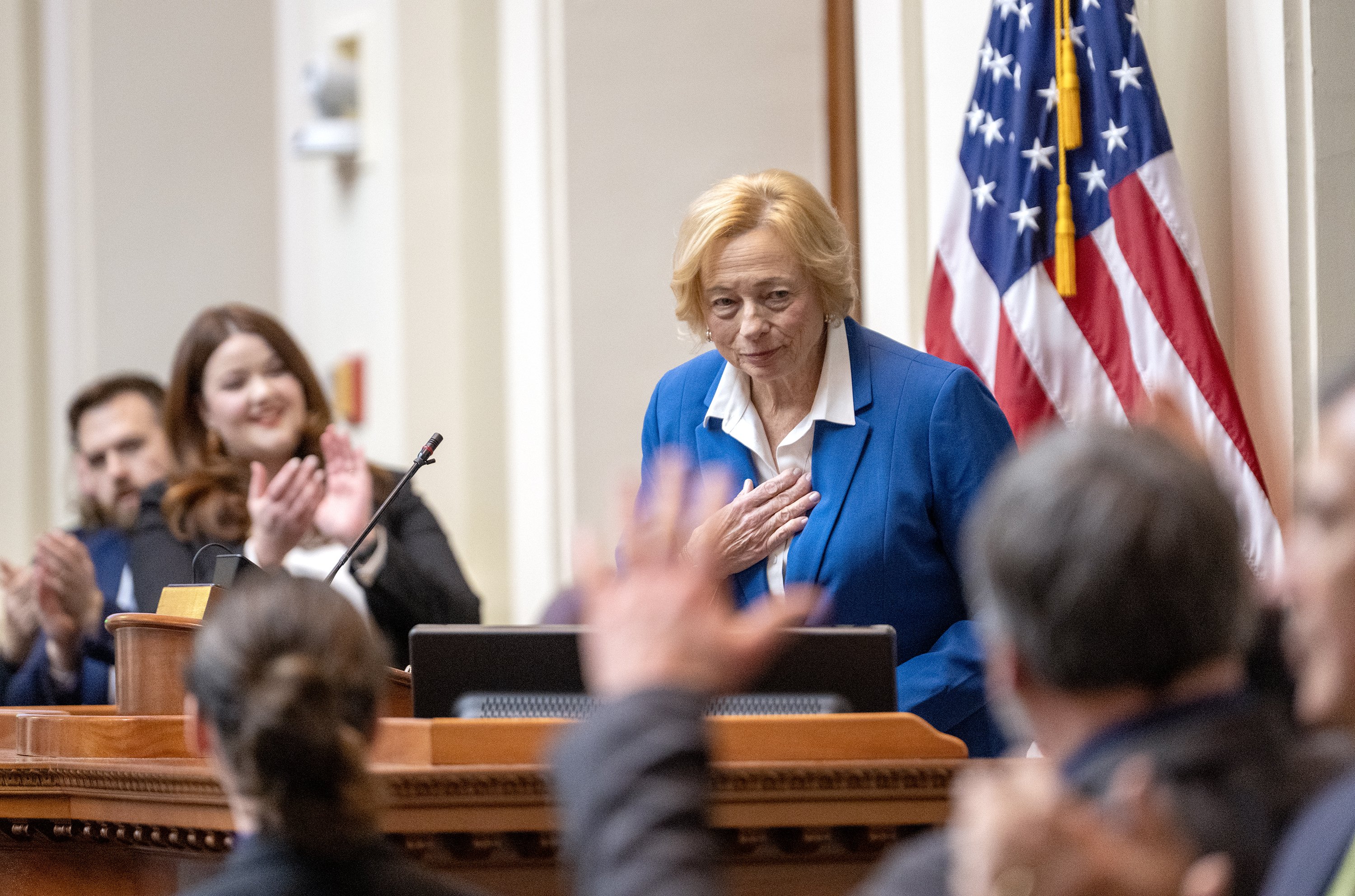
Mills said in a written statement that AI could help improve lives, drive economic growth and solve complex problems, but that it must be used in a “prudent, responsible, and ethical manner.”
“As AI becomes more prevalent in our society, its considerable promise must be balanced against harms — known and unforeseen — that can emerge from its widespread use,” she said. “It’s clear we’re only at the beginning of AI’s evolution.”
The governor has proposed $6.7 million in her supplemental budget to begin implementing some of the recommendations of a 21-member task force she created last year to study the issue.
Her proposal, which is being reviewed by lawmakers, would create a statewide AI literacy campaign; fund local and state partnerships to help municipalities use the technology and offer grants to support job training programs to keep Maine’s workforce competitive and productive in AI-enabled workplaces, among other things.
Lawmakers, meanwhile, are considering bills to address potential harms. In a rare bipartisan move, Republicans and Democrats voted unanimously last month in support of a bill (LD 524) making AI-generated child sex abuse material illegal. But that bill must receive about $55,000 before it can be sent to the governor.
They are also considering bills:
- To require political ads in state and local elections to include a disclosure when AI-generated or altered material is used (LD 517).
- To stop human-like chatbots or social AI companions from interacting with children (LD 2162).
- And to regulate how the technology is used in mental health settings (LD 2082).
Last year, lawmakers passed a measure including AI-generated images in the state’s ban on so-called “revenge porn,” and one requiring companies to inform consumers when they’re interacting with an AI assistant. Mills signed both into law.
Other proposals regulating AI use in medical and dental insurance claims and in setting rents died in committees. So did one prohibiting the use of AI in “dynamic pricing,” in which businesses use the technology to offer different real-time prices to different consumers.
Over 1,000 measures focusing on artificial intelligence were debated in state capitols last year, the National Conference of State Legislatures said.
Some states, such as Colorado and California, are taking steps to enact a broad regulatory framework for AI. California has provisions preventing discrimination in the workplace and requiring watermarks on AI content and transparency around data used to produce reports.
But Maine lawmakers are seeking to address potential harms on a case-by-case basis — at least for now.
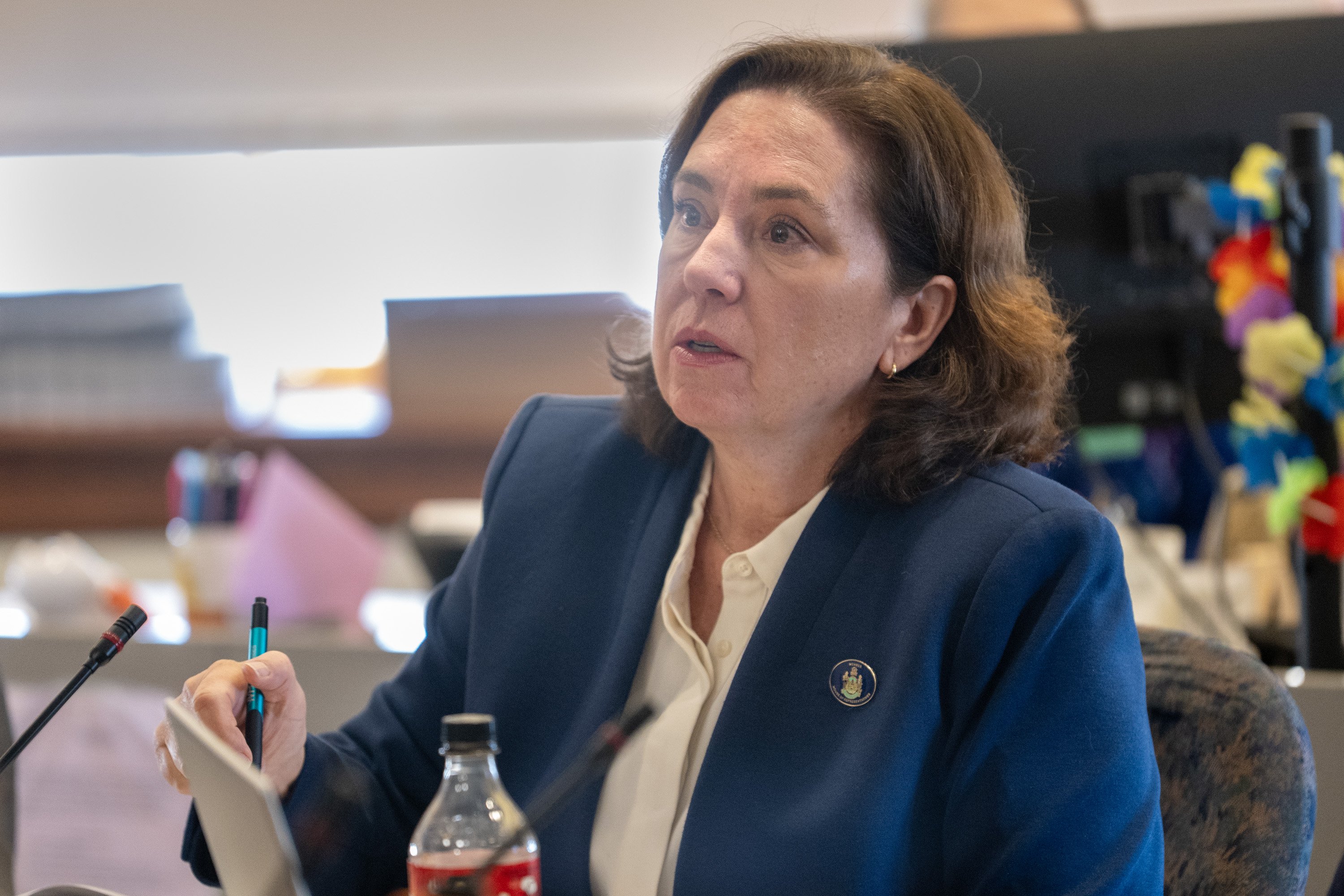
“I think of it as almost a whack-a-mole type of approach where we are developing legislation that very narrowly addresses specific harms of AI,” said Rep. Amy Kuhn, D-Falmouth, who is taking the lead for House Democrats.
“That sort of overarching regulatory framework just feels a little premature for Maine to me right now. I want to see that work its way through the states and let some other states take a swing before we get in there.”
Republicans, however, are worried about overregulation.
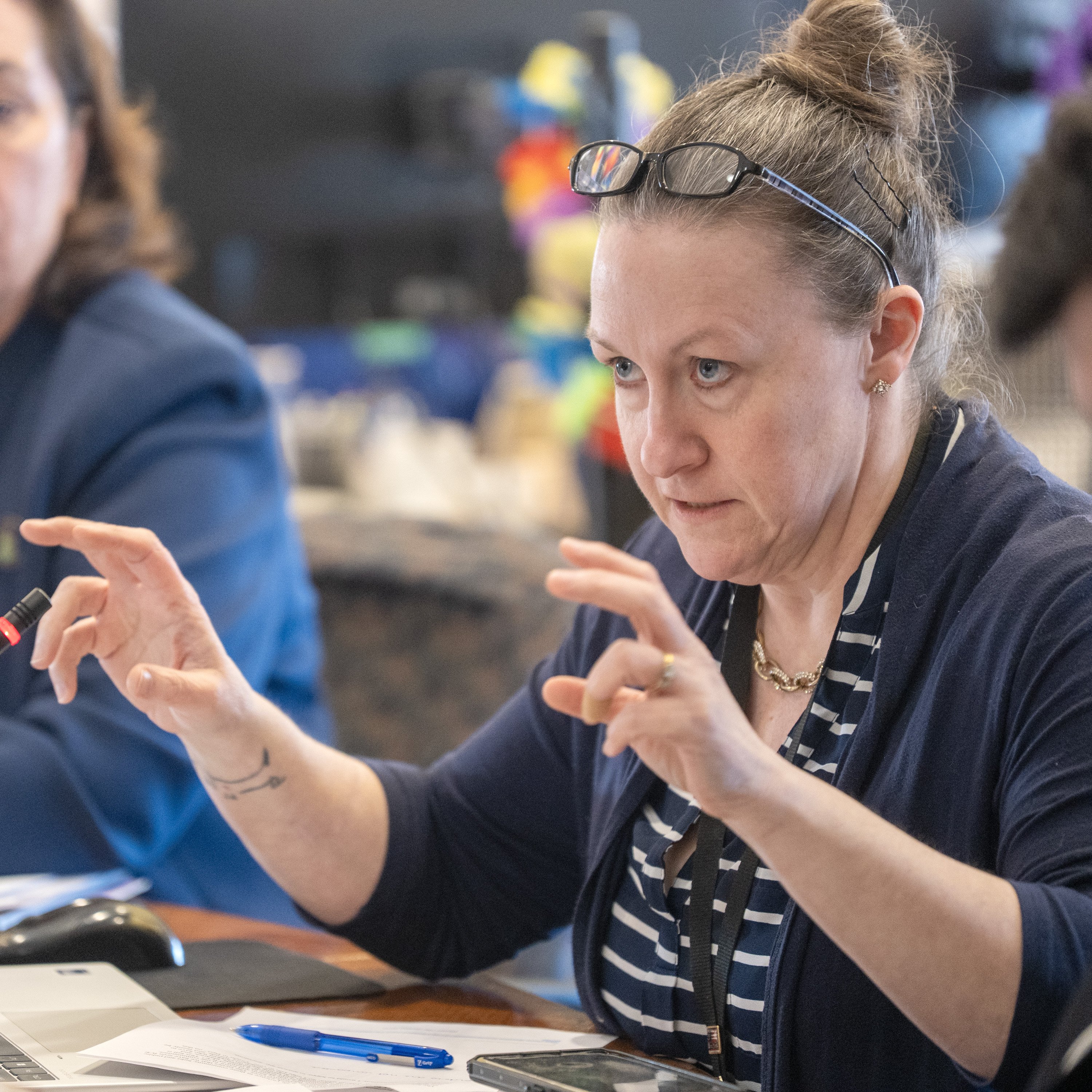
Rep. Jennifer Poirier, R-Skowhegan, said her caucus is focused on protecting children from potential harms associated with AI, but she worries that regulation will never keep up with AI’s evolution.
“You can’t always legislate your way out of everything,” Poirier said. “If you have a minor that has access to AI, and it can be used to harm them in any way, it’s our responsibility as adults to keep them safe. … But we are adults, and we need to use our own common sense.”
A recent poll from Pan Atlantic Research showed widespread concern about AI, with 66% of the 810 Mainers surveyed saying they’re mostly concerned about the potential problems of AI, while 25% were mostly optimistic.
More advanced programs can generate text, analyze reports and create increasingly lifelike images and videos. A recent AI video purporting to show Tom Cruise and Brad Pitt throwing down over the death of convicted sex offender Jeffrey Epstein raised alarm bells in Hollywood over its realism.
Other programs have been used by businesses in ways critics say can be exploitative. Consumer Reports recently published a story about how the online grocery shopping service Instacart used AI to charge certain customers higher prices — up to 23% more — if they were flagged as having higher incomes. Instacart reportedly stopped offering stores this option for “surveillance pricing” after the story was published in December.
A lobbying effort is underway to promote AI regulation in Maine. The “Protect What’s Human” campaign launched a website earlier this year, and a spokesperson said they have invested about $210,000 in ads supporting AI regulations. The commercials are targeting Republicans voters in the Bangor and Portland regions. The group is planning to spend another $110,000 on TV, streaming services, social media and podcasts.
Other proposals passed by the Legislature reflect lawmakers’ attempts to get ahead of the AI issue in indirect ways.
The House and Senate have each recently passed a strict data privacy law that would greatly restrict the amount of data — a person’s location, browsing and shopping histories and biometric information, for example— that companies can collect, store and sell. One of the main arguments was that such data can be used to train AI models. However, the chambers will have to iron out the differences between their two versions of the measure, LD 1822, if it is to become law.
And local residents are beginning to grapple with proposed data centers, which have been controversial in other parts of the county because they consume large amounts of water. This is especially true for centers powering AI.
Lawmakers are considering a bill, LD 307, to create a moratorium on such centers and establish a state council to study and review the impact of building them in Maine.
Construction is underway on a data center in Aroostook County, while another is being proposed in Sanford. Others have been proposed in Wiscasset and Lewiston, but did not move forward.
“This whole world is shifting to computer everything,” Poirier said, “and it’s important that we keep up with the times on that.”

California Democrats launch pricey polling effort to winnow crowded gubernatorial field

With U.S. at war with Iran, political upheaval could engulf World Cup

Israeli air strike targets building in south Lebanon

Ed Martin, outspoken Justice Department lawyer, is formally accused of ethical violations | CNN Politics

‘Utterly unaffordable’: Study reveals how deep blue city’s minimum wage law is ravaging key industry

Florida High School Football Rankings: Top 25 teams – Oct. 21

Cleary's 21 help Le Moyne down Central Connecticut State 69-64 in OT

How old is Bo Nix? What to know about Oregon quarterback ahead of 2024 NFL Draft

99th annual Pony Swim held in Virginia

Indiana Members Credit Union announced as new anchor tenant at Bottleworks District
Israeli air strike targets building in south Lebanon
Ed Martin, outspoken Justice Department lawyer, is formally accused of ethical violations | CNN Politics

Trump reveals top issues GOP should focus on to secure midterms victory: ‘I’ve never been more confident’

NATO intercepts another Iranian missile in Turkish airspace

Is Iran another Iraq? : Sources & Methods
-

 Wisconsin1 week ago
Setting sail on iceboats across a frozen lake in Wisconsin
-

 Massachusetts1 week ago
Massachusetts man awaits word from family in Iran after attacks
-

 Maryland1 week ago
AM showers Sunday in Maryland
-

 Florida1 week ago
Florida man rescued after being stuck in shoulder-deep mud for days
-

 Pennsylvania5 days ago
Pa. man found guilty of raping teen girl who he took to Mexico
-

 Sports6 days ago
Keith Olbermann under fire for calling Lou Holtz a ‘scumbag’ after legendary coach’s death
-

 Virginia6 days ago
Giants will hold 2026 training camp in West Virginia
-

 Politics1 week ago
Mamdani’s response to Trump’s Iran strike sparks conservative backlash: ‘Rooting for the ayatollah’