Sign up for the Today newsletter
Get everything you need to know to start your day, delivered right to your inbox every morning.

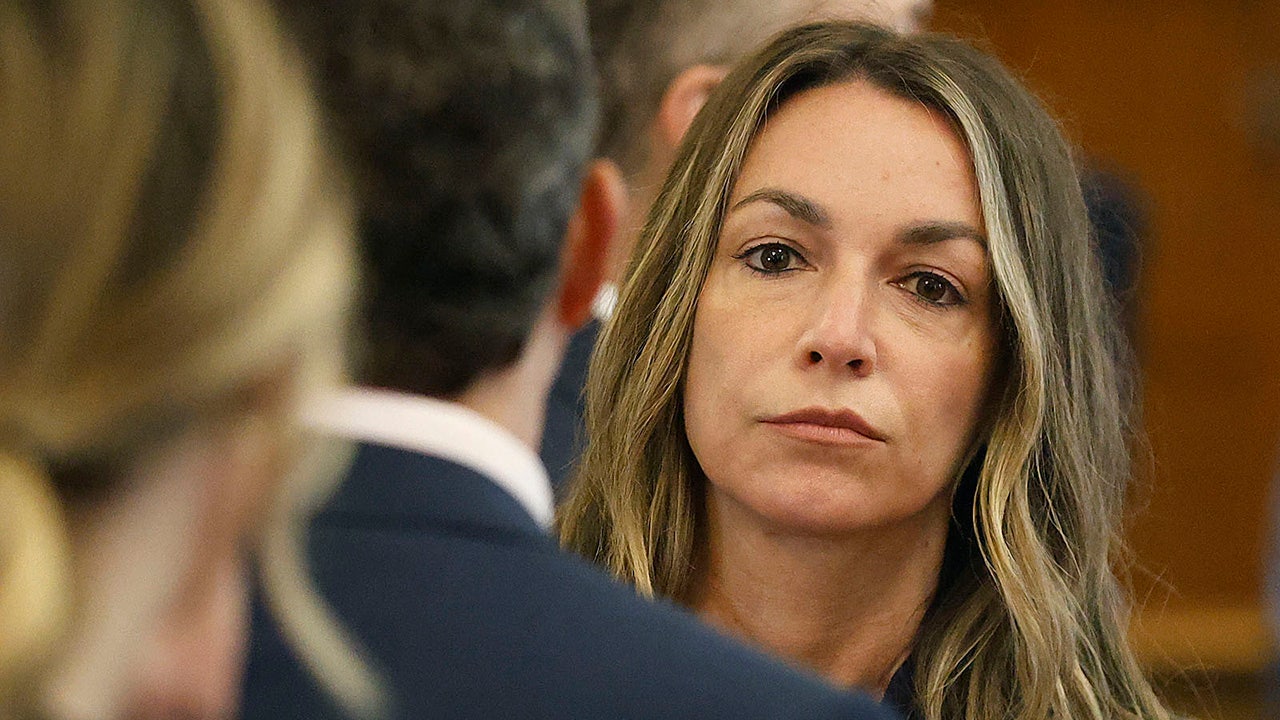
Karen Read’s retrial in the death of her Boston police officer boyfriend, John O’Keefe, kicks off Tuesday with opening statements, months after jurors deadlocked on the case and prosecutors had to start over. But experts expect a tough fight for the former financial analyst.
Read, 45, is charged with murder, manslaughter and fleeing the scene for allegedly striking O’Keefe with her Lexus SUV during a snowstorm on Jan. 29, 2022. He was found on fellow officer Brian Albert’s front lawn hours later with signs of hypothermia and traumatic injuries to his head.
Read has pleaded not guilty, denied killing O’Keefe and alleged she is being framed, attempting to sow reasonable doubt in prosecutors’ claims and asserting that someone else killed O’Keefe and had ties to and influence over the investigation.
Albert hosted an after-party that evening, inviting a group of friends and acquaintances to drop by after the local bars closed at midnight. Attendees testified that O’Keefe never came inside.
UNFAZED KAREN READ STARES DOWN LINGERING QUESTIONS ABOUT ‘DOG BITES,’ TEXTS WITH RETRIAL READY FOR KICKOFF
Karen Read’s booking photo (Massachusetts State Police)
Special prosecutor Hank Brennan and lead defense attorney Alan Jackson are slated to begin opening statements Tuesday. Experts say observers should expect fireworks.
For the retrial, Judge Beverly Cannone has placed limits on how the defense can raise its theory that an alternate perpetrator is responsible for O’Keefe’s death.
“Like a high-wire specialist, Alan is going to dance the line,” said Linda Kenney Baden, a high-profile defense attorney who has been following the case. “Sometimes when you do that, you fall off or, in this case, Brennan is going to try to push him off objecting.”
GET REAL-TIME UPDATES DIRECTLY ON THE TRUE CRIME HUB
John O’Keefe (Courtesy of Karen Read)
She said limiting what the defense can say in their opening about a potential third-party culprit is a severe hurdle for Read’s team.
“Judge Cannone is going to cut the defense off at its kneecaps,” she said. She noted that David Yannetti, another one of Read’s lawyers, opened the first trial by claiming she had been framed.
KAREN READ AND JOHN O’KEEFE: INSIDE EVOLUTION OF BOSTON MURDER MYSTERY SINCE JULY MISTRIAL
“She did not cause his death, and that means that somebody else did,” Yannetti told the court in April 2024.
He pointed to the controversial lead investigator, Massachusetts State Trooper Michael Proctor, who was fired last month as a result of an internal investigation into his conduct.
Karen Read is shown with her attorneys, David Yannetti, left, and Alan Jackson during jury selection at Norfolk Superior Court in Dedham, Mass., on April 15, 2025. (Nancy Lane/Boston Herald via AP/Pool)
Now that Proctor is no longer a member of law enforcement, the prosecution actually may have an easier time overcoming his sultry text messages in the eyes of the jury, according to Neama Rahmani, a former federal prosecutor.
KAREN READ PROSECUTOR WANTS TO BLOCK DEFENSE FROM BLAMING AFTER-PARTY GUESTS, PET DOG IN OPENING STATEMENT
“Now that Proctor’s been fired, the prosecution can own these bad facts and get ahead of them,” he said Monday. “By ‘fronting’ the unprofessional and embarrassing evidence impeaching Proctor for the jury, and showing Proctor has been terminated for his misconduct, the commonwealth will have a better chance of securing a conviction this time.”
Retrials tend to go better for prosecutors, who know what to expect from witnesses for the defense, said Andrew Stoltmann, a Chicago-based attorney and adjunct professor at Northwestern University’s School of Law.
Special Assistant District Attorney Hank Brennan introduces himself during jury selection in the murder trial of Karen Read at Norfolk Superior Court in Dedham, Mass., on April 15, 2025. (Nancy Lane/Boston Herald via AP/Pool)
“I think she faces a major uphill climb,” he told Fox News Digital. “They have many witnesses locked into their story. As for a prediction, I say the prosecutors are going to win this case as they are going to be loaded for bear with respect to her expert witnesses.”
Defense experts were key to Read’s strategy in the first trial, when they testified that O’Keefe’s injuries were inconsistent with being struck by an SUV.
Another attendee of the after-party was Brian Higgins, an ATF agent. Higgins and Read exchanged romantic text messages, and he testified that she once kissed him outside O’Keefe’s house.
ATF Agent Brian Higgins speaks during the Karen Read murder trial at Norfolk Superior Court in Dedham, Mass., on May 28, 2024. (Stuart Cahill/Boston Herald via AP/Pool)
Speaking outside the courthouse last week, Read left open the possibility of taking the stand in her own defense, something she opted not to do last year. Since then, she’s given multiple media interviews, appearing on TV and in print to share her side of the story.
Brennan, a specially appointed assistant district attorney brought in to spearhead the second trial, asked the court to appoint a third-party reader to read text messages between the defendant and the victim to the jury in court. Her defense opposed the move in writing Friday, arguing that an appointed reader could potentially drum up unfair prejudice with an over-dramatic inflection.
During the first trial, Massachusetts State Trooper Nick Guarino read the texts. The defense argued that was standard procedure.
Read the defense opposition to ‘independent readers’:
In the months since her first trial ended in a mistrial, the former lead investigator saw himself fired by the Massachusetts State Police over his handling of the investigation, which included sharing confidential materials in text messages that included lewd and unprofessional remarks about Read.
SIGN UP TO GET TRUE CRIME NEWSLETTER
He joked that he’d searched her confiscated phone for nude photos, called her a “c—” and said he wished she’d kill herself.
FOLLOW THE FOX TRUE CRIME TEAM ON X
Judge Beverly J. Cannone addresses potential jurors as jury selection continues for the murder retrial of Karen Read in Norfolk Superior Court, April 14, 2025, in Dedham, Mass. (Pat Greenhouse/Boston Globe via AP/Pool)
The defense also raised evidence-collection and chain-of-custody concerns surrounding Read’s vehicle, fragments of the taillight authorities said they recovered at the scene and other key items.
Close to the time of his death, she allegedly left him a voicemail saying, “I hate you.” The two had also argued the morning before his death, but they went out drinking that night.
A key part of the retrial is expected to include expert testimony about injuries found on O’Keefe’s right arm, which the defense argues were caused by a dog and is potential evidence that he wasn’t killed by a vehicular strike but rather in a fight.
The defense will call Garrett Wing, a dog trainer, and the prosecution will have testimony from Dr. James Crosby.
The trial is expected to last six to eight weeks after taking more than two weeks to seat a jury.
Read could face a maximum of life in prison if convicted.
Read the full article from Here


NEWYou can now listen to Fox News articles!
The New Hampshire man accused of opening fire inside a country club last year, killing one person, reportedly confessed to the shooting, telling investigators he aimed to kill the rich.
Hunter West Nadeau, 24, told police he carried out the shooting at a steakhouse located at the Sky Meadow Club in Nashua in an effort to retaliate against the rich because “they were not helping the poor,” according to a police affidavit obtained by The Boston Globe.
The affidavit reportedly pointed to surveillance video showing Nadeau entering the club’s main entrance around 7:17 p.m. Sept. 20, wearing a black hoodie and carrying a green backpack.
Nadeau then allegedly walked to Prime steakhouse, put on a face mask and brandished a gun, firing five shots at employee Steve Burtman, according to the affidavit.
Hunter Nadeau, 24, a former employee of the Sky Meadow Club, was charged with second-degree murder in Robert Steven DeCesare’s killing. (New Hampshire Attorney General)
Burtman, who was reportedly stationed at the front desk, was struck in the face, the outlet reported. He survived his injuries.
Surveillance footage then reportedly shows Nadeau entering the restaurant and firing five more shots toward numerous patrons.
Nadeau allegedly struck and killed 59-year-old Robert Steven DeCesare, who was dining with his wife and daughter. A third patron was also injured as he allegedly fired multiple shots toward a group of individuals.
WITNESS SAYS NEW HAMPSHIRE COUNTRY CLUB SHOOTER YELLED ‘FREE PALESTINE’ DURING WEDDING VIOLENCE: AP
Ambulances are parked outside a hotel acting as a reunification center after a shooting at a country club in Nashua, N.H., Sept. 20, 2025. (AP Photo/Michael Casey)
Nadeau then “continued to shoot until he was attacked by other patrons in the restaurant, and he retreated back through the doors of the steakhouse,” the affidavit said.
A witness previously told The Associated Press Nadeau allegedly yelled “Free Palestine” as the chaos was unfolding.
Police subsequently located Nadeau on the club’s golf course, where he “was bleeding from apparent self-inflicted incised wounds to [his] arms and wrists, and made statements to the effect that he was a ‘bad guy,’” according to the filing.
He then reportedly took responsibility for the shooting, telling officers about his negative feelings toward the affluent.
BODYCAM IMAGES SHOW LUIGI MANGIONE’S MCDONALD’S ARREST AS DEFENSE CHALLENGES EVIDENCE COLLECTION
Robert “Rob” DeCesare Jr., 59, was fatally shot during a wedding at Sky Meadow Country Club in Nashua, N.H. (Charlene DeCesare)
Speaking to authorities from his hospital bed, Nadeau told investigators “he was tired of the ‘elites’ taking all the money,” according to the outlet.
Nadeau also reportedly told investigators he chose Sky Meadow because he had previously worked there and knew members were affluent.
“He said that he settled on Sky Meadow as a location because he worked there about a year ago as a server and knew that you had to have money to have a membership there,” police said, according to the Globe.
POLICE SERGEANT DENIES HEARING LUIGI MANGIONE MOTHER’S ALLEGED DAMNING STATEMENT ABOUT CEO KILLING
“He was not targeting a specific person but did not care whether he killed someone or not,” police reportedly added.
Additionally, Nadeau explained why he targeted a wedding being held at the venue at the time of the shooting, telling police “he did not want to target ‘civilians,’” according to the outlet.
At the time, the shooting came less than one year after Luigi Mangione allegedly opened fire on UnitedHealthcare CEO Brian Thompson in an apparent assassination in midtown Manhattan. Investigators have pointed to similar ideological motives behind Mangione’s alleged crimes.
CLICK HERE TO DOWNLOAD THE FOX NEWS APP
In January, prosecutors filed multiple charges against Nadeau, including first-degree murder and reckless second-degree murder, according to the New Hampshire Department of Justice.
He is being held without bail as he awaits trial.
Fox News Digital was unable to locate an attorney representing Nadeau.
Fox News Digital’s Sarah Rumpf-Whitten contributed to this report.

Read the full article from Here

Nikki Ogunnaike, the editor in chief of Marie Claire magazine, did not grow up the scion of an Anna Wintour or a Marc Jacobs.
But, she said, “my mom and dad are both very stylish people.”
They got dressed up to go to church every week in her hometown Springfield, Va. Her mother managed a Staples; her father, a CVS. “Presentation is important to them,” she said.
Since landing her first internship with Glamour magazine in college, Ms. Ogunnaike, 40, has held editorial roles there and at Elle magazine and GQ. She has been in the top post at Marie Claire since 2023.
She recently spent a Saturday with The New York Times as she prepared for Milan Fashion Week.

Health
Massachusetts health officials have confirmed the state’s first two measles cases of the year, a school-aged child and a Greater Boston adult.
The Department of Public Health announced the cases Friday, marking the first report of measles in Massachusetts since 2024.
According to health officials, the adult who was diagnosed returned home recently from abroad and had an “uncertain vaccination history.” While infectious, the person visited several locations where others were likely exposed to the virus, and health officials said they are working to identify and notify anyone affected
The child, meanwhile, is a Massachusetts resident who was exposed to the virus and diagnosed with measles out-of-state, where they remain during the infectious period. Health officials said the child does not appear to have exposed anyone in Massachusetts to measles.
The two Massachusetts cases come as the U.S. battles a large national measles outbreak, which has seen 1,136 confirmed cases nationwide so far in 2026, according to the Centers for Disease Control and Prevention.
“Our first two measles cases in 2026 demonstrate the impact that the measles outbreaks, nationally and internationally, can have here at home,” Massachusetts Public Health Commissioner Robbie Goldstein said Friday. “Fortunately, thanks to high vaccination rates, the risk to most Massachusetts residents remains low.”
Measles is a highly contagious disease that spreads through the air when an infected person sneezes, coughs, or talks. The virus can linger in the air for up to two hours and may even spread through tissues or cups used by someone who has it, according to the DPH.
Early symptoms occur 10 days to two weeks after exposure and may resemble a cold or cough, usually with a fever, health officials warned. A rash develops two to four days after the initial symptoms, appearing first on the head and shifting downward.
According to the DPH, complications occur in about 30% of infected measles patients, ranging from immune suppression to pneumonia, diarrhea, and encephalitis — a potentially life-threatening inflammation of the brain.
“Measles is the most contagious respiratory virus and can cause life-threatening illness,” Goldstein said. “These cases are a reminder of the need for health care providers and local health departments to remain vigilant for cases so that appropriate public health measures can be rapidly employed to prevent spread in the state. This is also a reminder that getting vaccinated is the best way for people to protect themselves from this disease.”
According to the DPH, people who have had measles, or who have been vaccinated against measles, are considered immune. State health officials offer the following guidance for the Measles-Mumps-Rubella (MMR) vaccine:
Get everything you need to know to start your day, delivered right to your inbox every morning.





Exclusive: DeepSeek withholds latest AI model from US chipmakers including Nvidia, sources say


Mother and daughter injured in Taunton house explosion


2026 MHSA Montana Wrestling State Championship Brackets And Results – FloWrestling


Wildfires rage in Oklahoma as thousands urged to evacuate a small city


Wildfire near Gum Swamp Road in Livingston Parish now under control; more than 200 acres burned


10 acres charred, 5 injured in Thornton grass fire, evacuation orders lifted


YouTube TV billing scam emails are hitting inboxes


Stellantis is in a crisis of its own making