Northeast
Karen Read arrives at Massachusetts court through sea of ‘cop killer’ chants, supporters in fight to drop case

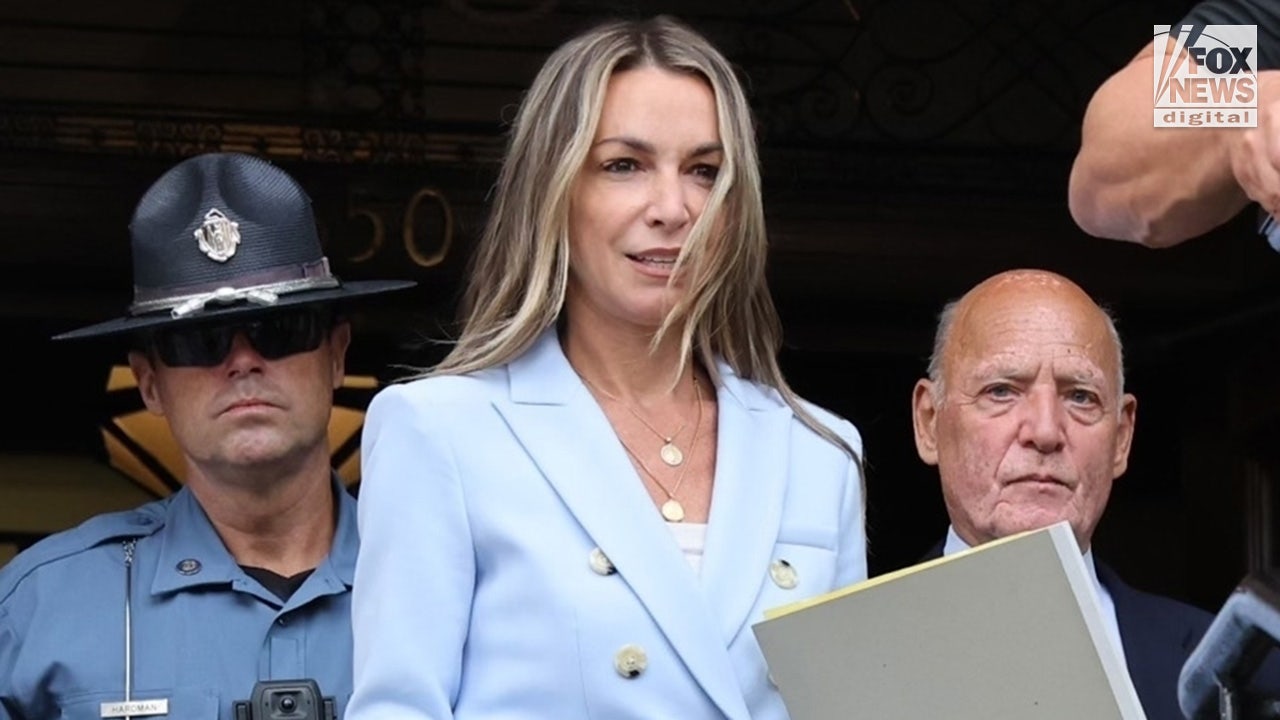
Karen Read, the Massachusetts woman who was accused of killing her police officer boyfriend with a vehicle in January 2022, was back in court Friday for a hearing discussing her defense team’s motion to dismiss.
Attorney Martin Weinberg argued for Read in court on Friday. Attorneys Alan Jackson and David Yannetti previously argued that two of three charges filed against Read, 44, including second-degree murder and leaving the scene of a fatal accident, should be dismissed following a mistrial in June.
Her lawyers told Judge Beverly J. Cannone that jurors reportedly agreed that Read was not guilty on two of the charges, and that another trial would subject Read to “double jeopardy.”
Prosecutors plan to retry Read in January. Cannone heard arguments from both sides and said she will take them under advisement, without making a decision Friday.
WHAT’S NEXT FOR KAREN READ?
Karen Read departs Norfolk Superior Court in Dedham, Massachusetts on Friday, Aug. 9, 2024. Read, who was accused of killing her Boston police officer boyfriend with a vehicle in January 2022, was back in court Friday for a hearing discussing her defense team’s motion to dismiss. (Patriot Pics/Backgrid for Fox News Digital)
Karen Read departs Norfolk Superior Court in Dedham, Massachusetts on Friday, Aug. 9, 2024. (Patriot Pics/Backgrid for Fox News Digital)
Read arrived at the Norfolk County Superior Court in Dedham, Massachusetts, on Friday afternoon surrounded by dueling onlookers: those who cheered her and held up signs that read, “Free Karen” and “Framed,” versus those who chanted, “Cop killer” repeatedly as she walked up the courthouse steps.
Jackson and Yannetti argued during the June trial that accusations against Read alleging she killed her boyfriend, Boston police officer John O’Keefe, are part of an elaborate cover-up and frame job.
Following a weeks-long trial and 26 hours of deliberation, the Norfolk County jury was deadlocked and Cannone declared a mistrial on July 1.
Prosecutors argued during the trial that after a night of drinking on Jan. 28, 2022, a shouting match between O’Keefe and Read — a financial analyst — turned deadly when Read allegedly backed into O’Keefe with her SUV. Prosecutors further alleged she left her boyfriend to die in front of a Canton home during a nor’easter.
Karen Read departs Norfolk Superior Court in Dedham, Massachusetts on Friday, August 9, 2024. Read, who was accused of killing her Boston police officer boyfriend with a vehicle in January 2022, was back in court Friday for a hearing discussing her defense team’s motion to dismiss. (Patriot Pics/Backgrid for Fox News Digital)
Karen Read smiles as defense attorney David Yannetti speaks to reporters in front of Norfolk Superior Court after the judge declared a mistrial after jurors were unable to reach a verdict following a two-month trial, Monday, July 1, 2024, in Dedham, Mass. (AP Photo/Steven Senne)
Authorities located his body on the front lawn of an influential family with deep ties to law enforcement and prosecutors.
KAREN READ MURDER CASE ENDS WITH ‘DEEPLY DIVIDED’ JURY’S DECISION
The question remains: Who killed John O’Keefe?
Read’s defense claimed the family who owned the home where O’Keefe was found dead in the snow on the morning of Jan. 29, 2022, framed her for his death in an elaborate cover-up.
Karen Read smiles during a news conference in front of Norfolk Superior Court, Monday, July 1, 2024, in Dedham, Mass. A judge declared a mistrial after jurors deadlocked in the case of Read, who was accused of killing her Boston police officer boyfriend by striking him with her SUV and leaving him in a snowstorm. (AP Photo/Steven Senne)
Karen A. Read, girlfriend of the late Boston Police officer John OKeefe, was arraigned in Norfolk Superior Court on charges of second degree murder in his death in Dedham, MA on June 10, 2022. A photo of the couple together was presented by the defense to the prosecution. (John Tlumacki/The Boston Globe via Getty Images)
The case has sparked debate between Boston-area locals who blame Read for O’Keefe’s death and those who think she’s innocent.
KAREN READ TRIAL COULD SINK OTHER HIGH-PROFILE MURDERS, EXPERT WARNS: ‘HARD TO SEE HOW IT DOESN’T’
“It’s turned into the Karen Read show,” O’Keefe’s brother, Paul O’Keefe, told CBS Boston in July. “She walks through a crowd that cheers her on. She goes in public and takes pictures and signs autographs.
View of 34 Fairview Road in Canton, Massachusetts on Feb. 2, 2022. Massachusetts State Police homicide detectives arrested Karen A. Read, of Mansfield, on a manslaughter warrant in the death of John OKeefe, a Boston Police officer who was found unresponsive outside a Canton residence. (Craig F. Walker/The Boston Globe via Getty Images)
“She’s just living life like nothing ever happened,” he said at the time.
The jurors who presided over the June trial were “deeply divided” because of “deeply held convictions,” ultimately deciding that a “consensus is unattainable,” according to the judge’s notes from July.
WATCH: DASHCAM FROM THE NIGHT JOHN O’KEEFE WAS FOUND DEAD
A Norfolk County grand jury in June 2022 indicted Bentley University Professor Karen Read, 42, of Mansfield, for second-degree murder, motor vehicle manslaughter, and leaving the scene of a collision, which prosecutors said caused 46-year-old Boston Police Officer John O’Keefe’s death. (John Tlumacki/The Boston Globe)
“Despite our commitment to the duty entrusted in us, we find ourselves deeply divided by fundamental differences in our opinions and state of mind,” the jury wrote in its final note to the judge.
Fox News Digital’s Chris Eberhart contributed to this report.
Read the full article from Here


A portion of a Vermont highway has been shut down following a rock slide on Tuesday.
Vermont State Police said in an email around 1:22 p.m. that they had received a report of a rock slide on Route 5 in Fairlee, just south of the Bradford town line.
“Initial reports are of a substantial amount of rock & trees in the roadway, making travel through the area difficult or impassable,” they said. “Motorists should seek alternate routes or expect delays in the area.”
Route 5 is a nearly 200-mile, mostly two-lane highway running from the Massachusetts border to Canada.
In an update shortly after 2 p.m., state police said Route 5 in Fairlee between Mountain Road and Sawyer Mountain Drive will remain closed while the Vermont Agency of Transportation assesses the stability of the roadway.
No further details were released.
NEWYou can now listen to Fox News articles!
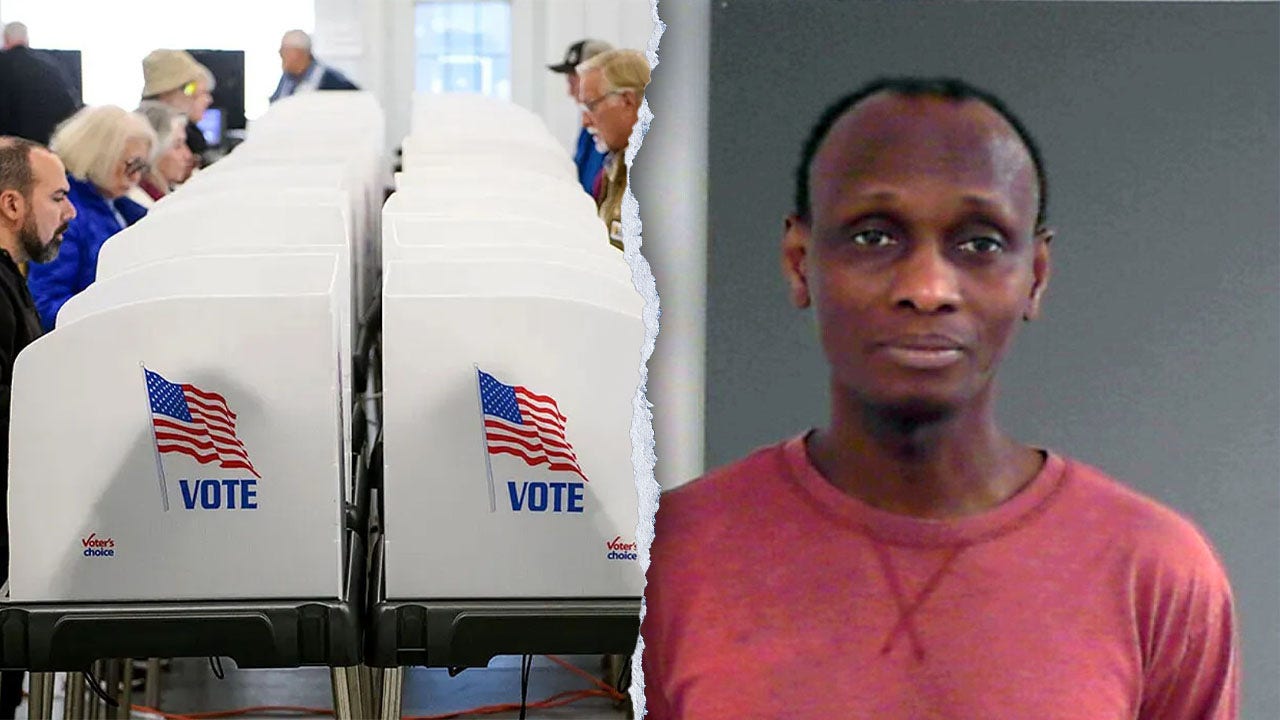
FIRST ON FOX: An illegal immigrant from Africa who has allegedly voted in every federal election since 2008 has been arrested, Fox News Digital has learned, as congressional lawmakers fiercely debate a proposal to strengthen election integrity laws.
Mahady Sacko, a Mauritanian citizen, has been charged with voter fraud in Philadelphia, the Department of Homeland Security (DHS) said Monday.
“This criminal illegal alien committed a felony by voting in federal elections dating back to 2008. Illegal aliens should NOT be electing American leaders,” DHS Deputy Assistant Secretary Lauren Bis said. “Our elections belong to American citizens, not foreign citizens. Congress must pass the SAVE America Act immediately to secure our elections. The Senate must pass the SAVE America Act.”
HOUSE REPUBLICANS PUSH JOHNSON TO GO TO WAR WITH SENATE OVER SAVE ACT
Mahady Sacko, a Mauritanian, citizen living in the United States illegally, has fraudulently voted in every federal election dating back to 2008, federal prosecutors said. (Department of Homeland Security; Getty Images)
Sacko, 50, entered the U.S. in March 1998 in Miami, and was ordered to be removed from the country by an immigration judge in 2000, according to a federal criminal complaint reviewed by Fox News Digital.
He appealed this decision, but the Board of Immigration Appeals dismissed his appeal and affirmed the removal order on Nov. 14, 2002. Despite this order, Sacko did not depart the U.S., authorities said.
He was arrested by ICE in 2007, but was not deported because he didn’t have a passport from Mauritania and the agency was unable to obtain one for him, federal prosecutors said. As a result, he was placed on supervision and required to regularly report to ICE offices, which he complied with.
GOP REACHES KEY 50-VOTE THRESHOLD FOR TRUMP-BACKED VOTER ID BILL AS SENATE FIGHT LOOMS
Voters cast ballots inside a polling place. (Melissa Sue Gerrits/Getty Images)
In May 2025, investigators obtained voting records for Philadelphia County from the Philadelphia City Commissioners (PCCO) and the Pennsylvania Department of State (DOS) via a subpoena.
Sacko registered to vote in 2005, and falsely stated on several occasions that he was a U.S. citizen, authorities allege.
The voting records showed that he cast ballots in several federal elections, including during the general elections in 2008, 2012, 2016, 2020, and 2024. In addition, he voted in the 2016 and 2020 primary elections, prosecutors said.
He voted in person for every election, except for the 2020 primary, in which he voted by mail, the complaint states.
The court documents feature several paper voter registration documents that Sacko allegedly filled out in which he provided his name, address, social security number, address, date of birth and affirmed that he was a U.S. citizen, prosecutors said.
CLICK HERE TO DOWNLOAD THE FOX NEWS APP
The Trump administration and Republicans have pushed for lawmakers to pass the SAVE America Act, which would tighten voter registration and identification requirements to cast ballots in elections, namely proof of American citizenship to vote.
Many Democrats contend the law would disenfranchise vulnerable populations from voting, citing the burden of getting documents needed for an ID, while supporters of the bill note that the vast majority of people use photo ID for everyday tasks.
Read the full article from Here
Boston, MA
‘More than just a game’: Free chess classes aim to reduce youth violence in Boston – The Boston Globe

“I know we’re used to rushing, but this is a mind game. So we want to slow down and think,” Shaheed said. “Don’t move off of impulse.”
It’s a message that extends far beyond the chess board.
Organizers of Boston’s new Chess for Peace program are using one of history’s oldest board games to teach kids important life skills, including strategic thinking and conflict resolution. Their goals are to reduce youth violence and address the negative impacts of technology.
The program offers free chess classes Sunday afternoons in the basement of the Madison Park High School gym in Roxbury. It’s affiliated with a Boston Public Schools initiative that also includes basketball, boxing, yoga, rugby, and more, an effort to support families and keep students engaged throughout the week.
Pat Greenhouse/Globe Staff
The 6-WON-7 program, which has grown significantly over the past couple years, is about to mark its 100th Sunday, said Cory McCarthy, director of student support at Boston Public Schools. School administrators launched the program partly in response to reports about unruly teenagers causing chaos at the South Bay shopping center and elsewhere on weekends, McCarthy said.
“School should feel like a community,” he said. “It’s the forgotten piece in the academic journey. It’s a safety issue. It’s violence prevention, it’s youth development, it’s all part of student wellness.”
While violent crime has decreased overall, youth violence remains a concern in Boston, largely concentrated among small groups of teenagers and sometimes fueled by gang affiliations. Social media often plays a role, experts say, with kids posting threats or bragging about crimes they’ve committed.
As technology shortens our attention spans, encourages rash decision-making and limits in-person interactions, playing chess can be a robust kind of antidote, said Renee Callender, a retired Boston police detective who spearheaded the program.
“It’s more than just a game. It actually mirrors life,” she said. “In the game of chess, like life, every action comes with consequences.”
During more than three decades on the police force, Callender saw firsthand how cycles of violence start and end. She also founded a nonprofit called Promoting Conflict Resolution, Inc.

She said the idea for the program came from watching a youth chess tournament on TV; she was impressed by how poised and attentive the players looked. Maybe this could help kids in Boston stay out of trouble, she thought.
“It’s not only about how to play but how to lose,” she said. “How to gracefully lose. How to be humble.”
Indeed, it’s all fun and games until your king is in check.
Jacquami eventually lost to his opponent, 7-year-old Filip Rancic, who said his winning strategy involved steadily advancing his pieces toward the middle of the board.
“Sometimes he wins, sometimes he loses. So that’s good for him,” said Filip’s dad, Milan Rancic.
“They need to learn to be patient enough to develop a strategy, and obviously avoid a tantrum when they lose — pretty much everything we want our kids to learn,” he added.
During the class, three sets of players sat across from each other at classroom desks, with Shaheed monitoring their games and offering instruction. Sometimes the clink of plastic chess pieces was the only sound in the room.
“I think I got checkmate,” exclaimed Henry Lee, 10, bouncing excitedly in his chair.
Shaheed inspected the board and confirmed — checkmate, indeed.
“Good game,” Lee said, reaching out to shake hands with his opponent, 11-year-old Jesus Beltran.
“Can you believe you just lost to a 10-year-old?” he asked, grinning.
Beltran laughed, rolled his eyes and started setting up the board again; he had won the previous match. In addition to chess, the boys play soccer together. They agreed their friendship can easily withstand some light-hearted competition.

Pat Greenhouse/Globe Staff
A few turns into the next game, Lee made a move he instantly regretted.
“Can I have that turn back?” he asked Beltran, who smiled and shook his head no.
“So often, they’re focused on just one piece,” said Rhodes Pierre, another instructor with the program. “I tell them to examine the entire board.”
Pierre, who grew up in Mattapan, has experienced firsthand the impacts of violence. His older brother was shot and killed in 1994 near their childhood home, about two weeks after he inadvertently witnessed another daytime shooting nearby. The case was later linked to a neighborhood drug gang, according to news reports at the time.
Pierre said he started playing chess in college and quickly came to appreciate the life skills it teaches.
“Giving people another outlet to express themselves without having to revert to violence, that’s a good thing,” he said. “Making people sit down and think. It’s a better avenue than what we have right now.”

While sprinkling in the basics of chess strategy, Shaheed sends a similar message.
“It’s about seeing the moves behind the moves,” he told the class. “It takes paying attention, hearing your own self think. Most games are won or lost because of focus.”
It’s something he personally learned the hard way, Shaheed said.
Now 45, he spent much of his youth caught in a cycle of poverty, crime, incarceration, and mental illness. From foster care and psychiatric institutions to jails and prison, he ended up playing a lot of chess.
The game took on a central role in his life, an overarching metaphor that changed the way he approached decision-making, Shaheed said. Especially when he found himself in a hostile environment, he would think about the moves available to him and their potential consequences. That finally helped him leave the streets behind and forge a new path.
“The easy money, it wasn’t working. It was almost like a setup — nothing made sense anymore,” he said. “I needed a better move.”

He still plays chess regularly with various partners he’s befriended around Boston. He said he hopes younger generations will find some of the same benefits he’s experienced.
“Chess is a game of distress, tribulations, defeat, obstacles, resistance, competition, sorrow, and conquest,” Shaheed wrote in his recently published book, “Games Over: The Real Story About Chess and Life.”
“And that’s what life is all about — overcoming barriers and making progress.”
Lea Skene can be reached at lea.skene@globe.com. Follow her on X @lea_skene.

Vermont highway shut down following rock slide

Virginia lawmakers criticize anti-redistricting mailer with Jim Crow-era images – WTOP News

Wisconsin Lawmakers Propose Ranked Choice Voting for All Elections

New laws establish a statewide literacy program

Current price of Bitcoin for March 10, 2026 | Fortune

Florida High School Football Rankings: Top 25 teams – Oct. 21

Cleary's 21 help Le Moyne down Central Connecticut State 69-64 in OT

How old is Bo Nix? What to know about Oregon quarterback ahead of 2024 NFL Draft

99th annual Pony Swim held in Virginia

Indiana Members Credit Union announced as new anchor tenant at Bottleworks District

Map: 2.3-Magnitude Earthquake Reported North of New York City

Trump stirs GOP primary drama with visit to Massie’s Kentucky home turf

Israeli air strike targets building in south Lebanon

Ed Martin, outspoken Justice Department lawyer, is formally accused of ethical violations | CNN Politics

Trump reveals top issues GOP should focus on to secure midterms victory: ‘I’ve never been more confident’
-

 Wisconsin1 week ago
Setting sail on iceboats across a frozen lake in Wisconsin
-

 Massachusetts1 week ago
Massachusetts man awaits word from family in Iran after attacks
-

 Maryland1 week ago
AM showers Sunday in Maryland
-

 Pennsylvania5 days ago
Pa. man found guilty of raping teen girl who he took to Mexico
-

 Florida1 week ago
Florida man rescued after being stuck in shoulder-deep mud for days
-

 Sports6 days ago
Keith Olbermann under fire for calling Lou Holtz a ‘scumbag’ after legendary coach’s death
-

 Virginia6 days ago
Giants will hold 2026 training camp in West Virginia
-

 Politics1 week ago
Mamdani’s response to Trump’s Iran strike sparks conservative backlash: ‘Rooting for the ayatollah’