Northeast
Fox News Voter Analysis: Trump tops Haley in New Hampshire

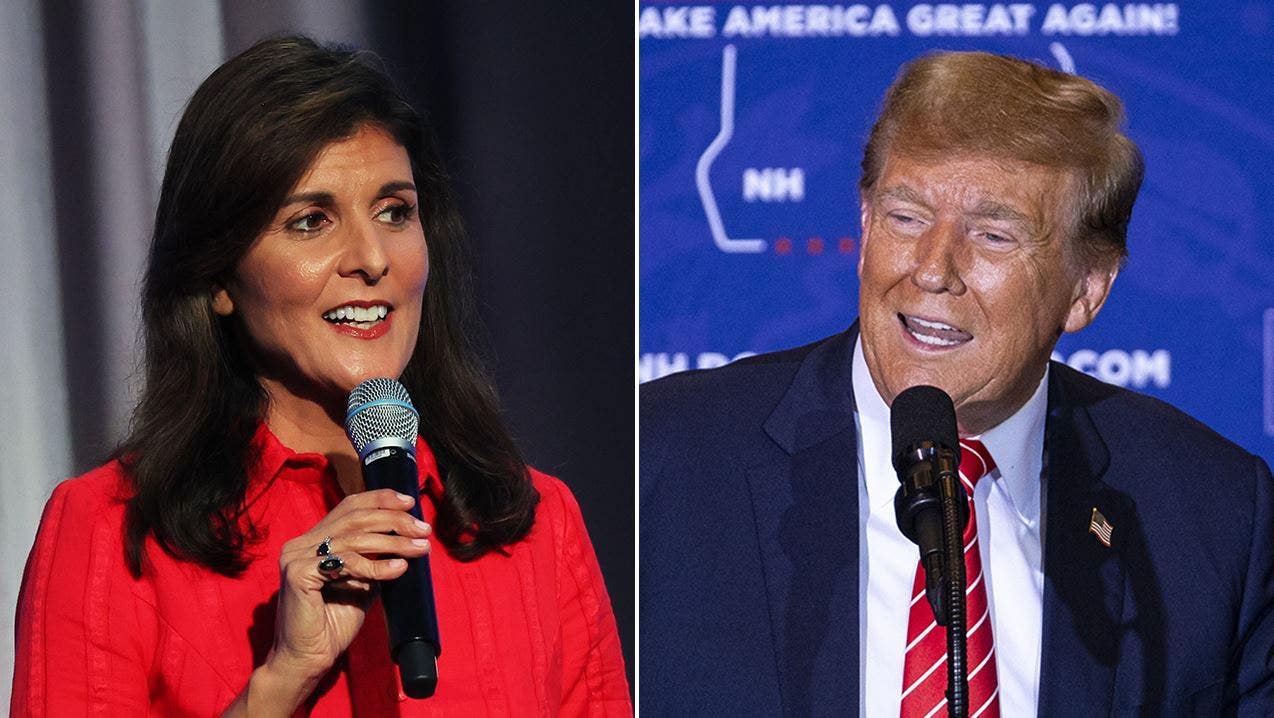
Former President Trump won New Hampshire’s first-in-the-nation primary by 10 points over Nikki Haley. Trump is the first Republican candidate to win competitive elections in the Iowa caucuses and New Hampshire primary since 1976.
Ron DeSantis ended his campaign two days before the primary, effectively making it a head-to-head race between Trump and Haley, who vowed to continue her campaign through the South Carolina primary on Feb. 24.
The results of the Fox News Voter Analysis, a survey of nearly 2,000 New Hampshire Republican primary voters, show the contours of a race that was notably closer than last week’s Iowa caucuses, which Trump won by 30 points.
In New Hampshire, unaffiliated voters – those not registered with a partisan affiliation – can participate in primary elections, and these voters were the main reason the race in the Granite State was tighter than in Iowa. Unaffiliated voters made up slightly less than half of the electorate (47%), and broke for Haley by 26 points.
DONALD TRUMP QUICKLY BEATS NIKKI HALEY IN NEW HAMPSHIRE GOP PRIMARY
Former President Trump won the New Hampshire primary by 10 points over rival Nikki Haley, the former two-term South Carolina governor and U.S. ambassador to the U.N. during the Trump administration. (Michael M. Santiago/Al Drago/Bloomberg)
Just over half of unaffiliated voters (54%) considered themselves Republicans; the remainder generally identified as independents (26%) or Democrats (20%).
Trump easily outpaced Haley among registered Republicans (+42 points).
Haley won political moderates by 24 points, while Trump won self-described “somewhat conservatives” by the same margin (+24 points). He ran up the score among very conservative voters (+68 points).
In the end, much of Haley’s support came from voters outside the GOP mainstream. Just over half of her supporters (52%) backed Joe Biden in the 2020 election, while 32% voted for Trump. The vast majority (90%) of Trump’s backers in the primary voted for him four years ago.
Those who considered themselves part of the Make America Great Again movement went overwhelmingly for Trump (+77 points), while non-MAGA voters backed Haley by 52 points. Both candidates benefited from DeSantis dropping out, as he ran second in Iowa among both MAGA and non-MAGA voters.
CLICK HERE FOR RESULTS FROM THE NEW HAMPSHIRE PRIMARY
Beyond ideology, education was a major fault line in the New Hampshire GOP electorate – to an even greater degree than in Iowa. Haley won college-educated voters by 22 points (after Trump won them by 2 points in Iowa), but Trump dominated among those without a college degree in both states (+30 in New Hampshire and +45 in Iowa).
Haley won suburban voters – a group that broke for Trump by 6 points in Iowa – by a single point. Rural voters were once again a major source of strength for Trump.
Despite millions of dollars in campaign spending and a flurry of candidate events across the state, in some ways the race was over before it began. Fully 42% of voters knew who they would support all along, and almost all of them backed Trump.
Far fewer (16%) decided after the Iowa caucuses, but these voters broke for Haley.
Haley supporters headed to the ballot box knowing they were fighting an uphill battle as most voters expect Trump to be the eventual nominee.
If Trump is the eventual nominee, he has work to do to unify the party. While just over half (53%) of primary voters would be satisfied with Trump as the GOP nominee, one-third (35%) would be dissatisfied enough that they would not vote for him in November. Fewer would be satisfied with Haley as the nominee (39%), while 32% would be dissatisfied enough that they would not back her in the fall.
All told, three-quarters (77%) of Haley voters said they would not vote for Trump in November; 51% of his voters felt the same way about her.
Some of the dissatisfaction with Trump as the nominee may be due to concerns he is too extreme to win the general election. Half of voters worried he is too extreme to win, including 37% who were very concerned.
Far fewer (35%) were concerned Haley is too extreme.
WATCH: HALEY CONGRATULATES TRUMP, VOWS TO CONTINUE FIGHTING
For some, however, an extreme candidate may be just what the country needs. Three-in-ten would like to see complete and total upheaval in the way the country is run, and the vast majority of them backed Trump. His 68-point margin among these voters was even larger than his 55-point advantage with this group in Iowa.
Half wanted substantial change in the country’s governance, and they broke for Trump by a much narrower 6-point margin.
The desire for major change did not mean New Hampshire Republican voters were looking for a candidate who would break the rules to get things done – just 17% said that was a very important quality in their nominee.
Instead, almost all voters said having the mental fitness to serve as president was a very important quality for the Republican nominee. Being a strong leader, having the best policy ideas, being able to win in November and caring about people like you were second-tier priorities.
Haley won voters who felt it was very important for the nominee to work in a bipartisan manner, while Trump won on the other traits.
WATCH: TRUMP ADDRESSES SUPPORTERS ALONGSIDE FORMER RIVALS
Meanwhile, immigration was the top issue on primary voters’ minds – just as it was in Iowa. The economy placed second and no other issues were close.
Eight-in-ten voters (79%) supported building a wall along the southern border, with just 21% opposed to Trump’s signature immigration policy. By more than two to one, voters felt immigrants do more to hurt the country (68%) than help it (28%). All told, Trump won immigration voters by 47 points.
The margin was closer among those who felt the economy was the most important issue, though Trump still held a 9-point advantage over Haley.
Six-in-ten voters (60%) said they were holding steady financially, but nearly 3 in 10 (27%) felt they were falling behind. These voters backed Trump by a massive margin (+58 points), while he and Haley split those who were breaking even (Haley +1 point). In Iowa, Trump won those who said they were holding steady by 22 points.
While far from the top of voters’ priority lists, foreign policy (8% most important issue) did create some fireworks on the campaign trail. Haley, who served as the U.S. Ambassador to the United Nations in the Trump administration, sought to attack his relationships with dictators and draw a contrast with Trump’s “America First” foreign policy. A majority of New Hampshire voters, however, preferred the U.S. take a less active role in world affairs.
Those who wanted the U.S. to be less active (Trump +40 points) and more active (Trump +14 points) in solving the world’s problems backed Trump, while those who felt the current U.S. stance was about right backed Haley by 43 points.
On the hot-button questions of foreign aid, half favored aid to Ukraine and two-thirds supported aid to Israel.
Voters who favored aid to both countries backed Haley by 34 points. Trump’s margins among those who would send aid to Israel but not Ukraine (+76 points) and those who opposed aid to both (+46 points) were much greater.
FOX NEWS VOTER ANALYSIS: WHAT NEW HAMPSHIRE VOTERS WANT IN A GOP NOMINEE
New Hampshire GOP primary voters are more moderate on abortion than their Iowa counterparts: slightly more than half said abortion should be legal in all or most cases, compared to 31% of Iowa caucusgoers. That helped Haley, as she won those who felt abortion should be legal by 22 points. Still, Trump won those who would outlaw abortion by a much wider 50-point spread.
Relatively few primary voters thought Trump has done something illegal with the classified documents found at his Florida home (32%), his alleged attempts to interfere with the 2020 election vote count (32%) or the events at the U.S. Capitol on Jan. 6, 2021 (27%).
Four-in-ten (39%) thought Trump had done something illegal in at least one of those cases, compared to 26% of Iowa Republicans who felt that way. Most of those backed Haley (+79 points), but Trump had a similar margin (+67) among the larger group saying he hadn’t broken the law.
Two-thirds of voters (64%) felt the cases were political attempts to undermine Trump rather than legitimate investigations into important issues (34%). Reflecting Trump’s view that the justice system is out to get him, half (52%) said they lacked confidence in the integrity of the U.S. legal system.
A similar number were not confident in U.S. democracy in general (46%) and slightly fewer lacked confidence in the integrity of U.S. elections (42%). Most expressed confidence in New Hampshire’s elections (86%).
Voters’ mistrust of U.S. elections extends to questioning the results of the 2020 election, as 51% say Biden was not legitimately elected. Trump won these voters by 77 points, while Haley won those who felt Biden won fair and square by a slightly narrower 61 points.
Methodology
The Fox News Voter Analysis is a survey of nearly 2,000 New Hampshire Republican primary voters conducted Jan. 17-23, 2024. Full methodological details are available here.
Read the full article from Here

Vermont
The University of Vermont is struggling. Will spending $175 million for athletics help? – The Boston Globe

The request encapsulates UVM’s strategy to withstand the forces hammering higher education: Schools are closing; federal support is going away; and the shrinking population of college-aged young adults is leaving all but the most elite schools fiercely competing for students. This “demographic cliff” is a five-alarm bell higher education insiders have been ringing for decades, and UVM, the flagship school of a greying state, is feeling the heat. It is suffering through a $12 million budget deficit and expects the incoming class of freshmen students to decline by 15 percent this fall.
At this ominous moment, UVM is betting that athletic amenities, such as a bouldering wall, hydrotherapy pools, and a new basketball court, will help balance the scales.
Tromp ultimately got the state money and says donors have lined up an additional $51 million. (UVM still needs another $32 million for the renovations.)
Once completed, the project will transform the school’s athletic complex and create the largest indoor venue in Vermont, a 5,000-seat space for concerts, events, and sports games of all levels. There will be more gym space for students, shinier offices for coaches, and a hospitality suite for athletics donors. University officials estimate the improvements would double use of the facilities and serve both students and everyday Vermonters.
Yet more than anything, the project is a not-so-secret admissions ploy, as sports and the social culture around it become ever-bigger factors in where applicants decide to go to college.
“A lot of this is about enrollment needs,” said Dominique Baker, a higher education policy expert at the University of Delaware. “It’s about trying to ensure that if a student is admitted to both UVM and another institution, that Vermont has a fighting chance.”
This is not exactly a new phenomenon. Even in the ’80s, the so-called Flutie effect — named for Boston College football great Doug Flutie — illustrated how a single star athlete can drive a bump in applications. Sports powerhouses, including Alabama and Michigan, draw eyeballs and multimillion-dollar profits from athletics. And smaller local schools, including Stonehill, Nichols College, and the University of New Haven, have beefed up sports programs to lure students.
UVM is not expecting to challenge the powerhouses of the NCAA. It does not have a varsity football program, by far the richest of college sports, but is known instead for hockey and basketball. Its men’s soccer team is highly ranked, winning the NCAA Division 1 national championship in 2024, and skiing at nearby mountain resorts is a bonus for many applicants. A high number of UVM students, about 2,500 of 14,000, also play club sports.
But Katelyn Figueiredo, a member of the women’s soccer team, said fans at UVM games are mostly other athletes.
“The study body is less interested in traditional sports,” said Figueiredo, who is also a marketing intern for UVM athletics.
In a state with an aging population, UVM has long relied on recruiting students from outside Vermont. Currently, almost 80 percent of UVM students come from out of state, the highest share of any flagship public school.
But prospective students from elsewhere in New England are increasingly drawn to the tailgate culture and lower tuition costs of Southern schools. And losing them would be a crisis.
With little state funding, UVM already ranks among the most expensive public universities nationwide, at $70,000 a year for out-of-state students. Most of its revenue is from tuition, although nearly half of current students who are Vermont residents attend school tuition-free. Before 2024, the university had not increased tuition for five straight years.
While many universities have emphasized new amenities over the years, the expense of gyms and climbing walls inevitably adds to the ever-higher price for families, research shows.

But at UVM, the recreational areas for students are a key weakness. Admissions tours skip the athletic facilities, and with just 7,500 square feet of fitness space, UVM lags other New England public universities. Students in surveys blast the facilities for being “antiquated” and “too crowded.” Some prefer to pay for private, off-campus gym memberships instead, according to a UVM student government resolution.
In a statement, university spokesperson Adam White called the renovation of the multipurpose center “essential to the high-quality campus experience today’s students expect.”
Strategically investing in recreational facilities is a way for UVM to attack its challenges, rather than give in, said Krista Trofka, a government and education expert at commercial real estate firm JLL.
“That being said, we are in something of an arms race related to athletic investment,” she said. “Is it fully sustainable?”
When Tromp, the UVM president, lobbied state lawmakers, she cited the small facilities in a recent decision to limit participation in a high school robotics competition. The Harlem Globetrotters told the school it may no longer be able to play there, she said.
Tromp recalled even musician Sting once joked that playing at UVM gave him a weird tinge of nostalgia.
“It’s been a long time since I played at a high school gym,” she quoted him saying in 1991.

Upgrading the facilities has long been on UVM’s agenda. The school began construction in 2019, but the COVID pandemic interrupted the work. Steel beams for new buildings went unused, although UVM has completed some piecemeal updates in recent years, including revamping the locker room for hockey and adding training facilities.
In the May legislative hearing, UVM director of government relations Wendy Koenig estimated that, once the funding is in hand, the construction would take three years to finish.
“You can tell by what we’re saying this morning that we are motivated to get this done,” she said.
Until then, a banner near the existing basketball court that reads “the wait is almost over,” put up five years ago, is “a running joke on campus,” said UVM student government president Kennedy Connors.
“Like, when is the wait over?”
Meanwhile, UVM is cutting costs elsewhere. It reduced its annual budget by 3.25 percent this spring and chose to forgo raises for senior leaders. The university is also reevaluating its vast real estate portfolio in Burlington and rural Vermont. It had previously eliminated low-enrollment humanities classes.
Brit Williams, an associate professor of education at UVM, said she supports using state money for forward-thinking moves. She also noted the athletics complex will benefit Greater Burlington, which “does not have as many spaces and places to host events, to build community.”
“We can’t cut our way to a successful financial future,“ Williams said. “I cannot confidently say that [athletics] will be the solution. Not one thing will change the trajectory of our institution. But a bunch of small changes could help move the needle.”

And Vermont and its colleges need to make bold moves to galvanize shrinking cities and retain residents, said Kevin Chu, executive director of the Vermont Futures Project, a nonprofit think tank that promotes economic growth in the state.
Green Mountain, Goddard, and Sterling colleges all closed recently, and the Vermont towns around them are struggling in their absence. The school-age population in the state is also declining at an alarming rate.
In that sense, Chu said, $12 million is an investment in the next generation of Vermont talent. Given the state’s small size, even a small amount goes a long way.
“Part of the pitch is that the investment would yield returns for Vermont,” Chu said. “We’re either going to be a leader for what to do or what not to do.”
In the meantime, students such as native Vermonter Oliver Szott are excited for the changes. The success of men’s soccer boosted pride in Vermont sports, and games for Vermont Green FC, a pre-professional team that has its home matches at UVM, sell out “practically immediately,” Szott said.
For applicants to UVM, Szott can see how athletics would be a “differentiating factor” against other options, he said.
“Whether it will be successful in increasing enrollment,” he said, “that is yet to be seen.”
Diti Kohli can be reached at diti.kohli@globe.com. Follow her @ditikohli_.
Boston, MA
Jets were 300 feet apart in Boston close call that forced Delta flight to abort landing, expert says

BOSTON (AP) — A Delta Air Lines jet was roughly 300 feet (90 meters) from an American Airlines plane during a close call at Boston’s airport that forced the Delta aircraft to abort a weekend landing attempt, an aviation expert said Sunday.
The Federal Aviation Administration said it was investigating the incident between two commercial flights that happened Saturday at Boston Logan International Airport.
Todd Curtis, a former safety engineer at Boeing, estimated the distance between the two jetliners using Flightradar24, a website that tracks flights. Curtis now coproduces a podcast about flight safety issues.
“This is a significant incident,” Curtis said, adding that it was particularly concerning because it involved two professional airline crews.
He said federal aviation officials have been concerned about such runway incursions for a while now and will scrutinize Saturday’s close call.
Near-misses and runway incursions at U.S. airports will be the subject of a hearing on Capitol Hill on Tuesday. The Senate Commerce Subcommittee on Aviation, Space, and Innovation will seek ways to strengthen safety across the national airspace system.
The Delta flight from Dallas had to execute a go-around, or aborted landing, to avoid the American plane departing from an intersecting runway, according to the FAA and flight logs.
The crew of Delta flight 2351 coordinated with air traffic control to perform the go-around, an airline spokesperson said. The plane, which had 129 passengers and six crew members on board, landed safely and deplaned normally, according to the spokesperson.
Go-arounds are safe, routine procedures performed at the discretion of the pilot or air traffic controllers, according to the FAA.
Pittsburg, PA
Pittsburgh Juneteenth celebration sees peaceful end after Market Square fight prompts chaperone policy

The 2026 Juneteenth celebration in downtown Pittsburgh came to an end Sunday with no additional major issues reported following the large group of juveniles fighting Friday night in Market Square.
The group of 40-50 juveniles fighting toward the end of Friday’s celebrations led to police using pepper spray and clearing the square, according to Pittsburgh Public Safety.
Event organizer William “B” Marshall responded with a chaperone policy starting Saturday, requiring kids to be joined by adults in Market Square.
Pittsburgh Public Safety told KDKA-TV that they don’t know of any issues with groups of kids on Saturday evening, and Marshall called the policy—and the event—a success.
“It’s been fantastic,” Marshall said. “We’re getting a lot of parents coming down with their children. We don’t want to stop anybody from coming and enjoying some Juneteenth.”
KDKA-TV still saw groups of kids unaccompanied in the square on Sunday, but none were disruptive. Marshall said they didn’t have to remove any kids from the square, which had programming aimed at older adults.
“I’ve been seeing a lot of adults. I haven’t seen a lot of groups of kids,” said Zhane Wilds, a mother who brought her kids to the celebrations on Sunday. “Everybody’s getting along, which is great.”
A big crowd gathered in Point State Park for an evening of music, helping to wrap up another year of Juneteenth in Pittsburgh.
“It’s been a vibe down here. Everything is going very good,” Wilds said.
Other attendees said the event was nice and fun.
“The festival has been great, we’ve had great weather, people are happy, and I’m happy,” Marshall said.
It’s hard to say if the lack of fights was directly due to the police. Marshall said that overall, there weren’t too many issues.
Pittsburgh Public Safety Director Sheldon Williams told KDKA-TV on Saturday that they weren’t enforcing this chaperone policy, that it was Marshall’s idea, but they would be on standby inside the square in case they needed to step in.
At the same time, Williams said they support the idea and Marshall’s efforts.
Looking ahead to next year, Marshall said they plan to kick off the celebration with an indoor performance from the Pittsburgh Symphony Orchestra.
More than 150 vendors took part in the event this year.
-

 Tennessee3 minutes ago
Rewriting Tennessee’s national park signs insults our ability to reckon with our history
-

 Texas6 minutes ago
How a Tiny Texas River Agency Plans to Build the Largest Desalination Plant in the Country – Inside Climate News
-
 Utah10 minutes ago
Voters weigh what kind of Democrat they want for Utah’s new, blue Congressional seat
-

 Vermont13 minutes ago
The University of Vermont is struggling. Will spending $175 million for athletics help? – The Boston Globe
-

 Virginia18 minutes ago
Virginia man arrested after reported larceny in Elizabeth City
-

 Washington20 minutes ago
Trump claims vandals will force drainage of algae-plagued Reflecting Pool – WTOP News
-

 Wisconsin26 minutes ago
‘Moving Menace’ faces death investigation, 10 criminal cases in Wisconsin
-

 West Virginia33 minutes ago
2030 athlete Noel Devine Jr. talks West Virginia camp

