


DeLille’s vineyards
DeLille


President Trump did not provide evidence that vandals damaged the Reflecting Pool. The $14 million renovation marked the latest in his efforts to beautify Washington, D.C.
Courtesy CNN

Courtesy CNN
Courtesy CNN
Courtesy CNN
(CNN) — President Donald Trump claimed Saturday, without providing evidence, that vandals damaged the algae-plagued Reflecting Pool on the National Mall and that the water will need to be drained for repairs.
Trump said police arrested “many additional people” for the vandalism, though one told CNN he was merely touching a piece of partially detached blue material from the recent renovation.
A senior administration official said police arrested five people for vandalism and issued federal citations to five others. The official said there were 14 police reports over vanadlism including for an alleged incident where a more than 250-foot section was cut with a blade.
“The Reflecting Pool was never so beautiful as it was just one week ago,” Trump said, adding that it will repaired quickly. Trump’s recent renovation, totaling $14 million, marked the latest in the president’s efforts to beautify Washington, DC, with architectural changes that have included building a White House ballroom and refurbishing run-down fountains.
Now, what was meant to be a straightforward task to return the century-old pool to its intended glory ahead of America’s 250th anniversary has become a spectacle, drawing tourists and locals to the pool for the wrong reason.
Three-time US Olympian David Hearn told CNN that police arrested him Friday after he said he touched a flap of blue material partially detached from the bottom of the pool. Hearn, who says he has a background in material science, told CNN he checked it out following a bike ride after reading reports of algae in the water and paint or sealant peeling off the bottom.
Hearn said he was curious about a partially attached blue flap he saw at the bottom of the Reflecting Pool. Upon reaching into the water, Hearn said he “sort of felt the end” and “bent it around a little bit.”
Hearn said a US National Park Service staffer instructed him not to reach into the water. After Hearn returned to his bike, he said was soon encountered by National Guard members and eventually arrested by the US Park Police. He said he was charged with destruction and defacing government property and disobeying a government employee.
The Olympic canoeist denied vandalizing the Reflecting Pool and said his actions were that of a “curious citizen.”
“There’s nothing about the Reflecting Pool that was in any different condition after I left there than it had before I went by there yesterday. I didn’t remove anything. I didn’t break, tear, peel, or rip, or destroy anything,” Hearn said Saturday.
He is set to appear in court on July 9. CNN has reached out to the US Park Police and the National Park Service to ask about Hearn’s account and for information on any other arrests.
Earlier this year, the president described the Lincoln Memorial Reflecting Pool as “absolutely filthy,” vowing to clean up the landmark and make it “look gorgeous, beautiful” so it reflects the federal monuments around it.
But with the Fourth of July and America’s 250th anniversary fast approaching, the pool that sits near the feet of Abraham Lincoln’s statue has instead come to reflect the deep divisions over those beautification efforts — and Trump’s presidency itself.
Trump on Friday first echoed claims that surfaced in right-wing circles that the pool’s broader problems are a result of vandalism, and linked it to the etching of “8647” into the grass on the National Mall days prior, adding that law enforcement is investigating.
“We’ve had some real problems with Vandalism at the beautiful Reflecting Pool,” Trump wrote on Truth Social, without citing evidence. He said the algae was “75% gone” and the “vandalized” area will be fixed early next week.
Tourists and local residents alike have flocked to the site in recent days, shooting video of the murky green water for social media posts that feature either a condemnation of Trump’s presidency or a passionate defense of the effort to clean up DC. Some peeled off strips of the blue material to take as souvenirs. Others filmed federal workers pouring bottles of hydrogen peroxide into the water.
The Interior Department has dismissed the visible signs of algae that have only become more abundant as DC’s warm, muggy weather fosters its growth. In a post on X Wednesday, the department’s press office touted its efforts to clear out the algae and described the water as being “crystal clear.”
CNN has reached out to the Interior Department for comment and additional details on the cleanup efforts.
Trump set out in late March to accomplish the renovation that has eluded previous presidents. In a post on Truth Social, he criticized the Biden administration for not taking on the project after a $34 million reconstruction effort under President Barack Obama proved unsuccessful.
In the weeks that followed, Trump expanded the scope of the project and ordered cosmetic changes, including painting the bottom of the pool “American flag blue.” The paint change immediately sparked a lawsuit from a nonprofit group, which argued the project violated federal laws requiring the Interior Department to complete a consultation process before beginning the work.
The president also wanted the project to be complete before July Fourth, an expedited timeline that the administration acknowledged drove up the cost — nearly seven times as much as the initial estimate of $1.8 million.
Trump made a visit to the site to survey progress, and weeks before it was complete, he began celebrating by posting an AI-generated image to Truth Social of him and some of his Cabinet members smiling while floating in the pool.
But just a day after the reservoir was filled with water, algae was already visible from the water’s edge.
The Interior Department told CNN at the time that the algae was “residual” and a normal part of the early process of restarting water flow.
However, within days, clumps of algae took over the pool, prompting the administration to send in workers to vacuum it out, install a filtration known as the “ozone nanobubbler” and dump in gallons of hydrogen peroxide.
To make matters worse for the Trump administration, earlier this week, blue material at the bottom of pool began peeling off. It is unclear whether the material is paint or sealant or what caused it to come up.
Democrats online were quick to gloat.
“You can’t make this up: after railing about waste, fraud, and abuse, the Trump Administration spent $14 million on a reflecting pool reno that’s now peeling and chock full of algae,” Democratic Sen. Jeff Merkley of Oregon said in a post on X. “I’m pressing to get answers for this embarrassing waste of resources.”
Beyond lawmakers, the pool saga has prompted an online debate, filled with false claims and conspiracy theories.
Left-leaning social media users latched onto a clip of a Fox News personality defending the renovation, incorrectly claiming that he was describing the visibly green water as blue. (He was referring to the pool’s bottom.)
Meanwhile, conservative media personality Grant Stinchfield alleged the excessive algae is a product of liberal “sabotage.”
“Is it nefarious? I tend to think so,” Stinchfield told his online viewers from outside the Reflecting Pool.
A video posted by conservative influencer Nick Sortor on Thursday night has also garnered attention. The video appeared to show “8647” traced into the algae at the bottom of the pool. CNN could not independently see that tracing on Saturday. When used as slang, the number 86 can refer to getting rid of or tossing something out. Trump is the 47th president. The phrase has recently been used to signal opposition to Trump.
Outside the pool, a collection of curiosity seekers and social media influencers have also gathered. One woman showed up with a banner painted with a green “Algae” as she chanted, “Algae’s smarter than MAGA.”
Matthew Weimer of California, who was in Washington, DC, to visit friends, applauded the renovation.
“I think it’s pretty great that somebody cared enough to do something about it,” Weimer said. When asked about criticisms over the pool, he said: “The people who are criticizing, what are they doing to make things better?”
Qayla Sykes, who visited from Connecticut for a bachelorette party, made a quick stop at the National Mall to take in the spectacle.
“It looks pretty gross. I’ve taken about like 20 pictures already, especially of the people cleaning it, because I don’t know if I’ll ever see this again in my lifetime,” she said. “Hopefully not.”
The-CNN-Wire
™ & © 2026 Cable News Network, Inc., a Warner Bros. Discovery Company. All rights reserved.


See what a ‘super’ El Niño could bring
USA TODAY Network reporter Brandi D. Addison breaks down what a strong El Niño could mean for weather patterns across the country.
It may be the middle of July, but the Old Farmer’s Almanac is already looking ahead to the fall with cooler temperatures ahead.
The Almanac, which has been one of the most trusted weather prediction sources for more than two centuries, recently released its fall forecast, showing a wide range of weather throughout the United States.
But what about in the Washington DC region? Here’s what the Almanac says.
DC sits along the Almanac’s Atlantic Corridor, and that region should expect a “cool, dry” fall, according to the forecast.
“Expect cooler and wetter conditions than usual this fall,” the Old Farmer’s Almanac says. “Below average temperatures are forecast, along with an uptick in precipitation over traditional averages.”
Last year, DC received 6.53 inches of rain during September, October and November — significantly lower than the city’s 30-year average of 10.50 inches, according to the National Weather Service.
September’s average temperature was 72.2 degrees, with October at 60.3 and November at 49.9 degrees. The season had an average temperature of 60.8 degrees, slightly below the 30-year average of 61.0 degrees.
In its long-range forecast, the Almanac forecasts above average temperatures this winter in DC with snowfall below normal.
“The coldest periods will occur in mid- to late-December and early and late January,” it says. “The snowiest periods will be in late December, early January, and late February.”
The Old Farmer’s Almanac says it is 80% accurate, but a 2017 University of Illinois study found it to be just 52% accurate.

This story is from an installment of The Oeno Files, our weekly insider newsletter to the world of fine wine. Sign up here.
While Washington State has become well known for its Cabernet Sauvignon and Bordeaux-style blends in recent years, it is also home to many producers making outstanding Syrah. With just a 40-year history of cultivation in the state, Syrah is now the second most-produced red wine there as well as its best-kept secret. First planted in Washington in 1986, some early releases were treated like Cabernet Sauvignon with a lot of new oak and one-size-fits-all production method, but over time a broad spectrum of expressions has arisen among the state’s Syrahs.
Elsewhere in the U.S.A. it might seem like wineries are holding back the most exciting bottles for their neighbors, but Washington Syrah is more widely available than one might think, especially on restaurant tables. Landry’s Inc.—which operates more than 500 restaurants across the country including steakhouses such as Morton’s, Del Frisco’s, and the Palm—serves more than a dozen Washington Syrahs and a wide range of Syrah blends from the state. Scott Tarwater, corporate director of wine and special events, describes Washington Syrah as “a rugged, mountain man, unshaven, but worldly, down to earth, and plain spoken.” While he enjoys it for its savory character, he also likes that it is full of jammy notes such as boysenberry, black raspberry, and pomegranate alongside hints of ripened olives and pipe tobacco.
One of the drivers of quality in the last 20 years is the adoption of Old World techniques like stem inclusion and the use of concrete vessels, large‑format oak casks, and neutral oak barrels to let the fruit do the talking. Improved vineyard techniques have allowed for site expression to become clearer as well, with the Rocks District and Royal Slope showing savory and mineral characteristics, Red Mountain and Horse Heaven Hills bringing out more power and ripeness, and Yakima Valley showcasing a mix of the two styles.
Matt Reynvaan, founder and winemaker of R|A Family Wines, makes his JDA Project Syrah from a vineyard in the Rocks District that is defined by ancient riverbed soils layered with dense cobblestone. “These stones retain and radiate heat, lending intensity, structure, and unmistakable minerality to the fruit,” he explains. Replanted in 2020, the vineyard was designed with clonal diversity and precision farming practices tailored block by block. “Syrah is interplanted with small amounts of Viognier, and each section contributes a unique dimension, from power and structure to elegance and purity, resulting in a wine that is both complex and site driven,” Reynvaan says.
DeLille’s vineyards
DeLille
At Two Vintners, winemaker and partner Morgan Lee produces four different Syrahs including a Columbia Valley cuvée, a Rocks District bottling and single-vineyard expressions from Horse Heaven Hills and Yakima Valley, working with 13 distinct vineyards across six AVAs. “Each patch of dirt puts a stamp of individuality on the wine,” he says. “The beauty of Syrah is that it absorbs its surroundings like nothing else. It is a chameleon. It is so exciting to taste these individual parcels side by side and see how thrillingly different they are from one another.” Leaning heavily into a Northern Rhône style in his vineyard sourcing, Lee also employs Rhône techniques like native-yeast fermentation and whole-cluster pressing.
Washington’s first Syrah was planted in the Red Willow Vineyard in the foothills of the Cascades in the far northwest portion of the Yakima Valley by Mike Sauer in 1986, and winemaker Nick Bernstein utilizes fruit from that original block for DeLille Red Willow Syrah. “The Syrah here thrives on steep slopes of poor volcanic soils and creates powerful wine with deep concentration,” Bernstein says. In addition to that and DeLille’s Grand Ciel estate vineyard on Red Mountain, Bernstein also buys fruit from Boushey Vineyard, whose proprietor Dick Boushey has been a prominent grower for 45 years. This cooler site allows for more hang time, flavor development, and acid retention, leading to an earthier Syrah with dark fruit notes.
The wide diversity of Syrah can be seen in Liminal’s two offerings, High Canyon Syrah and Block 16 Syrah, which come from blocks in the WeatherEye Vineyard in the Red Mountain AVA that are about 500 yards apart but differ in aspect, elevation, and clonal selection. Liminal winemaker and partner Chris Peterson says the High Canyon block has elements of black fruits, minerals, and cured olive that remind him of Côte-Rôtie. “This is why we co-ferment with about 4 percent Viognier and choose the specific barrels to age it in and accentuate these aspects,” he explains. Meanwhile, the Block 16 exhibits the “wild herb, cured meats, and firm structure” characteristics that recall Cornas, so he ages it in 500-liter puncheons, with a style of new barrel “that shows off this more feral side.”
One of the newest additions to the Evergreen State scene is Dossier Wine Collective, whose head winemaker Billo Naravane crafts its flagship Syrah with an eye on the Northern Rhône, especially Côte-Rôtie and Cornas. Sourced from three vineyards, it offers the aromatic elegance and finesse of Côte-Rôtie alongside the structure, focus, and depth of Cornas. “Our use of concrete during fermentation is intentional. Concrete preserves purity and freshness while lending the wine a tighter, more focused profile, a hallmark we admire in many traditional Northern Rhône Syrahs,” Naravane says.
On the east coast, diners at JF Restaurant’s eateries can enjoy Syrah from Walla Walla and Columbia Valley. Beverage director and partner Amy Racine tells clients unfamiliar with the style that “Washington Syrah is a crossover between the States and Rhône Valley. It has a savory, peppery backbone similar to the northern Rhône and a ripe and juicy fruit you can find in the States.” Calling it “a category that rewards curiosity,” she tells Robb Report, “Most guests come in with a fixed idea of what Syrah is supposed to taste like, usually a Rhône reference point, and Washington Syrah surprises them by being a little familiar yet entirely its own thing.”
Do you want access to rare and outstanding reds from Napa Valley? Join the Robb Report 672 Wine Club today.
Authors
Mike DeSimone and Jeff Jenssen

The following divorces granted were recorded July 2-8 in the Benton and Washington county clerks’ offices:
BENTON COUNTY
25-1094. Heather Jones v. Michael Mazzarisi
25-1993. Sarah Waddle v. Brandon Waddle
26-46. Samantha Hines v. Garrett Hines
26-266. Donna Boyd v. Russell Boyd
26-329. Tara Whitwam v. Brett Whitwam
26-354. April Timboe v. Matthew Timboe
26-397. Troy Hull v. Kaley McManamon
26-419. Mark Hagel v. Michelle Hagel
26-437. Deborah Luper v. Donald Luper
26-470. Amanda Russell v. Christopher Russell
26-561. Audrey Mosher v. Dustin Mosher
26-562. Jacob King v. Ashley King
26-649. Chris Edwards v. Sara Edwards
26-664. David Carpenter v. Hannah Holtrey
26-774. Lauren Armfield v. Alexander Armfield
26-775. Sandra Saldana v. Luis Saldana
26-785. Maritza Campos v. Luis De Los Santos
26-798. Darell Shepard v. Rachel Lipscomb
26-802. Jeffery Nicholas v. Tracy Nicholas
26-809. Alicia Moreland v. Travis Moreland
26-814. Mellisa Dugger v. Matthew Crowne
26-817. Sabra Utting v. Derek Utting
26-825. Laura Wortman v. Brian Wortman
26-827. Laura Dean v. Seth Dean
26-845. William Austen v. Krystal Austen
26-846. Janine Robin v. Henry Robin
WASHINGTON COUNTY
24-472. Breayonda Bendickson v. Zackery Thompson
25-1333. Joshua Stephens v. Tiffany Pershall
25-1475. Jacqueline Lybrand v. Zachary Lybrand
25-1720. Jennifer McMahon v. Timothy McMahon
26-10. Janiky Rosario Madera v. Angel Ortiz Fuentes
26-225. Carol Kaufman v. Charles Axtell
26-268. Elizabeth Lasiter v. Prashanth Kumaresan
26-367. Shawn Harp v. Angela Harp
26-414. Patricia Johnson v. Robert Pritchard
26-518. Francisco Ramirez v. Nicole Franz
26-633. Debra Andrews v. Randy Brown
26-695. Jorge Azahares v. Dianelis Rodriguez


Why careful people still end up on data broker sites

Netflix to add videos from digital publishers to its homepage

Tom Segura and Christina Pazsitzky split after 18 years of marriage
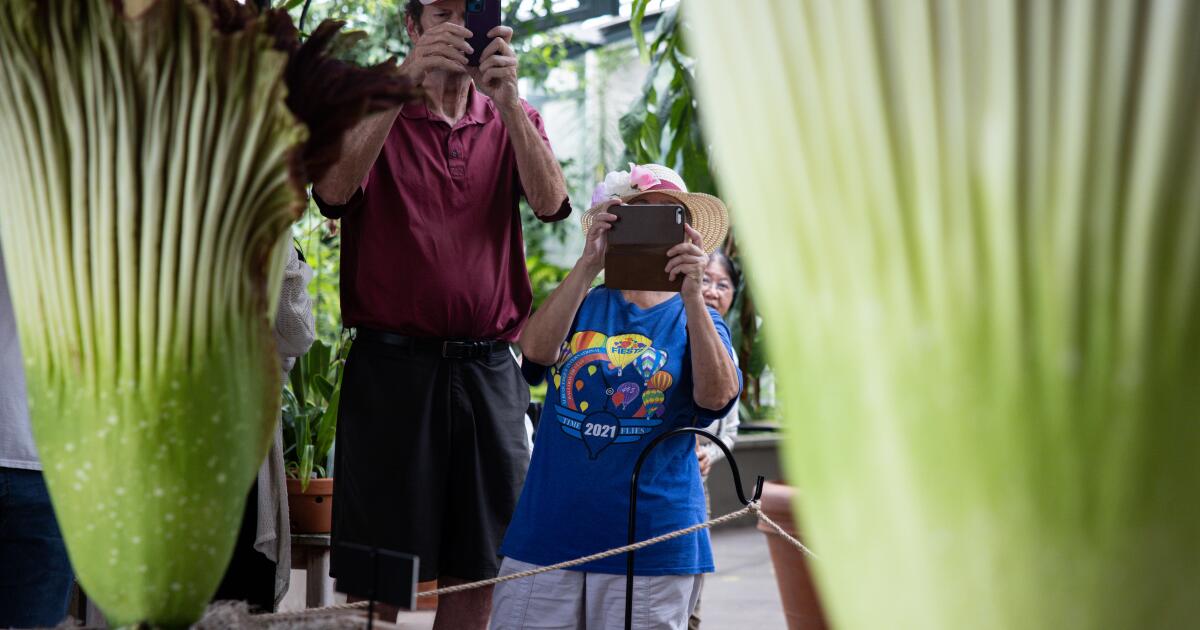
Like ‘rotten flesh’? Thousands rush to whiff double corpse flower at Huntington

Preliminary report reveals cause of death for Sen. Lindsey Graham

Life after LeBron: Austin Reaves embracing new role on new-look Lakers roster


Hungary’s parliament votes to oust president in latest anti-Orban move

A guard punched him on camera. It was still nearly impossible for him to sue

