Northeast
EXCLUSIVE: Stefanik steamrolls top conservative opponent; GOP leaders hand her commanding edge in NY primary

NEWYou can now listen to Fox News articles!
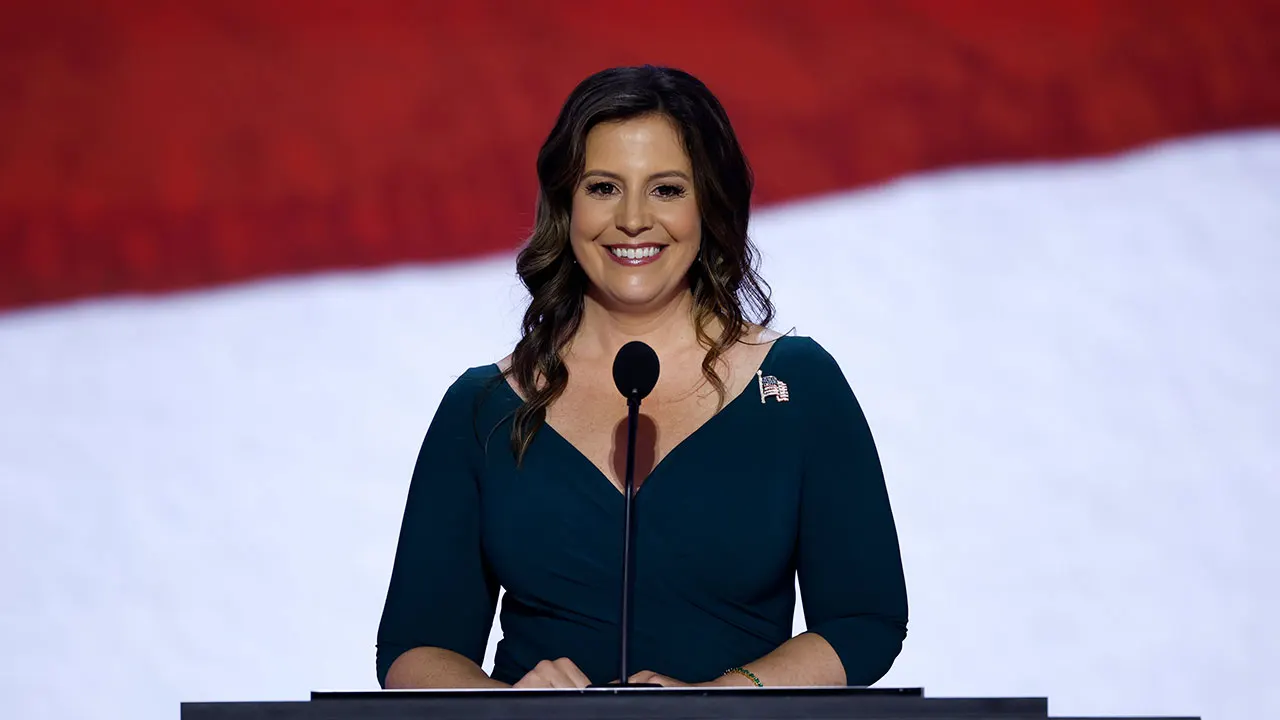
EXCLUSIVE: Rep. Elise Stefanik, R-N.Y., has opened a commanding lead in the New York Republican primary for governor, locking down endorsements from GOP county chairs, state lawmaker and Conservative Party leaders across the state, a consolidation of support that party officials say leaves Nassau County Executive Bruce Blakeman with virtually no path to the nomination.
Stefanik’s backing now accounts for more than 75% of the New York Republican Party’s weighted vote, an overwhelming advantage that makes her the presumptive nominee and would require any rival to petition his or her way onto the ballot.
Under New York’s rules, that means gathering at least 15,000 signatures from registered Republicans across the state, the Gothamist reported.
Party operatives describe the scale of Stefanik’s early support as unprecedented for a GOP gubernatorial race in recent cycles, especially this far ahead of the state convention.
POTENTIAL GOP CHALLENGER WARNS HOCHUL THAT A CORPORATE TAX HIKE WOULD BE A ‘DISASTER’ FOR NEW YORK’S ECONOMY
Rep. Elise Stefanik, R-N.Y., has all but clinched the GOP nomination in the primary race to be New York’s next governor in 2026, according to GOP chairs in the state. (Chip Somodevilla/Getty Images)
They say Stefanik’s name recognition, national fundraising network and county-level organizing have effectively closed the primary before it began, while Blakeman has failed to gain traction outside Long Island.
STEFANIK DECRIES HOCHUL AS ‘WORST GOVERNOR IN AMERICA’ IN FIERY 2026 CAMPAIGN LAUNCH
Rep. Elise Stefanik, R-N.Y. hopes to remove Democrat Kathy Hochul from office. Stefanik’s campaign says Hocul is “the worst governor in America.” (Faith and Freedom Coalition )
Stefanik enjoys a much broader-based candidacy across New York.
“Elise is honored to have earned endorsements from 58 GOP county party chairs representing over 75% of the New York Republican Party’s weighted vote at the convention,” Stefanik spokesperson Bernadette Breslin told Fox News Digital.
“According to two independent polls, Elise is the strongest candidate against Hochul and has the highest name ID and most favorable polling. Her strong support across the state only continues to grow as she earns more endorsements from prominent GOP leaders, including 40 out of New York’s 45 Conservative Party organizations. New York Republicans are wholly united behind the common goal of firing Kathy Hochul to save New York, and they have entrusted their full confidence in Elise to do so.”
That consolidation extends well beyond the county chairs. Fourteen Republican state senators, including Senate Republican Leader Rob Ortt, have endorsed Stefanik for governor. So have 10 county executives from across New York, adding weight from suburban, upstate and rural regions that traditionally anchor GOP turnout. The upstate chairs who have met with both candidates say Blakeman’s attempts to shift the narrative have fallen flat.
STEFANIK TO RELEASE NEW BOOK ON COLLEGE ANTISEMITISM AS SHE EYES BID FOR NY GOVERNOR
Nassau County Executive Bruce Blakeman, center, delivered remarks alongside elected officials and business leaders to oppose corporate tax increases Nov. 17, 2025. (Office of the County Executive)
“We appreciated County Executive Blakeman meeting with us during his visit Upstate, but nothing discussed at the meeting impacted our unwavering support for Elise Stefanik and her campaign to save New York,” said Liz Joy, chair of the Schenectady County GOP. “Elise has consistently delivered for our Upstate communities, and we trust she’s the right person to tackle the challenges New Yorkers face.”
Trish Turner, chairwoman of the Ontario County GOP and regional chair for the Finger Lakes, said Stefanik’s early organizing has impressed leaders statewide.
“It was a great honor to host Congresswoman Elise Stefanik in my home for a gathering of county Republican chairs from the Finger Lakes, Western New York, Central New York and the Southern Tier,” Turner said.
“The energy and enthusiasm in the room were inspiring, and it was clear that many leaders from across our regions are excited about her candidacy for NYS governor. Congresswoman Stefanik’s vision, leadership and deep commitment to New Yorkers were evident throughout our conversations. The Upstate Chairs who attended expressed not only strong support, but also genuine enthusiasm to get involved and help drive momentum in the months ahead.”
Dutchess County GOP Chairman Mike McCormack echoed that sentiment, telling Fox News Digital, “I’m with Elise, and that’s not changing. We need to focus on saving our state, and she’s the hope for New York.”
KEY TRUMP ALLY JUMPS INTO NEW YORK GOVERNOR’S RACE DAYS AFTER SHOCKING MAMDANI MAYORAL VICTORY
President Donald Trump is greeted by Bruce Blakeman, county executive of Nassau County, New York, after arriving at the Republic Airport on Air Force One Sept. 26, 2025 in Farmingdale, N.Y. (Anna Moneymaker/Getty Images)
Even as Stefanik’s margins grow, Blakeman has continued visiting counties upstate and has attempted to contrast himself as an executive-focused candidate who leads one of the state’s largest suburban counties. In prior public remarks, Blakeman has argued Stefanik’s national profile draws attention away from New York-specific issues. But GOP chairs say those arguments haven’t changed their “unwavering support” for Stefanik.
Blakeman’s electoral record has also become a talking point among Republican officials who describe Stefanik as a proven winner. Over the course of his multi-decade political career, Blakeman has lost a statewide comptroller race by more than 30 points in 1998, a Nassau County Legislature race in 1999, dropped out of the 2009 New York City mayoral contest, lost a 2010 U.S. Senate primary by more than 20 points and lost a 2014 congressional race in NY-14, the same year Stefanik won her seat.
Stefanik, by contrast, has never lost an election and raises annually what Blakeman has raised over multiple cycles. Stefanik secured more than 72% of the weighted vote on the very first day she launched her gubernatorial campaign and has only expanded her margin since.
Rep. Elise Stefanik, R-N.Y., leaves a House Republican Conference meeting with President Donald Trump on the budget reconciliation bill in the U.S. Capitol May 20, 2025. (Tom Williams/CQ-Roll Call, Inc via Getty Images)
With the backing of 40 of New York’s 45 Conservative Party organizations, which control their own separate ballot line, she is positioned to secure both the GOP and Conservative nominations long before either party’s convention. Early unity around Stefanik could allow Republicans to focus resources on the general election well ahead of schedule, a rare advantage for GOP candidates in deep blue New York.
The New York Republican Party’s convention is scheduled for early next year, with the petitioning period opening soon after. If Stefanik’s level of support holds through the convention, she would secure the nomination outright, leaving any challenger to attempt the 15,000-signature petition process instead of running through the party’s formal endorsement.
CLICK HERE TO DOWNLOAD THE FOX NEWS APP
For now, pollster James Johnson calls the primary a “done deal.”
“Stefanik seems to dominate the Republican vote. It’s a done deal,” Johnson said.
Read the full article from Here



This is a web edition of GBH Daily, a weekday newsletter bringing you local stories you can trust so you can stay informed without feeling overwhelmed.
Sign up here!
🥵Very hot, with highs around 97 degrees. Sunset is at 8:19 p.m.
GBH’s Dan Murphy captured Abby Evangelista and her corgi, Rocko, at Sail250 this weekend. “Rocko gets dressed up for lots of occasions … sometimes just to go to the store, and he does so great with meeting people,” Evangelista said. Keep reading for more photos from the tall ships.
A year ago today firefighters were extinguishing flames at the Gabriel House, an assisted living facility in Fall River. Ten people died in the fire, a tragedy for their loved ones and a scary moment for about 18,000 people who live in assisted living facilities across the state.
Now state officials have created new regulations for fire safety in assisted living facilities, going into effect later this month. Fire departments will inspect these facilities once a year, and facilities will need to submit emergency plans and train their workers on what to do in case of a fire.
GBH’s Craig LeMoult found that neither the new regulations nor state or federal fire codes address checking sprinkler systems. Some of the sprinklers at the Gabriel House weren’t working the night of the fire, including the ones in the room where it started.
“Had the sprinklers functioned properly, we’re not having this conversation right now. It is maybe a single fatality fire, but certainly not more than that,” Fall River fire chief Jeffrey Bacon told LeMoult. “The good news is that some of the sprinklers did function. And had they not, we would be here talking about 20, 30, 40 victims.” You can read the full story here.
Four Things to Know
1. Colleagues and friends are remembering Louisa Gag, a Boston transportation planner killed last week when a truck driver hit her as she rode her bike near the Roxbury Crossing MBTA stop. Gag grew up in Roslindale and worked for the city on expanding the BlueBikes bike-share program. Before that, she worked for the LivableStreets Alliance, co-authoring a plan to help cities stop traffic deaths. You can see her talk about her work in this 2019 video.
“In moments like these, there is a tendency to reduce the person to the way they died and to their activism,” said Stacy Thompson, a former executive director of LivableStreets. “While we may know Louisa as a deep champion of the city and a close advocate, she’s also a Boston Latin [School] kid. She’s also, like, the most infectious, hilarious person you’ve ever met. She’s also a daughter. It’s so important to us right now for her life to not be reduced to how she stopped living.”
2. More than 4,000 nurses are back at work at Brigham and Women’s Hospital. They went on a one-day strike last week, and hospital administrators kept them from returning to their jobs for another five days. The Massachusetts Nurses Association and Brigham management have been negotiating a contract for seven months, going back and forth over wages, health insurance premiums and staffing levels.
“It’s exciting, but also frightening,” said Christine Forgeron, a cardiac nurse at Brigham and Women’s Hospital. “I don’t know what to expect when we go back to our patients. What happens next, because we still don’t have a contract,is the most unsettling part.”
3. Michael Walsh, a Republican candidate for state attorney general, will be on the primary ballot in September despite what Superior Court Judge Jeffrey Karp called “substantial evidence in the record of voter fraud.” The case began when Adam Roof, executive director of the Massachusetts Democratic Party, submitted a complaint accusing a signature gatherer Walsh’s campaign hired of either falsifying or not meeting state requirements for 1,021 of the 10,677 signatures they submitted. Candidates for statewide office need 10,000 signatures to get onto the ballot.
Karp said that there was indeed evidence that the signatures came not from voters themselves but from a list of registered voters the state’s Republican party gave the signature gatherer. But the case fell on a technicality: state law required Roof, the Democratic party official, to submit his complaint by certified mail, and he did not do so. The state’s highest court still has to decide what will happen to Anne Manning Martin, a Republican candidate for lieutenant governor who used the same signature gatherer.
4. Residents of towns around the Quabbin Reservoir flooded into the Massachusetts Water Resources Authority meeting last week to ask for a better deal. The Quabbin supplies clean drinking water for dozens of cities and towns in the eastern part of the state. Right now, the state requires towns like Shrewsbury, Belchertown, Orange and Pelham to keep their development in check to keep the Quabbin clean. Though those towns get some money in return, local officials said it’s not enough to cover their costs.
“We are protecting this watershed by foregoing any type of economic development, which is a cornerstone of providing the basics of education [and] public safety,” said state Rep. Aaron Saunders, of Belchertown. “It’s time for a change, and not an incremental one.”
Tall ships sail into Boston
Dan Murphy / GBH News
Tomorrow is the last full day of Sail Boston, the city’s tall ships celebration. The ships will leave our harbor Thursday morning. GBH photographer Dan Murphy was there over the weekend to capture the Parade of Sail.

Dan Murphy / GBH News
The Esmeralda, a ship from Chile, sailed by Castle Island.
Dan Murphy / GBH News
Carolyn Gustine carried her son, Patrick, on her shoulders.
You can see the full photo essay here.
Dig deeper:
–Spectators line Cape Cod Canal to see tall ships make their way to Sail250 in Boston
–The World Cup transformed Greater Boston. Will it last?
–Department of Agricultural Resources celebrates Ice Cream Trail program
GBH Daily

It’s going to be another hot week in the Pittsburgh area with high temperatures back into the 90s.
Any Alert Days Ahead? I have us hitting 90 degrees starting on Tuesday through Friday, so that stretch of 4 days are First Alert Weather Days. A severe storm setup looks to be in place for Saturday, so we may also see a FAWD issued for Saturday.
Aware: So far this year, we have seen five 90° days. Tuesday may be our 6th of the year.
Heat index values today are expected to be in the mid-90s, near 100 degrees.
The hottest days of the week will be on Wednesday & Thursday. I have both days seeing highs at 92°.
Rain chances start to tick back up on Friday, late in the afternoon. I have Friday highs still hitting 90, with highs in just the mid-80s on Saturday and Sunday.
There still remains a concern for severe weather on Saturday, with all the ingredients in place. Right now, the chance looks low due to morning rain keeping instability numbers low.
Congress again considering making Daylight Saving Time year-round
I am not surprised that the U.S. Congress is taking up making Daylight Saving Time standard year-round again. The Sunshine Protection Act is the latest attempt by Congress to solve the issue of time and daylight. It’s a plan that you may not realize has been attempted before, and people disliked it so much that it didn’t even last a year.
Let’s start with a brief history of changes to the clock and what we will call Daylight Saving Time. Before World War 1, there was very little in the way of guidelines for states to follow when it came to time. WWI changed things, as the government dictated that Daylight Saving Time be in effect until the war was over in the hopes of conserving energy. Farmers were glad after the war to see the changes come to an end because the later sunrise in the winter meant less time to get out in the fields and get produce to market. Overall, the move to permanent DST was seen as unpopular.
The next big push for DST came during World War 2, and again, the reason for the change was the conservation of energy. Franklin Roosevelt, the president, called year-round DST ‘war-time.’ Once again, after the war, states were allowed to do their own thing. There remained no real federal policy on DST through 1966. That all changed in 1966 with the passing of the Uniform Time Act, signed into law by Lyndon Johnson. This put into effect a mix of daylight saving time and standard time, similar to what we have today; standard time lasted around 3 months longer than what we have today.
Our next energy crisis came in 1967 with the worldwide oil embargo by the Organization of Arab Petroleum Exporting Nations (OAPEC). Our Congress decided to try out a year-round DST across the country. They put the trial period beginning at the start of 1974 and going through the spring of 1975. What could go wrong, right? Well, everything. The public hated the changes, and even worse, nearly 10 kids were killed in early morning hours that first winter period due to low visibility. A program that was supposed to last just two winter seasons was cancelled before we even got to the second winter.
It appears to be a big push again to get Congress to push for permanent Daylight Saving Time hours. I hope they are considering the impact on everyone. For Pittsburgh, that would mean sunrise on some days in the winter around 9 a.m. Sunsets during that time would still be before 6 p.m. The issue is that during the wintertime, Pittsburgh only has around nine and a half hours of ‘daylight.’ We have to figure out the best way to align our clocks to that time. I think what we are doing right now is pretty close to perfect. What do you think?

Florida’s tallest flag pole raises new Stars and Stripes on Independence Day
Florida’s tallest free-standing American flagpole now stands 250 feet tall at Bernice Braden Park in Cape Coral
You might have seen Connecticut’s state flag in government buildings and schools and wondered what the meaning was behind its design.
Adopted by the General Assembly in 1897, the Flag of Connecticut features a navy blue background with a white shield. Three grapevines with purple grapes are on the shield and oak leaves and acorns can be found on the shield’s edge.
Below the shield is a banner which features the phrase “Qui Transtulit Sustinet” written in Latin. According to ConnecticutHistory.org, that phrase translates to “He who transplanted still sustains,” which honors the colonists who moved to the state from England.
Per Encyclopedia Britannica, the three grapevines have two competing interpretations: they represent either the three oldest settlements in the state (Hartford, Wethersfield and Windsor) or the three colonies that merged to form Connecticut (Connecticut Colony, Saybrook Colony and New Haven Colony).
Why is the Connecticut flag blue?
According to ConnecticutHistory.org, the blue comes from Connecticut’s Civil War military flags. During the Civil War, Connecticut regiments had flags featuring blue backgrounds. ConnecticutHistory.org reports that when the legislature adopted an official flag in 1897, they kept the color that military tradition had already established.
Origins of Connecticut’s state flag
Per ConnecticutHistory.org, Connecticut did not have an official state flag until 1897. The site reports that in 1895, the Anna Warner Bailey Chapter of the Daughters of the American Revolution in Groton pushed for an official flag to display in their new meeting room.
Governor Owen Vincent Coffin introduced a bill on May 29, 1895, which ConnecticutHistory.org says caused the legislature to subsequently form a committee. After several designs were submitted, the Connecticut General Assembly adopted the flag in 1897.
Connecticut’s coat of arms, which includes the shield, grapevines and banner featured on the state flag, was not formally standardized until 1931, according to USASymbol.com. The website also says color standards for the flag came in 1956, when the Secretary of the State’s office developed uniform specifications.
-
 Sports5 minutes ago
What will the Sparks do next? The franchise is at a crossroads after firing its GM
-
World17 minutes ago
Euronews explains: can Hungary's PM Magyar really remove president Sulyok from office?
-

 News47 minutes ago
Mexico files criminal complaints in US over migrant deaths in custody
-

 Videos2 hours ago
New explosions near Iranian port cities, says state media | BBC News
-

 Los Angeles, Ca2 hours ago
Big rig crash spills cinder blocks on 101 Freeway; lanes blocked in Tarzana
-
 Detroit, MI3 hours ago
How to watch ‘The Odyssey’ in IMAX, 70mm and more in metro Detroit
-

 San Francisco, CA3 hours ago
Sold-Out SF Marathon 2026: The Races, Routes and Road Closures (Plus How to Watch It All) | KQED
-

 Dallas, TX3 hours ago
Top 10 Dallas Cowboys of 2026: Rashan Gary is Complete EDGE Dallas Needed

