Northeast
DOJ sues six states for refusing to turn over voter registration rolls, warns ‘open defiance’ of federal law

NEWYou can now listen to Fox News articles!
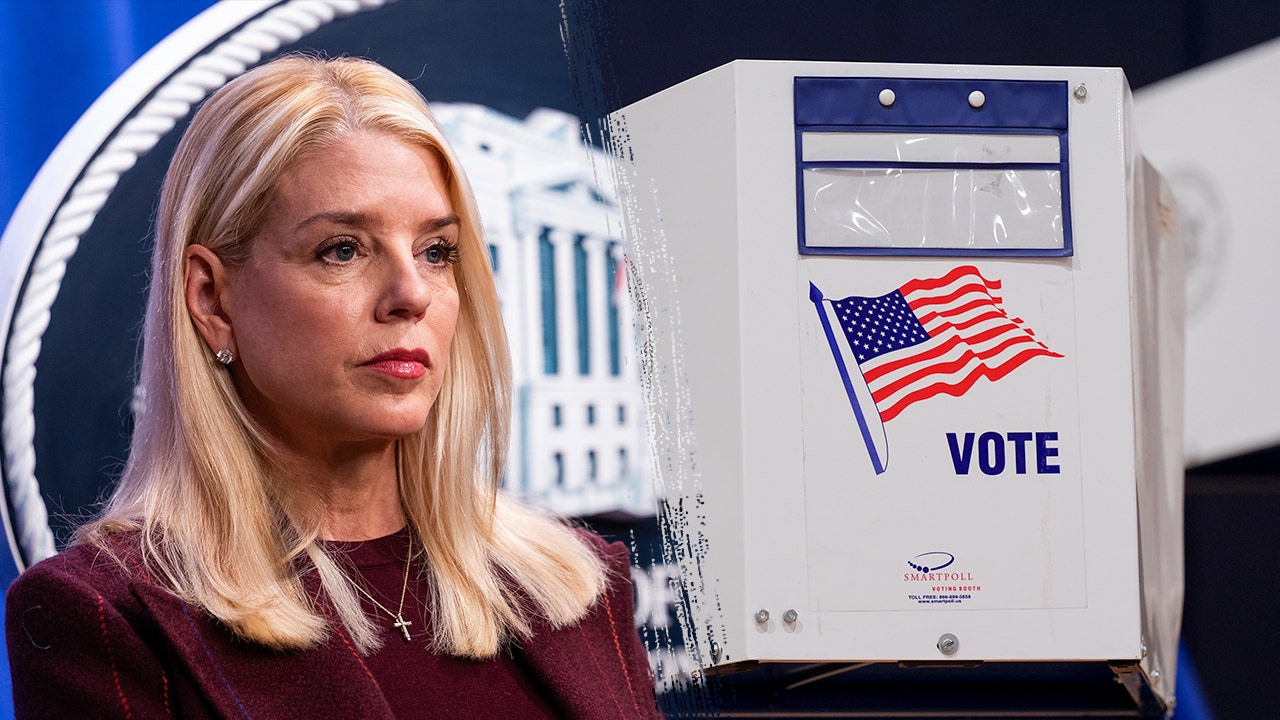
The Justice Department filed lawsuits Tuesday against six blue states: Delaware, Maryland, New Mexico, Rhode Island, Vermont and Washington, accusing them of violating federal law by refusing to provide statewide voter registration rolls upon request.
The complaints, filed by the DOJ’s Civil Rights Division, argue the states failed to meet their legal obligations under the National Voter Registration Act (NVRA), the Help America Vote Act (HAVA), and the Civil Rights Act of 1960, three federal statutes that require states to maintain accurate voter rolls and make those records available for inspection.
Attorney General Pam Bondi said state refusals to disclose the lists undermine the transparency and accountability those laws were designed to guarantee.
“Accurate voter rolls are the cornerstone of fair and free elections, and too many states have fallen into a pattern of noncompliance with basic voter roll maintenance,” Bondi said in a statement announcing the lawsuits. “The Department of Justice will continue filing proactive election integrity litigation until states comply with basic election safeguards.”
NEWSOM’S FIERY CLAIM DOJ HAS ‘NO BUSINESS’ MONITORING CA ELECTION BLASTED BY TRUMP OFFICIAL: ‘CALM DOWN BRO’
The Department of Justice announced a new suit against six blue states Tuesday over access to voter roll data. (Getty Images)
According to the DOJ, the agency formally requested each state’s current, statewide voter registration roll and did not receive the required records. In each lawsuit, the department argues that Congress gave the attorney general clear authority to demand the production, inspection, and analysis of voter registration data to ensure compliance with federal law.
Assistant Attorney General for Civil Rights Harmeet Dhillon, who leads the Civil Rights Division, said the department is escalating enforcement efforts ahead of the 2026 election cycle.
“Our federal elections laws ensure every American citizen may vote freely and fairly,” Dhillon said. “States that continue to defy federal voting laws interfere with our mission of ensuring that Americans have accurate voter lists as they go to the polls, that every vote counts equally, and that all voters have confidence in election results. At this Department of Justice, we will not stand for this open defiance of federal civil rights laws.”
FIRST TIME VOTING? HERE IS THE ULTIMATE GUIDE TO BALLOT BOXES, CRITICAL ISSUES ON ELECTION DAY
Assistant Attorney General for Civil Rights Harmeet Dhillon arrives for a news conference at the Justice Department on September 29, 2025 in Washington, DC (Andrew Harnik/Getty Images)
The DOJ says the lawsuits are part of a broader effort to enforce voter-registration transparency requirements that Congress put in place to ensure public confidence in election administration. NVRA requires states to maintain accurate voter lists and produce them upon request; HAVA mandates states modernize and safeguard voter registration systems; and the Civil Rights Act of 1960 authorizes the government to inspect and copy certain election records, including voter rolls.
Fox News Digital has reached out to elections officials in all six states for comment.
The Justice Department filed lawsuits against six blue states: Delaware, Maryland, New Mexico, Rhode Island, Vermont and Washington, accusing them of violating federal law by refusing to provide statewide voter registration rolls upon request. (Patrick T. Fallon/AFP via Getty Images)
Federal officials have increasingly pressed states on voter roll compliance issues in recent years, arguing that transparency around registration lists is essential to maintaining accurate records, preventing administrative errors and ensuring voters have confidence in election outcomes. The DOJ says the six states named in these new suits have repeatedly failed to meet the department’s requests.
The cases will now move forward in federal court, where judges could order the states to turn over the voter lists, impose compliance deadlines, or issue injunctions requiring adherence to federal law.
CLICK HERE TO DOWNLOAD THE FOX NEWS APP
Election law disputes over voter roll access and maintenance have escalated nationwide as states prepare for the 2026 midterms and the DOJ’s latest actions show an aggressive legal posture toward states that fail to meet federal disclosure rules.
The department says it will “continue filing proactive election integrity litigation until states comply,” and has left open the possibility of additional lawsuits.
Read the full article from Here



Boston taxis will be able to pick up passengers who request Uber and Lyft rides under a new pilot program announced by Mayor Michelle Wu Tuesday.
Customers who get a cab through a ride-hailing app will still see the cost upfront on their phone as opposed to the typical taxi fare structure.
“The goal of the pilot is to give Boston passengers more options to hail a taxi and to allow Boston’s licensed taxis to participate directly in meeting the demand for trips generated through Uber and Lyft,” the city said in a news release.
Wu said the yearlong pilot will allow cab drivers to earn more while reducing wait times for passengers.
“We’re thankful for the collaboration and advocacy from our taxicab drivers to introduce this new transportation service, and excited to support the people who keep our city moving,” the mayor said.
The program excludes taxi trips to Boston’s Logan Airport, and allows the Hackney Division to make exceptions during some special events in the city.
Uber’s website informs users “you might get matched with a Boston taxi driver.”
“If so, you’ll enjoy the same 24/7 availability and affordable prices you know with UberX while riding to your destination in a cab,” Uber says.
The city said it expects taxi drivers will now be able to “access a significantly larger number of trips than most currently serve.”
“This change is a major boost for taxi drivers in Boston and the passengers we serve,” said Balwinder Gill, who has owned and operated a Boston taxi for 25 years.

The Pittsburgh Steelers’ pair of young quarterbacks received some refreshing news regarding Brendan Sorsby.
With the NFL opting not to hold a supplemental draft this summer and thus ensuring Sorsby’s only other opportunity to enter the league is by declaring for the 2027 NFL Draft, both Will Howard and Drew Allar won’t face any competition from another up-and-coming signal caller this summer.
While next year’s draft is still the target for the Steelers when it comes to finding a franchise quarterback, having to kick the can down the road in this instance means Howard and Allar now have additional time to prove themselves and aren’t at risk of losing their respective roles in 2026.
How Howard Benefits
Unless Pittsburgh was willing, or planning, to carry four quarterbacks had it landed Sorsby in the supplemental draft before it was nixed, Howard was all but certain to part ways with the organization.
Perhaps he would’ve latched back onto the practice squad if he were cut and subsequently cleared waivers, but the 24-year-old would’ve otherwise become a complete afterthought behind Sorsby and Allar.
The outlook on Howard ever becoming a long-term starter for the Steelers is grim at best. Because Sorsby won’t be on the roster this season, however, his battle with Mason Rudolph for the backup job behind Aaron Rodgers won’t be rendered obsolete.
It’s possible Howard could win it over Rudolph and show enough leading into the 2027 campaign that he could earn the starting role to open the year before Allar or a rookie takes over.
That feels like it’s looking too far ahead, though. In the present, the fact that Sorsby isn’t on the team means Howard’s odds of cracking the 53-man roster remain rather high.
Allar Is In a Good Spot
Assuming trading Allar was never on the table regardless of their potential plans if they had brought Sorsby in, the Penn State product was always going to be on the Steelers’ roster in 2026.
The third-round rookie would’ve had far more of a convoluted path to any sort of meaningful role with the team had Sorsby shared the quarterback room with him, though.
Their strengths are incredibly similar, though Sorsby has a significant leg-up over Allar in terms of his mobility, which could’ve ultimately been the difference down the line in any position battle between the two.
It’s still too early to champion Allar, and it’s likely that a first-round quarterback in the 2027 draft would usurp him if that’s the direction Pittsburgh ends up going in.
Nevertheless, with less pressure and more focus from the coaching staff on helping him develop than there would’ve been if Sorsby were in town, Allar doesn’t have to worry about competing with another signal caller when he isn’t really ready to do so.
Make sure to bookmark Steelers On SI, and find our podcast All Steelers Talk on YouTube or anywhere you listen!
 Add us as a preferred source on Google
Follow

Merrill Lynch has hired a veteran Morgan Stanley manager to help oversee branches in Connecticut, western Massachusetts and portions of New York.
Jairzinho “Jazz” Skair joined Merrill as a market manager overseeing offices in Hartford, New Haven, Springfield, Glastonbury, West Hartford, Farmington, Mystic, Guilford, Southbury and Ridgefield, a Merrill spokesperson confirmed. He reports to Central Shoreline Connecticut Market Executive William Cholawa, who returned to the thundering herd in 2024 after around a decade at UBS.
Skair had most recently been a branch manager for Morgan Stanley in Hartford, according to his LinkedIn. He had started his career in the legal department at UBS Wealth Management USA in 1998 and served in a number of finance, sales and management roles, including branch manager in Westport, before joining Morgan Stanley in 2023.
“I had the opportunity to work closely with Jazz during my time at UBS and saw firsthand his passion for coaching, developing people, and driving results,” Cholawa said in a LinkedIn post announcing the hire. “He is a servant leader who believes in being Authentic, Present, and Useful, and those principles are reflected in the way he leads and supports others.”
A Morgan Stanley spokesperson did not immediately return a request for comment.
Merrill and its wirehouse peers have been shuffling and poaching field leaders as they seek to bolster recruiting in an increasingly competitive market.
To that end, Merrill said it had hired two father-son teams with a combined $560 million in client assets. Both joined on June 17.
Roy Savarick and his son, Evan, joined Merrill from Wells Fargo Advisors where they managed around $280 million in assets, according to the Merrill spokesperson. They generated around $2.3 million in annual revenue.
The elder Savarick, a 44-year industry veteran, is based in the firm’s Florida Tropics market led by Jason Edelmann. Evan, who has 12 years of experience, works in New York City from Merrill’s Park Avenue office led by Joe Doonan. They had joined Wells in 2022 from Morgan Stanley, according to BrokerCheck records.
Separately, Brandon K. Pribyl and his sons, Tobey and Bailey, joined Merrill from Baird Private Wealth Management. They had around $280 million in assets and are based in Davenport, Iowa, according to the spokesperson.
The team, which generated around $1.9 million in annual revenue, is part of the Mid Land Market led by Will Cohen. The senior Pribyl had spent the first decade of his career at Merrill. He was not registered between 2009 and 2016 when he joined with Baird, according to BrokerCheck.
(Updated with clarification on the market manager role.)
-

 Los Angeles, Ca8 minutes ago
Air quality concerns remain as the Boyle Heights warehouse fire continues to burn
-

 Detroit, MI26 minutes ago
Wenceel Pérez returns home, but when will he return to Detroit Tigers?
-

 San Francisco, CA38 minutes ago
San Francisco Supervisor Jackie Fielder to return following mental health leave
-
Dallas, TX41 minutes ago
Impact: How Jeffery Simmons’ extension could affect Quinnen Williams
-
Miami, FL46 minutes ago
Jaylen Brown bidding war? Haslem drove this? All the fallout from Antetokounmpo trade to Miami
-

 Boston, MA53 minutes ago
Your next Uber ride in Boston could be a taxi
-

 Denver, CO56 minutes ago
Nuggets 2026 NBA mock draft tracker 2.0: What national experts predict Denver will do
-

 Seattle, WA1 hour ago
How to watch Bosnia vs. Qatar in next Seattle World Cup match


