Northeast
Dem elites accused of slapping small-town cops with ‘witch hunt’ fines twice their pay

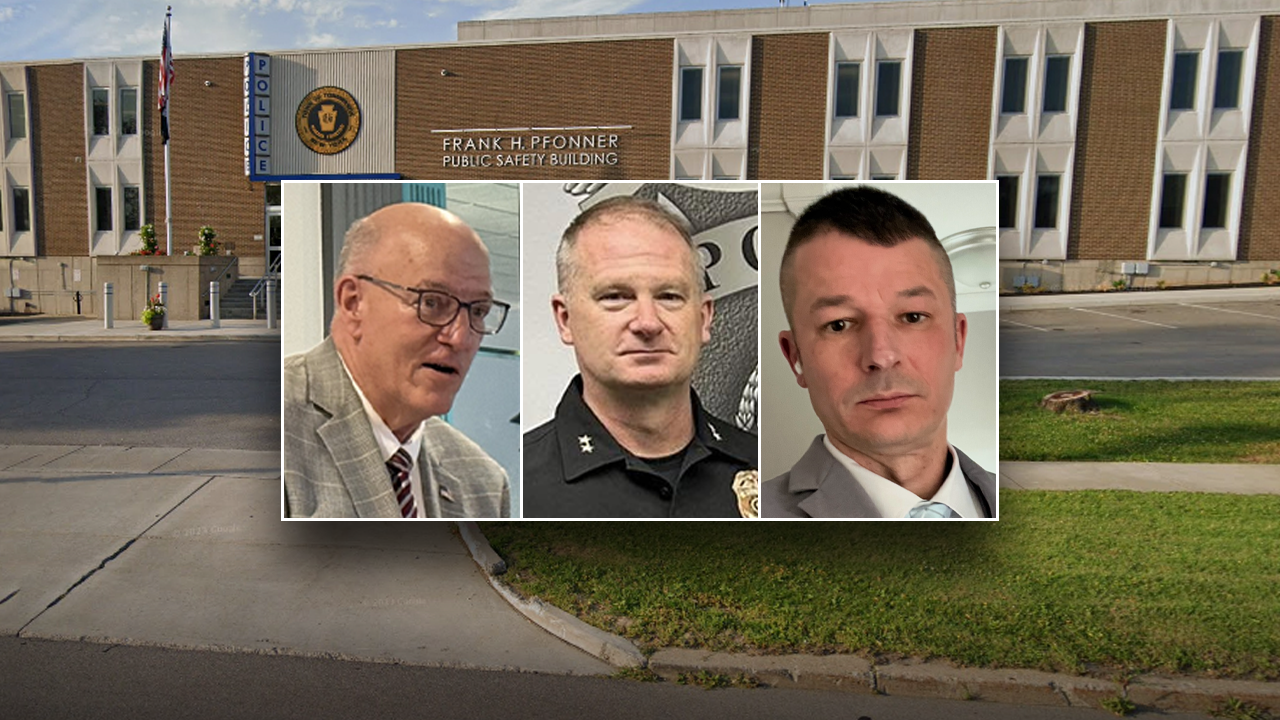
Dozens of officers in a small-town New York police department near the Canadian border have been fined for allegedly taking part in an unauthorized labor strike during a snowy stretch this winter.
The union described the fines as retaliation and an abuse of power that denied the officers due process.
One of the officers says the allegations aren’t true. He went to work, participated in on-duty training and even made a drunken driving stop during a span when it snowed “every day.”
“They’re upset that we didn’t make them enough money and meet their perceived ticket quota,” said Andy Thompson, a Tonawanda Police officer and the president of the department’s union, the Tonawanda Police Club.
NEW YORK PRISON GUARDS FIRED FOR IGNORING DEAL TO END STRIKE, THOUSANDS SET TO LOSE HEALTH INSURANCE
Tonawanda Police Chief James Stauffiger after an award ceremony in March. The local police union is pushing for his ouster after members were accused of an unauthorized strike. (Town of Tonawanda Police Department)
Tonawanda Police Chief James Stauffiger, whom the union is asking town residents to oust, said Thompson’s allegations are “without merit.”
“I stand behind the charges filed against the union with the Public Employees Relations Board and the individual officers,” he told Fox News Digital. “The process needs to unfold fairly and thoroughly.”
Thompson is among the nearly 50 officers accused of going on strike without authorization for one hour a day over a nine-day stretch and has had two hours of pay docked for each of those days, according to a letter he received that was signed by Tonawanda Town Supervisor Joe Emminger.
BLUE CITY POLICE SERGEANTS SAY THEY’RE PAID LESS THAN SUBORDINATES AS BILLIONS GO TO MIGRANTS
“We didn’t strike. We showed up to work every day. We did our jobs every day,” Thompson told Fox News Digital. “We didn’t write enough tickets, and we didn’t put enough money in the town’s coffers. And they decided they’re going to fine each officer.”
Ticket quotas are illegal under New York law, he noted, and workplace retaliation can be, too.
Between late January into February, the town got so much snowfall it ran out of road salt, and there was an increase in police calls. Officers were also required to spend 16 hours doing mandatory training with new department-issued guns, all during a staffing shortage after seven officers retired or left at the start of the new year, Thompson told Fox News Digital.
The Tonawanda Police Department headquarters (Google Maps)
OBAMA-ERA PROSECUTOR’S PROBE INTO BLUE STATE POLICE RACIAL BIAS CLAIMS CALLED ‘UNTENABLE’ FOR TROOPERS
This year, Tonawanda Police has issued 123 tickets, according to a filing with New York’s Public Employment Relations Board. Between 2021 and 2024, the department issued between 439 and 653 over the same period. Town leaders alleged in the document that the decrease is the result of officers striking without permission in violation of the state’s civil service laws.
“It’s unheard of,” said Mike O’Meara, the president of the Police Conference of New York, the state’s largest police union. “They’re making this up as they go along.”
He called the town’s labor complaint against Tonawanda officers “unprecedented,” as well as the fines, which are double the hourly wage of officers for each hour they were allegedly striking.
“It may be somewhat unprecedented to claim that a reduction in the issuance of traffic tickets constitutes a strike,” said Jerry Cutler, author of “Legal Guide to Human Resources” and a Columbia University lecturer. “However, the critical issue from a legal standpoint is whether the employees have abstained from performing their duties in the normal manner.”
Andy Thompson is the president of the local police union, the Tonawanda Police Club, and was accused of taking part in an unauthorized strike. (Andy Thompson)
Experts say that, feud aside, it boils down to whoever has more convincing evidence.
“A reduction in ticket volume may point to a concerted effort to interfere with the employer’s operations, in which case the action would likely be found to constitute an unlawful strike,” Cutler told Fox News Digital. “Alternatively, the evidence may suggest some legitimate reason for the reduced ticket volume – or that this is not an apt means of comparison – which would lead to a finding that the law has not been violated.”
Department leaders say officers went on strike to protest disciplinary measures taken against Tonawanda Officer Bikramjit Singh, a U.S. Army veteran accused of mishandling evidence while investigating a potential drug deal.
“He had his body camera on. He opens this water bottle. There’s a bag in there,” Thompson said. “He looks at the bag. … He says it’s garbage. He wraps it up in his glove, and he disposes of it.”
However, a suspected drug dealer and suspected drug user later told police there were drugs in the bag, and department officials moved to have Singh fired for throwing it out, Thompson said. The alleged drugs were never recovered, but Singh wound up resigning since being fired could have cost him his law enforcement certifications, Thompson said.
Tonawanda Supervisor Joe Emminger speaks during his State of the Town address Feb. 7, 2025. He is involved in an ongoing dispute with the local police union. (Town of Tonawanda/Facebook)
Tensions were already simmering between the rank-and-file and Stauffiger, an Emminger appointee who they accuse of unfairly forcing Singh out and withholding paperwork that would allow him to find new employment in law enforcement in another department.
Stauffiger, a 30-year member of the department, was appointed chief five years ago as part of an effort to eradicate corruption from the department. Thompson, too, represents new leadership, having been president of the union for just over a year.
“There’s no due process, and this whole thing was done between the supervisor and the law firm that represents the town, who also donates large amounts of money to the town supervisors’ campaign and the Town of Tonawanda Democratic Party’s campaigns,” Thompson said, citing public records. “So, it’s more of a witch hunt than anything.”
Emminger did not respond to a request for comment. Neither did the town’s law firm.
Thompson believes the allegations mark the first time the state’s civil service law has been used to punish police officers for failing to meet “quotas” after he says the town lost money due to a decrease in traffic citations issued during the snowfall.
“This is going to end up being case law by the time this is all over,” Thompson said. “This has never been done to a police union before.”
CLICK TO GET THE FOX NEWS APP
The union has launched a public campaign urging residents to demand that local leaders remove Stauffiger, who they accuse of retaliation and harassment and withholding “basic gear,” including winter coats.
According to the union, during the time officers were allegedly on strike, the department still made seven drunken driving arrests, issued more than 300 tickets and responded to nearly 2,000 more calls for service than the same period a year earlier with 14 fewer officers.
“The real losers are town residents,” O’Meara told Fox News Digital. “They’re saying, ‘Make sure you tag the residents of this town.’”
Read the full article from Here


How can people possibly afford to live in one of the most expensive cities on the planet? It’s a question New Yorkers hear a lot, often delivered with a mix of awe, pity and confusion.
We surveyed hundreds of New Yorkers about how they spend, splurge and save. We found that many people — rich, poor or somewhere in between — live life as a series of small calculations that add up to one big question: What makes living in New York worth it?
Weixun Hu enjoys what might sound like the ultimate professional perk. New Yorkers pay some of the country’s highest taxes on their income, more than $12,000 on average per person between state and local governments. But Mr. Hu’s income tax this year? $0.
That’s because Mr. Hu, 32, who was born in Guangzhou, China, conducts social development research at an international organization, where most employees are exempt from national income taxes or reimbursed for the cost. His gross and net income are one in the same; he earns roughly $110,000 after his insurance and pension contributions.
Mr. Hu became one of New York City’s 3.1 million foreign-born residents nearly three years ago, after reassignment from a post in Bangkok in the summer of 2023. But he quickly ran into a hurdle: finding an apartment with no credit history, no tax returns and no one to co-sign a lease.
“It sounds very cool that you don’t pay taxes,” Mr. Hu said. “It also creates a lot of problems.”
He discovered that many of his co-workers landed in a handful of pricey residential developments including Stuyvesant Town. Yet renting there felt worlds apart from Thailand’s capital city, where a luxury studio in a high-rise condo with a rooftop infinity pool and premium gym might run $600 per month.
So he found a studio in Long Island City, Queens, where he has in-unit laundry and falls asleep to the sound of waves hitting the shore near Hunters Point South. His employer subsidizes $700 of his $3,900 rent, and utilities and internet cost about $150 monthly.
“It’s much better value compared to renting in Manhattan,” he said.
Saving for Tomorrow
A good deal of young adults in New York City don’t know how to drive, and expect to remain renters for most of their lives. Not Mr. Hu.
He puts away $2,000 or so a month into a high-yield savings account, aspiring to buy a car. His sights are set on a Mazda CX-5. But he expects he’ll need to pay upfront in cash, another consequence of lacking a credit or tax history — and it’ll take about three more years to build up enough.
Eventually, he wants to own a home. “I know most people in New York City don’t care,” he said. “But for me, it’s very important.”
Mr. Hu also supports his parents in their retirement, sending about $3,000 every three months. As their only child, he feels both a sense of guilt for living about 8,000 miles from home — and an obligation to pay them back for their sacrifices.
“People will say, ‘Oh, you’re single. You don’t have a wife. You don’t have kids,’” he said. “‘So all your money is yours.’”
“And I’m like, ‘Excuse me, my parents are still alive.’”
In other ways, though, Mr. Hu fits the profile of an everyday bachelor: He rarely cooks meals at home. “My oven is basically storage space.”
Rather, he searches for affordable deals on Too Good To Go, a popular app where restaurants sell excess food at a discounted price. His No. 1 spot is Chinese Musician in Greenpoint, which offers a three-course meal for $9.
Sometimes, Mr. Hu does the $16 tonkotsu ramen at Nishida Sho-ten on 49th Street for lunch, an $8 lamb over rice meal for dinner from the halal truck in front of Bellevue Hospital or a hot dog for $3.25 from Gray’s Papaya. He’ll swing by the Dollar General in Astoria to stock up on his favorite drink, Coca-Cola Orange Cream.
And he saves up for an upscale dining experience every couple of months. He recently feasted at the Michelin-starred chef Daniel Boulud’s steakhouse, La Tête d’Or, where he spent roughly $300 and ordered what he called the standout filet mignon.
The Lions Over the Knicks
For any sports buff, it’s an incredible time to live in New York City.
But for Mr. Hu, ticket prices to see the Knicks play at Madison Square Garden felt “a little bit off-putting” — and that was even before their championship run. So he started religiously following basketball at Columbia, going to games that often run $10 to $12 on the Morningside Heights campus.
Yankees games, where a 400-level seat might run $45, are a no; he opts to watch the Columbia Lions up close at Robertson Field in Inwood without charge.
He is willing to spend up to about $300 on some singular sports showdowns. He can still recall how Kylian Mbappé flew down the field at MetLife Stadium during a Real Madrid match against Borussia Dortmund last summer.
Typically, though, he elects for low- or no-cost events like this spring’s edition of the Madison Avenue Gallery Walk.
And he regularly joins free lectures at the Asia Society, where he has a complimentary membership through his employer, and at local universities like N.Y.U., where he’s met the minds behind two of his favorite video games, The Elder Scrolls and Monument Valley.
A Sense of Wanderlust
Ever since Mr. Hu can recall, he’s felt a magnetic pull to experience the world. And few things embody such a yearning as aviation.
He sometimes goes to Canarsie to watch planes land at Kennedy International Airport, studying the way pilots pull up the nose of their aircrafts and slow the descent before touching down. He’s even found others who share his passion on walks in the neighborhood.
And traveling draws him even closer to his hobby.
He spent $4,400 on a trip to Guangzhou last June to fly for the first time in an Airbus A380, the only full-length double-deck aircraft in the world. Qatar Airways is one of the few airlines that still has an active fleet — so Mr. Hu arranged his trip by way of Doha.
“Some people treat it as bragging,” he said. “But no, it’s just to admire such an incredible machine that’s very rare to be seen these days.”
“It’s a weird, niche hobby, but I’m happy spending my money on it.”
As a young man living in his seventh country — after Belgium, China, Italy, Poland, Thailand and the United Kingdom — he appreciates that as “a foreigner in this city, you don’t have to worry about whether you stand out.”
He’s relished exploring from Crown Heights to Jackson Heights, taking the train to a random stop and popping into bodegas to chat up the owners. He considers Staten Island — and its Chinese Scholar’s Garden in Snug Harbor where adult admission costs $5 — to be a hidden gem.
And when he boarded the U.S.S. Bataan during a past Fleet Week, he felt obliged to tell a Marine that he was Chinese. “He said: ‘Oh, no worries at all. Everybody can be an American’.”
“To be honest, I still don’t think it’s a value option for the money,” Mr. Hu said of New York City. “But there’s something so unique, and I think it’s that inclusiveness.”
“You don’t need to go to the world,” he said. “The world comes to you.”
We are talking to New Yorkers about how they spend, splurge and save.

Britten partnered with the Massachusetts Port Authority (Massport) to bring an ambitious public-facing installation to life, celebrating Boston’s role in the global excitement surrounding the FIFA World Cup 2026.
Massport envisioned a bold experiential marketing activation at Piers Park II in East Boston, centered around a Guinness World Record attempt for the world’s largest soccer ball. The nearly 50-foot structure needed to become a highly visible waterfront landmark while meeting strict engineering, safety, and verification requirements. The challenge extended far beyond fabrication. The installation needed to withstand unpredictable coastal conditions, operate safely in a public environment, and be completed on a fixed timeline tied to FIFA fan programming.
Massport needed an experienced event production partner capable of transforming a large-scale concept into a fully engineered, installed, and record-breaking experience. Britten served as the central event fabrication partner, managing production coordination, logistics, and on-site execution from concept through completion. Working alongside Massport and engineering partners, Britten helped translate the creative vision into a buildable solution capable of meeting Guinness World Records standards. Every detail, from material selection and structural integrity to panel alignment and inflation systems, required precision to support a nearly 50-foot inflatable structure.
After off-site fabrication, Britten coordinated transportation, staging, and installation at Piers Park II. The waterfront location introduced additional challenges, including wind exposure, tidal conditions, limited staging space, and public access. Britten oversaw anchoring systems, inflation sequencing, and installation operations to ensure the soccer ball was safely deployed and successfully verified. Through close collaboration with stakeholders, engineers, and Guinness World Records officials, Britten delivered a seamless execution where creative vision, engineering expertise, and experiential marketing came together.
The completed installation achieved official Guinness World Records recognition as the world’s largest soccer ball, measuring approximately 47.9 feet in diameter. The record-breaking brand activation transformed Piers Park II into a must-visit destination along Boston’s waterfront, creating a memorable community experience connected to the FIFA World Cup. Visible across Boston Harbor and from approaching aircraft, the installation generated widespread attention and became a recognizable symbol of Boston’s tournament celebrations.


Pittsburgh voted best Fourth of July celebration in America
In 2026, Pittsburgh gets the bragging rights for the nation’s Best Fourth of July Celebration, as determined by voters in USA Today 10BEST Readers’ Choice Awards.
Pittsburgh has long been known for its connections to horror films starting with George A. Romero’s Night of the Living Dead in 1968.
Now, in honor of that designation and the legacy of Romero, who died in 2016, the Pittsburgh Film Festival has announced it is introducing a new award this year.
The inaugural Romero Awardfor Best Horror Feature will be presented at the 45th annual Three Rivers Film Festival, scheduled to run from Nov. 4-15, according to the group’s website. Presented with support from the George A. Romero Foundation, the award will be selected by a panel of industry judges.
Named in honor of Romero, the award celebrates bold, visionary work in the horror genre. As the birthplace of Night of the Living Dead, Pittsburgh remains a vital home for horror storytelling, making the Romero Award a natural addition to the festival’s juried honors, the group said.
“The GARF is devoted to preserving Romero’s legacy and continues to support creatives and independent filmmaking in genres and horror spaces,” Suzanne Romero, George’s widow and founder and president of the George A. Romero Foundation, said recently. She died June 24 at her home in Toronto after a long illness.
Film Pittsburgh’s executive director, Shanna Carrick, added, “We are proud to partner with the GARF to introduce an international competition for best independent horror film. Pittsburgh has a deep love of horror films and we believe that our audiences will be thrilled to experience new voices in the genre.”
The festival is currently accepting submissions, with the full lineup to be announced in October.
The festival will also continue to celebrate its horror offerings with its beloved Chiller Theater, named in honor of the late Pittsburgh horror show host Chilly Billy Cardille. The spooky showcase features the best new independent horror shorts from around the globe and Allegheny County.
-

 World1 minute ago
Clockenflap’s Justin Sweeting and Woozi Studio’s Mia Min Yen on Asia’s Live Music Boom at Golden Melody Festival: ‘No Longer Is a Fan Just Buying a Ticket, But Investing in a Memory’
-
 Lifestyle41 minutes ago
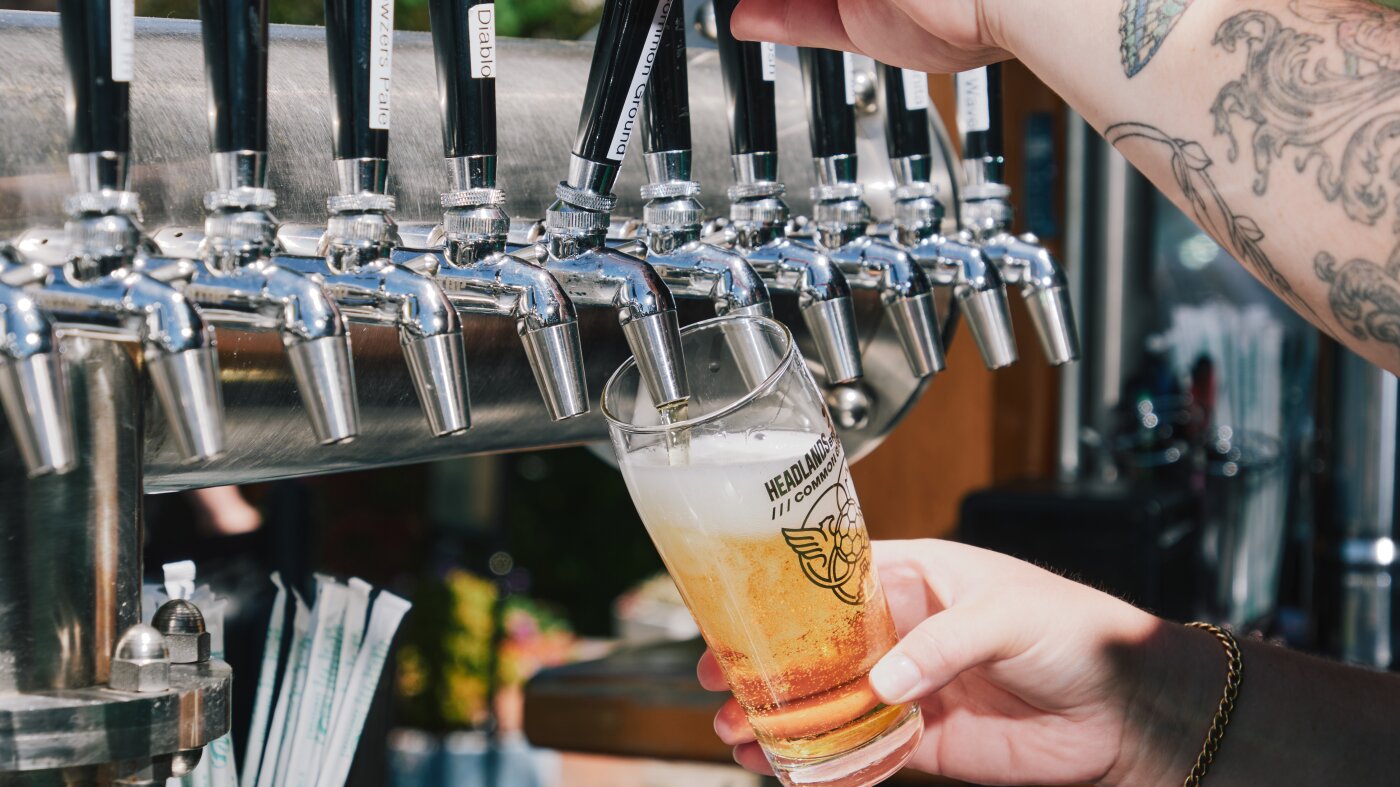
3 World Cup rivals find ‘Common Ground’ in a cross-border beer
-

 Technology53 minutes ago
The Flipper Zero creators’ Busy Bar productivity display will go on sale next month
-

 World56 minutes ago
Families watch in horror as skydiving plane crashes in France, killing all 11 aboard
-

 Politics1 hour ago
DOJ launches grand jury probe into Marxist mogul Neville Roy Singham’s funding of leftist groups
-

 Health1 hour ago
America’s lifespan has doubled since 1776 — experts reveal what changed
-

 Sports1 hour ago
Thekla embarrasses Stardom’s Starlight Kid after retaining AEW World Women’s Championship at Forbidden Door
-

 Technology1 hour ago
AI may spot deadly heart risk in a routine ECG

