Northeast
Butler rally shooting survivors blame Trump assassination attempt on Secret Service: 'Rush job'

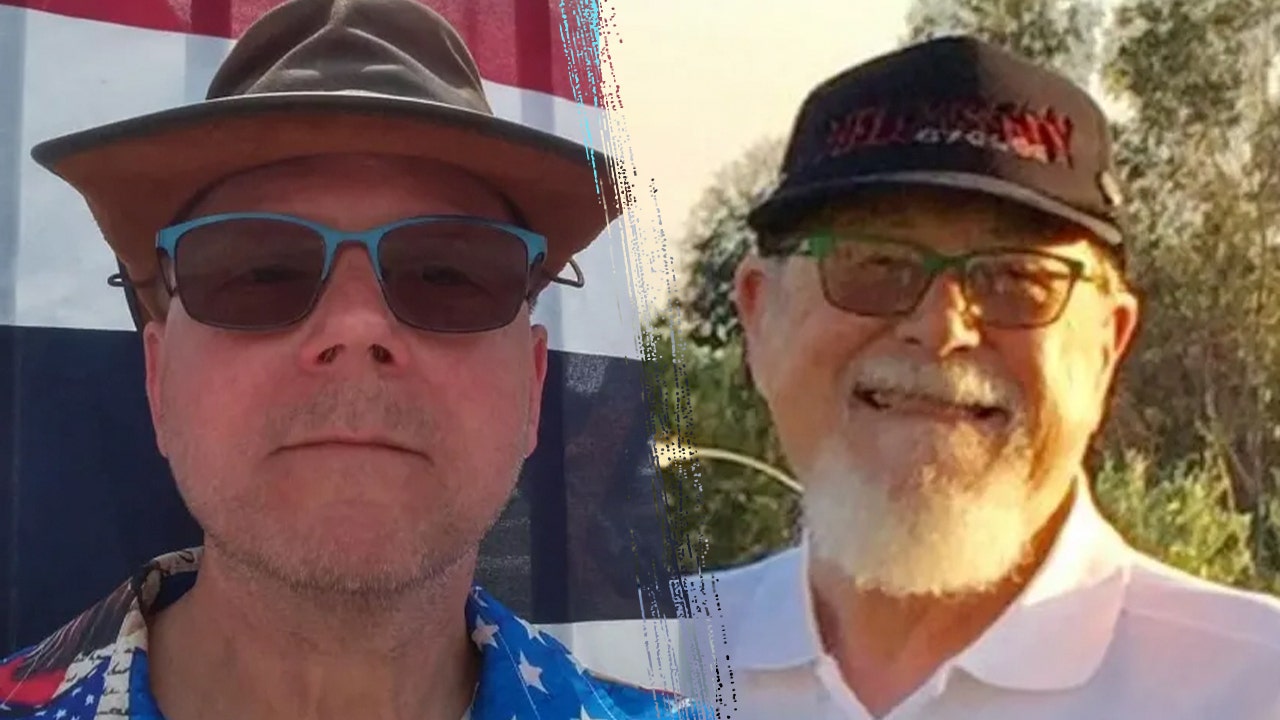
The two men who survived the assassination attempt on former President Trump during a rally in Butler, Pennsylvania, are placing the blame squarely on the Secret Service.
James Copenhaver, 74, and David Dutch, 57, sat down with NBC News for an interview that aired Monday to share their experiences and the emotions they went through. Dutch said his anger overrode everything else.
“I was more mad about it than anything,” Dutch said. “I mean, I was in the service, went through a war, didn’t even get a scratch. And yet, go to a rally and you get shot at in the crowd.”
Asked what he was specifically mad about, Dutch said: “The security.”
NBC POLLING ANALYST SAYS KAMALA HARRIS’ 5-POINT ADVANTAGE IN PREVIOUS POLL IS ‘GONE’
L-R: David Dutch and James Copenhaver. (Facebook; Family Handout)
Copenhaver, who now walks with a cane, said he realized something was wrong when “I saw part of my sleeve go away and heard [gunshot noises].”
“I heard it distinctly and then I turned around to my friend and said, ‘I think I was shot,’” he said.
Both men were injured by gunfire after a lone gunman opened fire on Trump from a nearby rooftop just minutes into the Republican candidate’s rally in Butler, Pennsylvania, on July 13. Trump’s ear was grazed as he ducked to avoid the hail of bullets, but the gunfire struck multiple attendees, including Corey Comperatore, who died while shielding his family from bullets.
A fireman’s coat belonging to the late Corey Comperatore is erected among the crowd at a rally for former President Donald Trump in Butler, PA on Saturday, October 5, 2024. (Matthew McDermott for Fox News Digital)
Copenhaver was shot twice: one bullet tore into his tricep, while the other is still lodged in his body, leaving him with nerve damage – something likened to somebody “taking a cigarette and burning right” in his leg.
The bullet that struck Dutch split his liver. He compared it to getting hit with a “sledgehammer right in the chest.”
“I could feel my ribs were all busted up,” Dutch told NBC News.
HARRIS DOUBLES DOWN WITH ‘INDIGENOUS PEOPLES’ DAY’ POST AMID OUTRAGE OVER COLUMBUS DAY RHETORIC
The assassination attempt put the Secret Service under intense scrutiny for its failure to detect the threat and prevent it from happening. The scrutiny heightened after Trump survived yet another assassination attempt by a lone gunman who was spotted hiding in the shrubbery near Trump’s golf course in Florida where the former president was playing a round.
Asked if he believed the Secret Service failed them and the president in Butler, Dutch replied: “Oh yes, big time.”
Republican presidential nominee former President Donald Trump speaks at a campaign rally at the Calhoun Ranch, Saturday, Oct. 12, 2024, in Coachella, Calif. (AP Photo/Alex Gallardo)
“It was a rush job. It was put together too quickly, and they skipped steps,” Copenhaver said.
On Sunday, a man was arrested on gun charges outside Trump’s Coachella rally in California. The man, 49-year-old Vem Miller, told Fox News Digital he reported the guns to authorities. He said he always travels with the guns, but never uses them. He argued that documents Riverside County Sheriff Chad Bianco said were fake are legit.
His arrest on gun charges sparked speculation, following two assassination attempts on Trump since July. But he was quickly released on $5,000 bail and so far, no federal charges have been filed.
Fox News Digital has reached out to the U.S. Secret Service for a response to the interview.
Fox News Digital’s Stepheny Price contributed to this report.
Read the full article from Here


The decision to trade catcher Joey Bart to the Braves gives the Pirates a solution to a problem that soon needed to be made.
Bart had been on a rehab assignment with Triple-A Indianapolis, working his way back from a left foot infection that kept him out of action for over a month.
With Bart nearing a return, the Pirates were going to have to figure out what to do at catcher with Henry Davis and Endy Rodríguez splitting time behind the plate in his absence.
Given how Rodríguez has been swinging the bat since he was recalled from Indianapolis to replace Bart on the active roster, there was no way the Pirates could’ve sent him down. In 23 games, the 26-year-old has a .267/.413/.467 batting line with three doubles, three home runs, eight RBI, two steals and a robust 19.7% walk rate.
Davis, meanwhile, has struggled to an anemic .138/.242/.285 batting line with four doubles, five home runs and 17 RBI in 47 games. While he hasn’t offered much with the bat, he’s been responsible for two defensive runs saved and leads MLB with a 55% caught stealing rate.
Now that Bart has been traded, Rodríguez and Davis will remain the catching tandem at the big-league level with Rafael Flores Jr. as the top backup option with Indianapolis. Flores is considered Pittsburgh’s eighth-best prospect on MLB Pipeline.
For the first time in the big leagues, Rodríguez is realizing the potential that once made him one of the top 100 prospects in baseball. Because of that, he should get the majority of the playing time with Davis continuing to catch Paul Skenes’ starts and filling in when needed.
As for the return, the Pirates known what to expect from Hunter Stratton, who spent nine seasons in the organization and made 47 appearances with the team from 2023-25.
The bullpen has been an obvious weak spot for the team this season, and while it was somewhat surprising to see the Pirates assign Stratton to Indianapolis, he improves the pitching depth and will almost surely be called upon at some point this year.
In 60 career big-league appearances between the Pirates and Braves, Stratton is 3-2 with a 3.75 ERA and two saves. The right-hander spent most of the 2026 season with Triple-A Gwinnett and went 2-4 with a 4.38 ERA and 24 strikeouts in 24.2 innings across 21 appearances.
One more important note about the trade is that the Pirates saved some money in the deal, which could be used later in additional trades to add to an already record-setting payroll. Stratton is a pre-arbitration player, while Bart is making $2.53 million this season.
More about:Pirates
Connecticut
Joe Deko Appointed to State Legislature’s Group Studying Prepaid Funeral Contracts to Protect Consumers

- Reviewing contract structures: Examining issues related to pre-need funeral contracts and cremation service agreements.
- Strengthening oversight: Recommending stronger consumer protections and improvements to state regulation of the funeral services industry.
- Developing compensation mechanisms: Creating rules for distributing funds to affected consumers and exploring the framework for a future industry-backed guarantee fund.
Deko took to Facebook to share the news.
“I am honored to announce my appointment to the Connecticut State working group focused on reviewing and strengthening Connecticut’s prepaid funeral laws.
This important effort brings together professionals and stakeholders committed to ensuring that prepaid funeral arrangements continue to serve and protect Connecticut families while maintaining the highest standards within our profession.
I am grateful for the opportunity to contribute my experience and perspective to this process and look forward to working collaboratively with fellow members of the group.
A special thank you to Senator Paul Cicarella for his confidence in me and for entrusting me with this appointment. Your support and leadership are greatly appreciated. I look forward to helping shape thoughtful policies that will benefit Connecticut families and the funeral profession for years to come.”

FALMOUTH — Standing in the apple orchard at Gilsland Farm, Chris Maher instantly recognized the woodchuck waddling across the grass 30 yards away.
“There’s Torch,” said Maher, needing neither her binoculars nor the telescope she had on hand to identify the tan marmot the size of a small cat. “And, oh, look, she’s got a pup with her.”
Trailing behind Torch was one of her several “pups” in her litter this year. Only 6 weeks old, the baby woodchuck was the size of a grapefruit, scurrying around under the watchful eye of its mother, who was nibbling clover flowers. Their burrow was just yards behind them, under the base of a tree stump.
Maher has been studying the woodchucks, also known as groundhogs, at Maine Audubon’s Gilsland Farm since 1998. A biology professor at the University of Southern Maine, her office is 10 minutes away in Portland.
Over the nearly 30 years of studying this population in Falmouth, she’s been answering longstanding questions about the species. Not whether they’ll see their shadow on Feb. 2, and not how much wood they could chuck if they could chuck wood, but how and why they behave the way they do.
“They’re basically a lot more social than people had thought they were,” she said.

Purchase this image
Woodchucks are one of six native marmot species in North America and the least social of them all. When Maher first started reading the scientific literature on the species in the 1980s and 1990s, it said that woodchucks were solitary and territorial — but some anecdotal reports also shared they were perhaps more social than previously thought.
When Maher moved to Maine in 1997 to work at USM after years studying the behaviors of other species, she decided the social lives of woodchucks were worth examining. With the permission of Maine Audubon, she started trapping and tagging the woodchucks at Gilsland Farm. It became the longest study of woodchucks ever conducted.
While there were once three dozen woodchucks on the property, now only eight adults have multiple burrows each in the many fields, orchard, peony bushes, parking lot and underneath Maine Audubon’s outdoor classroom. Maher’s workforce has declined as well, as her busy schedule as an interim dean at USM means she has less time for student assistance.
One of the eight and Torch’s adult daughter, named Tremont, also wandered under the apple trees. After she left her mother’s burrow, she moved in next door, digging burrows under the outdoor classroom and in a field of goldenrod.
“Born in the orchard, and basically never left home. The parallels with people are amusing,” said Maher.
With her handheld computer, which resembles a PIN pad in the grocery store checkout, Maher took a 15-minute sample of Torch’s behavior, hitting buttons every time Torch switched what she was doing. There are codes for when the woodchucks eat, groom themselves, dig, recline or are on alert.
Female woodchucks have a territory of about three-quarters of an acre. Maher’s research found that related female woodchucks will overlap their territory, previously thought to never happen. Mother and daughter, aunts and nieces, grandmother and granddaughter are all more tolerant of sharing space than unrelated woodchucks.
But sometimes they still need to take a stand. That morning, Tremont and Torch got into a fight, squeaking at and batting each other. With their familiar relationship bringing higher tolerance, it wasn’t a “knock-down, drag-out” brawl, said Maher, just “Torch being Torch.”
For the fight, Maher hits the button to indicate “other.”
Purchase this image
Maher knows that not everyone is a fan of woodchucks.
“People kind of run this gamut between ‘I hate woodchucks, because they eat my garden, or they dig under my shed.’ Or they love woodchucks — chances are, those people don’t have a garden,” she said.
Despite the woodchucks who keep eating the zucchini plant in her home garden, Maher maintains her affinity for the animals. Over the years, she’s trapped and tagged 630 Falmouth woodchucks.
In addition to the number on its metal ear tag, each woodchuck also gets a name, which helps her students remember them. Each year, there’s a theme: cars, cartoon characters, musical instruments and colleges. This year, she’s thinking it will be sports teams, in honor of the World Cup.
Now she’s attempting to trap and tag the pups born this year, including those of Tremont, who was born three years ago when the naming convention was Maine towns and had four pups this year.
Maher set four traps at right angles around the entrance of one of Tremont’s burrows, smearing a dab of Hannaford’s smooth peanut butter on the pressure plate that will trigger the trap to close if stepped on. Apple slices she dropped inside the metal grate increase the temptation.
Between the traps, Maher shoved wooden shingles to make a fence. Adult woodchucks will get creative trying to escape, as evidenced by tooth marks on the wood. Catching the pups is easier.
“They’re naive,” she said.

” data-image-caption=”<p>University of Southern Maine biology professor Chris Maher sets four traps around a woodchuck burrow in the Pond Meadow at Gilsland Farm Audubon Center in Falmouth on Monday, June 15, 2026. (Daryn Slover/Staff Photographer)
” data-large-file=”https://www.pressherald.com/wp-content/uploads/sites/4/2026/06/43635806_20260615_Falmouth-Woodchucks_1.jpg?w=780″ height=”683″ width=”1024″ alt=”” class=”wp-image-7669140″ srcset=”https://www.pressherald.com/wp-content/uploads/sites/4/2026/06/43635806_20260615_Falmouth-Woodchucks_1.jpg 3000w, https://www.pressherald.com/wp-content/uploads/sites/4/2026/06/43635806_20260615_Falmouth-Woodchucks_1.jpg?resize=300,200 300w, https://www.pressherald.com/wp-content/uploads/sites/4/2026/06/43635806_20260615_Falmouth-Woodchucks_1.jpg?resize=768,512 768w, https://www.pressherald.com/wp-content/uploads/sites/4/2026/06/43635806_20260615_Falmouth-Woodchucks_1.jpg?resize=1024,683 1024w, https://www.pressherald.com/wp-content/uploads/sites/4/2026/06/43635806_20260615_Falmouth-Woodchucks_1.jpg?resize=1536,1024 1536w, https://www.pressherald.com/wp-content/uploads/sites/4/2026/06/43635806_20260615_Falmouth-Woodchucks_1.jpg?resize=2048,1365 2048w, https://www.pressherald.com/wp-content/uploads/sites/4/2026/06/43635806_20260615_Falmouth-Woodchucks_1.jpg?resize=1200,800 1200w, https://www.pressherald.com/wp-content/uploads/sites/4/2026/06/43635806_20260615_Falmouth-Woodchucks_1.jpg?resize=2000,1333 2000w, https://www.pressherald.com/wp-content/uploads/sites/4/2026/06/43635806_20260615_Falmouth-Woodchucks_1.jpg?resize=780,520 780w, https://www.pressherald.com/wp-content/uploads/sites/4/2026/06/43635806_20260615_Falmouth-Woodchucks_1.jpg?resize=400,267 400w” sizes=”auto, (max-width: 1024px) 100vw, 1024px”/><figcaption>University of Southern Maine biology professor Chris Maher sets four traps around a woodchuck burrow in the Pond Meadow at Gilsland Farm Audubon Center in Falmouth on Monday, June 15, 2026. (Daryn Slover/Staff Photographer)<span class=)
Purchase this image
Once a pup is caught, she’ll weigh it, take a hair sample, give it a numbered ear tag and paint a distinct mark on it with Revlon black hair dye, so she can recognize it from a distance.
Keeping track of which of these squirrely animals are related for 28 years, as well as what they’re doing and where they’re going, is no small feat. Maher’s logbook is filled with decades of notes on trappings and re-trappings of the hundreds of animals.
“Long-term studies are really valuable,” said Daniel Blumstein, a biology professor at University of California Los Angeles who studies yellow-bellied marmots. “Having decades of information gives us a whole different way of thinking about what’s going on.”
In addition to changing understandings of their social behavior, Maher has conducted numerous other studies across the course of the project, including the variation in woodchuck personalities, tracking their movement with radio transmitters, testing their paternity using DNA from hair samples and seeing if they pay attention to the alarm calls of other animals (turns out, woodchucks care what chipmunks have to say).
She’s also seen their lineages unfold across generations, such as with the woodchuck named Bonnie.
Maher first caught Bonnie in 1998. She lived for 12 years, twice the average woodchuck lifespan, until she disappeared. Her legacy living onwards, as having trapped and tagged her offspring, and her offspring’s offspring, Maher was able to track Bonnie’s bloodline for seven generations until it died out in 2018.
Maher wondered what exactly happened to Bonnie. The answer was unearthed in 2021, when Maine Audubon tore down the pavilion that her burrow had been under. Curled up underneath was the mummified body of Bonnie, identifiable by the tag still in her ear.

” data-image-caption=”<p>University of Southern Maine biology professor Chris Maher has recorded notes on each woodchuck that she has trapped at Gilsland Farm Audubon Center in Falmouth. The next woodchuck that Maher trapps will be No. 631. (Daryn Slover/Staff Photographer)
” data-large-file=”https://www.pressherald.com/wp-content/uploads/sites/4/2026/06/43635806_20260615_Falmouth-Woodchucks_3.jpg?w=780″ height=”683″ width=”1024″ alt=”” class=”wp-image-7669141″ srcset=”https://www.pressherald.com/wp-content/uploads/sites/4/2026/06/43635806_20260615_Falmouth-Woodchucks_3.jpg 3000w, https://www.pressherald.com/wp-content/uploads/sites/4/2026/06/43635806_20260615_Falmouth-Woodchucks_3.jpg?resize=300,200 300w, https://www.pressherald.com/wp-content/uploads/sites/4/2026/06/43635806_20260615_Falmouth-Woodchucks_3.jpg?resize=768,512 768w, https://www.pressherald.com/wp-content/uploads/sites/4/2026/06/43635806_20260615_Falmouth-Woodchucks_3.jpg?resize=1024,683 1024w, https://www.pressherald.com/wp-content/uploads/sites/4/2026/06/43635806_20260615_Falmouth-Woodchucks_3.jpg?resize=1536,1024 1536w, https://www.pressherald.com/wp-content/uploads/sites/4/2026/06/43635806_20260615_Falmouth-Woodchucks_3.jpg?resize=2048,1365 2048w, https://www.pressherald.com/wp-content/uploads/sites/4/2026/06/43635806_20260615_Falmouth-Woodchucks_3.jpg?resize=1200,800 1200w, https://www.pressherald.com/wp-content/uploads/sites/4/2026/06/43635806_20260615_Falmouth-Woodchucks_3.jpg?resize=2000,1333 2000w, https://www.pressherald.com/wp-content/uploads/sites/4/2026/06/43635806_20260615_Falmouth-Woodchucks_3.jpg?resize=780,520 780w, https://www.pressherald.com/wp-content/uploads/sites/4/2026/06/43635806_20260615_Falmouth-Woodchucks_3.jpg?resize=400,267 400w” sizes=”auto, (max-width: 1024px) 100vw, 1024px”/><figcaption>University of Southern Maine biology professor Chris Maher has recorded notes on each woodchuck that she has trapped at Gilsland Farm Audubon Center in Falmouth. The next woodchuck that Maher trapps will be No. 631. (Daryn Slover/Staff Photographer)<span class=)
Purchase this image
Maher keeps Bonnie’s mummy in her office in a plastic tote, occasionally taking her out when she gives talks about her research at libraries, to Girl Scout troops and Maine Audubon camps.
“It’s a highlight of the summer for many campers,” said Molly Woodring, who oversees day camp and other educational programs at Maine Audubon.
With additional assistance from a woodchuck puppet, Maher presents her research and what it’s like to be a wildlife biologist to campers each year, also often explaining what she’s doing to other curious visitors of Gilsland Farm who typically come out to birdwatch.
“I do think, like in the context of the sanctuary, and in the context of her work, (woodchucks) do become really fascinating and lovable,” said Woodring.
As she starts this season’s pup tagging, Maher is also considering winding down her project. She turned 63 on Thursday — a day she wished she could have spent with the woodchucks, but was packed full of meetings.
In a year she’ll be on sabbatical, where she’ll write up more findings and is hoping to write a popular science book about woodchucks and her life studying them. Retirement is not too far off, and it doesn’t look like anyone else will be taking over the reins of the study.
“It will be hard to not keep coming out here,” she said. “By then, it will be 30 years of stories.”
While Maher may soon reduce her time observing Falmouth’s woodchucks, the woodchucks will remain — with evidence of their contribution to science still visible for at least another generation.
“Animals with tags will still be running around for a little while,” said Maher.
-

 Pittsburg, PA29 seconds ago
Pirates Trade Analysis: Something Had to Give
-

 Augusta, GA7 minutes ago
Augusta Dream Center sees surge in families needing food as summer begins
-

 Washington, D.C8 minutes ago
National Geographic Explorers share their most memorable adventures ahead of new DC museum opening
-

 Cleveland, OH16 minutes ago
LOOK: Remembering the Cavs championship win, victory parade 10 years later
-

 Austin, TX23 minutes ago
Juneteenth celebrations in Austin include parade and fun run
-

 Alabama26 minutes ago
Gov. Kay Ivey sets execution date for Jeremy Williams
-

 Alaska31 minutes ago
8 Prettiest Downtown Strips In Alaska
-

 Arizona38 minutes ago
Founding Fathers-themed ice cream parlor makes Arizona debut

