Northeast
Brown University shooter confessed in videos to planning attack for long time, showed no remorse: DOJ

NEWYou can now listen to Fox News articles!
Federal prosecutors on Tuesday released transcripts of short videos they say were recorded by the gunman responsible for a mass shooting at Brown University and the killing of an MIT professor in Massachusetts.
The U.S. Attorney’s Office for the District of Massachusetts said investigators recovered an electronic device containing the videos when they executed a federal search warrant on Dec. 18, 2025, at a storage facility used by Claudio Manuel Neves Valente, whom authorities described as “the Portuguese national responsible for the senseless murders.”
The videos were recorded in Portuguese and later translated into English, prosecutors said. In the recordings, Neves Valente described the attack as the culmination of long planning.
“It’s done. It was, it was six months, man. Not six months, six semesters. Uh. I had already planned this for a little more,” he said in one video, according to the transcripts.
DISPATCH RECORDS FROM BROWN UNIVERSITY SHOOTING CAPTURE CHAOS OF DEADLY CAMPUS ATTACK
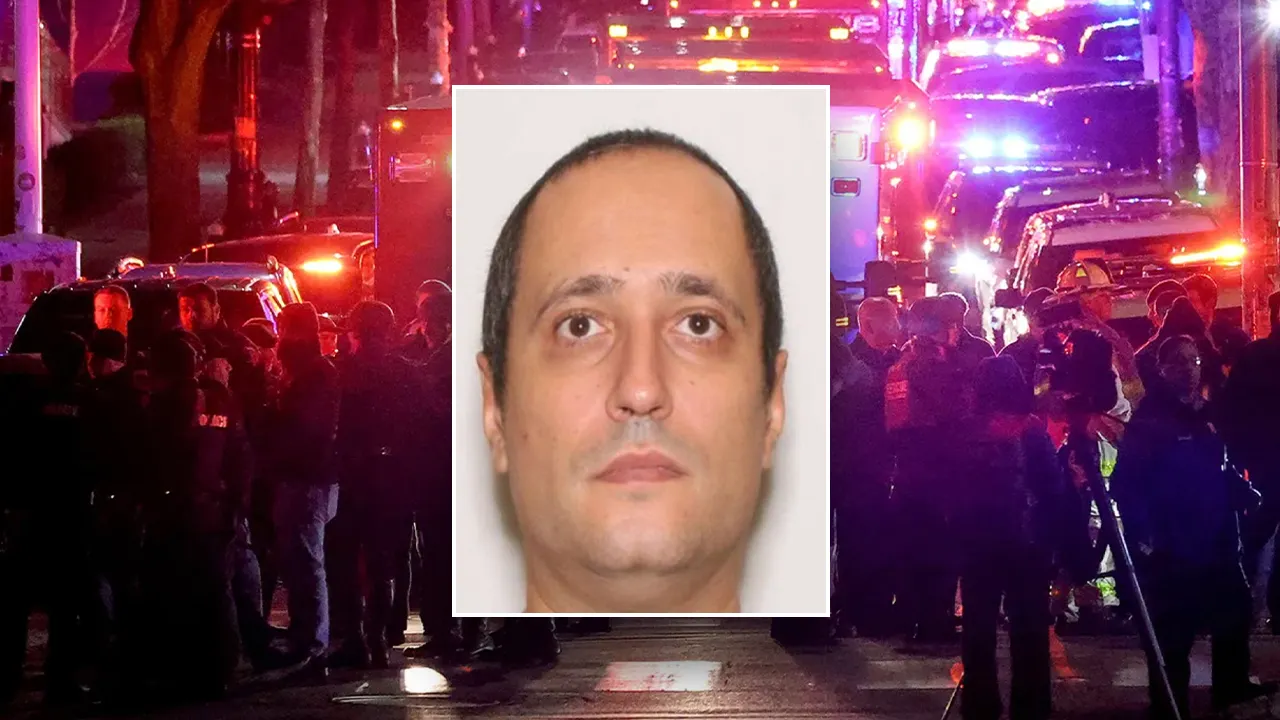
Federal prosecutors in Massachusetts released this image showing the man identified in deadly shootings of Brown University students in Rhode Island and a Massachusetts Institute of Technology professor in Massachusetts. (Justice Department)
Authorities said Neves Valente identified Brown University as his intended target but did not provide a motive for shooting students at Brown or for killing the MIT professor, Nuno Loureiro, 47. Prosecutors said the investigation into a motive will continue.
Two Brown students, Ella Cook, 19, and Muhammad Aziz Umurzokov, 18, were killed in the Dec. 13 shooting on the Providence, Rhode Island, campus, and nine other people were wounded, authorities said. Just two days later, Loureiro, a professor at MIT, was killed in Brookline.
In the transcript, Neves Valente repeatedly refused to express remorse.
BILLIONAIRE TRUSTEES STAY SILENT AS BROWN UNIVERSITY FACES MOUNTING CAMPUS MURDER FALLOUT
READ THE TRANSCRIPTS – APP USERS, CLICK HERE
“So, what has been done now… I’m in a storage space in Salem, I’ve had this here for three years, I think. I still have money. … I am not going to apologize, because during my lifetime no one sincerely apologized to me.” He also rejected that mental illness was to blame, saying: “that’s all bull—- excuses.”
“I am – I am sane,” he said. “I’ve always been, more or less [sane].”
Neves Valente also said President Donald Trump was right to “have called me an animal, which is true.”
“I am an animal, and he is also, but uhm, I have no love–I have no hatred towards America, I also have no hatred at all. This was an issue of… of opportunity.”
BROWN UNIVERSITY HIRES FORMER US ATTORNEY ZACHARY CUNHA AS POSSIBLE CAMPUS SHOOTING LAWSUITS LOOM
Despite its role as Brown University’s highest governing authority with direct power over presidential oversight and long-term strategy, the board of trustees has declined to comment in the wake of the murders that exposed serious lapses in campus security. (Photo by David L. Ryan/The Boston Globe via Getty Images)
MIT PROFESSOR SHOT DEAD IN BROOKLINE HOME, MASSACHUSETTS STATE POLICE LAUNCH HOMICIDE INVESTIGATION
Prosecutors said Neves Valente “showed no remorse” during the recordings and blamed victims for their deaths.
In the transcript, he criticized people’s responses during the shooting, saying, “Because they were kind of stupid.”
He also dismissed how the world would view him after he carried out the mass shooting on the college campus.
“I don’t give a d— about how you judge me or what you think of me,” he said, while also saying, “I also have no interest in being famous.”
Images of Claudio Manuel Neves-Valente displayed on a projector screen at a news briefing in Providence, Rhode Island. The 48-year-old former student and Portuguese national has been identified as the gunman behind a mass shooting that killed two students and wounded nine. (Andrea Margolis/Fox News Digital)
BROWN UNIVERSITY CUSTODIAN TOLD SECURITY SUSPICIOUS MAN WAS ‘CASING’ BUILDING WEEKS BEFORE SHOOTING: REPORT
Throughout the transcript, he focused on the injury he sustained, saying: “As you can see, my eye is kind of f—– up.”
Neves Valente said that he was injured in what he called a “shell round” that “bounced” into his eye.
A split image showing multiple still frames from the surveillance video taken near Brown University of a person of interest before and after a school shooting. (FBI Boston)
An autopsy previously found Neves Valente died by suicide two days before his body was discovered in a storage unit in Salem, New Hampshire.
CLICK HERE TO DOWNLOAD THE FOX NEWS APP
Authorities said Tuesday they do not believe there is any ongoing public safety threat associated with the shootings and that additional updates will be provided.
Fox News Digital’s Michael Ruiz and Andrea Margolis contributed to this report.
Read the full article from Here



Mariah Pizzuto is a licensed social worker and MSW student at the University of Maine at Orono. She is also a former Child Protective Services caseworker.
The Maine State Legislature has again failed to affect real change regarding Long Creek Youth Development Center. LD 1923, An Act to Repurpose Long Creek Youth Development Center and Build a Community System of Support, has been amended to the point where we will not see real action on the subject for another five years, if at all.
The original bill proposed that the facility be repurposed with a start date of no later than Jan. 1, 2027. Amendments now state that studies will be conducted over the next five years to provide recommendations for exactly how the facility should be changed — ridiculous considering the fact that the state has known since 2021, when Gov. Mills vetoed legislation to close the facility due to a lack of proper interventions being in place, that supports for Maine’s juvenile offenders and at-risk youth need to be investigated.
Here we are, five years later, with the state putting off change yet again in favor of “studies.” How many of our youth must be exposed to the revolving door of a broken criminal justice system before we see real steps forward? Frankie Bachelder, a former resident of Long Creek who was there five separate times from the ages of 14-16, said it best in his testimony to the Joint Standing Committee on Criminal Justice and Public Safety:
“Each time I was released from Long Creek, there was no real treatment plan, no meaningful re-entry support and no follow-up care. I was sent home and expected to do better, with the same trauma, the same addiction issues and the same lack of support I had before…..the problem wasn’t that I was incapable of change. The problem was that Long Creek wasn’t designed to help me change.”
Powerful, impactful words from a youth who has firsthand experience in not only being
subjected to Long Creek, but finding his way out of addiction and maladaptive behaviors. We know what needs to be done. LD 1923, before its amendments, outlined it in perfect clarity. We must implement services for housing, behavioral health, education, substance use disorder prevention and treatment, wrap-around case management, the list goes on.
The original bill even included a section regarding development of a working group to study options and best practices for repurposing the land and facilities at the center — we had it all, but it was taken away in order for the state to avoid assuming responsibility for affecting change by 2027.
“I’m standing here today employed, sober, involved in my community and working with youth organizations because someone finally invested in my rehabilitation. I am living proof that when we focus on treatment instead of punishment, lives change,” Frankie Bachelder testified.
What is stopping Maine legislators from being the force to invest in our youth? I know that fixing a broken system will take time, money and effort. I know that it is a massive responsibility and it is much easier to let things continue on as they currently stand. Mr. Bachelder probably felt the same after repeated stints at Long Creek. But if he can turn things around, make an effort to dig himself out of a system that is not designed to help him and support his improvement, then the very least we can do is follow his lead.
But we won’t. The Maine State Legislature has proven that. We have failed him, and will continue to fail every child that enters our broken and outdated facility. Why are we so afraid to take action?


Here are five ways how you can save some money when food shopping.
Here are five ways how you can save some money when food shopping.
Your household can earn more than $200,000 a year and still be considered part of the “middle class” in Massachusetts, according to a recent study by SmartAsset.
Massachusetts ranks as the top state with the highest income range for households to be considered middle class, based on SmartAsset’s analysis using 2024 income data from the U.S. Census Bureau. The Pew Research Center defines the middle class as households earning roughly two-thirds to twice the national median household income.
According to a 2022 Gallup survey, about half of U.S. adults consider themselves middle class, with 38% identifying as “middle class” and 14% as “upper-middle class.” Higher-income Americans and college graduates were most likely to identify with the “middle class” or “upper-middle class,” while lower-income Americans and those without a college education generally identified as “working class” or “lower class.”
Here’s how much money your household would need to bring in annually to be considered middle class in Massachusetts.
How much money would you need to make to be considered middle class in MA?
In Massachusetts, households would need to earn between $69,900 and $209,656 annually to be considered middle class, according to SmartAsset. The Bay State has the highest income range in the country for middle-class households. The state’s median household income is $104,828.
In Boston, the range is slightly lower. Households need to earn between $65,194 and $195,582 annually to qualify as middle class, giving the city the 19th-highest income range among the 100 largest U.S. cities. Boston’s median household income is $97,791.
How do other New England states compare?
Massachusetts has the highest income range for middle-class households in New England. Here’s what households would have to earn in neighboring states:
- Massachusetts (#1 nationally) – $69,885 to $209,656 annually; median household income of $104,828
- New Hampshire (#6 nationally) – $66,521 to $199,564 annually; median household income of $99,782
- Connecticut (#10 nationally) – $64,033 to $192,098 annually; median household income of $96,049
- Rhode Island (#17 nationally) – $55,669 to $167,008 annually; median household income of $83,504
- Vermont (#19 nationally) – $55,153 to $165,460 annually; median household income of $82,730
- Maine (#30 nationally) – $50,961 to $152,884 annually; median household income of $76,442
Which state has the lowest middle-class income range?
Mississippi ranks last for the income range needed to be considered middle class, according to SmartAsset. Households there would need to earn between $39,418 and $118,254 annually. The state’s median household income is $59,127.

Foreign ministers from Pakistan, Saudi Arabia, Turkey and Egypt will meet in Islamabad today in an attempt to come up with a plan to de-escalate the Iran war.
The meeting comes as several thousand more U.S. troops arrived in the region and after another group got involved in the expanding conflict: Yemen’s Houthis.
The Iran-backed Houthis launched missiles towards Israel, and there’s concern their involvement could threaten another vital global shipping lane in the Red Sea.
Here are more updates on day 30 of the Iran war.
Diplomacy Push in Pakistan
The four foreign ministers from regional powers will meet in Islamabad today and Monday for a push towards diplomacy to end the war.
In a statement ahead of the meeting, the Egyptian government said: “Discussions are expected to focus on recent developments related to regional military escalation and ongoing diplomatic efforts to contain tensions and promote de-escalation.”
“The talks come amid heightened concerns about regional stability, with participating countries seeking to coordinate their stances and support political solutions to emerging crises,” it added.
Whether whatever consensus the countries known as “the quad” come up with will be accepted by the US, Israel, and Iran is another question.
Pakistan has emerged as a possible peace-broker in the conflict, passing messages between the U.S. and Tehran. Foreign Minister Ishaq Dar said Saturday that “dialogue, diplomacy, and such confidence-building measures are the only way forward.”
Dar also welcomed the fact Iran has agreed to allow 20 Pakistan-flagged ships – or two a day – through the Strait of Hormuz.
Houthis enter war
Iranian-backed Houthi militants in Yemen launched the first missile they have fired since the war began toward Israel on Saturday. Israel’s military successfully intercepted it but the Houthis’ attack opens another front in a war that has now moved into its second month.
Up until Saturday’s missile launch the Houthis had stayed out of this war. But a Houthi spokesman said attacks will continue until “the aggression on all resistance fronts stops.”
Pakistan Ministry of Foreign Affairs / AP
/
AP
The Yemen-based rebels were active during Israel’s war in Gaza, firing on cargo ships in the Red Sea and disrupting global commercial traffic.
With Iran essentially blockading the Strait of Hormuz, driving up global oil prices, there are concerns that if the Houthis start attacking ships in the Red Sea again global shipping will be even more disrupted.
Iran also hit multiple sites around Tel Aviv and Jerusalem Saturday and Israel’s military says Iran is increasingly using cluster bombs.
Designed to detonate at high altitude the munition disperses dozens of smaller bombs that are more challenging for Israel’s multi-layered air defense system to intercept and can cause damage over a wider area.
Dozens of countries have signed onto a cluster munitions treaty banning the weapons – except Iran, Israel and the U.S.
Iran threatens U.S. universities in region
Iranian authorities and residents say more airstrikes hit them overnight. Social media videos from across Iran showed strikes hitting all over the country.
Israel’s military said it had completed what it called a wide-scale wave of strikes targeting weapons production and storage sites.
Iran claims U.S.-Israeli strikes hit a Tehran university over the weekend and Iran’s Revolutionary Guard Corps threatened American university campuses in the Middle East in retaliation.
“We advise all employees, professors, and students of American universities in the region and residents of their surrounding areas” to stay a kilometer away from campuses, the statement, carried by Iranian media, said.
Several US universities have campuses in the Gulf, including New York University in the United Arab Emirates and Texas A&M University, among others, in Qatar.
Meanwhile, Iran continues to fire drones and missiles at Gulf countries, with Kuwait saying it was intercepting missile and drone attacks early Sunday. Saudi Arabia said it intercepted and destroyed ten drones.
Iran also claimed it had attacked two major aluminium sites in Bahrain and the United Arab Emirates (UAE). Emirates Global Aluminium confirmed an Iranian attack wounded several and caused significant damage to its plant.
U.S. Troops injured, more arrive
At least 15 U.S. service members were wounded Friday in an Iranian strike on a Saudi air base that hosts American troops, according to the Associated Press, including at least five in serious condition. The missile and drone strikes targeted Saudi Arabia’s Prince Sultan air base, located outside the capital Riyadh.

Iran has targeted U.S. service members at bases throughout the region since the war began a month ago, in retaliation for the U.S. attacks and seeking to drive troops out of the region. Overall, the Pentagon has put the U.S. casualty toll at 13 killed and more than 300 injured.
On Saturday, troops from the Japan-based 31st Marine Expeditionary Unit, made up of around 3,500 sailors and Marines, arrived in the Middle East, according to U.S. Central Command.
The U.S. military will not say where and how they might be deployed. Thousands more soldiers from the U.S. military’s 82nd Airborne Division are also expected to be deployed.
Journalists killed in Lebanon
Three Lebanese journalists covering the Israeli invasion of the country’s south were killed in an Israeli airstrike in Jezzine.

One of them worked for a TV channel affiliated with Hezbollah and Israel accuses him of being a militant rather than a journalist – but has not provided evidence. The journalist Israel says it targeted was Ali Shaeb, a veteran TV correspondent and household name in Lebanon. After killing him, Israel’s military issued a statement accusing him of exposing the locations of Israeli troops.
The other two journalists killed were siblings, TV correspondent Fatima Ftouni and her cameraman brother, Mohammed Ftouni. Afterward their father appeared on TV, saying he was proud of his children.
All three had been covering Israel’s invasion of southern Lebanon.
Lebanese officials called the attack a flagrant violation of international law, and said they’re complaining to the UN Security Council. Hundreds of fellow journalists marched at a protest vigil in Lebanon’s capital.
The three journalists were among at least 47 people killed Saturday in Israeli attacks, according to Lebanese health officials.
Nine of those killed were paramedics, which the head of the World Health Organization called “a tragedy,” noting health workers are protected under international law.

Israel has intensified its attacks across Lebanon, mostly in the South, where Israeli ground troops are moving northward to try to oust Hezbollah militants.
Another Israeli soldier was also killed in Lebanon, with Prime Minister Benjamin Netanyahu expressing his condolences on X over the weekend.
Developments in Syria, Iraq
The war is spreading to more parts of the Middle East. On Sunday, Syria said it had intercepted a drone strike from Iraq targeting a U.S. military base. Pro-Iran Iraqi groups have claimed responsibility for some attacks on US interests.
Separately, the Syrian and UAE governments condemned an attack targeting the residence of the Kurdish region’s president Nechirvan Barzani.
French President Emmanuel Macron also condemned the attack saying: “The sovereignty of Iraq, and of Kurdistan within it, is essential to regional stability. Everything must be done to prevent Iraq from being drawn into the ongoing escalation.”
On Sunday, the Israeli army said it had launched its “first” attack into Lebanon from Syria.
Jane Arraf in Amman, Emily Feng in Van, Turkey, Lauren Frayer in Jezzine, Lebanon, Carrie Khan in Tel Aviv, and Kate Bartlett in Johannesburg contributed to this report.
Copyright 2026 NPR

Decorated Illinois guard Josh Gesky met with Saints ahead of draft

Hundreds gather at Indiana State Capitol for ‘No Kings’ protest

Body recovered from retention pond after reported drowning in Iowa Colony
![~!@[WATCHLIVE!TV]>> NOW Portland Thorns FC vs Kansas City Current Match 𝐋𝐈𝐕𝐄 Free Streams ON Tv Channel](https://i2.wp.com/unicornriot.ninja/wp-content/uploads/2018/09/LiveChannel334x212v2.png?w=80&resize=80,80&ssl=1 "~!@[WATCHLIVE!TV]>> NOW Portland Thorns FC vs Kansas City Current Match 𝐋𝐈𝐕𝐄 Free Streams ON Tv Channel")
~!@[WATCHLIVE!TV]>> NOW Portland Thorns FC vs Kansas City Current Match 𝐋𝐈𝐕𝐄 Free Streams ON Tv Channel

2026 top-50 recruit Chris Washington Jr. drawing interest from Kentucky Basketball

Florida High School Football Rankings: Top 25 teams – Oct. 21

How old is Bo Nix? What to know about Oregon quarterback ahead of 2024 NFL Draft

Cleary's 21 help Le Moyne down Central Connecticut State 69-64 in OT

99th annual Pony Swim held in Virginia

Indiana Members Credit Union announced as new anchor tenant at Bottleworks District

JD Vance says he was ‘obsessed’ with UFOs, believes aliens are actually ‘demons’
The EU's recipe for trade deals : easy on beef, tough on wine

Photos: ‘No Kings’ protests across the country

Jeffries declines to break with indicted Democrat after ethics panel’s guilty verdict

Hundreds of thousands march through London in stand against the far right
-

 Sports1 week ago
IOC addresses execution of 19-year-old Iranian wrestler Saleh Mohammadi
-

 New Mexico7 days ago
Clovis shooting leaves one dead, four injured
-

 Tennessee6 days ago
Tennessee Police Investigating Alleged Assault Involving ‘Reacher’ Star Alan Ritchson
-

 Technology7 days ago
YouTube job scam text: How to spot it fast
-

 Minneapolis, MN3 days ago
Boy who shielded classmate during school shooting receives Medal of Honor
-

 Science1 week ago
Record Heat Meets a Major Snow Drought Across the West
-

 Politics1 week ago
Schumer gambit fails as DHS shutdown hits 36 days and airport lines grow
-

 Texas1 week ago
How to buy Houston vs. Texas A&M 2026 March Madness tickets