Boston, MA
When will the big nor’easters return? Boston in midst of second-longest streak without hefty snowfalls. – The Boston Globe


Have you noticed a lack of major snowstorms over the past several winters here in New England? Perhaps you’re wondering if this is a new permanent pattern. Snowfall across New England is highly variable, particularly here in the Boston area and the rest of Southern New England, where we lie on the southern edge of consistent snowfall.
First, let’s look at how radically different winter snowfall can be. On Feb. 25, 2022, Boston received 8½ inches of snow. That was the last time the city saw a 6-inch snowfall, which is meteorologically considered a “major snowfall” in New England (accumulation of at least 6 inches of snow). Roughly 1,414 days later and counting, we are now in the midst of our second-longest streak devoid of 6-inch snowfalls, since data was first recorded in 1872. You have to go back to 1988-92 to find a similar “major snow” drought. That streak lasted 1,772 days.
As a side note, the Boston area would have to make it through this entire winter without a major snowstorm to move into the No. 1 spot. Will we do it?
These gaps in significant snowstorms might be considered mini snow droughts, but when they end, the winter weather pattern tends to shift in the other direction. For example, when that streak ended in 1992, it ushered in three of four blockbuster winters, including one that dumped over 107 inches of snow in the winter of 1995-96.
This very snowy mid-’90s was followed by highly variable snowfall seasons with as little as 15 inches of snow in 2001-02 and as much as nearly 87 inches of snow several years later during the 2004-05 winter season.
Snowiest decade on record (2008-18) vs. least snowfall (2015-present)
Then, starting in 2008 and lasting until 2018, we experienced the snowiest decade on record in Greater Boston with a total of 543 inches of snowfall.
If you move the starting point to winter 2015-16 and conclude through 2025, we received only 333 inches of snow, marking the lowest 10-year period of snowfall on record. This is where we currently sit, and it makes sense with the lack of major nor’easters nearing New England over the past several winters.
Even winter storm warnings issued by the National Weather Service have fallen. Check out the chart below, and you’ll notice that the past several years have seen fewer than six winter storm warnings issued.
All of this should not lull you into a false sense that we are in some new paradigm without major coastal storms or that it’s not going to be snowy again. On the contrary, nor’easters are actually getting stronger and are generating more precipitation than they used to. According to research published last summer on the intensification of the strongest nor’easters, noted climate scientist Michael Mann and five of his colleagues at the University of Pennsylvania looked at how our famous coastal storms have changed over the past several decades.
“Our analysis of nor’easter characteristics reveals that the strongest nor’easters are becoming stronger, with both the maximum wind speeds of the most intense nor’easters and hourly precipitation rates increasing since 1940,” the researchers said.

The reason why I’m mentioning this while also talking about the lack of snow in our region is that both can be true. As we have seen, snowfall itself is very cyclical. That cycle is occurring amid a backdrop of a warming climate. With more and more anthropogenic CO2 — carbon dioxide emissions resulting from human activity, primarily the burning of fossil fuels — average temperatures have increased, and that rise has led to an availability of more energy for coastal storms.
‘Climate change has made crippling snow and flooding rain more likely despite the recent dearth of these types of storms locally. ’
As the oceans warm, they provide more latent heat or fuel for these nor’easters. Additionally, with warmer temperatures and still an availability of cold air to the north, there’s an increase in temperature contrast, or what meteorologists call “baroclinicity.” This is a critical feature and aids in the rapid intensification or bombogenesis of low-pressure areas east of the Atlantic Seaboard.
The Perfect Storm back in 1991, the Storm of the Century in 1993, the so-named Snowmageddons in February 2010 and winter 2015, and the January 2018 blizzard are all examples of unusually strong nor’easters.

The trend in maximum wind speed in nor’easters has increased since the middle of the last century. You can see from the Mann paper some of the actual data used to reach this conclusion.
In addition, hourly precipitation has also increased in these coastal storms. This means that crippling snow and flooding rain are becoming more likely in spite of the recent dearth of these types of storms locally.
In the same way that we haven’t had a hurricane reach the shores of New England since 1991, so too are we overdue for a major nor’easter. Both are in our future. It’s just a matter of when.
Sign up here for our daily Globe Weather Forecast that will arrive straight into your inbox bright and early each weekday morning.

Boston, MA
Ariana Grande fan gets better tickets to TD Garden concert in Boston after resolving StubHub issue

Ariana Grande is coming to Boston next week and one of her biggest fans in Massachusetts will be there after resolving a ticket issue with StubHub.
Kelsie Duest of Hopedale had two front row balcony seats to Grande’s show on July 23 at TD Garden. Her brother bought them for her on StubHub last year. Her mother said it cost nearly $1,400 for the pair.
But about a month later, Sharon Duest checked her Apple Wallet and noticed the tickets were invalid. She said StubHub offered them a choice, take a refund or different tickets.
Duest ended up accepting the tickets that were offered, only to learn they were obstructed view seats behind the stage and Kelsie wouldn’t be able to see Grande during parts of the concert.
Concerned that her daughter, who has Down syndrome, would miss out on the experience of seeing Grande on stage, Duest tried calling and emailing Stubhub hoping to get better seats.
“We didn’t want anything for free. We just wanted just the tickets that we had,” she told WBZ-TV.
With the concert coming up soon, the Duests reached out to the I-Team’s Call for Action for help, who contacted StubHub.
“We’re so sorry about the issues Sharon experienced with their ticket order, especially given how meaningful this concert is to Kelsie,” a company spokesperson said in an email.
“We understand how disappointing and stressful that situation was. Our Customer Care team worked with them to resolve the issue and ultimately secured upgraded replacement tickets in a section in front of where the original seats were located, allowing them to attend the show with an improved view.”
Kelsie and her mom now have club seats closer to the stage than the tickets they originally purchased.
“I know we couldn’t have done this without you guys. Thank you, thank you from the bottom of our hearts,” Sharon Duest said.
A good rule of thumb with electronic tickets is to always check on them to confirm that they remain valid up until the event. You should also keep good records in case you need a refund or a replacement.

ATTLEBORO, Mass. (WJAR) — U.S. Immigration and Customs Enforcement Boston said Friday that it arrested a Barbados national during targeted operations in Attleboro.
ICE Boston said Irijah Jabarri Stowe Marshall is “a criminal illegal alien.”
According to officials, his criminal history includes a pending charge for failing to register as a sex offender in Massachusetts.
He was also previously convicted of attempted rape and aggravated sexual contact, ICE Boston said.

A 20-year-old Boston man is facing a series of charges after prosecutors say he shot at Boston Police officers during an attempted stop in Dorchester before leading them on a foot chase through neighborhood backyards.
Rasiel Carbuccia was arraigned in Dorchester District Court Thursday on a list of charges, including assault with a dangerous weapon, carrying without a license and possession of a large capacity firearm, stemming from the Wednesday night incident near Devon and Laredo streets.
Opened fire with ghost gun, prosecutors say
According to prosecutors, Boston Police officers attempted to stop Carbuccia when he pulled out a gun and began shooting, striking a Boston police cruiser before fleeing the scene.
Investigators said Carbuccia ran through backyards and hopped fences before he was taken into custody. Officers did not fire their weapons during the encounter.
Prosecutors said investigators later recovered the firearm along the path where Carbuccia had been running.
“It was determined that the firearm was a ghost gun, and it did not possess a serial number,” Suffolk County prosecutor Jacqueline Martinelli said in court.
Union says “everyone should be outraged”
Larry Calderone, president of the Boston Police Patrolmen’s Association, said the shooting is part of what he believes is a troubling trend of violence this summer and renewed his call for more officers on Boston streets.
“Everybody should be outraged. Bullets flying in the city’s streets at uniformed police officers. How can we possibly convince the general public that they’re safe to walk around their own neighborhoods?” Calderone said.
“We have teenagers pulling firearms and stealing mopeds from others in broad daylight. We have shots being fired at police officers in uniform, officers being attacked, people being shot daily that we can’t solve the crimes,” he added.
No one was injured in the shooting, but Calderone said the outcome could have been much worse.
“Thank goodness, neither officer or a pedestrian, an innocent child or somebody in the middle of the evening did not get killed last night. Just as thankful, at least they caught him. They recovered the weapon,” he said.
After the arraignment, Carbuccia’s attorney declined to discuss the case in detail but indicated mental health issues could become part of the proceedings.
“Ultimately as you guys know this is a process that has to play out and he’s presumed innocent and there’s going to be a number of things that are going to come out in respect to mental health and potentially the investigation, I don’t really have much more to say beyond that,” attorney Bob White told reporters.
According to prosecutors, Carbuccia had two open assault cases and an active warrant at the time of his arrest.
He’s being held in jail without bail and is scheduled to return to court later this month for a dangerousness hearing.
-
 Politics5 minutes ago
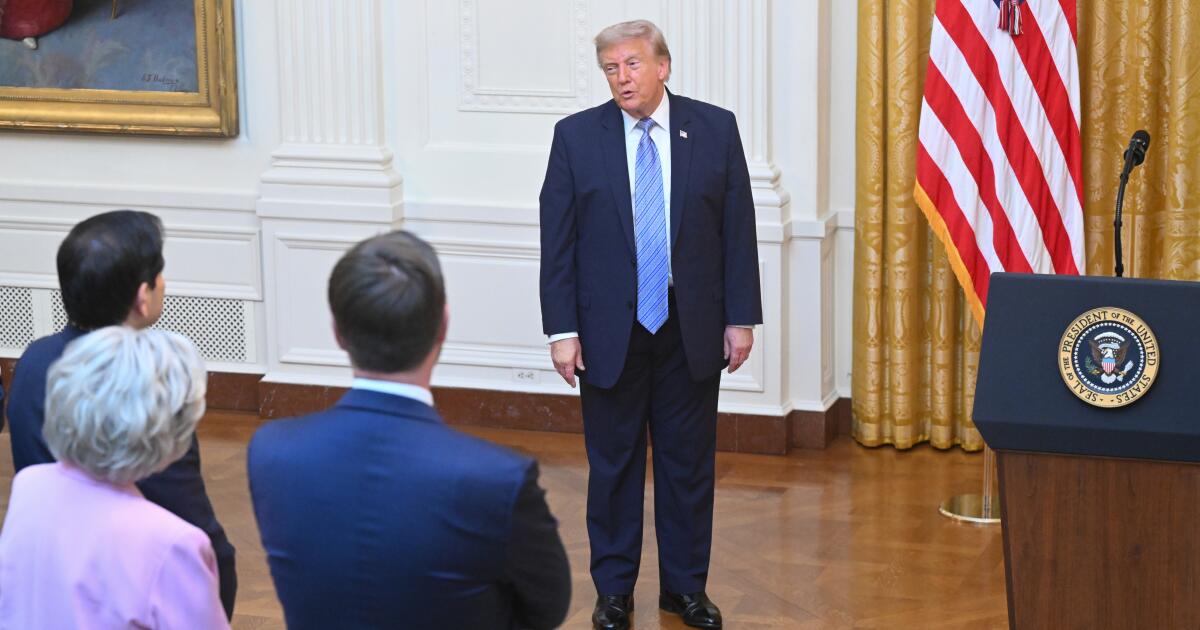
Trump escalates election attacks, threatens California over voter data
-
 Science11 minutes ago
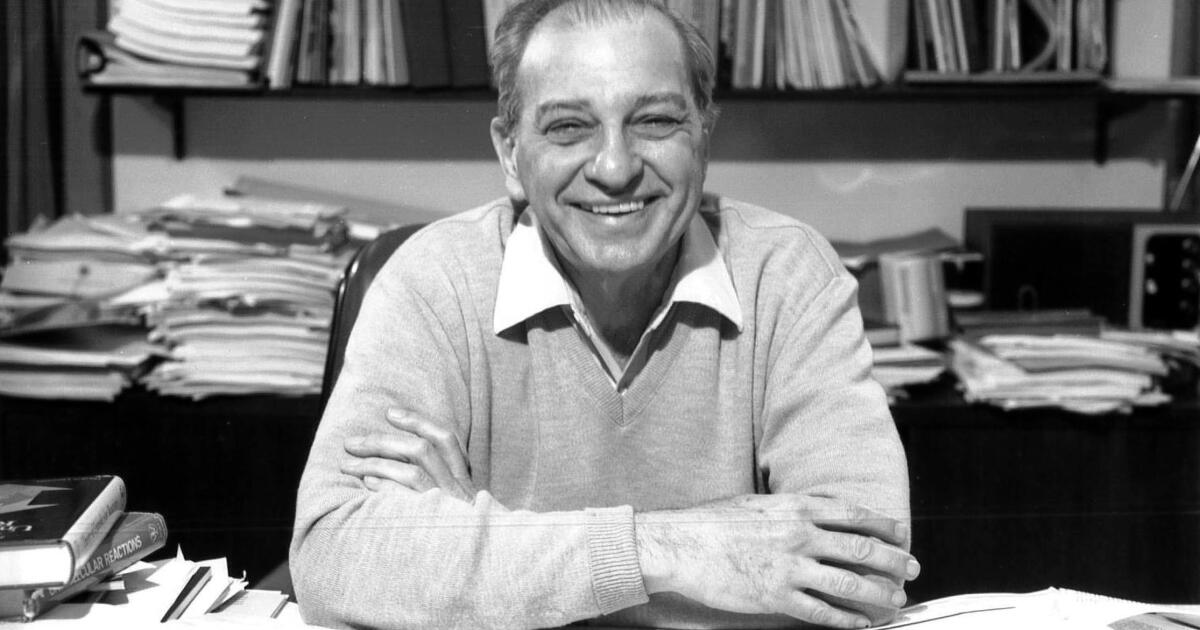
Rudolph Marcus, Caltech chemist who won Nobel Prize, dies at 102
-
 Sports17 minutes ago
Commentary: With Will Smith out indefinitely, Dodgers need to trade for a catcher
-

 World29 minutes ago
Mandela Day: What his legacy means in today’s South Africa
-
 News59 minutes ago
ICE shared Medicaid data it wasn’t supposed to have with Palantir
-

 Los Angeles, Ca3 hours ago
‘Moana’ is a triumph for Pacific Islander representation on the big screen
-

 Detroit, MI3 hours ago
Five shot during funeral at Detroit church
-

 San Francisco, CA3 hours ago
San Francisco Giants Announce Intriguing Roster Move Ahead of Mariners Series

