Northeast
Blue state’s bag ban meant to protect environment backfires at staggering rate: study

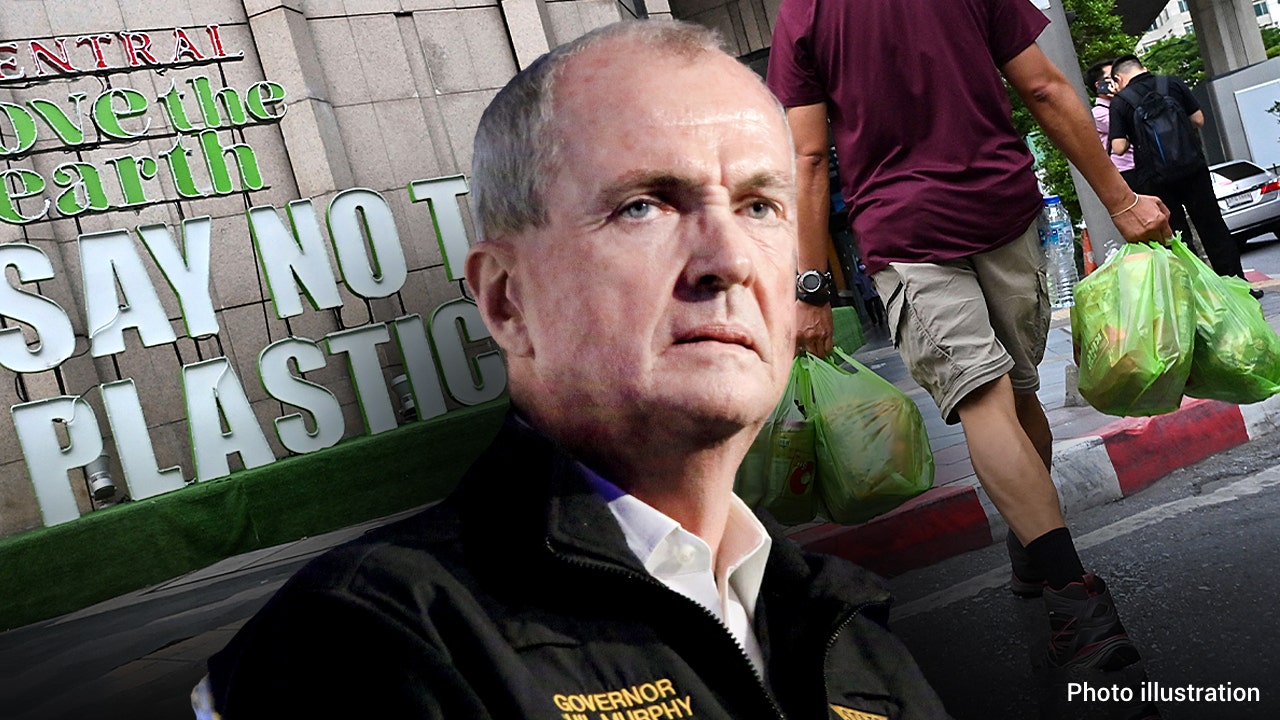
Plastic consumption in New Jersey spiked by nearly three times following the state’s implementation of a strict ban on single-use plastic shopping bags, a study found.
“Following New Jersey’s ban of single-use bags, the shift from plastic film to alternative bags resulted in a nearly 3x increase in plastic consumption for bags,” Freedonia Custom Research (FCR), a business research division for MarketResearch.com, reported in a study published this month.
New Jersey implemented a ban on single-use plastic bags in 2022, the strictest ban on bags in the nation at the time, billing it as an effort to cut back on the plastic one-use bags piling up in landfills.
“Plastic bags are one of the most problematic forms of garbage, leading to millions of discarded bags that stream annually into our landfills, rivers and oceans,” Democratic Gov. Phil Murphy said after signing legislation in 2020 that authorized the bag ban. “With today’s historic bill signing, we are addressing the problem of plastic pollution head-on with solutions that will help mitigate climate change and strengthen our environment for future generations.”
NEW JERSEY LAWMAKERS CONSIDER TWEAKING PLASTIC BAG BAN AS REUSABLE BAG PLAN CAUSES ‘PROBLEM’
Gov. Phil Murphy delivers the State of the State Address at the New Jersey State House in Trenton on Jan. 10, 2023. (Aristide Economopoulos/Bloomberg via Getty Images)
The ban took effect in May 2022, forbidding larger retail, grocery and food service stores from providing single-use plastic bags to customers. Instead, shoppers may purchase reusable bags made of woven and non-woven polypropylene plastic, or can bring their previously-purchased reusable bags to the store.
It didn’t take long, however, until shoppers started airing their grievances to local media that the reusable bags were stacking up in their homes due to repeatedly purchasing reusable bags at the grocery store, or due to home grocery delivery services using new reusable bags each drop-off.
NEW JERSEY’S PLASTIC BAG BAN: WHAT TO KNOW
“I keep them in the basement,” one New Jersey mom told NJ Advance Media in 2022. “I have another bag by the door in case I go out to the farmer’s market. Most of them are brand new, even have the tag on them. I use them one time but don’t throw them out.”
A man sits on a bench beside plastic shopping bags. (Vittorio Zunino Celotto/Getty Images )
Some Garden State lawmakers soon acknowledged the issues of shoppers not reusing the reusable bags and simply throwing them out, floating proposed amendments that have since apparently stalled, such as requiring home delivery services use cardboard boxes or paper bags instead of the heavy reusable plastic bags.
PLASTIC BAG BANS HALTED IN SEVERAL CITIES DUE TO CORONAVIRUS PANDEMIC
Instead of having the intended beneficial impact on the environment, the reusable bag ban has actually backfired, data reported in the study show. Plastic consumption in the state has nearly tripled, with New Jerseyans previously consuming 53 million pounds of plastic before the ban, compared to 151 million pounds following the ban, FCR researchers reported.
A shopper leaves a story with their goods in reusable plastic bags. (Justin Tallis/AFP via Getty Images )
Reusable bags made of non-woven polypropylene are much thicker than the typical single-use plastic bags typically found at grocery and convenience stores, using roughly 15 times the amount of plastic, the study reported. Though the bags are built for repeated shopping trips, most New Jerseyans only reuse the bags two to three times before they’re discarded.
NEW YORK’S PLASTIC-BAG BAN FRUSTRATES MANY SHOPPERS
“[Six times] more woven and non-woven polypropylene plastic was consumed to produce the reusable bags sold to consumers as an alternative. Most of these alternative bags are made with non-woven polypropylene, which is not widely recycled in the United States and does not typically contain any post-consumer recycled materials. This shift in material also resulted in a notable environmental impact, with the increased consumption of polypropylene bags contributing to a 500% increase in greenhouse gas (GHG) emissions compared to non-woven polypropylene bag production in 2015,” the study reported.
A man carries goods in plastic bags outside a department store. (Romeo Gacad/AFP via Getty Images)
In order to have a positive impact on the environment and the state’s plastic consumption, researchers found shoppers would have to reuse the bags a minimum of 16 times.
Reusable bags have also resulted in windfall profits for retailers since the ban took effect, with the researchers finding the average retailer could make $200,000 annually at a single location.
CLICK HERE FOR THE FOX NEWS APP
Fox News Digital reached out to Gov. Murphy’s office for comment on the study, but did not receive a response by time of publication.
New Jersey is just one of a handful of states that have implemented plastic bag bans in an effort to stymie plastic consumption and benefit the environment. States such as Vermont, Oregon, California and others have their own versions of bans on single-use plastic bags.
Read the full article from Here


The Boston Red Sox were expected to have a busy offseason to build on their short 2025 playoff appearance, their first in four seasons. Boston delivered, albeit not in the way many reporters and fans expected — Alex Bregman left and no one was traded from the outfield surplus.
Roster construction questions have loomed over the Red Sox since last season. They were emphasized by Masataka Yoshida’s return from surgery rehab and Roman Anthony’s arrival to the big leagues. Boston has four-six outfielders, depending where it envisions Yoshida and Kristian Campbell playing, and a designated hitter spot it likes to keep flexible — moving an outfielder makes the most sense to solve this quandary.
The best case-scenario for addressing the packed outfield would be to find a trade suitor for Yoshida, which has proven difficult-to-impossible over his first three seasons with the Red Sox. Red Sox insiders Chris Cotillo and Sean McAdam of MassLive think Boston may have to make an extremely difficult decision to free up Yoshida’s roster spot.
“You wonder, at what point does this become a — not Patrick Sandoval situation — but a Pablo Sandoval, where you rip the Band-Aid off and just release,” McAdam theorized on the “Fenway Rundown” podcast (subscription required).
Red Sox insiders wonder if/when Boston will release Masataka Yoshida, as it did with Pablo Sandoval in 2017
Pablo Sandoval is infamous among Red Sox fans. He signed a five-year, $90 million deal before the 2015 season and he only lasted two and a half years before the Red Sox cut him loose. His tenure was marked by career lows at the plate, injuries and a perceived lack of effort that soured things quickly with Boston. Yoshida hasn’t lived up to the expectations the Red Sox had when they signed him, but he’s no Sandoval.
McAdam postulated that the Red Sox may be waiting until there is less money remaining on Yoshida’s contract before they potentially release him. Like Sandoval, Yoshida signed a five-year, $90 million deal before the 2023 season, which has only just reached its halfway point. The Red Sox still owe him over $36 million, and by releasing him, they’d be forced to eat that money.
The amount of money remaining on Yoshida’s contract is just one obstacle that may be preventing the Red Sox from finding a trade partner to move him elsewhere. Yoshida has never played more than 140 games in a MLB season with 303 total over his three-year tenure, mostly because he’s dealt with so many injuries since moving stateside.
Maybe the Red Sox could attach a top prospect to him and eat some of his contract money to entice another team into a trade, like they already did with Jordan Hicks this winter. But that would require sacrificing a quality prospect and it would cost more money, just to move a good hitter who tries hard at his job.
There’s no easy way to fit Yoshida onto Boston’s roster, but the decision to salary dump or release him will be just as hard. Yoshida hasn’t been a bad player for the Red Sox and he doesn’t deserve the Sandoval treatment, but his trade value may only decrease if he spends another year with minimal playing time. Alex Cora and Craig Breslow have a real dilemma on their hands with this roster.
Pittsburg, PA
‘It began right here in the Hill District’: Bill from Rep. Lee seeks national honor for Freedom House


NEW BRITAIN, CT — Stanley Black & Decker on Thursday said it has decided to close its manufacturing facility in New Britain.
Debora Raymond, vice president of external communications for the manufacturer, said the decision is a result of a “structural decline in demand for single-sided tape measures.”
The New Britain facility predominantly makes these products, according to Raymond.
“These products are quickly becoming obsolete in the markets we serve,” Raymond said, via an emailed statement Thursday.
The decision is expected to impact approximately 300 employees, according to Raymond.
“We are focused on supporting impacted employees through this transition, including providing options for employment at other facilities, severance, and job placement support services for both salaried and hourly employees,” Raymond said.
As of Thursday at 4:30 p.m., no Worker Adjustment and Retraining Notification (WARN) Act notice had been filed with the state Department of Labor.
The company’s corporate headquarters remains at 1000 Stanley Dr., New Britain.
Gov. Ned Lamont released the following statement on the decision:
“Although Stanley has made the decision to discontinue operations for manufacturing outdated products, a change in workforce opportunities is difficult for employees, their families, and any community.,” Lamont said. “However, I am hopeful that these skilled workers will be repurposed with the help of Stanley Black & Decker, a company that will still proudly be headquartered here in Connecticut. My administration is working closely with local and state leaders to support affected workers and to reimagine the factory site so it can continue to create opportunity and strengthen New Britain’s economic future.”
New Britain Mayor Bobby Sanchez said he is “deeply disappointed” the company will be closing its Myrtle Street operations.
“For generations, Stanley Works has been part of the fabric of our city, providing good-paying jobs, supporting families, and helping build New Britain’s proud reputation as the ‘Hardware City,’” Sanchez said.
According to the mayor, his office’s immediate focus is on helping affected workers and their families. The mayor has been in contact with Lamont’s office, and they will be working closely to make sure employees have access to job placement services, retraining opportunities and support, Sanchez said.
“We will continue aggressively pursuing economic development opportunities and attracting businesses that are looking for a true community partner, a city ready to collaborate, innovate and grow alongside them,” Sanchez said. “New Britain has reinvented itself before, and we will do so again.”
Stanley Black & Decker, founded in 1843, operates manufacturing facilities worldwide, according to its website. It reports having 43,500 employees globally, and makes an array of products, such as power tools and equipment, hand tools, and fasteners.

Robert ‘Fish’ Jenkins helped Detroit students soar in sports and life

San Francisco court clerks strike for better staffing, training

Mavericks vs Kings Final Score: Dallas falls to Sacramento, 130-121

Red Sox insider hints Boston may have Pablo Sandoval problem with Masataka Yoshida

David Fountaine Black Obituary | The Denver Post

Florida High School Football Rankings: Top 25 teams – Oct. 21

Cleary's 21 help Le Moyne down Central Connecticut State 69-64 in OT

How old is Bo Nix? What to know about Oregon quarterback ahead of 2024 NFL Draft

99th annual Pony Swim held in Virginia

Indiana Members Credit Union announced as new anchor tenant at Bottleworks District

Read Judge Schiltz’s Order

Vulnerable House Dem lashes out at Trump’s ‘racist’ SOTU challenge: ‘That was uncomfortable’

Italy calls for suspension of EU carbon market

Chicagoans pay respects to Jesse Jackson as cross-country memorial services begin

DHS shutdown triggers TSA ‘emergency measures’ as lawmaker warns airports could feel economic pain
-

 World1 day ago
Exclusive: DeepSeek withholds latest AI model from US chipmakers including Nvidia, sources say
-

 Massachusetts2 days ago
Mother and daughter injured in Taunton house explosion
-

 Montana1 week ago
2026 MHSA Montana Wrestling State Championship Brackets And Results – FloWrestling
-

 Oklahoma1 week ago
Wildfires rage in Oklahoma as thousands urged to evacuate a small city
-

 Louisiana4 days ago
Wildfire near Gum Swamp Road in Livingston Parish now under control; more than 200 acres burned
-

 Technology6 days ago
YouTube TV billing scam emails are hitting inboxes
-

 Denver, CO2 days ago
10 acres charred, 5 injured in Thornton grass fire, evacuation orders lifted
-

 Technology6 days ago
Stellantis is in a crisis of its own making