Northeast
Bill Belichick's girlfriend, Jordon Hudson, losing Miss Maine USA fan vote to transgender competitor

NEWYou can now listen to Fox News articles!
The 2025 Miss Maine USA pageant will feature Bill Belichick’s 24-year-old girlfriend, Jordon Hudson, looking to claim the crown after finishing as runner-up last year.
But if the early fan voting is any indication, Hudson could be in line for a lower finish.
The online vote, which allows the public to vote for a favorite contestant for $1 per vote, showed Hudson way behind for first place with just over 220 votes at the time of publication. The model who wins the online vote will also win the People’s Choice Award and an automatic entry into the pageant’s semifinals.
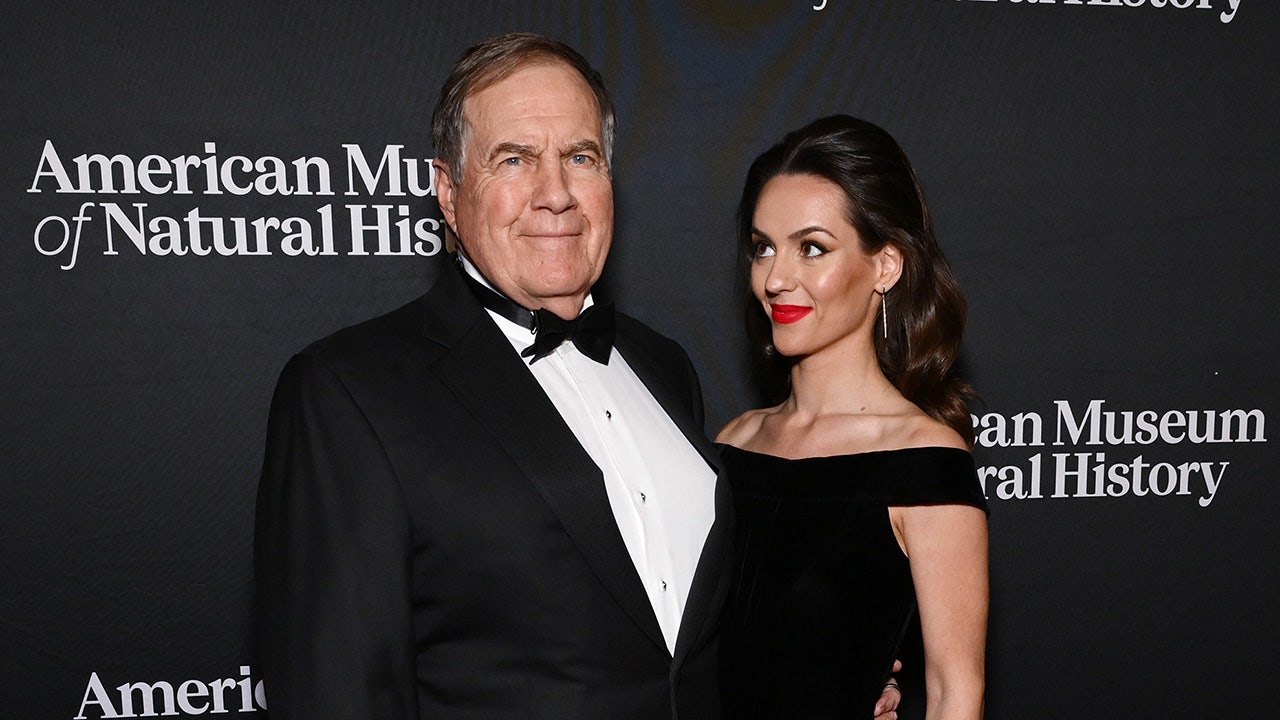
Bill Belichick and Jordon Hudson at the 14th Annual NFL Honors at Saenger Theatre Feb. 6, 2025, in New Orleans. (Christopher Polk/Variety via Getty Images)
Ahead of Hudson is Isabelle St. Cyr with over 440 votes at the time of publication. St. Cyr is the first transgender model to compete in the Miss Maine USA competition in its history after previously winning the local Miss Monson USA pageant in the Maine town of Monson.
“When I started cheerleading I had all the odds stacked against me,” St. Cyr wrote in a March 25 Facebook post. “So much pushback, so many people telling me it wasn’t a space for me. But I fought for what I loved and I ended up being a very successful cheerleader, winning state and national titles and inspiring people to join even if they hadn’t been doing it their whole life.
WHO IS JORDON HUDSON? GIRLFRIEND STIRRING CONTROVERSY, BUILDING WEALTH WITH LEGENDARY COACH BILL BELICHICK
“I sense a similar trajectory in my ongoing journey with pageants. I believe I have everything it takes to be Miss Maine USA and I know that no amount of experience can match a true passion and drive to accomplish something.”
Maine has been a battleground for the ongoing national conflict between blue state officials and the federal government over the issue of trans athletes in women’s and girls sports since February.
Gov. Janet Mills and education officials have taken a hard stand to enable trans inclusion amid immense federal pressure by President Donald Trump’s administration.
The Department of Justice filed a lawsuit against the state over the issue.
Former cheerleader Jordon Hudson arrives at Sports Illustrated’s SI The Party at Mardi Gras World Feb. 8, 2025, in New Orleans. (Skip Bolen/Getty Images)
Hudson is competing to represent Maine fishing families after her family’s fishing business went bankrupt when she was a child.
“As the daughter of displaced fishermen, I care to use my voice to protect the fleeting tradition and heritage of Maine fishing families, to prevent others from going through the same plight as what mine had to go through,” Hudson wrote on Instagram.
On Saturday afternoon, the Maine online vote page crashed, so updated results are unknown.
The most recent leader in the online vote before the crash was University of Southern Maine student Lexi Bjork with over 1,400 votes.
Follow Fox News Digital’s sports coverage on X, and subscribe to the Fox News Sports Huddle newsletter.
Read the full article from Here


“There’s less traffic and more parking.”
“I only drive if I have to move something large or heavy.”
“Sometimes I skip lunch at work to make up for the driving tax.” “I visit my elderly parents less often.”
“I complain to myself every time I have to pay the fee and I’m STILL 100% in favor of it.”
“I am returning my leased car six months before the lease expires.”
One year after the start of congestion pricing, traffic jams are less severe, streets are safer, and commute times are improving for travelers from well beyond Manhattan. Though these changes aren’t noticeable to many, and others feel the tolls are a financial burden, the fees have generated hundreds of millions of dollars for public transportation projects. And it has probably contributed to rising transit ridership.
The program, which on Jan. 5, 2025, began charging most drivers $9 during peak travel times to enter Manhattan below 60th Street, has quickly left its mark.
To assess its impact, The New York Times reviewed city and state data, outside research, and the feedback of more than 600 readers with vastly different views of the toll.
Some groused about high travel costs. Others cheered for a higher toll. Many shared snapshots from their lives: quieter streets, easier parking, costlier trips to the doctor.
Many findings from a Times analysis a few months into the experiment have held up. The program so far has met nearly all of the Metropolitan Transportation Authority’s goals, although more evidence is needed on some measures. And one question remains unresolved: whether a federal judge will decisively shield the program from efforts by the Trump administration to end it.
“Despite the threats to shut it down,” Gov. Kathy Hochul said in an interview, “the cameras are still on, and business is still up, and traffic is still down. So it’s working.”
Here’s the evidence one year in:
1. Fewer vehicles
About 73,000 fewer vehicles are entering the central business district each day, a number that has added up in the first year to about 27 million fewer entries. The decline, compared with traffic trends before the toll, has been remarkably stable across the year:
Average daily entries to the central business district
All other consequences of congestion pricing flow from this one — that fewer people are choosing to enter the area by private vehicle.
“I never drive into the city anymore. I only take the subway. It’s a relief.”
Philip Zalon Brooklyn
“I’m much more aware of driving into Manhattan and avoid it unless I have to haul a lot of stuff like a car load of Girl Scout cookies.”
Jacob White Queens
By influencing that one decision, the policy can also affect commute times, transit reliability, road safety, street life and more (as we’ll get to below).
One clear sign that behaviors are changing: Every weekday, there is now a spike in vehicles entering the zone right before the toll kicks up to $9 at 5 a.m., and right after it declines to $2.25 at 9 p.m.
Personal vehicle entries into the central business district
“I’ve decided to get up earlier to get the lower price.”
Eric Nehs Manhattan
“It is exhausting to plan the trip to cross the line at 9 p.m.”
Paul S. Morrill Manhattan
2. Faster traffic
The first consequence of those fewer vehicles is that traffic is now moving faster for the drivers who remain, and for the buses that travel those same roads. And this turns out to be true inside the congestion zone, near the congestion zone, and even much farther away.
Change in vehicle speeds, 2024-25
“Taking my kid to [doctor’s] visits in 2024 was a nightmare, every time. … After congestion pricing, it’s been noticeably less aggravating.”
Josh Hadro Brooklyn
Many readers, however, told us they didn’t believe they could see the benefits; the changes aren’t always easy to perceive by the naked eye. Readers also frequently said they believed the gains from congestion pricing were more apparent in the first months of the year and had waned since. The city’s speed data generally suggests that these improvements have been sustained, although some of the largest gains were recorded in the spring.
Average vehicle speeds in the congestion zone
But for some travelers, the speed gains have been much larger, particularly those who cross through the bridge and tunnel chokepoints into and out of Manhattan:
“Traffic approaching the [Holland] tunnel has saved me 15-30 minutes on the rides back to New York and given me hours of my time back.”
Salvatore Franchino Brooklyn
“On a typical 8 a.m. commute, there is so little traffic into the [Lincoln] tunnel that it looks like a weekend.”
Lisa Davenport Weehawken, N.J.
“I haven’t used the Lincoln Tunnel all year, probably will never use it again.”
Steven Lerner Manhattan
Improvements have also been more notable for commuters who take longer-distance trips ending in the congestion zone. That’s because those 73,000 vehicles a day that are no longer entering the zone have disappeared from surrounding roads and highways, too.
Commuters from farther out are seeing accumulating benefits from all these sources: faster speeds outside the congestion zone, much faster speeds through the tunnels and bridges, and then the improvements inside Manhattan. And people who travel roads outside the congestion zone without ever entering it get some of these benefits, too.
An analysis by researchers at Stanford, Yale and Google confirmed this through the program’s first six months. Using anonymized data from trips taken with Google Maps, they found that speeds improved after congestion pricing more on roads around the region commonly traveled by drivers heading into the central business district. That’s a subtle point, but one many readers observed themselves:
“Noticeably fewer cars driving, even way out in Bensonhurst!”
Charles Haeussler Brooklyn
“Even across the river in Bergen County, I feel that we benefit.”
Michelle Carvell Englewood Cliffs, N.J.
“I supercommute weekly from Kingston by bus. Each week, my bus round trip is 30-60 minutes faster than it was before congestion pricing.”
Rob Bellinger Kingston, N.Y.
3. More transit riders
Public transit will benefit from congestion pricing as its proceeds are invested in infrastructure upgrades; in the first year, the toll is projected to raise about $550 million after accounting for expenses, $50 million more than the M.T.A. originally predicted. But transit also stands to benefit as bus speeds improve on decongested roads and as more commuters shift to transit.
On bus routes that cross through the congestion zone, speeds increased this year, in notable contrast to the rest of the city. These improvements follow years of declining bus speeds in the central business district coming out of the pandemic.
Local bus routes
Express bus routes
Change in bus speeds, 2024-2025
“The crosstown buses are faster than they used to be, even during peak commuting times.”
Marc Wieman Manhattan
“Have gratefully noticed that they’re more on-time.”
Sue Ann Todhunter Manhattan
“It has significantly improved my bus trips from N.J., cutting about 20 minutes of traffic each way.”
John Ruppert New Jersey
Paid transit ridership is up this year compared with 2024 across the subway, M.T.A. buses, Long Island Rail Road and Metro-North Railroad as transit has continued its recovery from pandemic declines. About 300,000 more people are riding the subway each day — far more than the 70,000 cars that have been taken off the road in the congestion zone. So while congestion pricing is probably contributing to rising transit ridership, it’s not the main driver of it.
All of these added transit riders do, however, help explain why congestion pricing has not dampened activity in the busiest parts of the city, as critics feared. People are still coming, just not necessarily by private car.
“I finally taught myself to use the subway. Between the tunnel toll, congestion pricing and parking, I’m saving an enormous amount of money, time and inconvenience.”
Daniel Ludwig Weehawken, N.J.
“It’s made using the bus for short trips a more appealing option.”
John Buckholz Brooklyn
In fact, overall visits to the business district aren’t down — they were up by about 2.4 percent over the previous year, according to the city’s Economic Development Corporation. And restaurant reservations on the platform OpenTable were up inside the zone as well, by the same amount as the increase citywide.
Tom Harris, the president of the Times Square Alliance, which represents 2,600 businesses, said he had initially received complaints from some businesses. But he was pleasantly surprised that they soon stopped.
“We’re thrilled we have not seen negative impacts to local businesses,” he said. “It seems like it has been absorbed.”
4. Better quality of life
These primary shifts — fewer cars, less congested roads, more transit riders — have in turn produced a number of other effects that might more broadly be thought of as changes to qualify of life. Readers described experiencing safer crosswalks, less stressful bike rides and what feels like cleaner air.
In city data, the number of complaints to 311 for vehicle noises like car honking has declined significantly inside the congestion zone, compared with the rest of Manhattan.
Change in vehicle noise complaints, 2024-25
“Sometimes it’s almost — dare I say it? — quiet.”
Daniel Scott Manhattan
“Midtown is so much quieter now.”
Melanie DuPuis Manhattan/Hudson Valley
“It turns out that mostly when people say ‘New York is noisy’ they really mean ‘cars are noisy.’”
Grant Louis Manhattan
And the perception that roads have gotten safer is also borne out by crash data. The number of people who were seriously injured in a car crash decreased citywide, but the improvement was more pronounced in the congestion relief zone.
Change in number of people seriously injured in a crash, 2024-25
“Nobody’s trying to run me over.”
Alice Baruch Manhattan
“Fewer cars honking, fewer cars running red lights, fewer cars blocking crosswalks.”
Charlie Rokosny Brooklyn
“The number of blocked crosswalks have gone down significantly!”
Samir Lavingia Manhattan
Amid these positive changes, however, other readers described distinct declines in their quality of life, often stemming from the cost of the toll. These deeply personal observations have no corresponding measures in public data. But they make clear that some of those 27 million fewer driving trips weren’t simply replaced by transit or forgone as unnecessary — they’re missed.
“Sadly Manhattan is no longer an option for many things we once enjoyed.”
Linda Fisher Queens
“Congestion pricing has made my world much smaller.”
Justine Cuccia Manhattan
“I’m more careful about choosing events to attend, so I go to fewer of them.”
Karen Hoppe Queens
“I will not use doctors in Manhattan, limiting my health care choices.”
David Pecoraro Queens
One final aim of congestion pricing — improved air quality — has the potential to benefit everyone in the region. But the data remains inconclusive so far. A recent study from researchers at Cornell found a 22 percent improvement in one air quality measure over six months. But another analysis, by the Stanford and Yale authors, found little to no effect on air quality using local community sensors and comparing New York with other cities. And the M.T.A.’s own analysis of the program’s first year found no significant change in measured concentrations of vehicle-related air pollutants.
That doesn’t mean benefits won’t become clearer with more time and data. But the open questions about air quality underscore that even one year in, even with all the evidence gathered, there are still some effects we don’t fully understand.
“As an asthmatic, I can also palpably feel improvements in the air quality.”
Rob Hult Brooklyn
“It’s allowed me to believe that perhaps America can change for the better.”
Hanna Horvath Brooklyn
“As a car owner myself, I think it’s fair that the cost of driving is now being passed from city residents onto the drivers.”
Vincent Lee The Bronx
“I don’t like the cost but I also can’t deny its effectiveness.”
Jon Keese Queens

Police are investigating a deadly shooting that occurred overnight in Boston’s Mattapan neighborhood.
Boston police said they responded to a report of a person shot in the area of 24 Stow Road in Mattapan around 12:12 a.m. on Monday.
When they arrived, officers found a vehicle parked in front of 24 Stow Road with a man inside suffering from multiple gunshot wounds. Boston EMS transported the man to a local hospital, where he later died.
No arrests have been announced.
The shooting remains under investigation, and anyone with information is being asked to call homicide detectives at 617-343-4470. Anonymous tips can be submitted by calling 1-800-494-TIPS, texting the word “TIP” to 27463 or online.

PITTSBURGH — The Pittsburgh Steelers did it. They are AFC North champions for the first time since 2020 after a thrilling victory in Week 18.
Now, the Steelers are host the Houston Texans to finish off Wild Card Weekend. It’s another challenging matchup and another game that the Steelers will likely be considered the underdogs.
But, against the ever-growing odds, it’s possible that the Steelers could actually do this. They might just have what it takes to win the Super Bowl.
Timely Defensive Performance
There is nothing more dangerous in the postseason than a surging defense. Countless Super Bowl-winning teams are fueled by a lock-down defensive group.
The Steelers aren’t there, quite yet, but there have been glimpses of a Steel Curtain lurking.
One way they’ve displayed that is with their run defense. Since Week 14, the Steelers have vastly improved their ability to stop the run. They’ve held their opponents to under 100 yards rushing in three of the last five games.
The secondary remains a problem, evidenced once again by the multiple explosive plays they surrendered in Week 18.
But they can make up for that with their ability to create turnovers. The Steelers finished with the fourth-best turnover differential in the NFL. They finished the regular season with 15 interceptions and 12 fumbles, the second-most forced this year.
The DK of It All
The Steelers offense was in a brutal place after wide receiver DK Metcalf was suspended for the final two games of the regular season. They failed to record a touchdown in their Week 17 loss, and running back Kenneth Gainwell was the team’s leading receiver in Week 18.
In their first postseason game, Metcalf is back. His suspension ends, and the Steelers’ best offensive player returns. Despite missing the final two contests, he finished his first season in Pittsburgh with 59 receptions on 99 targets, 850 yards and six touchdowns.
With Metcalf back, the offense suddenly has hope again. Quarterback Aaron Rodgers found a way to drag the passing game forward in Week 18. He threw for 294 yards, including a game-winning touchdown throw to Calvin Austin III.
But no one is as dynamic as Metcalf. His physicality and speed can be unguardable at times, and with the Steelers set to face the league’s stingiest defenses, Metcalf’s production remains paramount.
It might be unlikely, but it’s suddenly possible. The Steelers have struggled at various points of the season, but that all fades away when the postseason begins. In its place comes hope and a belief that this team has what it takes to go on a long playoff run.
Subscribe to our FREE Newsletter for the latest news and updates on the Pittsburgh Steelers

Congestion pricing after one year: How life has changed.

Police standoff continues in Ypsilanti neighborhood

Eagles react to facing the San Francisco 49ers in playoffs: ‘It’s going to be good on good’

Defensive coordinator candidates who could improve Cowboys’ brutal secondary in 2026

This Miami Developer Is Leaning Into Miami’s Surging Mansion Market

Florida High School Football Rankings: Top 25 teams – Oct. 21

Cleary's 21 help Le Moyne down Central Connecticut State 69-64 in OT

How old is Bo Nix? What to know about Oregon quarterback ahead of 2024 NFL Draft

99th annual Pony Swim held in Virginia

Video: ‘It Didn’t Have to Happen This Way:’ U.Va. Faculty Call for Review of Police Response to Protests

Trump vows US ‘in charge’ of Venezuela as he reveals if he’s spoken to Delcy Rodríguez

Trump’s abduction of Maduro escalates concerns over potential war with Iran

Cuba says 32 Cuban fighters killed in US raids on Venezuela

Dan Bongino officially leaves FBI deputy director role after less than a year, returns to ‘civilian life’
Hundreds march in silence to honour Crans-Montana fire victims
-

 World1 week ago
Hamas builds new terror regime in Gaza, recruiting teens amid problematic election
-
 Business1 week ago
Google is at last letting users swap out embarrassing Gmail addresses without losing their data
-

 Indianapolis, IN1 week ago
Indianapolis Colts playoffs: Updated elimination scenario, AFC standings, playoff picture for Week 17
-

 Southeast1 week ago
Two attorneys vanish during Florida fishing trip as ‘heartbroken’ wife pleads for help finding them
-

 News1 week ago
Roads could remain slick, icy Saturday morning in Philadelphia area, tracking another storm on the way
-

 Politics1 week ago
Most shocking examples of Chinese espionage uncovered by the US this year: ‘Just the tip of the iceberg’
-
 News1 week ago
Marijuana rescheduling would bring some immediate changes, but others will take time
-

 World1 week ago
Podcast: The 2025 EU-US relationship explained simply