Connect with us

News

Trump vs Biden: who is winning with six months to go?

Published

on

Trump vs Biden: who is winning with six months to go?

Unlock the Editor’s Digest for free

Donald Trump has a small polling lead over Joe Biden in the critical swing states with six months to go before US voters elect their next president on November 5.

It marks a stunning reversal for Trump, who exited the White House in 2021 with a record-low approval rating of 29 per cent after a mob of his supporters stormed the Capitol on January 6 in a bid to overturn his electoral loss.

More registered voters now view Biden’s presidency to be a failure compared with Trump’s, according to a recent CNN poll — 55 per cent of US respondents said Trump’s presidency was a success compared with 39 per cent for Biden.

Advertisement

Biden’s approval rating has dropped by 19 percentage points since the start of his presidency, to 35 per cent in April, according to Pew Research.

Still, the 2024 election looks to be an exceptionally close rematch of the 2020 race, when just 43,000 votes out of 155mn cast delivered victory for Biden. 

With six months to go, here is where the race stands.

What are the polls saying right now?

National polling has been tight. Trump and Biden are both polling just above 40 per cent, with Trump currently holding a slender edge of 0.8 percentage points, well within bounds of statistical error, according to FiveThirtyEight’s averages. The independent candidate Robert F Kennedy Jr has been polling at about 10 per cent, though support for such candidates tends to be higher in pre-election polling than in actual elections.

You are seeing a snapshot of an interactive graphic. This is most likely due to being offline or JavaScript being disabled in your browser.

Advertisement

But US presidential elections are not decided by a national vote. Rather they are decided by winner-takes-all contests in the 50 states, which send electors to the Electoral College. Whichever candidate secures 270 of the 538 Electoral College votes becomes president.

In seven crucial “swing states” — Arizona, Georgia, Michigan, Nevada, North Carolina, Pennsylvania and Wisconsin — Trump leads Biden by between one and six points.

You are seeing a snapshot of an interactive graphic. This is most likely due to being offline or JavaScript being disabled in your browser.

What are the issues that will decide the election — and who’s leading on them?

The top priority for US voters remains the economy — an issue that has boosted Trump against Biden. 

Overall, 41 per cent of voters trust Trump with the economy, compared with just 35 per cent for Biden, according to the latest Financial Times poll conducted with the University of Michigan Ross School of Business.

A recent CNN poll found that 65 per cent of registered voters called the economy “extremely” important to their vote — higher than any other issue — and near levels not seen since October 2008.

Advertisement

While inflation has certainly hurt Biden, political views of the economy also play a role. Of those who said the economy was “poor”, 41 per cent said a change in political leadership in Washington would improve their perception of the economy, while 37 per cent said lower inflation and 14 per cent said better personal finances.

Other top issues include immigration — where polling suggests voters believe Trump is more competent than Biden — and protecting democracy, preserving abortion rights and lowering healthcare costs. Biden is stronger on the last three.

You are seeing a snapshot of an interactive graphic. This is most likely due to being offline or JavaScript being disabled in your browser.

Most Americans do not vote based on foreign policy. But voters have consistently said they think the US is spending too much on military and financial aid to Ukraine and Israel, according to monthly FT-Michigan Ross polling. This could help Trump.

Though Trump has not said that he will cut funding for either country, the former president has made clear that he expects other countries in Europe to step up their defence spending when it comes to countering Russia. Republicans have also stalled congressional efforts to approve aid to the two countries — only relenting in mid-April after months of deadlock.

You are seeing a snapshot of an interactive graphic. This is most likely due to being offline or JavaScript being disabled in your browser.

Advertisement

Perhaps even more important than the issues is how voters view Biden and Trump as people. 

A majority of voters say Trump, 77, is more physically and mentally fit than Biden, 81, but are less confident that Trump will act ethically in office. According to an April poll by Pew Research, 62 per cent of registered voters said they were not confident Biden is mentally up to the job, compared with 59 per cent who said they were not confident that Trump would act ethically.

You are seeing a snapshot of an interactive graphic. This is most likely due to being offline or JavaScript being disabled in your browser.

Trump is facing four criminal indictments, including federal and state charges that he conspired to overturn the 2020 election. A majority of independent Americans believe Trump is guilty in the four cases, according to a Politico Magazine/Ipsos poll. And 24 per cent of registered voters who support Trump say that if the former president is convicted, they might reconsider, according to a CNN poll.

You are seeing a snapshot of an interactive graphic. This is most likely due to being offline or JavaScript being disabled in your browser.

Who’s got more money and where is it being spent?

Biden has massively outraised Trump in the money race, leaving Biden groups with $66mn more on hand than Trump groups by the end of March.

Trump’s coffers have been drained by his legal fees. His donors have paid $76mn on Trump’s lawyers since January 2023 — 26 per cent of the total raised for the ex-president.

You are seeing a snapshot of an interactive graphic. This is most likely due to being offline or JavaScript being disabled in your browser.

Advertisement

Biden’s campaign has already spent more than $39mn on ads this year, according to AdImpact, compared with $25mn for Trump. But much of Trump’s ad spend went towards the presidential primary, as he fought off well-funded Republican challengers, including Nikki Haley and Ron DeSantis.

Future Forward Pac, a pro-Biden super Pac that can raise unlimited sums, has already booked $130mn in ads beginning in September, targeting the seven swing states and Nebraska’s one electoral vote in Omaha.

News

Brass bands in Beijing make way for sticker shock at home as Trump returns to escalating inflation

Published

on

Brass bands in Beijing make way for sticker shock at home as Trump returns to escalating inflation

WASHINGTON (AP) — President Donald Trump returned from the spectacle of a Chinese state visit to a less than welcoming U.S. economy — with the military band and garden tour in Beijing giving way to pressure over how to fix America’s escalating inflation rate.

Consumer inflation in the United States increased to 3.8% annually in April, higher than what he inherited as the Iran war and the Republican president’s own tariffs have pushed up prices. Inflation is now outpacing wage gains and effectively making workers poorer. The Cleveland Federal Reserve estimates that annual inflation could reach 4.2% in May as the war has kept oil and gasoline prices high.

Trump’s time with Chinese leader Xi Jinping appears unlikely to help the U.S. economy much, despite Trump’s claims of coming trade deals. The trip occurred as many people are voting in primaries leading into the November general election while having to absorb the rising costs of gasoline, groceries, utility bills, jewelry, women’s clothing, airplane tickets and delivery services. Democrats see the moment as a political opportunity.

“He’s returning to a dumpster fire,” said Lindsay Owens, executive director of Groundwork Collaborative, a liberal think tank focused on economic issues. “The president will not have the faith and confidence of the American people — the economy is their top issue and the president is saying, ‘You’re on your own.’”

The president’s trip to Beijing and his recent comments that indicated a tone-deafness to voters’ concerns about rising prices have suggested his focus is not on the American public and have undermined Republicans who had intended to campaign on last year’s tax cuts as helping families.

Advertisement

Trump described the trip as a victory, saying on social media that Xi “congratulated me on so many tremendous successes,” as the U.S. president has praised their relationship.

Trump told reporters that Boeing would be selling 200 aircraft — and maybe even 750 “if they do a good job” — to the Chinese. He said American farmers would be “very happy” because China would be “buying billions of dollars of soybeans.”

“We had an amazing time,” Trump said as he flew home on Air Force One, and told Fox News’ Bret Baier in an interview that gasoline prices were just some “short-term pain” and would “drop like a rock” once the war ends.

Inflationary pain is not a factor in how Trump handles Iran

Trump departed from the White House for China by saying the negotiations over the Iran war depended on stopping Tehran from developing nuclear weapons. “I don’t think about Americans’ financial situation. I don’t think about anybody. I think about one thing: We cannot let Iran have a nuclear weapon,” Trump said.

That remark prompted blowback because it suggested to some that Trump cared more about challenging Iran than fighting inflation at home. Trump defended his words, telling Fox News: “That’s a perfect statement. I’d make it again.”

Advertisement

The White House has since stressed that Trump is focused on inflation.

Asked later about the president’s words, Vice President JD Vance said there had been a “misrepresentation” of the remarks. White House spokesman Kush Desai said the “administration remains laser-focused on delivering growth and affordability on the homefront” while indicating actions would be taken on grocery prices.

But as Trump appeared alongside Xi, new reports back home showed inflation rising for businesses and interest rates climbing on U.S. government debt.

His comments that Boeing would sell 200 jets to China caused the company’s stock price to fall because investors had expected a larger number. There was little concrete information offered about any trade agreements reached during the summit, including Chinese purchases of U.S. exports such as liquefied natural gas and beef.

“Foreign policy wins can matter politically, but only if voters feel stability and affordability in their daily lives,” said Brittany Martinez, a former Republican congressional aide who is the executive director of Principles First, a center-right advocacy group focused on democracy issues.

Advertisement

“Midterms are almost always a referendum on cost of living and public frustration, and Republicans are not immune from the same inflation and affordability pressures that hurt Democrats in recent cycles,” she added.

Democrats see Trump as vulnerable

Democratic lawmakers are seizing on Trump’s comments before his trip as proof of his indifference to lowering costs. There is potential staying power of his remarks as Americans head into Memorial Day weekend facing rising prices for the hamburgers and hot dogs to be grilled.

“What Americans do not see is any sympathy, any support, or any plan from Trump and congressional Republicans to lower costs – in fact, they see the opposite,” Senate Democratic leader Chuck Schumer of New York said Thursday.

Vance faulted the Biden administration for the inflation problem even though the inflation rate is now higher than it was when Trump returned to the White House in January 2025 with a specific mandate to fix it.

“The inflation number last month was not great,” Vance said Wednesday, but he then stressed, “We’re not seeing anything like what we saw under the Biden administration.”

Advertisement

Inflation peaked at 9.1% in June 2022 under Biden, a Democrat. By the time Trump took the oath of office, it was a far more modest 3%.

Trump’s inflation challenge could get harder

The data tells a different story as higher inflation is spreading into the cost of servicing the national debt.

Over the past week, the interest rate charged on 10-year U.S. government debt jumped from 4.36% to 4.6%, an increase that implies higher costs for auto loans and mortgages.

“My fear is that the layers of supply shocks that are affecting the U.S. economy will only further feed into inflationary pressures,” said Gregory Daco, chief economist at EY-Parthenon.

Daco noted that last year’s tariff increases were now translating into higher clothing prices. With the Supreme Court ruling against Trump’s ability to impose tariffs by declaring an economic emergency, his administration is preparing a new set of import taxes for this summer.

Advertisement

Daco stressed that there have been a series of supply shocks. First, tariffs cut into the supply of imports. In addition, Trump’s immigration crackdown cut into the supply of foreign-born workers. Now, the effective closure of the Strait of Hormuz has cut off the vital waterway used to ship 20% of global oil supplies.

“We’re seeing an erosion of growth,” Daco said.

Advertisement
Continue Reading

News

Top Drug Regulator Is Fired From the F.D.A.

Published

on

Top Drug Regulator Is Fired From the F.D.A.

Dr. Tracy Beth Hoeg, the Food and Drug Administration’s top drug regulator, said she was fired from the agency Friday after she declined to resign.

She said she did not know who had ordered her firing or why, nor whether Health Secretary Robert F. Kennedy Jr. knew of her fate. The Department of Health and Human Services did not immediately respond to a request for comment.

The departure reflected the upheaval at the F.D.A., days after the resignation of Dr. Marty Makary, the agency commissioner. Dr. Makary had become a lightning rod for critics of the agency’s decisions to reject applications for rare disease drugs and to delay a report meant to supply damaging evidence about the abortion drug mifepristone. He also spent months before his departure pushing back on the White House’s requests for him to approve more flavored vapes, the reason he ultimately cited for leaving.

Dr. Hoeg’s hiring had startled public health leaders who were familiar with her track record as a vaccine skeptic, and she played a leading role in some of the agency’s most divisive efforts during her tenure. She worked on a report that purportedly linked the deaths of children and young adults to Covid vaccines, a dossier the agency has not released publicly. She was also the co-author of a document describing Mr. Kennedy’s decision to pare the recommendations for 17 childhood vaccines down to 11.

But in an interview on Friday, Dr. Hoeg said she “stuck with the science.”

Advertisement

“I am incredibly proud of the work we were doing,” Dr. Hoeg said, adding, “I’m glad that we didn’t give in to any pressures to approve drugs when it wasn’t appropriate.”

As the director of the agency’s Center for Drug Evaluation and Research, she was a political appointee in a role that had been previously occupied by career officials. An epidemiologist who was trained in the United States and Denmark, she worked on efforts to analyze drug safety and on a panel to discuss the use of serotonin reuptake inhibitors, the most widely prescribed class of antidepressants, during pregnancy. She also worked on efforts to reduce animal testing and was the agency’s liaison to an influential vaccine committee.

She made sure that her teams approved drugs only when the risk-benefit balance was favorable, she said.

The firing worsens the leadership vacuum at the F.D.A. and other agencies, with temporary leaders filling the role of commissioner, food chief and the head of the biologics center, which oversees vaccines and gene therapies. The roles of surgeon general and director of the Centers for Disease Control and Prevention are also unfilled.

Advertisement
Continue Reading

News

Supreme Court is death knell for Virginia’s Democratic-friendly congressional maps

Published

on

Supreme Court is death knell for Virginia’s Democratic-friendly congressional maps

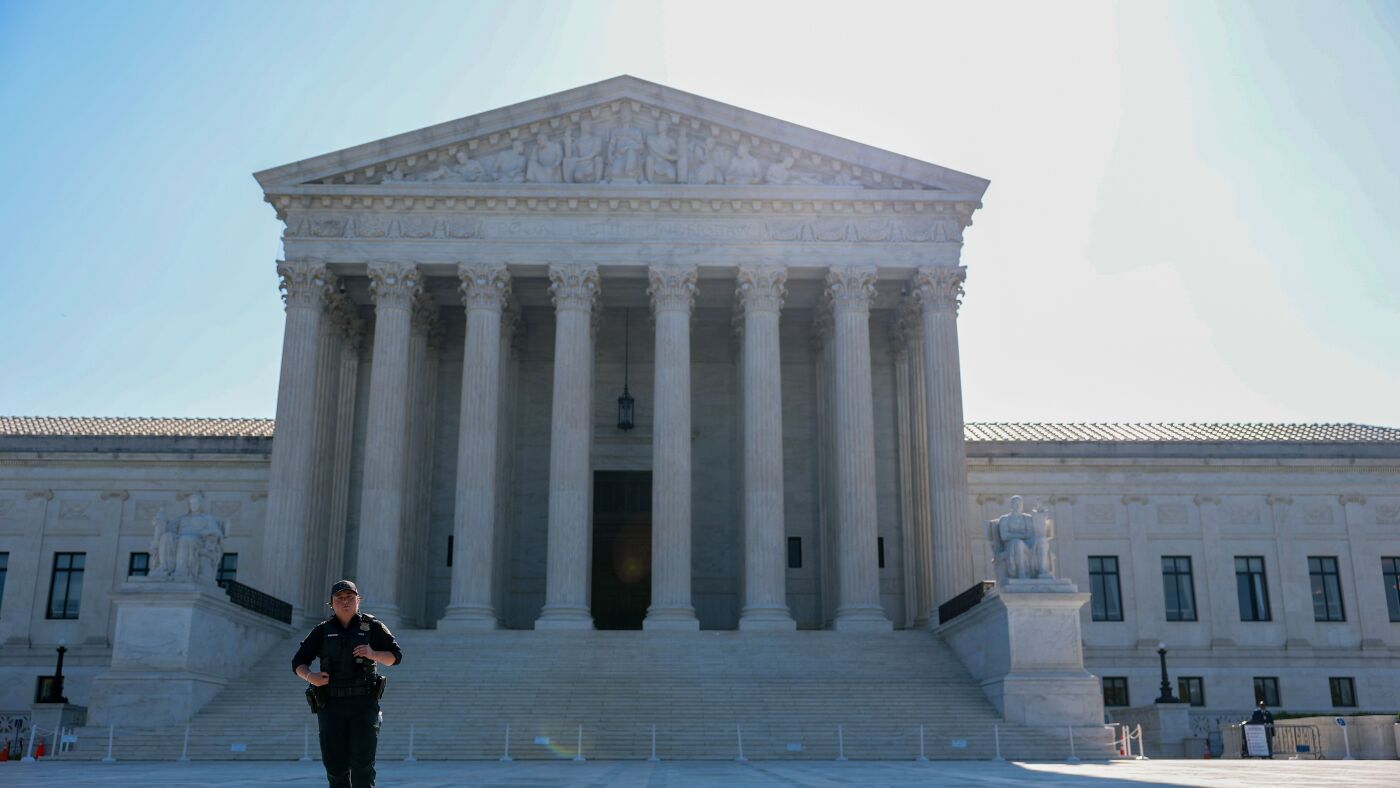
The U.S. Supreme Court

Andrew Harnik/Getty Images


hide caption

toggle caption

Advertisement

Andrew Harnik/Getty Images

The U.S. Supreme Court refused Friday to allow Virginia to use a new congressional map that favored Democrats in all but one of the state’s U.S. House seats. The map was a key part of Democrats’ effort to counter the Republican redistricting wave set off by President Trump.

The new map was drawn by Democrats and approved by Virginia voters in an April referendum. But on May 8, the Supreme Court of Virginia in a 4-to-3 vote declared the referendum, and by extension the new map, null and void because lawmakers failed to follow the proper procedures to get the issue on the ballot, violating the state constitution.

Virginia Democrats and the state’s attorney general then appealed to the U.S. Supreme Court, seeking to put into effect the map approved by the voters, which yields four more likely Democratic congressional seats. In their emergency application, they argued the Virginia Supreme Court was “deeply mistaken” in its decision on “critical issues of federal law with profound practical importance to the Nation.” Further, they asserted the decision “overrode the will of the people” by ordering Virginia to “conduct its election with the congressional districts that the people rejected.”

Advertisement

Republican legislators countered that it would be improper for the U.S. Supreme Court to wade into a purely state law controversy — especially since the Democrats had not raised any federal claims in the lower court.

Ultimately, the U.S. Supreme Court sided with Republicans without explanation leaving in place the state court ruling that voided the Democratic-friendly maps.

The court’s decision not to intervene was its latest in emergency requests for intervention on redistricting issues. In December, the high court OK’d Texas using a gerrymandered map that could help the GOP win five more seats in the U.S. House. In February, the court allowed California to use a voter-approved, Democratic-friendly map, adopted to offset Texas’s map. Then in March, the U.S. Supreme Court blocked the redrawing of a New York map expected to flip a Republican congressional district Democratic.

And perhaps most importantly, in April, the high court ruled that a Louisiana congressional map was a racial gerrymander and must be redrawn. That decision immediately set off a flurry of redistricting efforts, particularly in the South, where Republican legislators immediately began redrawing congressional maps to eliminate long established majority Black and Hispanic districts.

Advertisement
Continue Reading
Advertisement

Trending