Connect with us

News

Novo Nordisk cuts forecasts after replica obesity drugs hit US take-up

Published

on

Novo Nordisk cuts forecasts after replica obesity drugs hit US take-up

Unlock the Editor’s Digest for free

Danish pharmaceutical group Novo Nordisk has cut sales and profit forecasts after replica drugs hit take-up of its blockbuster GLP-1 obesity and diabetes medicines Wegovy and Ozempic in the US.

The company beat operating profit forecasts for the first quarter of the year but said it had been hit by compounding — preparations custom-made by pharmacies using the active ingredients of patented drugs.

“In the first quarter of 2025, we delivered 18 per cent sales growth and continued to expand the reach of our innovative GLP-1 treatments,” said Lars Fruergaard Jørgensen, president and chief executive. “However, we have reduced our full-year outlook due to lower-than-planned branded GLP-1 penetration, which is impacted by the rapid expansion of compounding in the US.”

Advertisement

Novo also said its US operations would no longer have to meet the company’s global gender goals, as President Donald Trump’s administration applies pressure to remove diversity initiatives.

Sales growth for this year is now expected to be 13 to 21 per cent at constant exchange rates, compared with earlier guidance of 16 to 24 per cent. Operating profit growth is forecast at 16 to 24 per cent, compared with a previous range of 19 to 27 per cent.

Sales rose 18 per cent year-on-year to DKr78.1bn ($11.9bn) at constant exchange rates in the first quarter. Operating profits climbed 20 per cent to DKr38.8bn, beating consensus analyst forecasts.

Novo shares rose more than 5 per cent in morning trading.

Compounding began in the US after the Food and Drug Administration regulator declared official shortages in 2022 of Wegovy, Ozempic and Zepbound, which is made by Novo’s rival Eli Lilly. Patients have been able to buy compounded products for as little as $199 a month. List prices for the branded drugs, charged to people without insurance, are $1,000 or more.

Advertisement

The FDA has now said the shortage is over, meaning pharmacies must stop selling compounded versions of the Novo drugs by May 22. 

Novo said it expects “a step up in the business that used to go to compounders” in the second half of the year, according to chief financial officer Karsten Munk Knudsen. Another potential boost for Wegovy includes deals to sell it at discounted rates at the drugstore chain CVS and via telehealth companies. Novo also plans to speed up its international expansion of Wegovy outside the US, Knudsen said.

“We’ve launched in around 25 markets currently and we see an accelerated launch schedule following increased supplies,” he said.

In a statement alongside its results, the drugmaker said: “While Novo Nordisk maintains our global aspiration of a minimum 45 per cent representation for each gender by the end of 2025, Novo Nordisk’s operations in the US will no longer participate in this global initiative due to evolving legal requirements,” the company said.

Although none have been announced yet, the pharma industry will potentially have to deal with US tariffs on pharmaceutical imports. Tariffs “may have a negative impact on Novo Nordisk and our industry”, the company said on Wednesday.

Advertisement

Novo has significant production capacity already in the US and exports more from the country than it imports, Jørgensen said. It has announced more than $24bn of investments in the US over the past decade.

Novo was showing “encouraging” signs of “fighting back” in the face of investor worries that it was losing ground to Lilly, said Emily Field, an analyst at Barclays.

“The results and the guidance cut are for the most part in the realm of what people had been expecting,” Field said. “What people really want to hear from them is how confident they are that volumes are going to increase in the second half — because it’s a volume play.”

Novo has also faced investor scrutiny about its planned successor obesity and diabetes drugs, after two sets of worse than expected trial results for its product CagriSema.

Advertisement

News

Cuba says 32 Cuban fighters killed in US raids on Venezuela

Published

on

Cuba says 32 Cuban fighters killed in US raids on Venezuela

Havana declares two days of mourning for the Cubans killed in US operation to abduct Nicolas Maduro.

Cuba has announced the death of 32 ⁠of its ​citizens during the United States military operation to abduct and detain Venezuelan President Nicolas Maduro and his wife in Caracas.

Havana said on Sunday that there would be two days of mourning on ‌January 5 and ‌6 in ⁠honour of those killed and that ‌funeral arrangements would be announced.

Recommended Stories

list of 4 itemsend of list

The state-run Prensa Latina agency said the Cuban “fighters” were killed while “carrying out missions” on behalf of the country’s military, at the request of the Venezuelan government.

The agency said the slain Cubans “fell in direct combat against the attackers or as a result of the bombing of the facilities” after offering “fierce resistance”.

Advertisement

Cuba is a close ally of Venezuela’s government, and has sent military and police forces to assist in operations in the Latin American country for years.

Maduro and his wife have been flown to New York following the US operation to face prosecution on drug-related charges. The 63-year-old Venezuelan leader is due to appear in court on Monday.

He has previously denied criminal involvement.

Images of Maduro blindfolded and handcuffed by US forces have stunned Venezuelans.

Venezuelan Minister of Defence General Vladimir Padrino said on state television that the US attack killed soldiers, civilians and a “large part” of Maduro’s security detail “in cold blood”.

Advertisement

Venezuela’s armed forces have been activated to guarantee sovereignty, he said.

‘A lot of Cubans’ killed

US President Donald Trump, speaking to reporters on board Air Force One on Sunday, said that “there was a lot of death on the other side” during the raids.

He said that “a lot of Cubans” were killed and that there was “no death on our side”.

Trump went on to threaten Colombian President Gustavo Petro, saying that a US military operation in the country sounded “good” to him.

But he suggested that a US military intervention in Cuba is unlikely, because the island appears to be ready to fall on its own.

Advertisement

“Cuba is ready to fall. Cuba looks like it’s ready to fall. I don’t know how they, if they can, hold that, but Cuba now has no income. They got all of their income from Venezuela, from the Venezuelan oil,” Trump said.

“They’re not getting any of it. Cuba literally is ready to fall. And you have a lot of great Cuban Americans that are going to be very happy about this.”

The US attack on Venezuela marked the most controversial intervention in Latin America since the invasion of Panama 37 years ago.

The Trump administration has described Maduro’s abduction as a law-enforcement mission to force him to face US criminal charges filed in 2020, including “narco-terrorism” conspiracy.

But Trump also said that US oil companies needed “total access” to the country’s vast reserves and suggested that an influx of Venezuelan immigrants to the US also factored into the decision to abduct Maduro.

Advertisement

While many Western nations oppose Maduro, there were many calls for the US to respect international law, and questions arose over the legality of abducting a foreign head of state.

Left-leaning regional leaders, including those of Brazil, Colombia, Chile and Mexico, have largely denounced Maduro’s removal, while countries with right-wing governments, from Argentina to Ecuador, have largely welcomed it.

The United Nations Security Council plans to meet on Monday to discuss the attack. Russia and China, both major backers of Venezuela, have criticised the US.

Beijing on Sunday insisted that the safety of Maduro and his wife be a priority, and called on the US to “stop toppling the government of Venezuela”, calling the attack a “clear violation of international law“.

Moscow also said it was “extremely concerned” about the abduction of Maduro and his wife, and condemned what it called an “act of armed aggression” against Venezuela by the US.

Advertisement
Continue Reading

News

Here’s a partial list of U.S. elected officials opposing Trump’s invasion of Venezuela

Published

on

Here’s a partial list of U.S. elected officials opposing Trump’s invasion of Venezuela

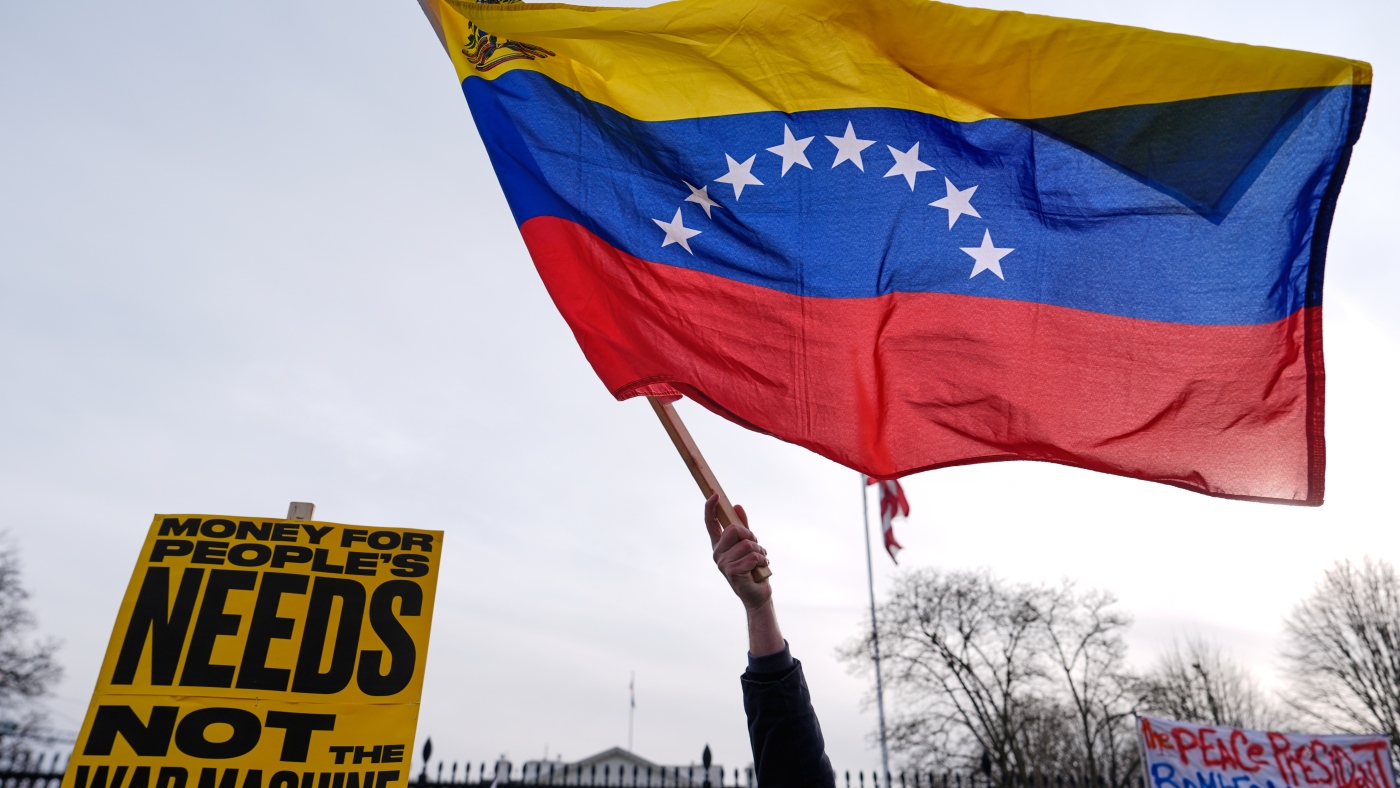
Protesters rally outside the White House Saturday, Jan. 3, 2026, in Washington, after the U.S. captured Venezuelan President Nicolás Maduro and his wife in a military operation.

Julia Demaree Nikhinson/AP


hide caption

toggle caption

Advertisement

Julia Demaree Nikhinson/AP

President Trump’s move to depose Venezuelan President Nicolás Maduro has drawn praise inside the United States, especially from Republican leaders. But the invasion also faces significant skepticism, questions about legality, and full-throated opposition from some elected officials across the political spectrum.

Here’s a survey.

Some Republicans condemn, or question, Trump’s invasion

While most conservative lawmakers voiced support for Trump’s action, a small group of Republican House members and GOP Senators described the move as unlawful or misguided.

Advertisement

“If the President believes military action against Venezuela is needed, he should make the case and Congress should vote before American lives and treasure are spent on regime change in South America,” said Rep. Thomas Massie, a Republican from Kentucky, speaking on the House floor. “Do we truly believe that Nicolás Maduro will be replaced by a modern-day George Washington? How did that work out in Cuba, Libya, Iraq or Syria?”

Rep. Marjorie Taylor Greene, R-Ga., posting on social media, voiced skepticism that the true goal of Trump’s invasion was to stop the flow of drugs into the United States. She also described the military action as a violation of conservative “America First” principles.

“Americans disgust with our own government’s never ending military aggression and support of foreign wars is justified because we are forced to pay for it and both parties, Republicans and Democrats, always keep the Washington military machine funded and going,” Greene posted on X. “This is what many in MAGA thought they voted to end. Boy were we wrong.”

Rep. Don Bacon, R-Neb., a retired U.S. Air Force Brigadier General, generally praised the military operation, but he also said the precedent of U.S. military intervention could embolden more aggressive action by authoritarian regimes in China and Russia.

Advertisement

“Freedom and rule of law were defended last night,” Bacon said on X, referring to the invasion of Venezuela, “but dictators will try to exploit this to rationalize their selfish objectives.”

At least three Republican Senators also voiced concern or skepticism about the invasion and its legal justification, while also celebrating the fall of Maduro.
“In this case, a leader who monopolized central power is removed in an action that monopolizes central power,” Kentucky Sen. Rand Paul wrote on the platform X. “Best though, not to forget, that our founders limited the executive’s power to go to war without Congressional authorization for a reason—to limit the horror of war and limit war to acts of defense.”

GOP Senators Lisa Murkowski and Dan Sullivan, both of Alaska, said Maduro’s ouster would make the United States and the world safer, but suggested the operation could turn into a quagmire for U.S. troops.

“Late last year, I voted to proceed to debate on two resolutions that would have terminated the escalation of U.S. military operations against Venezuela absent explicit authorization from Congress,” Murkowski wrote on the platform X. She added that she expects further briefings from Trump officials on the “legal basis for these operations.”

Advertisement

“The lessons learned from what took place after the United States deposed another Latin American indicted drug lord—Panama’s Manuel Noriega in 1989—could prove useful, as could the painful and difficult lessons learned after the U.S. invasion of Iraq in 2003,” Sullivan wrote on X.

Most Democrats condemn the invasion

Most Democratic lawmakers and elected officials also described Maduro as a dictator, but they generally condemned Trump’s action. At a press conference Saturday, New York City’s new Mayor Zohran Mamdani told reporters he phoned Trump and voiced opposition to the invasion.

“I called the President and spoke with him directly to register my opposition to this act and to make clear that it was an opposition based on being opposed to a pursuit of regime change, to the violation of federal and international law,” Mamdani said.

Democratic minority leader Sen. Chuck Schumer of New York accused Trump of acting in bad faith and violating the U.S. Constitution. “The idea that Trump plans to now run Venezuela should strike fear in the hearts of all Americans,” Schumer said in a post on X. “The American people have seen this before and paid the devastating price.”

According to Schumer, the Trump administration assured him “three separate times that it was not pursuing regime change or or military action without congressional authorization.”

Advertisement

California’s Democratic Sen. Adam Schiff, a frequent Trump critic, posted a series of comments on X describing Saturday’s military action and Trump’s proposed U.S. occupation of Venezuela as potentially disastrous.

“Acting without Congressional approval or the buy-in of the public, Trump risks plunging a hemisphere into chaos and has broken his promise to end wars instead of starting them,” Schiff wrote.

“Donald Trump has once again shown his contempt for the Constitution and the rule of law,” said Vermont’s Independent Sen. Bernie Sanders, in a video posted on social media, where he described the U.S. invasion as “imperialism.”

“This is the horrific logic of force that Putin used to justify his brutal attack on Ukraine,” Sanders said.

Rep. Alexandria Ocasio-Cortez, Democrat of New York, also spoke harshly of the military strike, describing it as an effort by Trump to distract attention from domestic troubles in the United States.

“It’s not about drugs. If it was, Trump wouldn’t have pardoned one of the largest narco traffickers in the world last month,” Ocasio-Cortez said, referring to Trump’s decision to free former Honduran President Orlando Hernandez, who had been convicted in the U.S. of helping smuggle more than 400 tons of cocaine into the U.S.

Advertisement

“It’s about oil and regime change. And they need a trial now to pretend that it isn’t. Especially to distract from Epstein + skyrocketing healthcare costs,” Ocasio-Cortez added on X.

Continue Reading

News

Who is Delcy Rodríguez, Venezuela’s leader after Maduro’s capture? | CNN

Published

on

Who is Delcy Rodríguez, Venezuela’s leader after Maduro’s capture? | CNN

Following the capture of President Nicolás Maduro during a US military operation in Venezuela, the command of the South American country has fallen into the hands of Executive Vice President Delcy Rodríguez.

That is what Venezuela’s constitution outlines in its different scenarios anticipating a president’s absence. Under Articles 233 and 234, whether the absence is temporary or absolute, the vice president takes over the presidential duties.

Rodríguez – also minister for both finance and oil – stepped into the role on Saturday afternoon. Hours after the capture of Maduro and his wife, Cilia Flores, she chaired a National Defense Council session, surrounded by other ministers and senior officials, and demanded the couple’s “immediate release” while condemning the US military operation.

Standing before the Venezuelan flag, Rodríguez said the early-morning operation represents a blatant violation of international law and Venezuela’s sovereignty. She added that the action must be rejected by Venezuelans and condemned by governments across Latin America.

“We call on the peoples of the great homeland to remain united, because what was done to Venezuela can be done to anyone. That brutal use of force to bend the will of the people can be carried out against any country,” she told the council in an address broadcast by state television channel VTV.

Advertisement

Rodríguez, 56, is from Caracas and studied law at the Central University of Venezuela.

She has spent more than two decades as one of the leading figures of chavismo, the political movement founded by President Hugo Chávez and led by Maduro since Chávez’s death in 2013.

Alongside her brother Jorge Rodríguez, the current president of the National Assembly, she has held various positions of power since the Chávez era. She served as minister of communication and information from 2013 to 2014 and later became foreign minister from 2014 to 2017. In that role, she defended Maduro’s government against international criticism, including allegations of democratic backsliding and human rights abuses in the country.

As foreign minister, Rodríguez represented Venezuela at forums such as the United Nations, where she accused other governments of seeking to undermine her country.

In 2017, Rodríguez became president of the Constituent National Assembly that expanded the government’s powers after the opposition won the 2015 legislative elections. In 2018, Maduro appointed her vice president for his second term. She retained the post during his third presidential term, which began on January 10, 2025, following the controversial July 28, 2024, elections. Until the president’s capture, she served as Venezuela’s chief economic authority and minister of petroleum.

Advertisement

Venezuela’s opposition maintains that the 2024 elections were fraudulent and that Maduro is not a legitimately elected president. They insist that the true winner was former ambassador Edmundo González Urrutia, a position supported by some governments in the region.

José Manuel Romano, a constitutional lawyer and political analyst, told CNN that the positions Rodríguez has held show she is a “very prominent” figure within the Venezuelan government and someone who enjoys the president’s “full trust.”

“The executive vice president of the republic is a highly effective operator, a woman with strong leadership skills for managing teams,” Romano said.

“She is very results-oriented and has significant influence over the entire government apparatus, including the Ministry of Defense. That is very important to note in the current circumstances,” he added.

On the path to an understanding with the US?

Hours after Maduro’s capture, and before Rodríguez addressed the National Defense Council, US President Donald Trump said at a press conference that Secretary of State Marco Rubio had spoken with the vice president. According to Trump, she appeared willing to work with Washington on a new phase for Venezuela.

Advertisement

“She had a conversation with Marco. She said, ‘We’re going to do whatever you need.’ I think she was quite courteous. We’re going to do this right,” Trump said.

Trump’s remarks, however, surprised some analysts, who believe Rodríguez is unlikely to make concessions to the United States.

“She is not a moderate alternative to Maduro. She has been one of the most powerful and hard-line figures in the entire system,” Imdat Oner, a policy analyst at the Jack D. Gordon Institute and a former Turkish diplomat based in Venezuela, told CNN.

“Her rise to power appears to be the result of some kind of understanding between the United States and key actors preparing for a post-Maduro scenario. In that context, she would essentially serve as a caretaker until a democratically elected leader takes office,” the analyst added.

In her first messages following Maduro’s capture, Rodríguez showed no signs of backing down and, without referencing Trump’s statements, closed the door to any potential cooperation with the United States.

Advertisement

Earlier in the morning, during a phone interview with VTV, Rodríguez said the whereabouts of Maduro and Flores were unknown and demanded proof that they were alive. Later in the afternoon, during the National Defense Council session, she escalated her rhetoric, condemned the US operation and, despite the circumstances, insisted that Maduro remains in charge of Venezuela.

“There is only one president in this country, and his name is Nicolás Maduro Moros,” said Rodríguez — now, by force of events, the most visible face of the government.

Reuters news agency contributed to this report.

Advertisement
Continue Reading
Advertisement

Trending