News
Lena Waithe's religion is 'The Wizard of Oz.' Here's what she learned from it. : Wild Card with Rachel Martin


Lena Waithe shares why her least favorite thing is being wrong.
Vivien Killilea/Getty Images for Palm Springs In
hide caption
toggle caption
Vivien Killilea/Getty Images for Palm Springs In

Lena Waithe shares why her least favorite thing is being wrong.
Vivien Killilea/Getty Images for Palm Springs In
A note from Wild Card host Rachel Martin:
Lena Waithe knows what she wants. She wants people to look outside of their own lives to try to understand other people and the choices they make. Her TV shows and films are these powerful little empathy engines.
Waithe became the first Black woman ever to win an Emmy for comedy writing on the show Master of None. She’s also the creator of the comedy series Boomerang and Twenties. She wrote the film Queen & Slim and was a producer on the movie Dear White People.
But for me, Waithe’s real triumph is The Chi. The show takes place where she grew up on the south side of Chicago. It’s about Black people living at the margins of society with little to no room for error. It is also about family and loyalty and joy. I love this show because every character is given their full humanity. You cannot put anyone in a tidy column of good or bad or say, “This person is worthy of respect and this person’s not.” People are complicated, beautiful and broken, and Waithe doesn’t want you to look away because if you do, you’re going to miss the truth that she’s putting out into the world – which is that judging people is harder when you start to understand them.
The trailer for season 6 of The Chi.
YouTube
This Wild Card interview has been edited for length and clarity. Host Rachel Martin asks guests randomly-selected questions from a deck of cards. Tap play above to listen to the full podcast, or read an excerpt below.
Question 1: When did you feel like you found your people?
Lena Waithe: Michael Svoboda – who was a writer’s PA on The Game when I was an assistant at Girlfriends – he and I just really vibed. And he was just like, “Yo, I got a writer’s group that I do where we sit and write original pilots that we’re working on to kind of help us get some stuff done.” And I walked into that writer’s group and I just like found all these amazing people that I’m still tight with today.
Rachel Martin: Tell me how that jibes with your hometown Chicago and your experience there, because it sounds like your people were writers. Did you not have that in some way in Chicago?
Waithe: I was a bit of an oddball in Chicago because I was obsessed with TV, obsessed with movies. Like, people go to the movies and watch TV shows – it’s a pastime. And I think my family could tell it was more than that for me – I would be just enthralled by it and be thinking about it.

Like, I have like a Wizard of Oz tattoo. I have Judy Garland. I have the lion. I have the scarecrow. I have all of it, because that movie was more than a movie for me. It was almost like a Bible to life.
It’s like – you always think there’s something out there that’s better than where you’re at right now. But the truth is, when you go out there and get to the Emerald City and meet the wizard, you realize it’s not really what you thought it was. And then all you long for when you’re in the Emerald City is to go where?
Martin: Home.
Waithe: Exactly. And it’s a lesson none of us really learn, still. You know, we still are trying to go, like, “I gotta get to the Wizard – if I could just get to the Emerald City, everything will be fine.”
And then you get there, you’re just like, “I’m still not fine.” And so I think the big reason why Wizard of Oz is such a religion and a reminder for me is that there is no Emerald City that will feel like home.
Martin: Was that sad for you? Was there a grief attached to that?
Waithe: No, it helped me to slow down. Because the truth is, there’s always something you want. And that’s fine, you know, you need that thing to make you want to go. But you got to remember that it’ll be nice if it happens. It’ll be cool. But you don’t want it to be a thing that, if you don’t get it, you can’t find happiness.
Question 2: What makes you irrationally defensive?
Waithe: Irrationally defensive? (laughs) Oh my gosh.
I don’t like to be wrong. My least favorite thing is getting something wrong. And that can be in many ways, you know, it’d be a relationship, you know, some trivia, you know what I mean?
Martin: I love that those were in the same breath..
Waithe: I know it’s like relationship, like Taboo, you know what I mean? I’m not good at not being good at things. So I can get defensive when I’m not like succeeding at something.
Martin: When’s the last time you were wrong about something?
Waithe: Oh, recently. I thought a particular actress was in Game of Thrones. And she wasn’t, and I was so ticked because I was like, “Are you sure that’s not her?” And I looked it up too. I was like, “Let me see, let me see!”

Martin: Right, of course! Because you believed with every fiber of your being that she was in Game of Thrones.
Waithe: I really did. That’s what I’m saying. Like, I was so not happy about that in that moment because I never get that stuff wrong, but it’s okay.
Martin: We’re going to forget you were wrong about that one. No one has to know.
Waithe: Now everybody knows.
Question 3: What’s your best defense against despair?
Waithe: Ooooooh. I love this Baldwin quote. He says to Nikki Giovanni in a beautiful conversation that they’re having where she thinks she’s a pessimist. And he says, “No, you’re a realist. You’re cool, but you’re not a pessimist.” He’s like, “Because you’re alive.” And I think my biggest defense against despair is the fact that I’m alive. Is that I’m here. And even though it can feel like a curse, it is the greatest gift to be Earthside at this time.
And you can’t run away from despair. You can try. I love that Solange song, “Cranes in the Sky,” because it’s all about ways in which we try to run away. So you can try to shop it away, smoke it away, you know, like sex away. You can’t.
The music video for Solange Knowles’ song “Cranes in the Sky.”
YouTube
Martin: So in the particular, when it has come for you, do you just sit there and like say an affirmation? Like, “I’m alive?” You look in the mirror, you pinch yourself like…
Waithe: No, I’m a sleeper. I’ll try to sleep it away. I try to watch The Comeback, you know, which is my favorite go-to.
Martin: Really? That brings you back from the brinks of despair?
Waithe: No, it just reminds me of a character that is so flawed. But yet, I love and root for so much. Like, Valerie Cherish is a game changing character for me. When I watch that show, I can’t help but look at Valerie Cherish and go, “Alright. I’m alright, I’m okay, I’ll be alright,” You know – that character and that show, The Comeback, ladies and gentlemen, go find it.
Martin: Despair beware!
Waithe: When you are in despair, go watch the first season of The Comeback, okay? And you will be like, “What am I experiencing? And I feel better now cause I’m laughing and also like completely have secondhand embarrassment.”


EPISODE 2: In the summer of 2020, protests are happening all across the country. But Seattle is different. A confrontation between protestors and police outside a precinct leads to the birth of CHOP. A thousand miles away, Antonio Mays Jr. hears about what’s happening in Seattle. He was shot and killed there three weeks later.
Listen to Embedded wherever you get your podcasts, including NPR App, Apple Podcasts, Pocket Casts, Spotify, and RSS.
Support journalism like this by signing up for NPR+ at plus.npr.org
Additional reporting by David Gutman. Produced by Dan Girma, with Adelina Lancianese and Abby Wendle. Edited by Luis Trelles, Laura Greanias and Katie Simon. Fact checking and research by Dania Suleman and Miyoko Wolf. Mastering by Jimmy Keeley.

new video loaded: Trump Says He ‘Loves the Inflation’ Amid War With Iran
transcript
transcript
Trump Says He ‘Loves the Inflation’ Amid War With Iran
President Trump dismissed the newest inflation report on Wednesday, marking the third-straight month of high prices for consumers. The war in Iran has snarled the world’s energy supply, resulting in high oil and gas prices.
-
Reporter: “Are you concerned, Mr. President, about the latest inflation number which came out this morning? Could that be a —” “No, I love it. The numbers were great. You know what I really love. I love the inflation.” “Inflation to come down between now and —” “When the war is over?” “Yes.” “It’s coming down.” “I know you can’t —” “It’s going to come down like a rock.”
By Jorge Mitssunaga
June 10, 2026

Iran has again claimed attacks on United States military bases in Bahrain, Kuwait and Jordan, and targeted two vessels in the Strait of Hormuz in retaliation for renewed waves of US attacks on the country.
The Islamic Revolutionary Guard Corps (IRGC) said it launched drone strikes on Bahrain’s Sheikh Isa airbase and Kuwait’s Ali Al Salem and Ahmad Al-Jaber airbases early on Thursday.
list of 4 itemsend of listRecommended Stories
The Al-Azraq airbase in Jordan was also targeted with 12 ballistic missiles, it said, while two oil tankers that attempted “to illegally pass through” the Strait of Hormuz were also hit.
Bahrain activated air raid sirens twice, while Kuwait said its air defence systems were “intercepting hostile aerial targets”.
The IRGC said the strikes were in response to the US’s “repeated violations” of an April ceasefire and declared the Strait of Hormuz “closed until further notice”.
All traffic in the waterway, including oil tankers and commercial vessels, would be shot at, it said.
The attacks came after the US’s Central Command announced renewed strikes on “multiple targets” inside Iran. The military said the strikes were at President Donald Trump’s “direction” and “in response to Iran’s unwarranted and continued aggression”.
Tit-for-tat exchanges
Al Jazeera’s Mohamed Vall, reporting from Tehran, said about a dozen places were hit in three waves of attacks by the US, including in the city of Karaj, west of the Iranian capital, and in the central Abyek county.
Iranian state media reported multiple explosions on the islands of Qeshm and Kish and in the cities of Bandar Abbas and Sirik along the Strait of Hormuz.
Blasts also hit the southern city of Kargan, wounding at least two people.
The US Central Command, which announced an end to the strikes four hours after they began at 22:15 GMT on Wednesday, said it hit “military surveillance capabilities, communication systems, and air defense sites across Iran”.
The latest exchange came a day after the two sides traded tit-for-tat strikes, triggered by the downing of a US Apache helicopter in the Strait of Hormuz. Washington blamed Tehran for the incident and said the two pilots were rescued uninjured.
Iran said it targeted the US Fifth Fleet in Bahrain, the Ali Al Salem airbase in Kuwait, as well as an airbase in Azraq, Jordan, on Wednesday. The US, meanwhile, bombed Qeshm Island as well as the ports of Sirik, Jask and Bandar Abbas.
Tehran said the US attacks destroyed two water reservoirs and damaged a telecommunications tower.
Al Jazeera’s Vall said many of the locations hit on Thursday “were similar to those hit during the previous night”. He said that “the Americans are betting on force as the only means for them to force the Iranians to sign a deal, but the Iranians are saying that the result will be the contrary”.
Trump threatens Iran
At the White House on Wednesday, Trump accused Iran of stalling negotiations for a peace deal and threatened to hit the country “very hard”.
“We’ll see what happens with the deal. We were really close to a deal. But they keep tapping us along. They keep playing us for suckers,” he told reporters.
Earlier in the day, the US president wrote on his Truth Social platform that Iran had taken too long to negotiate a peace deal and “now they will have to pay the price”.
In a subsequent interview with Fox News, he also threatened to strike power plants and bridges in Iran if it was unwilling to sign an agreement.
Iran’s President Masoud Pezeshkian hit back in a post on X.
“Critical infrastructures are the lifeblood of the people. Threats to target them – from transportation networks to the electricity and water industries – are not a show of strength but a sign of desperation in the face of a nation’s will,” he wrote.
“Iran, relying on the knowledge and capabilities of its specialists, national unity, and solidarity, will stand firm against any pressure or threat,” he added.
The US-Iran escalation comes days after Israel and Iran traded fire in their most serious clash since the April ceasefire, which ended weeks of devastating US-Israeli strikes on Iran and Iranian retaliatory attacks across the Gulf.
Traffic through the Strait of Hormuz has remained severely limited ever since, driving up oil and food prices worldwide.
Progress towards a peace deal also remains slow.
The two sides are engaged in indirect talks aimed at securing an interim agreement that would halt hostilities, while deferring Iran’s nuclear programme to future negotiations.
But sticking points remain, with Iran demanding the release of frozen assets and relief from sanctions. Complicating matters further is Israel’s intensifying campaign in Lebanon against the Iranian-backed Hezbollah.
-

 Technology4 seconds ago
12 biggest Apple WWDC 2026 takeaways you need to know
-
 Business5 minutes ago
Commentary: The right-wing attack on science reaches a nadir, but it could get worse
-
 Entertainment12 minutes ago
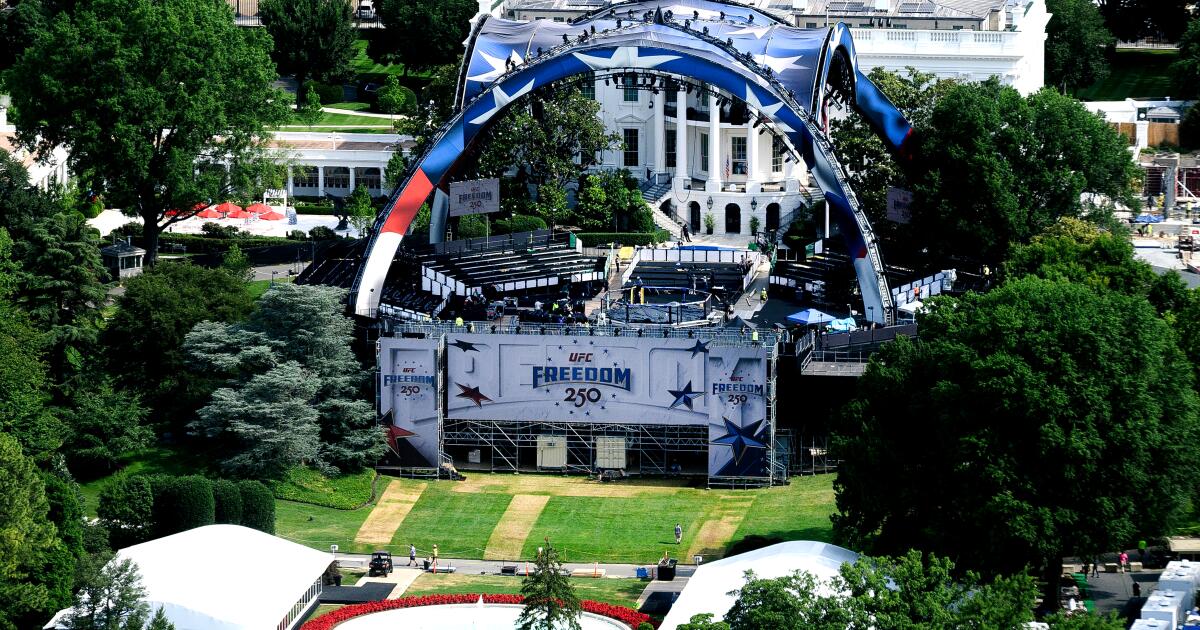
UFC Freedom 250: What to know about the White House bout, Paramount and the lawsuit
-
 Lifestyle15 minutes ago
Skip $300 parking. How to get to the World Cup at SoFi Stadium on $1.75 Metro shuttles
-
 Politics20 minutes ago
Who will be the new ’60 Minutes’ correspondents?
-
 Sports30 minutes ago
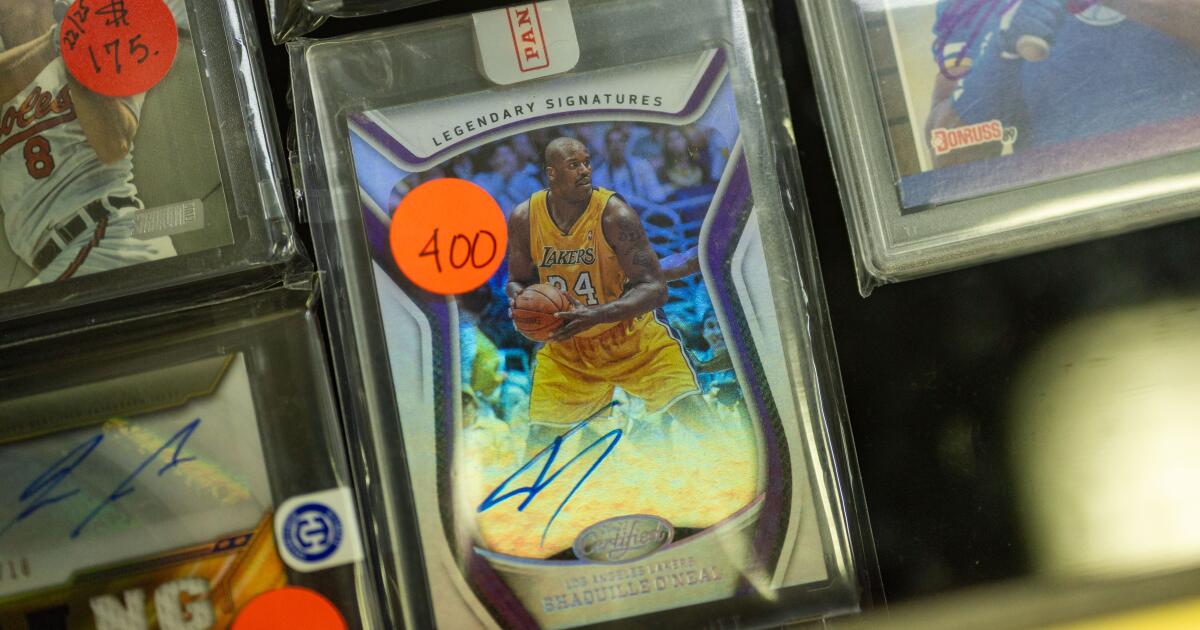
LA Card Show! Everything you need to know to make the best of the event this weekend
-

 World42 minutes ago
Trump says US will ‘be taking’ Kharg Island in latest Iran war threat
-
News1 hour ago
We Keep Us Safe: The Standoff : Embedded

