News
Activists worry that Trump will bulldoze trans rights. Here's how they're preparing


Supporters of transgender rights hold signs as they rally outside the Supreme Court on Wednesday in Washington, D.C., as arguments begin in a case regarding a Tennessee law banning gender-affirming medical care for transgender youth.
Drew Angerer/Getty Images
hide caption
toggle caption
Drew Angerer/Getty Images
Afraid. Disappointed. Frustrated.
This is how Giovanni Santiago is feeling after former President Donald Trump’s reelection victory.
“What I do believe is that LGBTQ people, specifically trans people, are a target for him, and are a target for his fan base,” Santiago, who is trans, says about the president-elect.

The 38-year-old lives in Ohio, where state law has banned gender-affirming care for youths and participation of transgender girls and women on girls and women’s sports teams. He is seeing and feeling the impacts of the political fight over rights for transgender people every day.
Nationally, the issue of gender-affirming care for minors was before the Supreme Court this week, after families challenged Tennessee’s ban.
Santiago, a local activist in Cleveland, isn’t alone in how he feels.

Giovanni Santiago, a transgender rights advocate who lives in Ohio, is preparing for a tough four years under a second Trump administration.
GROUND Media/GROUND Media
hide caption
toggle caption
GROUND Media/GROUND Media
“Many in our community, particularly trans people and their families, are filled with anxiety and fear about what a second Trump presidency could bring,” says Ash Lazarus Orr, with Advocates for Trans Equality. The group works to strengthen and protect the rights of transgender people through policy advocacy, political work and legal support.
Restricting access to gender-affirming care for minors and barring trans women from women’s sports teams covered by Title IX are just some of the policies that Trump’s campaign has said will be under consideration once he is in office.
Local advocates, trans people and their families, as well as national LGBTQ organizations are preparing for these potential Trump administration actions.
“We know that the next four years [are] going to be a grind,” Santiago says.
That means the work — on both policy and personal levels — is just beginning, Santiago and others tell NPR.

Trans-rights activists protest outside the House chamber at the Oklahoma Capitol in Oklahoma City before the 2023 State of the State address.
Sue Ogrocki/AP
hide caption
toggle caption
Sue Ogrocki/AP
The political climate ushering in Trump
Republicans ramped up anti-trans messaging in the 2024 campaign. According to a report by AdImpact shared with NPR, the Republican Party spent $222 million on anti-trans ads during the campaign; overall ad spending by the party totaled $993 million.
Topics like gender-affirming care and trans women in sports have galvanized many American voters, says Andrew Proctor, an assistant instructional professor of political science who teaches courses on lesbian, gay, bisexual and transgender politics at the University of Chicago.
Recent polling shows that 76% of Americans say they support nondiscrimination laws for LGBTQ communities.

And, yet, on the issue of transgender athletes, polling also indicates that a large majority of Americans, around 70%, say they should be allowed to compete only on teams that match their sex assigned at birth.
Trump returns to the White House at a time when half of all U.S. states ban transgender people under 18 from receiving gender-affirming health care. And 26 states have restrictions on transgender students participating in sports consistent with their gender identity, according to Movement Advancement Project, a nonprofit think tank that tracks LGBTQ-related laws.
The new Trump administration will likely look at what states have accomplished and use that as a playbook for what could be achieved legislatively at the federal level, Proctor says.
But the big question for Proctor is how high of a priority trans issues will be on the Trump agenda.
“They’re polarizing issues, and they do galvanize particular bases of the Republican Party,” he says.
That also was the case for anti-abortion policies, Proctor says, and yet Republicans were unable to pass legislation when they had control of the federal government under former President George W. Bush and for a time during Trump’s first term. “So it’s not clear if this issue will pan out any differently,” he says.
Roe v. Wade, which guaranteed the right to abortion, was eventually overturned by the U.S. Supreme Court in 2022.
Since the presidential election, one Republican, Rep. Nancy Mace of South Carolina, has introduced legislation that appears to single out newly elected Rep. Sarah McBride of Delaware, the first transgender lawmaker to serve in the U.S. Congress.
If passed, the bill would ban transgender women from using bathrooms and locker rooms on federal property that do not correspond with the sex they were assigned at birth.
Prepping for policies under Trump

Demonstrators gather near the steps to the Texas Capitol to speak against transgender-related legislation bills being considered in the Texas Senate and House in 2021, in Austin, Texas.
Eric Gay/AP/AP
hide caption
toggle caption
Eric Gay/AP/AP
Groups including the American Civil Liberties Union, Transgender Law Center and others are gearing up to combat Trump policies on trans Americans in the courts.
It’s a battle they’re familiar with.
During his first term, Trump attempted to ban transgender Americans from serving in the military and from receiving gender-affirming health care through the military. This effort faced legal challenges and was eventually overturned by President Biden’s administration.
When asked about the possibility of a ban on transgender people serving in the military during a second Trump administration, Trump-Vance transition team spokeswoman Karoline Leavitt told NPR that “no decisions” have been made on the issue. The transition team did not respond to other questions from NPR, including those about gender-affirming care for trans youths.
Another proposal during Trump’s first term — which intended to strip “sex discrimination” protections for trans people from health care laws — was challenged in court by a coalition of LGBTQ clinics and organizations. That was successfully blocked in court.
And at least 17 states are facing lawsuits challenging their laws and policies limiting youth access to gender-affirming care.
“Litigation will be essential, but it will not be enough,” Sruti Swaminathan, a staff attorney with the ACLU, said during a recent GLAAD media call. “We will engage on every advocacy front, including mobilizing and organizing our network of millions of ACLU members and activists in every state to work to protect LGBTQ people from the dangerous policies of a second Trump administration.”
Winning hearts and minds
Proctor says the electoral success of anti-trans messaging will embolden certain factions of the Republican Party. “We should expect that the anti-trans rhetoric is going to intensify,” he says.
Activists like Santiago and another Ohio resident, Rick Colby, say a major part of their work for the next four years will be pushing back against that anti-trans rhetoric.
Colby, 64, describes himself as a conservative Republican. He also has a son named Ashton who is trans. Colby, who lives in Columbus, Ohio, is in an unusual position: He voted for Trump, but plans to spend the next four years working with his 32-year-old son to fight anti-trans policies. He says he is happy the Republican Party will be in control of the federal government, but also very concerned about the party’s stance on trans issues, which he says “is awful.”

Rick Colby of Columbus, Ohio, right, and his son Ashton work as advocates on trans issues across the nation. Colby says their work will continue during the Trump administration.
Ashton Colby/Rick Colby
hide caption
toggle caption
Ashton Colby/Rick Colby
“Talking is where the education comes in,” Santiago says during a separate conversation with NPR. He is the founder of META Center Inc., a group that offers direct support to transgender and gender-nonconforming people online and in person.
Over the next few months, he says he will be partnering with several organizations to provide training and plans to participate in panel discussions about the state of being transgender in America — and Ohio specifically.
He plans to meet people “where they are” — in libraries, in town halls or over email — to share information about trans people and dispel incorrect, preconceived notions about LGBTQ communities. A conversation between people on different sides of an issue can lead to a meeting in the middle and even common ground, he says.
Take gender-affirming care for youths. Major medical groups in the U.S. — including the American Academy of Pediatrics and the American Medical Association — support access to gender-affirming care for youth with gender dysphoria, the discomfort or psychological distress caused when one’s sex assigned at birth and one’s gender identity are different. That care can range from using a child’s preferred pronouns to using puberty-blocking medications and sex hormones.
But, Santiago says, many people don’t know the facts about the issue. Trump’s campaign website says that he plans to “revoke Joe Biden’s cruel policies on so-called ‘gender affirming care’—a process that includes giving kids puberty blockers, mutating their physical appearance, and ultimately performing surgery on minor children.”

As a result, Santigao says, there’s an incorrect belief, spread during the election and by Trump, that young children are undergoing gender-affirming surgery — which is actually a rare occurrence.
Similar to Santiago’s efforts, Colby and his son will continue what they’ve been doing for years: meeting lawmakers face-to-face and talking about their experiences. Their work has brought them to Capitol Hill before and he expects it will again.
“We’re just being human,” Colby says. “We try to demystify the issue and humanize it. They hear the narratives being pushed about all these left-wing parents pushing their kids into being transgender. And, of course, obviously, anybody would be concerned if that’s the only thing you’re hearing.”
There’s a segment of the GOP that, in his experience, offers openness and kindness on the issue.
“My son and I are just going to keep trying to reach that kind of undecided middle group of people,” he says.
What groups are doing now
Lazarus Orr from Advocates for Trans Equality says there are steps people can begin taking now. The group recommends trans people update documents, including driver’s licenses and passports, to reflect desired name or gender marker changes ahead of January.

Lazarus also encourages people not to let anxiety and fear control them.
“I think one of the bravest things that trans folks can do right now is just continue living,” he says. “More than ever, just the simple act of our existence is a form of resistance.”

Santiago says his work and life will continue even in the face of opposition.
GROUND Media
hide caption
toggle caption
GROUND Media
It’s advice Santiago, the Ohio activist, takes to heart. To counter his fear and stress, he finds moments of joy while watching football with his family (“Roll Tide, baby”), decorating for the holidays and proudly embracing his identity as a “Disney Adult.” He is not cowed by the opposition.
“I’m going to live my best life because at the end of the day what would make them happy is for me to stop doing that,” he says. “And I’m never going to give that satisfaction to anyone.”


Members of the group Patriot Front ride the subway as a commuter looks on, in Washington, D.C., on July 4.
Cheney Orr/Reuters
hide caption
toggle caption
Cheney Orr/Reuters
The sight of hundreds of masked men roaming the streets of Washington, D.C., on July Fourth weekend, wearing khakis, blue shirts and uniform patches, was chilling to some of the city’s residents.
For many Americans, it was the first they heard about Patriot Front, a white nationalist organization that was born out of the deadly 2017 Unite the Right rally in Charlottesville, Va. A now-viral Reuters photo prompted reflections on the experience of a lone African American woman who was photographed in a Metro subway car, surrounded by white supremacists.
The planned demonstration of force was timed to bring a fringe group of extremists into public view as the nation marked 250 years of its independence. Indeed, the stunt succeeded in earning the group media coverage across mainstream outlets, amplifying its brand and potential to reach new recruits. On this occasion, the members refrained from engaging in violence and property damage, projecting an image of law-abiding, orderly activism.
But those who are closely familiar with Patriot Front’s history and operations warn: Don’t believe what you see.
“That is not who they are in private,” said Len Kamdang, director of the Criminal Justice Project at the Lawyers’ Committee for Civil Rights Under Law. “Although they were on their best behavior [last] weekend, this is a dangerous group that commits acts of violence all over the country.”
Patriot Front’s history of violence and property damage
Kamdang’s organization sued members of Patriot Front for vandalizing a public mural dedicated to the tennis legend and Black activist Arthur Ashe in Richmond, Va., in 2021. Ashe, who was inducted into the International Tennis Hall of Fame in 1985, was born in Richmond and his legacy is a continuing source of pride to members of that community.
“A couple of Patriot Front members showed up under cover of night and vandalized the mural,” Kamdang said. “They painted white stencils all over. … They literally tried to whitewash him and they put their symbols of hate all over — their stencils, their slogans. And all the while they were caught on video. And that video leaked using some of the most horrible language that you can imagine.”
In many jurisdictions, law enforcement can seek additional hate crime charges or sentencing enhancements in cases where illegal acts appear to have been motivated by racial bias. But in this case, Kamdang said, Patriot Front members faced no criminal charges and their identities were only revealed when online activists later infiltrated the group and leaked internal records.


In another civil case, Patriot Front was ordered to pay almost $2.76 million to an African American musician whom they assaulted in Boston in 2022, at another July flash rally they staged. Despite a police detective concluding that the attack “appeared to be more likely than not motivated in whole or in part by Anti-Black bias,” nobody was criminally prosecuted.
Neo-Nazi ideology in patriotic colors
In 2020, Kristofer Goldsmith said that a fellow veteran invited him to partner up on infiltrating Patriot Front. Goldsmith, who later established the Task Force Butler Institute to recruit Army veterans to counter fascist groups through open source online research, was not closely familiar with the group at the time.
“Frankly, when my friend used the term ‘neo-Nazi,’ I thought he was using hyperbole,” Goldsmith said. “It wasn’t until I saw them doing things like debating the merits of national socialism versus fascism versus monarchy that I truly understood that neo-Nazi was not hyperbole, that these people actually praise Hitler. … These people have dedicated their lives to promoting white nationalist, fascist and genocidal ideology.”
Patriot Front’s founder, Thomas Rousseau, was formerly a leader of a group called Vanguard America, which was prominent in planning and a presence at the 2017 Unite the Right rally. That gathering, the largest public white nationalist event in generations, turned fatal when one extremist drove a car through a crowd of counterprotesters, killing Heather Heyer. Ultimately, Goldsmith said that rally further smeared public perception of the white nationalist movement as violent and un-American — lessons that Rousseau took to heart.
“Rousseau needed to rebrand Vanguard America,” Goldsmith said. “So he basically stole all of its assets, its digital assets … and made it into Patriot Front and literally painted everything in red, white and blue so that it would be more attractive.”
The group has also shown up at natural disaster sites, namely in Central Texas last summer, ostensibly to assist local residents. Goldsmith said these missions and the group’s outward aesthetic are meant to project an idea of patriotism and service. He said the group maintains a strict code of conduct. Among other things, they do not display swastikas or give Hitler salutes in public.
“The goal of their propaganda, of their public actions like this, is to beat MAGA and conservatives and Republicans into defending them and to saying, ‘I don’t see anything wrong with this group. They clearly love America,’” he said.
Patriot Front described as a “cult” and a “pyramid scheme”
The show of force in D.C. has raised questions about the group’s financing, and whether members’ travel was sponsored by outside individuals or groups. In fact, Goldsmith and Kamdang said that members of Patriot Front appear almost entirely to shoulder the cost of operations and Rousseau’s lifestyle. They said it’s most likely that those who traveled to D.C. had to cover their costs themselves.
“All of them funnel resources to the top,” Kamdang explained about the group’s general financial structure. “In order to be a Patriot Front member, you have to engage in acts of what they call ‘activism.’ And usually what that means is vandalism: putting up banners, spreading the slogans of hate all over the country. And in order to do that, they will have stickers, stencils, branding. All of that has to be approved from the top down, and all of it has to be purchased from the top down. So all the members who do this multiple times a month send cash to Thomas Rousseau for essentially stickers and stencils.”

Goldsmith said that from his time infiltrating the group, the costs could run up to hundreds of dollars a month per member. Kamdang, who said that attorneys are actively seeking to collect judgment in the settlement over the Arthur Ashe mural, noted that Rousseau appears not to hold any additional paying jobs.
“This seems to be what he’s doing full time,” Kamdang said. “So he appears to be being propped up full time by his members.”
Goldsmith likened the financial operation to a pyramid scheme. But he said even more substantial than the financial investment that Patriot Front members are required to make to retain membership is the control they give up over their time and personal choices.
“I describe it as a cult, not to be offensive, but because it is like Rousseau needs to have complete control of all of his members,” Goldsmith said. “[The group] requires its members to give up all of their lives, all of their relationships. All of their priorities in life need to be focused towards growing the organization or continuing the organization [and] enriching its leadership. So, it’s costly.”
NPR reached out to Patriot Front for comment. The group did not respond by deadline.
Goldsmith also noted that Rousseau often gives lengthy speeches that members are expected to listen to, via online platforms.
To Kamdang, the publicity that Patriot Front earned through the group’s D.C. stunt presents a danger: It amplified a presentation of the group that was deliberately crafted to make Patriot Front appear orderly and patriotic.
“I think the reason why it got a lot of attention is because Patriot Front was very careful in their language,” he said. “They try to mask their replacement theory, the white supremacy and in ‘Americana’ terms and patriotism. But that is not who these guys are.”
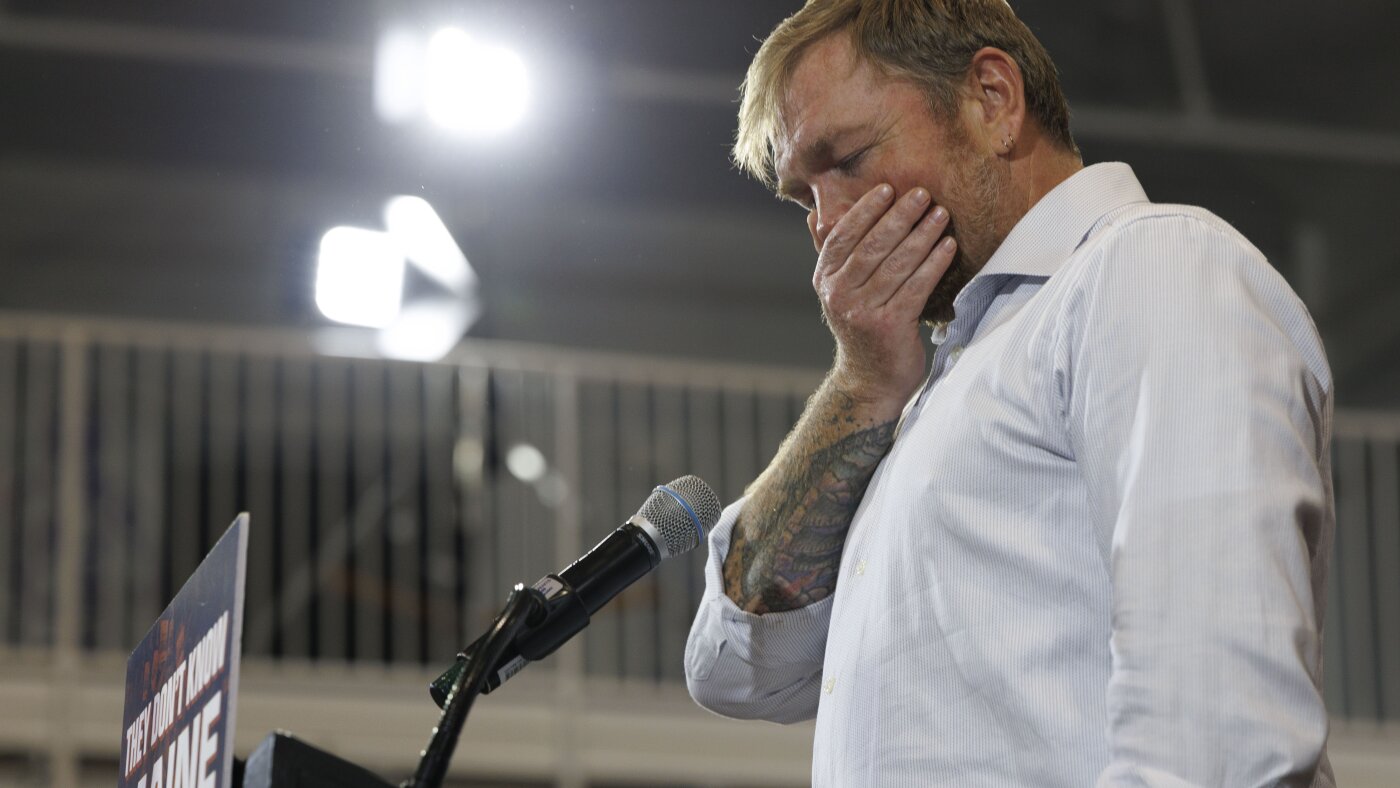
Now-former Democratic Senate candidate Graham Platner speaks at his primary election night event on June 9 in Blue Hill, Maine. Platner officially dropped out of the race July 10 following rape allegations from a former romantic partner that he denies.
CJ Gunther/Getty Images
hide caption
toggle caption
CJ Gunther/Getty Images
Graham Platner, Maine’s Democratic nominee for Senate, is officially out of the race.
The Maine Secretary of State said Platner filed the necessary paperwork to withdraw his candidacy two days after he announced he planned to do so following an accusation of rape by a former romantic partner. Platner denies the allegation.
The Maine Democratic Party has until July 27 to pick Platner’s replacement.
In his withdrawal notice, Platner said “people are desperate for change” and that’s why they voted “for a new kind of politics” by making him the Democratic nominee. He expressed gratitude for those who supported his campaign and said that he will continue to fight for “the movement we have built together and the future we believe in.”
He ended his notice with a strong statement aligned with the progressive platform.
“F*ck ICE. Free Palestine. Up the Hearts.”
Platner announced his plan to withdraw from the race in an 11-minute video he posted to social media on July 8. He said he had no choice but to suspend his campaign, citing it was no longer viable financially.
“We are going to lose our ability to fundraise. We are going to lose our ability to access voter data. We are going to lose all of the things that any campaign needs on the basic level simply to function,” he said.
Platner added that dropping out was not an admission of guilt. Rather, the decision, he said, is to keep the progressive movement in Maine alive to defeat Republican Sen. Susan Collins in November. Platner blamed the “political establishment” for his downfall and argued the goal was to force him out of the race.
“We built a campaign. We engaged in electoral politics. We motivated people. We banded together. We did it the way that we were told we are supposed to make change and we won. And now they are not going to let us have it. Not if it’s me,” he said.
Many powerful Democrats and progressives, including Sen. Bernie Sanders, an independent, urged Platner to step down.
Platner has had to answer to a waterfall of scandals since he launched his Senate bid. Despite those, he ran away with the nomination in the June 9 primary, securing more than 150,000 votes — more than any other Democratic Senate candidate in Maine’s history.
Platner ran on a progressive platform centered on affordability, universal health care and getting corporate money and influence out of politics. During his campaign, he generated an undeniable amount of enthusiasm, something the Maine Democratic Party will have to harness if it hopes to beat Collins in the general election.
Multiple people have already launched campaigns to replace Platner, including former state Sen. Troy Jackson and former CDC official Nirav Shah, who both ran unsuccessful bids for governor.
Platner called on the replacement process to reflect “the Mainers who on June 9 turned out and showed that they are desperate for a different kind of politics.”
“We were asking for real democracy, and we did it the right way. And we won. But now the ball is in the court of the Democratic establishment,” he added.
The Maine Democratic Party said that it intends to hold a new nominating convention where around 600 delegates will select Platner’s successor. Candidates have until July 15 to declare their intent to seek the nomination and gather signatures from at least 8 of Maine’s 16 counties. Party leadership added they will make the nomination process public and transparent.
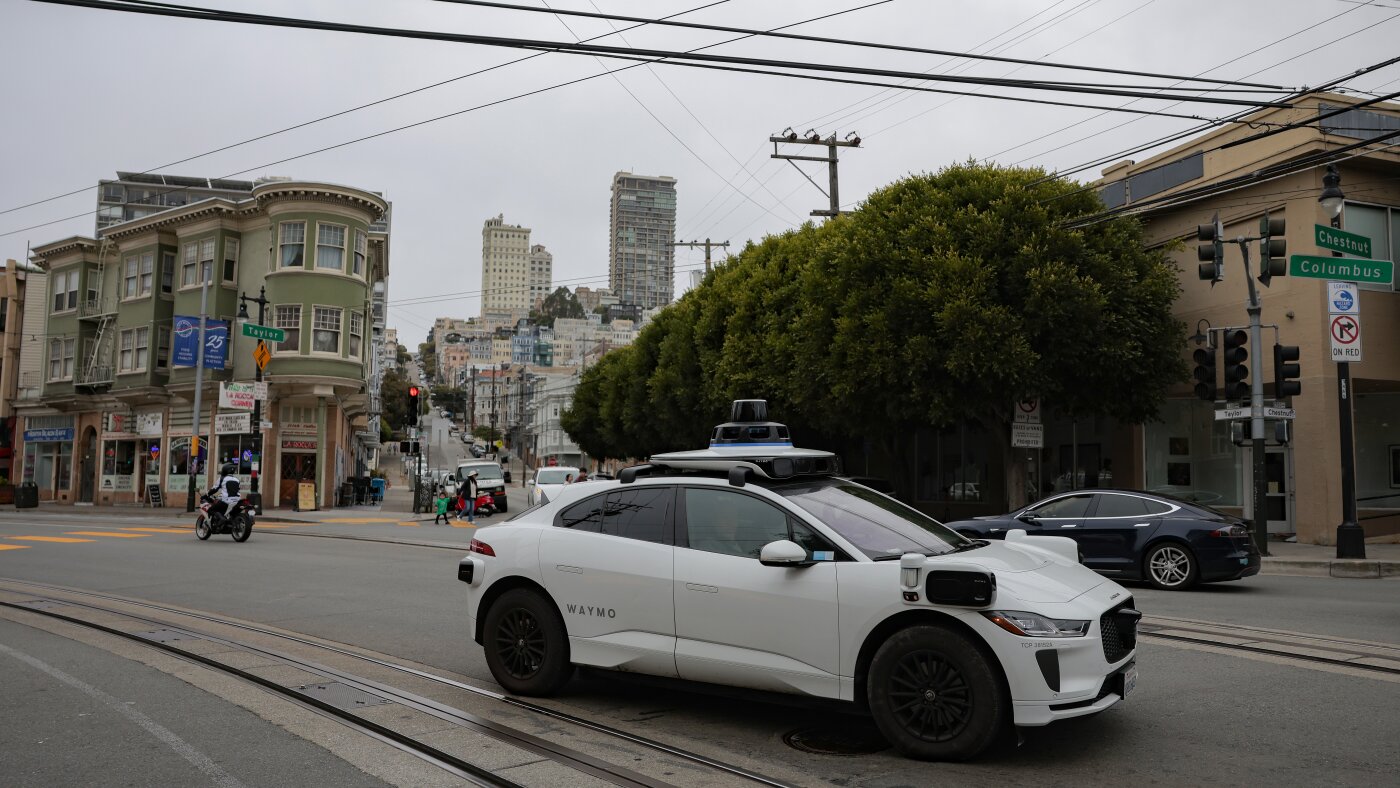
A Waymo robotaxi drives in San Francisco’s North Beach neighborhood this week.
Heather Diehl/Getty Images
hide caption
toggle caption
Heather Diehl/Getty Images
Police in San Mateo, Calif., posted Monday on social media that they had apprehended a pair of teenagers from a Waymo driverless robotaxi after the company alerted authorities to suspected criminal activity. It’s the latest incident involving video surveillance of passengers and others by autonomous vehicles — raising questions about the limits of privacy in such vehicles.

The Facebook post by the San Mateo County Police said: “Parents do you know where your teens are? @waymo does!”
The 15-year-olds were allegedly drinking alcohol and shooting toy guns from the car, according to the police. They said Waymo’s systems detected behavior that then triggered a safety response, after which the company disabled the vehicle and contacted police.
Waymo’s cars, equipped with an array of cameras, microphones and other sensors to monitor passengers and other nearby vehicles, are becoming more common in cities across the United States. Experts say the detention of the two teens in San Mateo highlights a potential — but not inevitable — trade-off between privacy and convenience. It also questions the extent to which companies similar to Waymo are required to hand over private data, including audio and video of passengers, in situations where a crime is suspected.
NPR reached out to Waymo, which is owned by Alphabet, the parent company of Google, for comment on the details of the San Mateo incident and how the company responded, but did not hear back. But on its website, the company says that as many as 29 cameras in its autonomous cars provide an all-around view and “are designed with high dynamic range and thermal stability, to see in both daylight and low-light conditions, and tackle more complex environments.”
“There already exist laws that govern duty to report or even duty to protect” for carriers such as Waymo, according to Alessandro Acquisti, a professor of information technology at the MIT Sloan School of Management. “The privacy problems arise when and if driverless carrier companies used such laws or ethical obligations as a pretext for blanket, indiscriminate accumulation of identifiable data for unspecified future purposes.”
That includes not just monitoring people inside the cars, but outside too. Take, for example, a hit-and-run investigation last year in Los Angeles. Media reported that the police inquiry was aided by video captured by a Waymo taxi that had a clear view of the crime. Critics suggested at the time that authorities were using the company’s vehicles as a mobile surveillance platform. And during 2025 protests in Los Angeles against Immigration and Customs Enforcement crackdowns, demonstrators vandalized Waymos, apparently angry that video recorded by the vehicles could be used by police, although there is no evidence that happened.
In a transparency report, Google says it received nearly 290,000 requests from governments worldwide in the first six months of 2025 for disclosure of user information across all its platforms, including Waymo. The company says that in more than 80% of the requests in those six months, some information was disclosed. “Google carefully reviews each request to make sure it satisfies applicable laws. If a request asks for too much information, we try to narrow it, and in some cases we object to producing any information at all,” the company says.
In an email to NPR, San Mateo Police Department spokesperson Jeanine Luna said that detaining the teens in the Waymo on Monday was “wholly appropriate” under the circumstances. “We received the call of a ‘firearm’ being shot from a moving vehicle,” she said. “Furthermore, the occupants were described as being possibly ‘intoxicated.’” she said.
“Being that the vehicle was disabled (the occupants had every right to exit the vehicle before police arrival, but they did not), a high-risk traffic stop was conducted to ensure the safety of all involved,” Luna added. “They were not arrested and were released to their parents, however, potential charges are still pending dependent on what the video from inside the vehicle shows.”
Autonomous taxis represent an ethical gray area
Robotaxis began to roll out across the U.S. in December 2018, when Waymo launched in Phoenix. These services have been used for less than a decade — so the norms surrounding them aren’t settled, experts agree.
The Facebook post may make Waymo passengers wonder what triggers a police intervention, says Irina Raicu, director of the Internet Ethics program at Santa Clara University. She has used Waymo’s driverless taxis and says ethically, the privacy issues surrounding them sit in a gray area. “There’s something about being in a car without another person that makes you think it’s private.”
“With all these recording devices, we don’t see them, [and] they’re not these obvious things being stuck in our faces,” Raicu adds.
That brings up a key issue: informed consent, Acquisti says.
“It is not clear the extent to which passengers … are reminded that when they step into the car, that they are being monitored, and most likely they are not told in its entirety how the data will be used,” he says.
Bruce Schneier, a cybersecurity and privacy expert and professor at the Munk School at the University of Toronto, believes that Waymo does have a compelling interest in protecting its vehicles. He compares monitoring a robotaxi via cameras to a human taxi driver keeping an eye on passengers in the rearview mirror.
“Maybe the driverless car comes back … and it has all of its cushions slashed, and it’s like, ‘Who the hell did that? Let’s go and look at the tape,’” Schneier suggests. “You can’t have sex in the back of a taxi, right? Someone would say, ‘Stop it.’”
He concludes that some supervision makes sense. In an Uber rideshare, he notes, “most of the time there’s a camera recording the back seat.” (Uber says on its website that it allows drivers to install such cameras for the purpose of “fulfilling transportation services.”)

Waymo robotaxis, while a fairly common sight in the San Francisco Bay Area, are still a novelty in much of the country. And many people are hesitant to ride in one, according to a Pew Research Center poll published this month. The survey found that only 5% of Americans had ever ridden in a driverless car. Meanwhile, 71% of those polled said they would feel uncomfortable in one, with only 7% saying they would be “extremely or very comfortable” riding in one.
For that reason, experts who spoke with NPR said they were optimistic that it’s not too late to shift gears on privacy norms and policies surrounding these vehicles.
Acquisti doesn’t see why privacy measures can’t be built into driverless vehicles.
“I would immediately challenge the notion that people have to be monitored,” he says, noting that privacy-preserving technologies exist and can be installed.
“Driverless cars are coming, but they don’t have to come in this particular incarnation,” Raicu says. “They’re still being designed and redesigned. It’s early days.”
-
 Lifestyle15 minutes ago
Shy on the dance floor? Virtual reality ‘partners’ aim to help you find your groove
-

 Technology27 minutes ago
Are you filthy enough for a $700 portable shower?
-

 World29 minutes ago
Former British MP and reality TV star Ann Widdecombe found dead; man arrested for murder
-

 Politics35 minutes ago
Trump takes unusual step, lets bipartisan housing bill become law unsigned amid SAVE pressure campaign
-

 Health42 minutes ago
Eating common dairy food every day may slow biological aging, study suggests
-

 Sports45 minutes ago
CM Punk to defend Undisputed WWE Championship against Cody Rhodes at SummerSlam
-

 Technology50 minutes ago
Would you pay $8,000 for a robot to fold laundry?
-
 Business57 minutes ago
Legendary Television City may be be sold in further blow to Hollywood

