Wisconsin
John Blackwell Hitting His Stride as Wisconsin's Starting Point Guard


MADISON, Wis. – Kamari McGee is as close to being an expert at point guard as the University of Wisconsin has on its roster.
The fourth-year senior excelled at the position at Racine (Wis.) St Catherine’s High School and won a state championship in 2020, thrived as a true freshman when he earned freshman all-conference honors at Green Bay, and been a steady contributor as the reserve at Wisconsin. He knows what works at the position.
That’s why McGee continues to be in awe of sophomore John Blackwell’s impact as the Badgers’ primary facilitator, ball handler, and igniter in his first season at the position.
“I’ve been seeing it game by game,” said McGee, answering the question sitting next to Blackwell after the sophomore scored a career-high 32 points in a win over Iowa. “He wasn’t used to playing the point guard for us specifically. He was coming off the bench (last year), getting into that role of just being a scorer, but each game he’s gotten better each time.
“People may say he’s not a point guard. Honestly, in today’s game, there aren’t really any point guards. He’s just a good playmaker and a great scorer for us.”
Fresh off back-to-back 20+ point games to get Wisconsin (12-3, 2-2 Big Ten) back to even in the Big Ten conference, Blackwell is starting to emerge as one of the Big Ten’s most complete guards. His 15.8 points per game is 13th in the league. He’s averaging 6.5 rebounds in conference play and has
“He’s just really complete,” head coach Greg Gard said of Blackwell. “He has a nose for the ball and got some toughness to him. He is a complete player. He does everything and he understands that. He understood that day one as a freshman last year. That’s what allowed him to get on the court so early. He understood the importance of little things.”
Blackwell put on a master class on Friday, scoring from all three levels against Iowa’s leaky defense. He was 5-for-6 from two-point range by either showing touch with mid-range pull-up jumpers or putting his shoulder down to get at and finish at the rim.
He was 3-for-21 from the perimeter over his previous seven games but confidently hit 6 of 10 from behind the arc. He made all four free attempts and tied his career-high with five assists against two turnovers, having no problem against a man-to-man or zone defense.
It was more workmanlike Monday at Rutgers but still efficient with an 8-for-15 night (7-for-11 on twos) and 4-for-4 from the line. Entering Friday’s game against Minnesota (8-7, 0-4), Blackwell is shooting 50 percent from the floor.
“I have confidence in my coaches and my teammates,” Blackwell said. “They trust me. They know how good I am, and I know how good I’ve worked.”
The implantation of Name, Image, and Likeness deals and the freedom of movement with the transfer porter have removed most of the guarantees in roster building. So, Gard didn’t have much time to wallow when Chucky Hepburn, his three-year starter at point guard, left for a reported $750,000 deal with Louisville.
The Badgers added Camren Hunter from the portal, but the Central Arkansas transfer didn’t play last season and was slowed by picking up the system and battled illness throughout November. UW inked highly ranked point guard Daniel Freitag but showed in the preseason he wasn’t ready for the role.
The staff also considered starting McGee, but Gard wanted to keep the senior as an energy boost off the bench (it’s worked with McGee shooting 55.2 percent from three with a 3.8 assist-to-turnover ratio).
Wanting a point guard who could push the ball in transition while still having an eye for scoring, Gard and his staff looked toward Blackwell, whose 45.5 3-point percentage was the best of any freshman in program history with at least 60 attempts. Despite playing just 18.5 minutes per game, Blackwell led the team in scoring four times.
While showing flashes in intrasquad scrimmages, Blackwell reportedly took over with the ball in his hands in the second half of UW’s closed scrimmage with Northern Iowa. He pushed tempo, created opportunities for himself and others, and the offense hummed.
“It was a tell-tell sign for us,” Gard said. “We had thought about it as a staff, talked about it, experimented a little bit. We had to stop dipping our toe in the water and really jump in with that and making a full commitment to him having the ball as much as we could.”
One of Blackwell’s first conversations after being informed of his role was with McGee, who has mentored him at every step.
“Killer was just in my ear,” Blackwell said. “Showing me all the support, telling me all the plays from the point guard spot, the ways I can score and still facilitate, and these guys trusting me with the ball in my hands, so credit to them.”
Of course, there have been bumps in the road. Blackwell had five assists to nine turnovers in losses to Michigan and Marquette. In the road loss at Illinois, Blackwell was limited to 22 minutes and fouled out. More frustrating for Gard was Blackwell had zero assists and felt that offense was stagnating for long stretches.
The film review was blunt and straightforward: be aggressive, make things happen with the ball in his hands, and be a confident facilitator.
Over the last four games, Blackwell has responded with 18 assists and only seven turnovers. In his words, he’s helped Wisconsin play “the right basketball” by moving the ball, having high assist numbers, and playing collectively as a unit.
“He’s got a lot on his plate,” Gard said. “It’s easy to try to take a break at times because maybe he needs one. I need to do a better job of getting him in and getting him out. His numbers of assists, even in practice, have jumped. That tells me he’s more comfortable.”


(WLUK) — Northeast Wisconsin community groups that helped during historic spring flooding can now apply for relief.
Applications for the United Way Fox Cities and Community Foundation for the Fox Valley Region Flood Relief fund are now open.
The grants are available to local nonprofits and churches serving residents in Outagamie, Calumet, Shawano, Waupaca, and the Neenah/Menasha area of Winnebago counties who are engaging in relief efforts both short-term and long-term.
Grants are available to:
- 501(c)(3) nonprofit organizations
- Groups fiscally sponsored by a qualified 501(c)(3)
- Churches and other public entities able to receive tax-deductible contributions
These grants are not available to private foundations, individuals or businesses directly, labor unions, or 501(c)(4), 501(c)(5), or 501(c)(6) organizations.
The funding provided to these community organizations will help with housing and safe shelter, food, health and well-being, and financial assistance.
For individual homeowners and renters seeking relief, you can apply for FEMA assistance.
President Trump recently approved $22.6 million in federal aid for Northeast Wisconsin. The request made earlier this year asked for $27 million.


Manuel Franco claims his $768 million Powerball jackpot
Manuel Franco, 24, of West Allis was revealed Tuesday as the winner of the $768.4 million Powerball jackpot.
Mark Hoffman, Milwaukee Journal Sentinel
The Wisconsin Lottery offers multiple draw games for those aiming to win big.
Here’s a look at July 14, 2026, results for each game:
Winning Mega Millions numbers from July 14 drawing
02-04-10-48-56, Mega Ball: 22
Check Mega Millions payouts and previous drawings here.
Winning Pick 3 numbers from July 14 drawing
Midday: 7-6-0
Evening: 2-1-0
Check Pick 3 payouts and previous drawings here.
Winning Pick 4 numbers from July 14 drawing
Midday: 5-5-0-6
Evening: 8-5-1-3
Check Pick 4 payouts and previous drawings here.
Winning All or Nothing numbers from July 14 drawing
Midday: 02-03-04-05-07-08-10-12-15-21-22
Evening: 01-03-05-07-08-10-13-18-19-21-22
Check All or Nothing payouts and previous drawings here.
Winning Badger 5 numbers from July 14 drawing
03-08-10-18-19
Check Badger 5 payouts and previous drawings here.
Winning SuperCash numbers from July 14 drawing
02-14-20-22-25-36, Doubler: Y
Check SuperCash payouts and previous drawings here.
Feeling lucky? Explore the latest lottery news & results
Are you a winner? Here’s how to claim your lottery prize
- Prizes up to $599: Can be claimed at any Wisconsin Lottery retailer.
- Prizes from $600 to $199,999: Can be claimed in person at a Lottery Office. By mail, send the signed ticket and a completed claim form available on the Wisconsin Lottery claim page to: Prizes, PO Box 777 Madison, WI 53774.
- Prizes of $200,000 or more: Must be claimed in person at the Madison Lottery office. Call the Lottery office prior to your visit: 608-261-4916.
Can Wisconsin lottery winners remain anonymous?
No, according to the Wisconsin Lottery. Due to the state’s open records laws, the lottery must, upon request, release the name and city of the winner. Other information about the winner is released only with the winner’s consent.
When are the Wisconsin Lottery drawings held?
- Powerball: 9:59 p.m. CT on Monday, Wednesday, and Saturday.
- Mega Millions: 10:00 p.m. CT on Tuesday and Friday.
- Super Cash: 9:00 p.m. CT daily.
- Pick 3 (Day): 1:30 p.m. CT daily.
- Pick 3 (Evening): 9:00 p.m. CT daily.
- Pick 4 (Day): 1:30 p.m. CT daily.
- Pick 4 (Evening): 9:00 p.m. CT daily.
- All or Nothing (Day): 1:30 p.m. CT daily.
- All or Nothing (Evening): 9 p.m. CT daily.
- Megabucks: 9:00 p.m. CT on Wednesday and Saturday.
- Badger 5: 9:00 p.m. CT daily.
That lucky feeling: Peek at the past week’s winning numbers.
Feeling lucky? WI man wins $768 million Powerball jackpot **
WI Lottery history: Top 10 Powerball and Mega Million jackpots
This results page was generated automatically using information from TinBu and a template written and reviewed by a Wisconsin editor. You can send feedback using this form.

Topline
The Wisconsin Elections Commission voted Friday to send two complaints to prosecutors alleging Elon Musk violated state election laws by writing checks to voters last year, the Milwaukee Journal Sentinel reported—after Musk invested tens of millions of dollars to support failed conservative candidate Brad Schimel.
Elon Musk gives a $1 million check to Nicholas Jacobs during a town hall in Green Bay, Wisconsin, on March 30, 2025. (Photo by ROBIN LEGRAND/AFP via Getty Images)
AFP via Getty Images
Key Facts
The commission voted 5-1 finding probable cause Musk violated the state’s election bribery statute when he offered money to people who voted in the 2025 election.
This is a developing story and will be updated.
-

 World3 minutes ago
WATCH: Russian soldier thrown through air as Soviet-era helicopter gun spins out of control
-

 Politics9 minutes ago
Lindsey Graham’s final act reverberates in Senate as sister is urged to “keep pedaling”
-

 Health15 minutes ago
Is lettuce still safe to eat amid Taco Bell illness probe? Doctors answer
-

 Sports21 minutes ago
Marcello Hernández roasts Jake Paul, Tiger Woods and Bill Belichick in ESPYS monologue
-

 Technology27 minutes ago
You paid for it. So why is your device showing ads?
-
 Business33 minutes ago
Paramount shareholder lawsuit accuses Ellisons of corruption
-
 Entertainment39 minutes ago
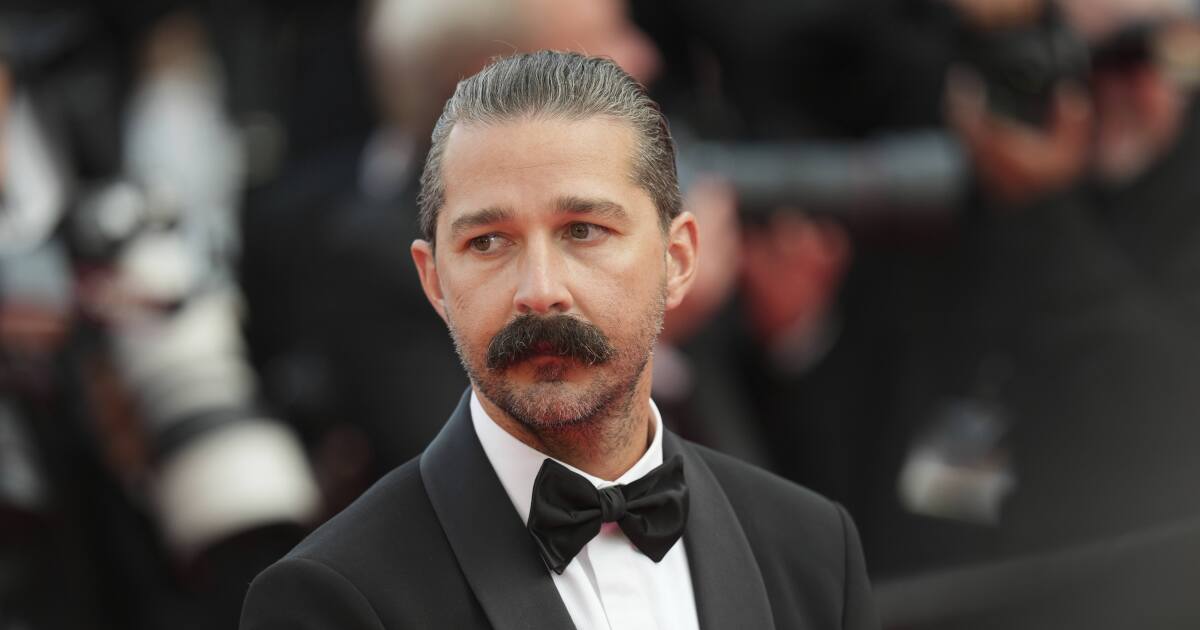
‘You’re scaring my people.’ Shia LaBeouf’s alleged stalker arrested after posting viral video
-
 Politics51 minutes ago
Californians back Becerra and reject AI data centers by big margins, poll finds

