South Dakota
Trump asks U.S. Supreme Court to pause federal trial over presidential immunity question – South Dakota Searchlight


WASHINGTON – Former President Donald Trump asked the U.S. Supreme Court on Monday to further delay his federal criminal trial on charges he attempted to subvert the 2020 election, contending his actions were protected by presidential immunity.
In a 40-page application to the Supreme Court late Monday, Trump and his attorneys asked the justices to pause pretrial activities in federal district court for the case brought by Special Counsel Jack Smith accusing Trump of lying to and encouraging supporters who turned violent on Jan. 6, 2021 and attacked the U.S. Capitol.
Trump’s application comes just days after the Supreme Court justices heard arguments in a separate case involving the former president, this time about whether Colorado could bar him from the 2024 presidential primary ballot because he violated the Constitution’s 14th Amendment. The justices met the argument with skepticism.
Trump, the front-runner for the 2024 Republican presidential nomination, plans to challenge a three-judge panel appeals court ruling last week that said he could not claim presidential immunity to escape the criminal charges accusing him of conspiring to overturn his loss in the 2020 presidential election.
Trump’s team said in the Monday application that they plan to appeal “en banc,” meaning to the full D.C. Circuit appeals court, and also to the U.S. Supreme Court, “if necessary,” Trump’s lawyers wrote.
Smith had asked the Supreme Court in December to fast-track Trump’s immunity question, essentially leapfrogging the federal appeals process, but the justices declined the request.
The brief cited Trump’s schedule ahead of November’s presidential election, saying a long trial would keep him off the campaign trail and deprive “tens of millions of American voters, who are entitled to hear President Trump’s campaign message as they decide how to cast their ballots.”
“Conducting a months-long criminal trial of President Trump at the height of election season will radically disrupt President Trump’s ability to campaign against President Biden — which appears to be the whole point of the Special Counsel’s persistent demands for expedition,” Trump’s lawyers said.
A majority of justices would have to vote to grant a stay for it to take effect.
Immunity argument
Trump is likely to win a high court case, his lawyers said Monday, because he was representing an essential aspect of presidential power. Allowing presidents to be prosecuted would create a constant threat of prosecution for every future president, making the job virtually unmanageable.
“This threat will hang like a millstone around every future President’s neck, distorting Presidential decisionmaking, undermining the President’s independence,” Trump’s attorneys wrote. “Without immunity from criminal prosecution, the Presidency as we know it will cease to exist.”
All the allegations in the four-count indictment stemmed from actions Trump took in his official capacity as president as a good-faith effort to reverse widespread election fraud, the brief said.
Prosecutors say Trump knew there was not determinative voter fraud, but nonetheless pressured state officials, Department of Justice leaders, Vice President Mike Pence, and others to illegally use the claim to overturn the election results.
The pressure campaign eventually led to the deadly storming of the Capitol by Trump’s supporters on Jan. 6, 2021, according to prosecutors and the U.S. House committee that investigated the matter.
Shortly after he left office, the U.S. House impeached Trump for his role in the attack. But with only seven Republican senators joining all Democrats in voting to convict Trump, the former president was acquitted in a Senate trial.
That should also protect Trump from court prosecution under the principle of double jeopardy that says a person cannot be tried twice for the same crime, Trump’s lawyers argued to the Supreme Court.
Four of the Supreme Court’s nine justices would have to agree to hear the case. Trump appointed three of them.
Original trial date postponed
Although Trump has not succeeded in having the case thrown out over presidential immunity, the issue has gobbled up months of court time and delayed his trial.
U.S. District Judge Tanya S. Chutkan, who is the trial judge in the case, said last month she would postpone the original trial start date of March 4. She has not set a new date.
In October, Trump made a pretrial motion to throw out the charges based on his presidential immunity theory.
Chutkan denied the motion, and Trump appealed her decision to the D.C. Circuit.
A panel of the appeals court ruled last week to uphold Chutkan’s decision, and gave Trump until Monday to take the case to the Supreme Court.
In early January, Trump’s lawyer D. John Sauer argued before federal appeals judges Karen LeCraft Henderson, Florence Y. Pan and J. Michelle Childs that the former president has absolute immunity from criminal prosecution because presidents cannot be tried for “official acts” taken while in office.
When asked by the judges about hypothetical criminal acts including ordering the assassination of a political rival or selling military secrets, Sauer notably argued that if presidents are not impeached and convicted, they would be immune from criminal prosecution.
In the unanimous unsigned federal appeals opinion on Feb. 6, the judges dismissed Trump’s arguments as “unsupported by precedent, history or the text and structure of the Constitution.”
“We cannot accept former President Trump’s claim that a President has unbounded authority to commit crimes that would neutralize the most fundamental check on executive power — the recognition and implementation of election results,” they wrote.
The three-judge federal appeals panel comprised appointees from both Democrat and Republican administrations — Henderson, appointed by George H.W. Bush, and both Pan and Childs were appointed by President Joe Biden.
GET THE MORNING HEADLINES DELIVERED TO YOUR INBOX





SIOUX FALLS, S.D. (Dakota News Now) – Nine school districts have been selected as recipients of the 2026 Perkins Reserve Grant by the South Dakota Department of Education.
The grant provides major equipment upgrades for Career and Technical Education programs, helping to equip students with the skills and experiences needed for post-secondary education and the workforce.
“CTE programs are constantly evolving to match the pace of workforce needs,” said Secretary of Education Dr. Joseph Graves.
“The South Dakota Perkins Reserve Grant aids schools in equipping students with current technologies, resources, and tools, offering students a realistic, hands-on learning experience that will strengthen their marketability to colleges or employers once they leave the K-12 education system.”
The following school districts have been named as the 2026 recipients:
- Aberdeen School District:
- Awarded $30,233 for new precision machine equipment for the manufacturing program.
- De Smet School District:
- Awarded $15,898 for modernizing metal fabrication within agriculture programs.
- Lake Preston School District:
- Awarded $43,160 for expansion of program offers in multiple career clusters to strengthen industrial alignment.
- McLaughlin School District:
- Awarded $11,997 to purchase equipment to offer a new culinary arts program.
- Menno School District:
- Awarded $32,844 to purchase small engines and attend professional development opportunities to enhance the agricultural mechanics program.
- Mitchell School District:
- Awarded $38,663 for the modernization of the automotive technology lab.
- Timber Lake School District:
- Awarded $42,400 for the expansion of agriculture course offerings to strengthen industry alignment.
- Wakpala School District:
- Awarded $40,145 to purchase a skid steer simulator to enhance the agriculture and construction program.
- Wolsey-Wessington School District:
- Awarded $26,201 to purchase industry-aligned equipment to enhance the agriculture and construction program.
You can learn more about the South Dakota Perkins Reserve Grant at doe.sd.gov.
Copyright 2026 Dakota News Now. All rights reserved.
The South Dakota Lottery offers multiple draw games for those aiming to win big.
Here’s a look at March 4, 2026, results for each game:
Winning Powerball numbers from March 4 drawing
07-14-42-47-56, Powerball: 06, Power Play: 4
Check Powerball payouts and previous drawings here.
Winning Lotto America numbers from March 4 drawing
33-38-39-47-51, Star Ball: 07, ASB: 02
Check Lotto America payouts and previous drawings here.
Winning Dakota Cash numbers from March 4 drawing
02-18-22-30-32
Check Dakota Cash payouts and previous drawings here.
Winning Millionaire for Life numbers from March 4 drawing
12-13-36-39-58, Bonus: 03
Check Millionaire for Life payouts and previous drawings here.
Feeling lucky? Explore the latest lottery news & results
Are you a winner? Here’s how to claim your prize
- Prizes of $100 or less: Can be claimed at any South Dakota Lottery retailer.
- Prizes of $101 or more: Must be claimed from the Lottery. By mail, send a claim form and a signed winning ticket to the Lottery at 711 E. Wells Avenue, Pierre, SD 57501.
- Any jackpot-winning ticket for Dakota Cash or Lotto America, top prize-winning ticket for Lucky for Life, or for the second prizes for Powerball and Mega Millions must be presented in person at a Lottery office. A jackpot-winning Powerball or Mega Millions ticket must be presented in person at the Lottery office in Pierre.
When are the South Dakota Lottery drawings held?
- Powerball: 9:59 p.m. CT on Monday, Wednesday, and Saturday.
- Mega Millions: 10 p.m. CT on Tuesday and Friday.
- Lucky for Life: 9:38 p.m. CT daily.
- Lotto America: 9:15 p.m. CT on Monday, Wednesday and Saturday.
- Dakota Cash: 9 p.m. CT on Wednesday and Saturday.
- Millionaire for Life: 10:15 p.m. CT daily.
This results page was generated automatically using information from TinBu and a template written and reviewed by a South Dakota editor. You can send feedback using this form.

PIERRE — A bill from South Dakota Attorney General Marty Jackley to criminalize the creation or sharing of deepfakes was amended this week to more clearly define what constitutes nudity before it reaches Gov. Larry Rhoden’s desk.
The amendment, added on the floor of the House of Representatives, came in response to concerns about unintended consequences.
Senate Bill 41 creates a class of felony crime for the creation or distribution of images digitally altered to depict a person in a state of nudity or involved in a sexually explicit act, commonly referred to as deepfakes.
In testimony in the House Judiciary Committee on Monday in Pierre, Jackley pointed to the case of Mark Rathbun, a former Division of Motor Vehicles employee who is accused of taking images of women and girls from state databases and creating sexual images.“This is real, and it’s something that we unfortunately are seeing happen in our state,” Jackley said.
The judiciary committee voted 8-3 to send the bill to the House floor but not before a discussion on its potential to criminalize political memes.
The bill’s definition of nudity originally encompassed a partial state of nudity. Fort Pierre Republican Rep. Will Mortenson asked Jackley if that would include a fabricated topless photo. Jackley said yes. Then Mortenson asked if a fabricated image of Democratic Illinois Gov. J.B. Pritzker without a shirt, if shared by President Donald Trump on social media, would put the president in line for felony charges.
Jackley said a Pritzker image wouldn’t qualify because Pritzker is male, but Mortenson pushed back.
He noted that partially nude fabrications would be a felony if done with the intent to “self-gratify or alarm, annoy, embarrass, harass, invade the privacy of, threaten, or cause emotional, financial, physical, psychological, or reputational harm to that individual.”
Nothing in the bill specified that a person in a digitally fabricated topless image must be female.
“We just said that half-nude is a state of nudity, and so now he’s shirtless, and the point of this is to embarrass this guy,” Mortenson said of his topless Pritzker meme scenario.
Mortenson voted against the bill in committee but brought an amendment Tuesday to define nudity as inclusive of male or female genitalia, buttocks or the female nipple.
The amendment passed, but it did not address every concern about the bill.
Democratic Rep. Kadyn Wittman of Sioux Falls asked Jackley during the bill’s committee hearing why he didn’t use it to enhance penalties for people who film others in states of undress or participating in sexual activity against their will.
That behavior is a felony if it involves the recording of a minor, or if it happens repeatedly. The new penalties for deepfakes would be added to the same chapter of South Dakota law.
“Why is the first time hidden recording a misdemeanor generally, but a digitally fabricated image would automatically be a classified felony,” said Wittman.
Jackley said he feels that the creation of digitally manipulated sexual images, even if they aren’t shared, signals “significant criminal intent.” He told South Dakota Searchlight after the committee meeting that he’s open to addressing that issue, but that SB 41’s primary purpose was to target deepfakes.
On the House floor, Wittman was one of two representatives to say the bill’s felony penalties could be unnecessarily harsh in instances where young people make “a stupid decision” and create a deepfake.
“I feel like, in a lot of situations, this bill covers behavior that could be covered by a lower level of offense,” Wittman said.
Supporters countered that the creation of fake nudes can do real psychological damage to real people, and that the state needs to clearly signal that doing so is a serious crime.
“It’s only fun and games until it happens to you,” said Rep. Mary Fitzgerald, R-St. Onge.
The bill passed the House 60-6. It now moves to the state Senate, which passed the bill 32-0 on Jan. 16. The Senate would need to approve the amended version of the bill before it could be delivered to Gov. Larry Rhoden to sign or veto.

Video: President Fires Noem as Homeland Security Secretary

GLP-1 Drugs Linked to Osteoporosis and Gout: Here’s How To Stay Safe
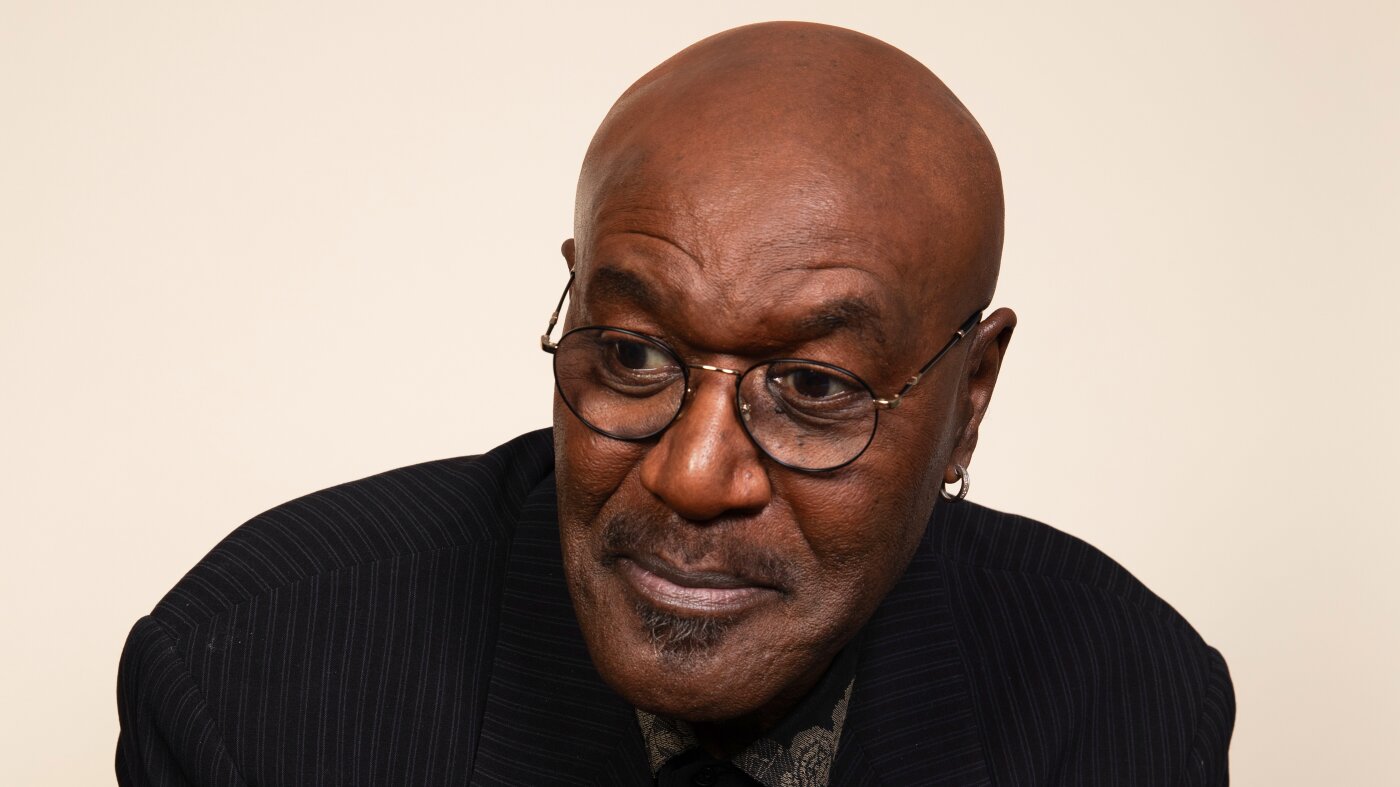
No matter what happens at the Oscars, Delroy Lindo embraces ‘the joy of this moment’

Amazon.com says things are fixed after some issues with logging in and checking out

Private flights account for 30% of departures from Oman airport as wealthy evacuate Middle East

Florida High School Football Rankings: Top 25 teams – Oct. 21

Cleary's 21 help Le Moyne down Central Connecticut State 69-64 in OT

How old is Bo Nix? What to know about Oregon quarterback ahead of 2024 NFL Draft

99th annual Pony Swim held in Virginia

Indiana Members Credit Union announced as new anchor tenant at Bottleworks District

DOJ continues Biden autopen probe despite former president unlikely to face charges
Fact check: Did French border guards mock influencers returning from Dubai amid Iran war?

Iran’s fight for survival / The widening war / Trump’s nebulous goals : Sources & Methods

Map: 4.9-Magnitude Earthquake Shakes Louisiana

Paxton vows he’s ‘staying in this race’ even if Trump backs Cornyn in Texas GOP clash
-

 World1 week ago
Exclusive: DeepSeek withholds latest AI model from US chipmakers including Nvidia, sources say
-

 Wisconsin4 days ago
Setting sail on iceboats across a frozen lake in Wisconsin
-

 Massachusetts1 week ago
Mother and daughter injured in Taunton house explosion
-

 Maryland5 days ago
AM showers Sunday in Maryland
-

 Massachusetts3 days ago
Massachusetts man awaits word from family in Iran after attacks
-

 Florida5 days ago
Florida man rescued after being stuck in shoulder-deep mud for days
-

 Denver, CO1 week ago
10 acres charred, 5 injured in Thornton grass fire, evacuation orders lifted
-

 Oregon6 days ago
2026 OSAA Oregon Wrestling State Championship Results And Brackets – FloWrestling