Midwest
Pritzker names new head of embattled Illinois family services agency

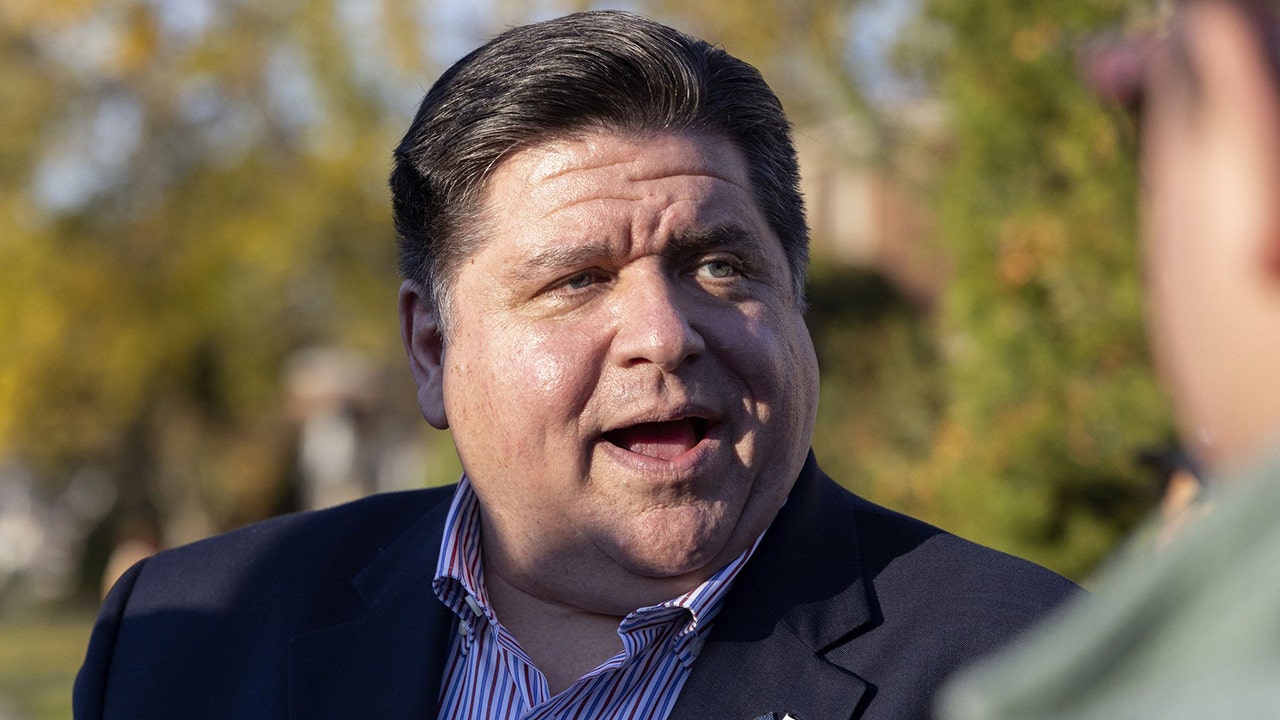
Gov. J.B. Pritzker on Wednesday named his director of juvenile justice to take over the troubled Department of Children and Family Services.
Heidi Mueller, 49, will replace Marc D. Smith, who has been at the helm since 2019 and has been held in contempt of court numerous times for improper housing of young people under the agency’s care. Smith, who announced his resignation in October, will help with the transition through January.
Mueller has been director of the Department of Juvenile Justice since 2016. The agency oversees the custody of young people committed to the state by Illinois courts.
HEAD OF EMBATTLED ILLINOIS CHILD SERVICES AGENCY TO RESIGN AT YEAR’S END
“I have witnessed firsthand the critical importance of a strong and supportive safety net for our state’s most vulnerable residents and the tragedy that results when there are holes in that net,” Mueller said in a statement. She thanked Smith for “driving real progress at DCFS.”
Mueller, who currently makes $173,250, was chosen after a nationwide search. Pritzker said her “transformative” work at Juvenile Justice has gained her national attention.
“Heidi’s care and compassion for the most at-risk young people in our state and her exceptional leadership are hallmarks of her career and I know that her passion and expertise will be a significant asset as we continue to improve our state’s child welfare system,” Pritzker said in a statement.
Gov. J.B. Pritzker greets constituents as he campaigns in Bellwood, Illinois, on Nov. 1, 2022. (Erin Hooley/Chicago Tribune/Tribune News Service via Getty Images)
Smith, 54, whose salary is $210,000, began his tenure months into Pritzker’s first term. The Democrat had pledged reforms, releasing an outside report on agency failures including the deaths of three children under its care in just a few months.
But the department continued to struggle. In 2022, Smith was held in contempt of court on numerous occasions for failing to find proper placement for young people in the agency’s care. Pritzker repeatedly blamed his Republican predecessor for the dismantling of private social-service agencies capable of proper youth housing during a budget stalemate with Democrats in the Legislature from 2015 to 2017.
The situation has seen little improvement. DCFS’ own annual report on placement released last week showed that during the fiscal year that ended last June, hundreds of children were kept in so-called temporary quarters, in some cases for months, or held in psychiatric hospitals beyond need for treatment or juvenile incarcerations past their release dates because DCFS had no place to put them.
The DCFS inspector general’s annual report released last week indicated that during the same fiscal year, 160 children with some level of involvement with the department had died.
PRITZKER ADMIN SCRAPS CHICAGO MIGRANT CAMP PLAN OVER SOIL CONTAMINATION CONCERNS
“The DCFS director has arguably the hardest and most important job in state government. Heidi Mueller has an outstanding reputation as a reform-minded manager and brings substantial child welfare experience to the task,” said Charles Golbert, the Cook County public guardian, whose office has filed class-action lawsuits over lengthy placements in psychiatric hospitals and juvenile justice incarceration. He urged Mueller to make the expansion of DCFS’s placement capacity an urgent priority.
Heidi Dalenberg, interim legal director of the American Civil Liberties Union of Illinois, which also has legal action against DCFS, said Mueller “must embrace the challenge of finding a safe place to stay — preferably with the child’s family members” and turn away from large, institutional settings.
“This is a challenging job that requires a leader with vision and a commitment to transformational change,” Dalenberg said.
Robert Vickery, currently deputy director of programs at Juvenile Justice, will serve as interim director of the agency during a search for Mueller’s permanent replacement.
Read the full article from Here


As part of our 30th anniversary celebration last month, we asked Hour Detroit readers to vote for their favorite covers from the magazine’s history. With all votes tabulated, here are the top 10 Hour Detroit covers, as voted by our loyal readers.
10. May 2022
Our May 2022 cover story by Nolan Bianhi highlighted the rise of Detroit City Football Club. The cover itself, photographed by Sal Rodriguez and featuring DCFC’s rabid Northern Guard Supporters, also birthed the very funny #EdDuckerForever social media trend.
As explained by Editor-In-Chief Kate Walsh in her Editor’s Letter in the June 2022 issue, “When the DCFC fans noticed a fan holding a scarf that said “Ed Ducker Forever,” some were left scratching their heads…Most people figured out that Ed Ducker was born to cover a profanity front and center on our cover, but they didn’t leave it at that. #EdDuckerForever became a thing on Twitter, with DCFC fans and others creating a backstory for this fictional character, including tales of his prowess on the pitch and in the sheets, saving (or dropping) babies, his love of beer, etc.”
Truthfully, the whole incident is symbolic of the overall vibe at any DCFC match. If you’ve never attended one yet, what are you waiting for?
Another piece of trivia: former Hour Detroit digital editor Christina Clark is among the group of fans — she’s the one with pink hair. Coincidentally, the photo was taken before she joined the magazine.
9. July 2023
Featuring a stunning aerial photograph by William Cunningham, the cover for the July 2023 issue of Hour Detroit just draws you in with its beauty. The cover story by Kate Townley chronicled the many reasons (65, to be exact) why the Great Lakes are so great. Frankly, there are plenty more reasons to add to this already extensive list.

8. April 2024
Like the DCFC cover, the cover for the April 2024 issue, created by Ryan Olbrysh, has an incredible kinetic energy. Based around Detroit hosting the NFL Draft, the “City Guide” cover story explored all of the details any visitor to metro Detroit should know and featured contributions from Bill Dow, Dana White, Juliana Lumaj, Mickey Lyons, and Jack Thomas.

7. May 2020
For the May 2020 issue, Hour Detroit chronicled the impact of COVID-19 on metro Detroit in a nine-page special report by Steve Friess, Amy Haimerl, Joanne C. Gerstner, and Ashley Winn. The cover depicts the Spirit of Detroit monument wearing a mask and hospital scrubs. The poignant image is an original oil painting by Luke Mack for Hour Detroit.

6. January 2018
Abdul El-Sayed graced the January 2018 cover of Hour Detroit, was profiled by Lou Blouin, and photographed by Matthew LaVere. At that time, he was a 33-year-old Michigan gubernatorial candidate gaining lots of attention for his rising grassroots campaign.
The former director of the Detroit Health Department lost the Democratic nomination to Gretchen Whitmer. However, the man some thought could be the first Muslim governor in the United States now has a chance at becoming the first Muslim person elected to the United States Senate. El-Sayed, now 41, is in a very competitive 2026 Democratic primary race against Rep. Haley Stevens and State Sen. Mallory McMorrow. Primary elections for the open Michigan Senate seat vacated by a retiring Sen. Gary Peters will take place on Aug. 4, with the Democratic and Republican primary winners facing off in the midterm elections on Nov. 3.

5. February 2021
On this cover photographed by Julia Pickett, contributor Steve Friess summed up Michigan Gov. Gretchen Whitmer’s 2020 rather perfectly: “A pandemic. An ‘SNL’ parody. A kidnapping plot. And mean tweets from the president. Did anyone have a more bizarre and intense 2020 than ’the woman in Michigan’?” Friess’ cover story on Whitmer explored her 2020 experiences and describing them as “surreal” could be the most apt use of that word ever.

4. January 2024
Detroit Lions head coach Dan Campbell headlined our annual “Detroiters” list in 2024, which highlights the people making unique impacts on metro Detroit. His striking portrait, courtesy of the Detroit Lions, appeared on the cover, with contributor Jim McFarlin detailing the rise of Campbell becoming one of the most beloved Detroit sports figures in recent history.

3. June 2005
Detroit has been very fortunate to have some incredible local news anchors over the years. WDIV-TV’s Carmen Harlan is certainly among the most iconic. A Detroit native, Harlan joined WDIV-TV in 1978 as a general assignment reporter. Three years later, she became an anchor. Paired with Mort Crim, another legendary Detroit news anchor, Harlan continued to serve as anchor until her retirement in 2016. Photographed by Roy Ritchie, Harlan appeared on the cover of Hour Detroit in June 2005 for our “Best of Detroit” issue. In the 2005 edition of our readers’ poll, Harlan won three honors: Best local TV anchor, best TV hairdo (female), and best-looking TV personality.

2. April 2026
Our latest “City Guide” feature took on the theme of “Hidden Detroit.” In it, we examined lesser-known aspects and treasures in metro Detroit. The cover was of Tintoretto’s “The Dreams of Men,” which is featured in the Detroit Institute of Arts, but it’s in a surprising location. If you’re looking to find out where to spot this gorgeous painting, Jack Thomas and Kate Walsh share its location in their piece appropriately titled “Things You May Have Missed at the Detroit Institute of Arts.”

1. June 2019
The 2019 “Best of Detroit” list served as a tribute to Aretha Franklin, who passed away in Aug. 2018 at age 76. Not only did the “Queen of Soul” win the honor of “Detroit Legend,” but she appeared on the cover via an original oil painting by Kim Frank Fujiwara. (Fujiwara won in the category of “Best Fine Artist.”) Simply put: This is a breathtaking cover. We admire and agree with our readers’ outstanding taste in their choice for the best Hour Detroit cover.


The Milwaukee Bucks’ impending trading of Giannis Antetokounmpo to a new team has been the buzziest NBA story since the New York Knicks won the title. But what if it never happens?
The stars are aligning for the Bucks to pitch a narrative to Giannis that for the second straight transaction cycle they’ve dangled him to the rest of the Association and gotten a tepid response.
A few teams, like the Miami Heat, have been clearly interested. Many others, like the Boston Celtics, seem much more cautious and coy about their pursuit of the Greek Freak. Juggernauts like the Oklahoma City Thunder and San Antonio Spurs are less than a Giannis away from winning the championship, and neither team even seems willing to bid.
Even Miami’s dogged pursuit may not include exhausting every possible means to add Giannis. After all, he’s into his 30s now, with a lot of basketball miles between NBA and international competition, and his representatives want a seat at the table, plus the injury history is getting extensive…
The important distinction, as @Anthony_Chiang and I, and @EthanJSkolnick have noted, is while only Bam is off limits, the Heat cannot in good conscience offer every single good young player and every single available first and every pick swap. Most, sure. But offer everything…
— Barry Jackson (@flasportsbuzz) June 18, 2026
And then there’s the Bucks, an organization so committed to winning with Giannis they waived and stretched Damian Lillard last summer because they thought adding Myles Turner would lead to the next great Milwaukee frontcourt following Brook Lopez’s decline. There’s a pitch to be made right now from Jon Horst and the Bucks’ leadership that there’s no other NBA team out there who wants to win with Giannis as badly as they do.
Outside from the human element of feeling wanted, there are more tangible elements in play. Giannis can’t sign his next massive extension until October 1 with Milwaukee, or six months following a trade if he is dealt. If his next team is hesitant to give up players or picks to trade for Giannis, is there really any guarantee that a max extension is on the table in 2027?
The collective bargaining agreement’s extension rules offer somewhat of a double-edged sword in this case. It hurts the Bucks’ ability to keep Giannis that he can’t formally extend until the draft and free agency are over, but also the prospect of being able to sign before suiting up in 2026-27 is more appealing to Giannis than having to wait until January or February. Especially given the series of injuries that have plagued him.
All of this sentiment and security still isn’t enough in itself for Milwaukee. The Bucks would require a plan to improve quickly to get Antetokounmpo bought in again to avoid ending up back here, but in an even more desperate spot, come February. Upgrading from Doc Rivers to Taylor Jenkins is a great start, but executing trades and smart free agent signings will be crucial.
Is it serendipitous timing that the Bucks biggest position of need is wing players and the New Orleans Pelicans reportedly want to get into the range of the 2026 NBA Draft where Milwaukee is slated to pick, with rival teams eyeing young wings Trey Murphy and Herb Jones? Notably, those same Pelicans infamously overpaid to “get their guy” last Draft.
This is more than likely some combination of pipe dream and fairy tale, given most of the reporting around Giannis continues to conclude he’ll be departing Milwaukee in the coming weeks. But even that is strangely optimistic for the Bucks, as they’ve reportedly quietly walked back ownership’s stated timeline of having a decision made by the draft.
All of that said, it still feels more likely that Giannis is traded than not. But this saga has had its share of twists and turns so far and throughout all the noise Giannis has re-signed with the Bucks. Who’s to say that couldn’t happen one more time?
Follow

MINNEAPOLIS — Real Capital Solutions (RCS) has acquired 3701 Wayzata Boulevard, a 308,681-square-foot office property in the Urban West End neighborhood of Minneapolis, for $34 million. Situated on 25.8 acres overlooking Brownie and Cedar lakes, the nine-story asset is 99 percent leased and serves as the headquarters location for several companies such as Tactile Medical, SRF Consulting Group, Regis Corp. and MOBE.
Originally developed as a corporate headquarters campus for Prudential and later occupied by Target Corp., the property underwent a comprehensive renovation and repositioning in 2019. Amenities today include a fitness center, conference facilities, a golf simulator, onsite café, outdoor gathering spaces, a rooftop patio, bike storage and direct access to regional trail systems.
-

 New York1 hour ago
Video: The Democracy of The Dive Bar
-

 Los Angeles, Ca1 hour ago
Sweltering heat wave to grip Southern California next week
-

 Detroit, MI1 hour ago
Top 10 ‘Hour Detroit’ Covers, As Voted By Readers
-

 San Francisco, CA2 hours ago
Injured SFPD officer released from hospital after line-of-duty shooting
-

 Dallas, TX2 hours ago
25,000 free Dallas teen passes available June 29 for museums, zoo and more
-

 Miami, FL2 hours ago
3 wildfires burn over 20,000 acres in Miami-Dade ahead of long-awaited rain
-

 Boston, MA2 hours ago
Boston is opening outdoor drinking areas during the World Cup. Here’s how it works.
-

 Denver, CO2 hours ago
Claimed by Christ, Free in Him: Archbishop Golka Celebrates First Juneteenth Mass in Denver

