Ohio
What do Ohio’s election results mean? Diving deeper into national, statewide and local races


Election Day is over, but the implications of Tuesday’s results will play out for years to come.
Republicans had a big day statewide and nationally, while on the local level Franklin County Democrats are celebrating. Here’s what we’re following in the election’s wake:
Donald Trump defeats VP Kamala Harris in Ohio, the biggest win for president in 40 years
Ohio voters picked former President Donald Trump over Vice President Kamala Harris in a double-digit victory – a result that underscored Ohio’s shift from a presidential bellwether to a solid Republican state.
Trump easily won Ohio in 2016 and 2020, so his victory in 2024 is not surprising. But the margin was impressive.
Trump’s 11-point lead was the largest for a presidential candidate in Ohio in 40 years.
Now that JD Vance will be VP, what happens to his Ohio Senate seat?
The next vice president of the United States will be a senator from Ohio.
Former president Donald Trump and Sen. JD Vance defeated Vice President Kamala Harris and Minnesota Gov. Tim Walz in the presidential election called Wednesday morning by the Associated Press. Trump and Vance will be inaugurated on Jan. 20, just two years after Vance took the oath of office for his first Senate term.
Now, Ohio has a Senate seat to fill (again).
Here’s what happens next.
Here’s why Ohio Issue 1, a proposal to end gerrymandering, failed
Ohio voters resoundingly rejected Issue 1, a proposal to replace elected officials with a citizen commission to draw congressional and state legislative districts.
Republicans overcame a massive fundraising deficit to convince Ohioans that Issue 1 was too confusing and too flawed to pass. The measure failed as Republicans swept statewide races in Ohio, including victories for former President Donald Trump and Senate challenger Bernie Moreno.
But Issue 1 backers say Ohio voters were duped by GOP-crafted ballot language and deceptive campaigning against their measure.
Read more here.
Republican Bernie Moreno unseats Sherrod Brown in key Ohio Senate race. How did he do it?
Sen. Sherrod Brown repeated the same refrain as he navigated the toughest campaign of his political career: “It’s always been Ohio.”
On Tuesday, it was Ohio that helped Republicans win control of the U.S. Senate by ousting Brown from office and electing Republican businessman Bernie Moreno
Here are four takeaways from Moreno’s win over Brown.
Springfield, Ohio was flung into the spotlight during the election because of immigration. How did they vote?
Two months ago, Springfield, Ohio, was in the national political spotlight after now President-elect Donald Trump and Vice President-elect JD Vance spread baseless rumors that Haitian immigrants in the community were eating pets and wildlife.
Local officials were quick to refute the rumors and show their support for the city’s small immigrant community.
Here’s how Clark County residents, including the city of Springfield, voted in Tuesday’s election.
The Ohio Supreme Court now has a 6-1 Republican majority. What will that mean for abortion rights?
Republicans expanded their control of Ohio Supreme Court on Tuesday by sweeping three races, giving the GOP six of seven seats beginning in January.
The GOP wins come as justices will decide cases involving the abortion rights amendment that voters approved last year. Ohio Right to Life endorsed the three Republicans for supreme court.
Here’s what to know.
Incumbents thrive in Ohio Congressional races
All of Ohio’s 15 incumbents will apparently remain in Congress based on unofficial election results from The Associated Press.
In Ohio’s 9th District, incumbent Democrat Marcy Kaptur, of Toledo, was in a see-saw race with Republican challenger Derek Merrin. But unofficial results from the Ohio Secretary of State showed that Kaptur captured a narrow lead of 1,193 votes with 100% of the votes counted as of 9:30 a.m. Wednesday.
Here’s a bigger look at the future of the delegation.
How the Ohio Statehouse will look different after Election Day
The Ohio Statehouse remained in Republican hands when final results rolled in Wednesday morning, but a few Democratic hopefuls upped their party’s numbers and changed the power plays of the Legislature, if only slightly.
Democrats gained two seats in the state Senate, and needed to flip two seats to shift the state House away from the two-thirds GOP supermajority that allows them certain privileges without having to consider the opposing party. They did, thanks in part to the most recent iteration of the ever messy Ohio redistricting saga creating a few new toss-up districts across the Buckeye State, some of which are in central Ohio.
Most of the flipped seats occurred in central Ohio. Here’s what to know about how things shifted.
What happened on Election Day in Columbus?
The Dispatch also has plenty of coverage of local races, issues and their implications, with more to come. Get caught up with these highlights:



Matt Patricia’s contract extension earlier this offseason included a pay raise that figures to make him the highest-paid assistant coach in college football this year.
But Patricia, who will make $3.75 million in guaranteed compensation as Ohio State’s defensive coordinator in 2026, also held an appreciation for his situation.
“Ohio State is such a special place, not only just the history, the tradition, the football program, the school, but the people here,” Patricia said. “Having a chance to have a little stability with my family, it’s hard when you have to move your family around, your kids and the new school and all that.”
Before he joined Ryan Day’s staff last year, the 51-year-old Patricia had bounced around as an assistant in the NFL for much of the decade.
He spent 2021 and 2022 in a variety of roles with the New England Patriots, then a year as a defensive assistant with the Philadelphia Eagles. He took off from coaching in 2024. The frequent relocation gave him perspective.
“We had an unbelievable experience settling into Columbus,” Patricia said. “Everybody’s been so nice and welcoming. It feels like home. It’s a big deal for us to be in a place where everybody’s happy. That’s really important.”
Patricia had a significant impact on the Buckeyes in his first year replacing Jim Knowles. Despite heavy roster attrition following their national championship season, he kept the defense atop the Football Bowl Subdivision. For the second straight season, no one allowed fewer points than Ohio State.
The 9.3 points per game allowed by the Buckeyes were the fewest by any defense since Alabama in 2011.
The success made Patricia a hot commodity on the coaching market, rebuilding his reputation as a sharp and creative football mind only a decade removed from his tenure as a Super Bowl-winning defensive coordinator for the Patriots. He was a finalist for the Broyles Award as the nation’s top assistant.
Patricia said he heard about opportunities in the NFL and elsewhere across the college football landscape, though none of them would pry him away from Ohio State.
“It wasn’t necessarily something where you’re looking to leave,” Patricia said, “but you do have to listen when those things come up. I’m just glad everything worked out.”
His challenge in his second season mirrors his previous one, as the Buckeyes are again managing the loss of eight starters on defense.
But unlike 2025, they have fewer returning pieces, relying on a larger class of transfers to help fill the holes on the depth chart.
“With as much coming into the program for the first time, not only are you trying to catch them up on the football scheme, but you’re also trying to catch them up on everything else,” Patricia said. “This is how we work, this is how we do things, this is the standard we’re looking for, this is how we practice, this is how we prepare, this is how we go to school. That has to be also taught. It becomes a lot, but that’s why you bring in the right guys that have the mental makeup to do all that.”
Joey Kaufman covers Ohio State football for The Columbus Dispatch. Email him at jkaufman@dispatch.com and follow him on @joeyrkaufman on X.


Gahanna Lincoln High’s principal shares thoughts on new building
Principal Jessica Williams speaks about the new Gahanna Lincoln High School on Tuesday, Feb. 24, in Gahanna, Ohio.
Which central Ohio school districts get the most bang for their buck?
On average, school districts in Ohio spend $16,069 per-pupil for education, according to the education think tank Fordham Institute.
However, different district types spend different amounts of money. For example, large urban districts with very high poverty spend around $21,000 per-pupil, but small towns with low poverty spend around $14,900. The district type closest to the state average are those considered rural and high poverty and suburban districts with low poverty.
Aaron Churchill, lead Ohio researcher for the Fordham Institute, said that urban districts – like Columbus City Schools, the state’s largest district – often have higher spending because they can pull more in tax revenue and the state supports them at a higher rate because they are serving a higher proportion of disadvantaged students. Small, high-poverty towns on the other hand, generate less tax revenue from property values and district employee wages, the highest expense for schools, may be lowered by less market competition.
Churchill said schools should be focused on directing their funding toward initiatives that improve student outcomes and achievement.
“It’s making sure we’re focused on quality, we’re focused on performance, and that we’re rewarding performance,” Churchill said. “And we don’t do enough of that in the education system now.”
Churchill said there is a long-running debate among education researchers about whether increasing spending translates to meaningful results for students. Overall, school funding has increased on average over $2,000 per-pupil since 2015 and reached a record-high in 2025, according to the Fordham Institute.
“You can see in the numbers that we’re spending more than we ever have,” Churchill said. “The real million-dollar question is ‘Can our schools spend the money well?’”
Which central Ohio districts have the best results compared to funding?
The Dispatch compared overall spending per-pupil for central Ohio school districts to the ODEW’s performance index, using 2025 state data.
The Performance Index uses the performance level results for students in third grade through high school on Ohio’s state testing. The Performance Index (PI) score accounts for the level of achievement of every student, not just whether they are “proficient.” Higher performance levels receive larger weights in the calculation, but all achievement levels are included. Overall, the state average of performance scores was 91.8, according to 2025 state data.
The central Ohio school district with the highest spending was Columbus City Schools, which spent $24,505 per pupil and received a PI score of 60.7. The district with the highest PI was Grandview Heights Schools, which received a 106 PI score and spent $21,567 per pupil. New Albany-Plain Local Schools was a close second in PI at 105.1 while spending more than $4,000 less than Grandview Heights at $16,923 per-pupil.
Here’s how central Ohio schools stack up by spending versus achievements on tests, according to the Ohio Department of Education (sorted by highest spending per-pupil):
- Columbus City Schools – Spending per-pupil: $24,505; PI score: 60.7
- Grandview Heights Schools – Spending per-pupil: $21,567; PI score: 106
- Bexley City Schools – Spending per-pupil: $21,025; PI score: 102.7
- Dublin City Schools – Spending per-pupil: $18,702; PI score: 97.6
- Worthington City Schools – Spending per-pupil: $18.573 ; PI score: 94.3
- Madison-Plains Local Schools – Spending per-pupil: $17,646; PI score: 88
- New Albany-Plain Local Schools – Spending per-pupil: $16,923; PI score: 105.1
- Westerville City Schools – Spending per-pupil: $16,815; PI score: 89.7
- Olentangy Local Schools – Spending per-pupil: $16,780; PI score: 103.9
- Groveport Madison Local Schools – Spending per-pupil: $16,236; PI score: 72.6
- Upper Arlington City Schools – Spending per-pupil: $16,282; PI score: 103.6
- Canal Winchester Local Schools – Spending per-pupil: $16.154; PI score: 89.1
- Average Ohio school district – Spending per-pupil: $16,069; PI score: 91.8
- Reynoldsburg City Schools – Spending per-pupil: $15,956; PI score: 72.2
- Gahanna-Jefferson City Schools – Spending per-pupil: $15,742; PI score: 89.7
- Hilliard City Schools – Spending per-pupil: $15,694; PI score: 90
- South Western City Schools – Spending per-pupil: $15,600; PI score: 78.5
- Whitehall City Schools – Spending per-pupil: $15,593; PI score: 66.95
- Johnstown-Monroe Local Schools – Spending per-pupil: $15,163; PI score: 94.5
- Jonathan Alder Local Schools – Spending per-pupil: $14,803; PI score: 95.9
- Pickerington Local Schools – Spending per-pupil: $14,470 ; PI score: 90.9
- Big Walnut Local Schools – Spending per-pupil: $14,239; PI score: 95.1
- London City – Spending per-pupil: $13,750; PI score: 81.3
- Marysville Exempted Village Schools – Spending per-pupil: $13,608; PI score: 95.5
- Licking Heights Local Schools – Spending per-pupil: $13,585; PI score: 85.4
- Hamilton Local Schools – Spending per-pupil: $12,971; PI score: 82.2
- Bloom-Carrol Local Schools – Spending per-pupil: $12,720; PI score: 90.89
- Licking Valley Local Schools – Spending per-pupil: $12,587; PI score: 85
Cole Behrens covers K-12 education and school districts in central Ohio. Have a tip? Contact Cole at cbehrens@dispatch.com or connect with him on X at @Colebehr_report

LONDON, Ohio (WSYX) — Officials broke ground on a new evidence collection building for the Ohio Bureau of Criminal Investigation in London, a project aimed at strengthening the agency’s crime-scene and cold-case work.
The new facility will replace BCI’s current evidence collection building, which is 800 square feet. Attorney General Dave Yost said the new building is needed to better track evidence and bring justice to victims as DNA technology evolves.
“But this story illustrates why it’s so important to have enough space to be able to hold the materials for these cases, to be able to store them properly, to maintain their integrity, so that when the science does catch up, we’re able to process a rape or a murder case and find the person who did it. There’s nothing that keeps me up at night more than thinking about unsolved cases,” Yost said.
The project is expected to take one year.
BE THE FIRST TO COMMENT
BCI also unveiled a new gun range at the Ohio Peace Officer Training Academy in London, intended to boost officers’ training.

Indiana coach Cignetti sends message to star transfer with pre-practice dress code lesson

Drone food delivery launches in New Jersey

FKA twigs sues ex-boyfriend Shia LaBeouf over ‘unlawful’ NDA
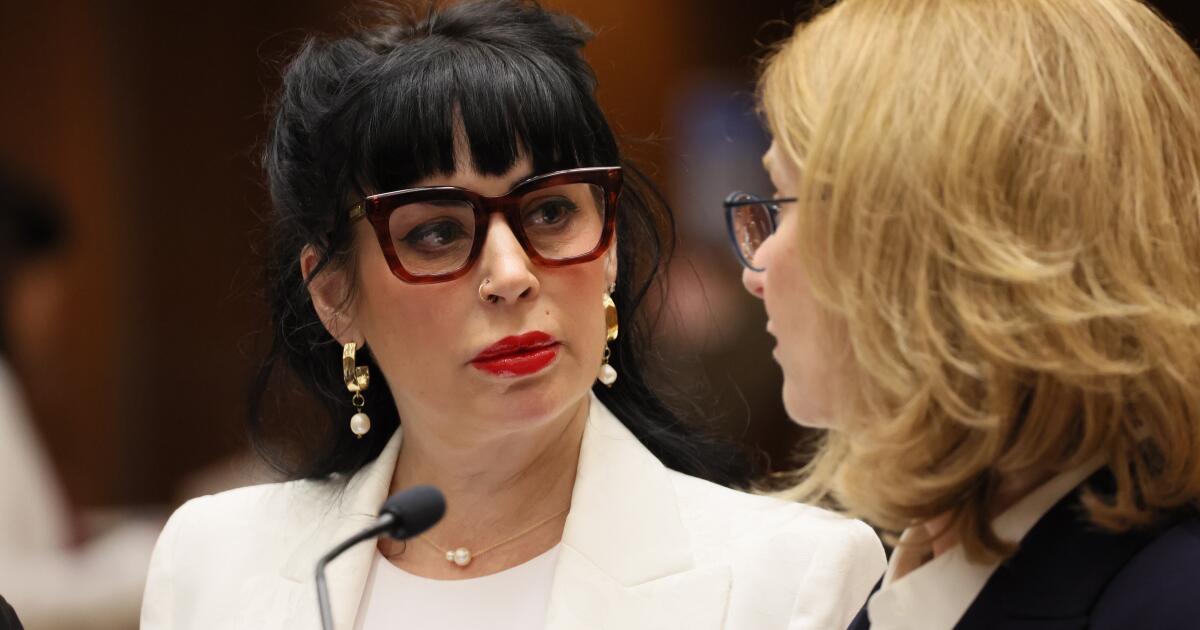
LAPD chief backed cops who shot at author, Weezer bassist’s ex; commission overruled him

What European Luxury Can Learn From American Fashion

Florida High School Football Rankings: Top 25 teams – Oct. 21

How old is Bo Nix? What to know about Oregon quarterback ahead of 2024 NFL Draft

Cleary's 21 help Le Moyne down Central Connecticut State 69-64 in OT

99th annual Pony Swim held in Virginia

Indiana Members Credit Union announced as new anchor tenant at Bottleworks District

Rubio joins crucial G7 talks as Iran war set to dominate second day

A surprise resignation could open the door for an independent to win a Montana Senate seat

Video: Savannah Guthrie Says She Believes Her Mother Was Taken for Ransom

Stefanik grills University of Michigan leader on lack of audit after string of Chinese national arrests

Photos: More than one million displaced by Israel’s evacuations in Lebanon
-

 Detroit, MI1 week ago
Drummer Brian Pastoria, longtime Detroit music advocate, dies at 68
-

 Science1 week ago
How a Melting Glacier in Antarctica Could Affect Tens of Millions Around the Globe
-

 Movie Reviews1 week ago
‘Youth’ Twitter review: Ken Karunaas impresses audiences; Suraj Venjaramoodu adds charm; music wins praise | – The Times of India
-
 Science1 week ago
I had to man up and get a mammogram
-

 Sports6 days ago
IOC addresses execution of 19-year-old Iranian wrestler Saleh Mohammadi
-

 New Mexico4 days ago
Clovis shooting leaves one dead, four injured
-

 Texas7 days ago
How to buy Houston vs. Texas A&M 2026 March Madness tickets
-

 Tennessee3 days ago
Tennessee Police Investigating Alleged Assault Involving ‘Reacher’ Star Alan Ritchson